
LAS VEGAS · TOP 28 · TRAVEL GUIDE
28 Best Things to Do in Las Vegas
Resort architecture, free shows, gardens and viewpoints — with practical routes through the Strip and Downtown.
By Let’s Visit By Radon
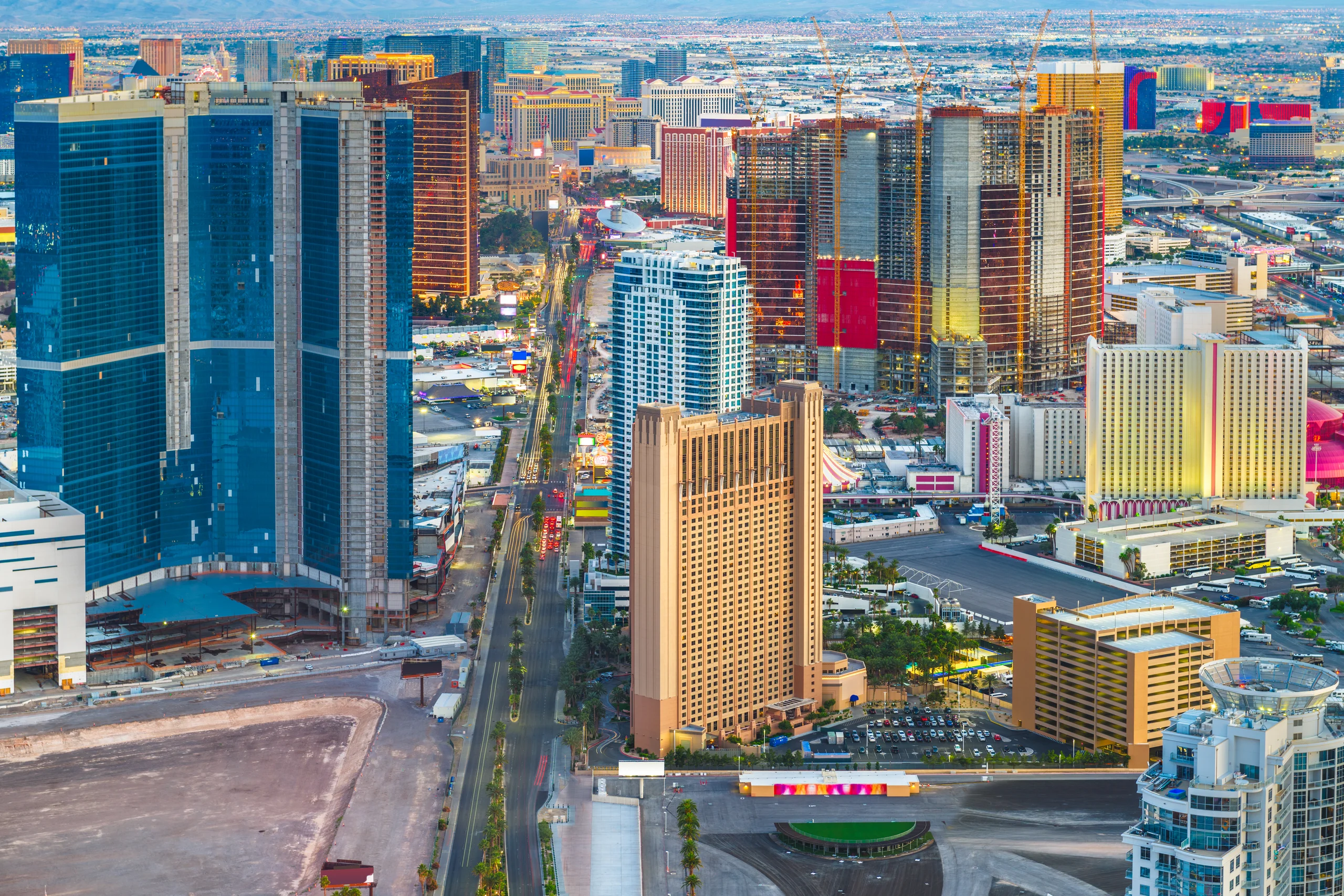
Explore the Strip and Downtown through hotel architecture, free shows, observation decks and places worth planning a visit around.
The best things to do in Las Vegas extend well beyond the casino floor. Watch the Bellagio fountains, explore the Venetian’s canals and colonnades, look across the valley from an observation deck, and spend an evening among Downtown’s neon signs. Much of the pleasure comes from understanding what each enormous resort contains—and deciding which parts deserve your time.
For a first visit, three to four full days is a useful starting point: enough for the central Strip, the southern landmarks, Downtown and a few ticketed experiences. Two days works for selected highlights. If you want to investigate all 28 entries, attend several shows and make a desert excursion, allow extra days rather than compressing everything into one continuous walking tour. These are editorial planning recommendations, not fixed tour durations.
This guide follows the 28 places in our Las Vegas film, arranged into geographic groups for planning. The article numbers run from 1 to 28; the separate “Film” labels preserve the video’s countdown. Bellagio, the Venetian and Caesars Palace each contain separately featured attractions, so the list includes several experiences within the same resort. It is an editorial selection, not a visitor-count ranking.
Time needed
Plan three to four full days for a varied first visit. Allow four to five days for broader coverage with several ticketed interiors; add a separate day for a substantial excursion.
Where to begin
Start around Bellagio, Paris and Caesars Palace. Group the southern resorts, the Venetian–Wynn area and Downtown into their own outings.
Getting around
Walk within clusters and use buses, the Monorail or a taxi between suitable stops. Free resort trams cover limited sections; the Monorail does not serve the airport or Downtown.
What to book
Secure any priority show, Sphere event or stadium tour first. Then choose an observation deck or wheel, and add other paid attractions only where they fit your route.
First visit? Start with these Las Vegas highlights
Choose a few connected experiences, then protect time for meals and transfers.
- Bellagio fountains, paired with the free Conservatory and glass-ceiling lobby.
- The Venetian for architecture and canals; a gondola ride is optional.
- The Welcome sign, combined with the southern themed resorts.
- Fremont Street for a separate Downtown evening.
- Sphere for its exterior display, or a separately booked indoor production.
- Choose one paid view: Eiffel Tower, High Roller or STRAT.
Choose your plan: 2 days — selected highlights · 3 days — first-visit plan · All itineraries
Transport coverage is explained in the official Monorail map, airport transport guide and MGM resort-tram guide.
Watch our Las Vegas attractions film
The film introduces the architecture and individual attractions behind this guide, from Container Park in Downtown to the Bellagio fountains. Use it to decide which hotel interiors, views and public spaces interest you before committing to tickets.
Watch the Las Vegas film on YouTube.
In this guide
Quick picks · Attractions map · Tickets · Photo spots · Transport · Food · Itineraries · FAQ
- Las Vegas Strip
- Welcome to Fabulous Las Vegas Sign
- Mandalay Bay
- Luxor Hotel & Casino
- Excalibur Hotel & Casino
- The Big Apple Coaster at New York-New York
- MGM Grand
- Allegiant Stadium
- ARIA Resort & Casino
- The Cosmopolitan of Las Vegas
- Bellagio Hotel & Casino
- Bellagio Conservatory & Botanical Gardens
- Fountains of Bellagio
- Eiffel Tower Viewing Deck at Paris Las Vegas
- Caesars Palace
- The Forum Shops at Caesars Palace
- High Roller Observation Wheel
- The Venetian Resort
- Grand Canal Shoppes
- Venetian Gondola Rides
- Sphere Las Vegas
- Wynn Las Vegas & Encore
- Fontainebleau Las Vegas
- Resorts World Las Vegas
- The STRAT Tower & Observation Deck
- Fremont Street Experience
- Circa Resort & Casino
- Downtown Container Park
All 28 Las Vegas attractions on one map
Numbers match this guide. Colors identify four sightseeing areas. Open the layer menu to show or hide a group. Check the venue’s own entrance and transport instructions before setting off.
1–8 · South Strip
9–17 · Central Strip
18–25 · Venetian & North Strip
26–28 · Downtown
A short history that explains the sights
Las Vegas grew around a railroad land auction in 1905 and became an incorporated city in 1911. Downtown’s streets belong to that early urban story. The legalization of gambling in Nevada in 1931, together with activity surrounding the construction of Hoover Dam, helped create the conditions for the hospitality and entertainment economy that followed. The City of Las Vegas timeline and its historical overview trace these developments.
Resort development then expanded along the highway south of Downtown. Themed hotels made their buildings part of the entertainment: Caesars Palace brought Roman imagery, while later resorts adopted Egyptian, medieval, New York and Venetian settings. Bellagio added major public art, horticulture and a choreographed lakefront display. More recent resorts emphasize contemporary architecture, dining and entertainment technology.
That history helps explain the guide’s geography. Downtown concentrates older casino fronts and signs around Fremont Street. The Strip contains sprawling resort campuses, much of them outside the city boundary in Clark County. Moving between those areas reveals different stages of the destination’s development; it also requires more planning than the name “Las Vegas” alone suggests. Clark County’s geographic explanation.
All visit durations below are editorial allowances for time at the attraction, unless an operator’s duration is explicitly identified. Add travel, meals, security and queues. Connected sights can share one arrival and departure; do not add every estimate mechanically to create a supposedly precise day.
The Strip and its southern landmarks
Start with the resort corridor as a whole, then explore the southern cluster. The Welcome sign and Allegiant Stadium require their own approach; the themed resorts form a more connected group.
1. Las Vegas Strip
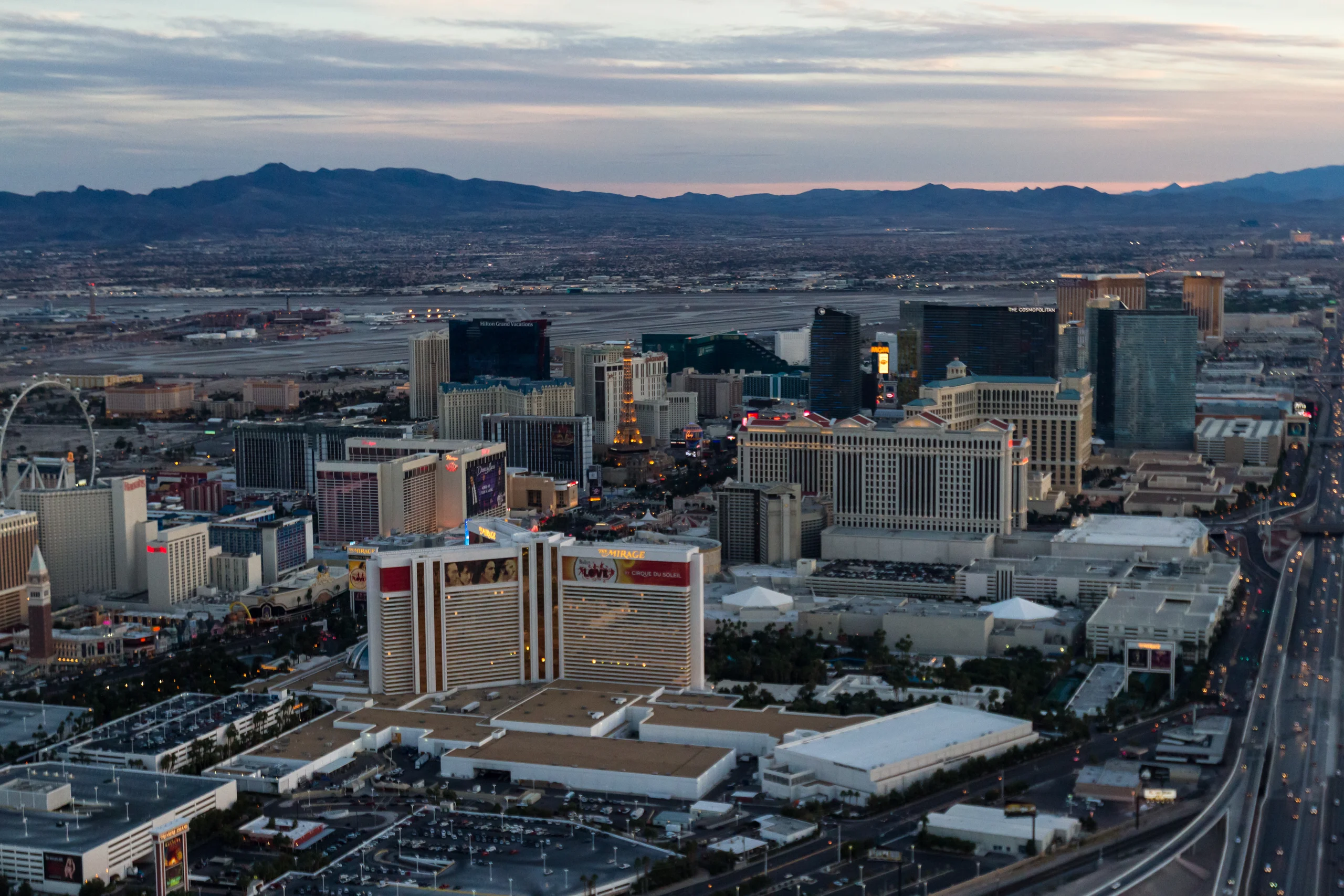
The Strip is the organizing spine of a first Las Vegas visit: a stretch of Las Vegas Boulevard where hotel entrances, shopping passages, theaters and enormous resort facades become attractions in their own right. Much of this familiar landscape lies in unincorporated Clark County, outside the City of Las Vegas. Downtown and Fremont Street are a separate sightseeing area, rather than the northern end of the same continuous pedestrian precinct. Clark County explains the boundary and the Strip’s location.
Its architectural variety is easiest to appreciate in sections. The southern cluster puts an Egyptian pyramid, a medieval castle and a Manhattan skyline close together. Farther north, Bellagio and Caesars Palace lead into the Venetian complex, followed by the more contemporary towers of Wynn, Resorts World and Fontainebleau. Visit some of the same streets in daylight and after dark: the buildings and their illuminated exteriors reward different kinds of attention.
Choose a manageable section and investigate a few interiors instead of trying to walk past every hotel at once. Pedestrian bridges, crossings and entrances set back from the boulevard add distance that a skyline photograph conceals. The Strip is listed separately in the film, but time spent exploring its individual resorts also counts as time on the Strip.
Plan your visit
Area: resort corridor along Las Vegas Boulevard. Allow several shorter walks across your stay; avoid counting them again as an extra full attraction day. Public sidewalks are free; individual venues have their own admission rules. Use RTC visitor transport information for longer transfers.
In the film: #3. Watch our Las Vegas guide.
2. Welcome to Fabulous Las Vegas Sign
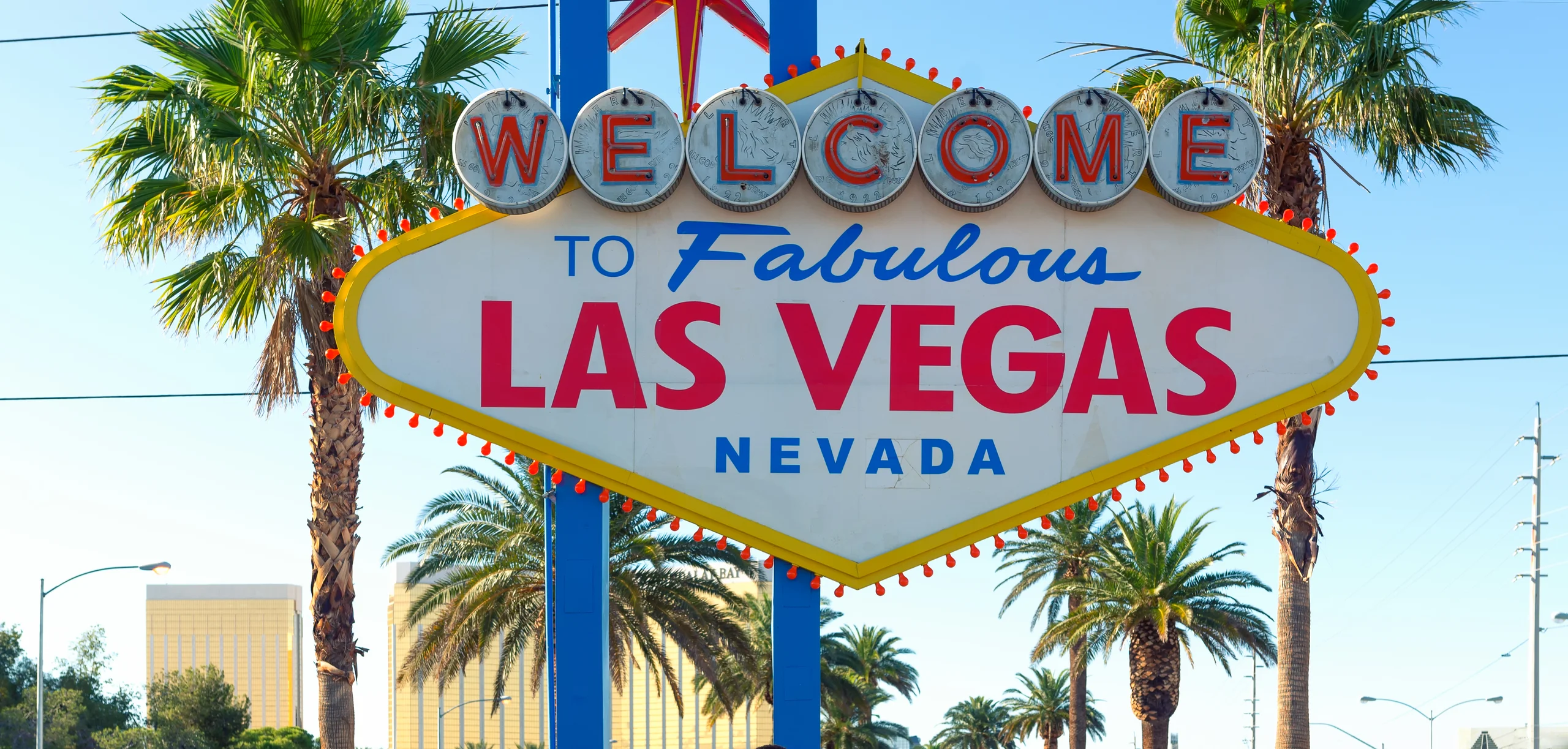
Betty Willis designed the Welcome to Fabulous Las Vegas sign in 1959, long before the surrounding resort skyline took its present form. Its starburst, elongated diamond and individually circled letters make it a compact example of the roadside design that helped advertise the city to motorists. The circles around “WELCOME” represent silver dollars, a reference to Nevada’s Silver State identity. The destination’s tourism authority traces the design and its history.
The sign stands south of the main resort cluster, in the median of Las Vegas Boulevard. Treat it as a deliberate stop rather than something you will automatically pass while walking between central hotels. The designated visitor area makes the familiar head-on photograph possible without stepping into traffic; keep to the marked access routes and crossings.
Combine it with Mandalay Bay and the southern resorts. A short photo visit can grow considerably if you wait for a centered portrait, so leave a queue allowance before any timed booking. The sign itself is the attraction: a paid photograph or photographer is not required to see it. Keep an alternative angle in mind if you would rather spend your time elsewhere than wait for an empty foreground.
Plan your visit
Area: southern Las Vegas Boulevard, south of Russell Road. Editorial allowance: 15–30 minutes plus any queue and transport. General viewing is free. Official visitor information.
In the film: #8. Watch our Las Vegas guide.
3. Mandalay Bay
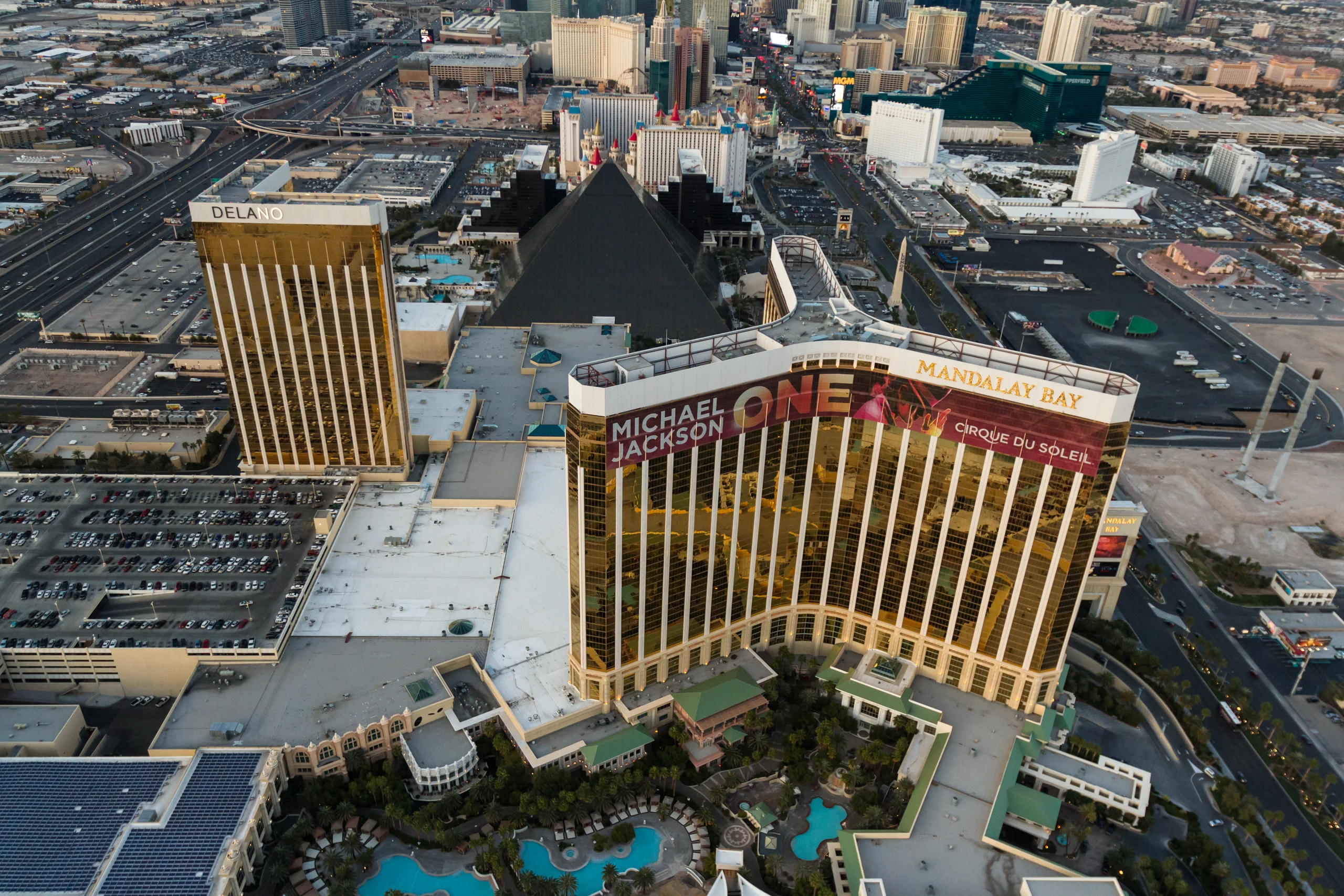
Mandalay Bay’s gold-glass towers identify the southern Strip, where the resort opened in 1999. Its design is associated with a tropical setting rather than a replica city, most clearly expressed in the beach complex behind the hotel. That 11-acre (about 4.5-hectare) area combines a wave pool, lazy river and lagoon pools, but it is a hotel amenity with access conditions, not a public beach that every sightseeing visitor can enter. Official resort information · Mandalay Bay Beach
For non-guests, the stronger reason to plan an extended visit is often Shark Reef Aquarium. This is a distinct attraction within the property, with its own entrance arrangements and timed tickets. It gives families and visitors seeking an indoor activity something more substantial to do than explore the public corridors. Reserve a suitable entry slot if the aquarium is central to the day rather than assuming it can always be added on arrival. Shark Reef visitor information
Mandalay Bay works well with Luxor and Excalibur as a southern resort group. The connecting tram can reduce some of the walking between properties, although reaching the actual attraction still takes time inside each building. Pairing the public areas with the aquarium or a meal creates a coherent visit without trying to include every resort facility.
Plan your visit
Southern Strip; 30–60 minutes for public areas, with additional time for the aquarium or dining; guest-pool restrictions apply and Shark Reef is ticketed. Official beach information · Aquarium booking
In the film: #22. Watch our Las Vegas guide.
4. Luxor Hotel & Casino
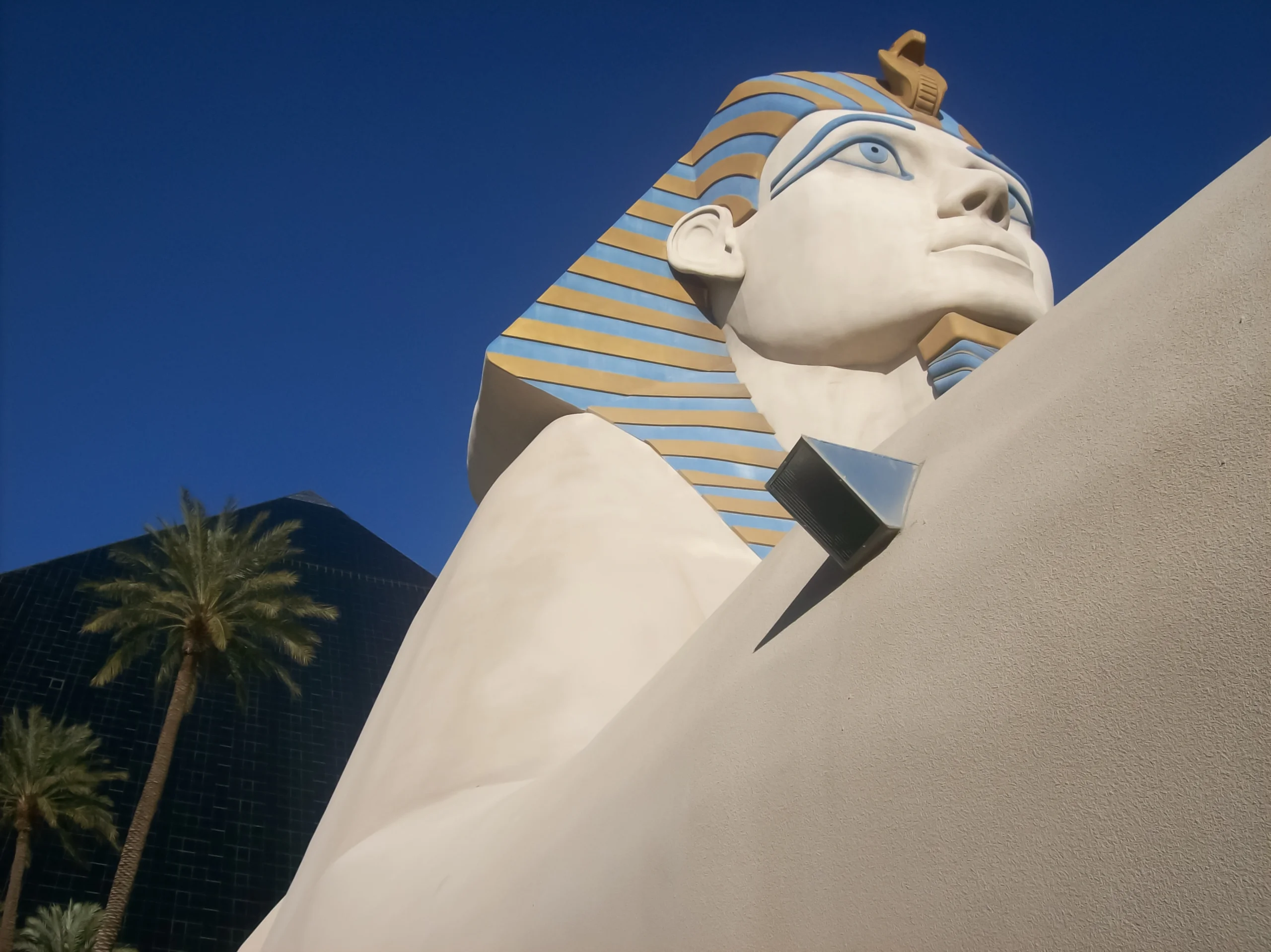
Luxor brings a black-glass pyramid, sphinx and obelisk to the southern Strip. The resort opened in 1993, and its shape determines the architecture inside as much as the view from the boulevard. Corner elevators travel at an angle of 39 degrees, following the pyramid’s slopes—an engineering detail documented by Guinness World Records.
The public atrium is the useful place to examine that structure. Look upward to see how the accommodation rises around the open center, then follow the public escalators between the casino and Atrium Level. Luxor provides walking directions to its Atrium Level; the hotel’s guest-room elevators should be treated as hotel transport rather than a sightseeing ride.
A short visit works well between Excalibur and Mandalay Bay, keeping three neighboring resorts together. Decide beforehand whether the pyramid itself is the stop or whether you also want a ticketed exhibition or performance. Those experiences need their own time allowance, and the official entertainment directory is the place to compare them. For an architectural visit, concentrate on the exterior and atrium instead of trying to cover every corridor.
Plan your visit
South Strip, between Excalibur and Mandalay Bay. Estimated time: 20–40 minutes for architecture, excluding travel and paid attractions; editorial estimate. Entry: public resort areas can be visited without an exhibition ticket; shows, exhibitions and guest facilities have separate access conditions. Official information: Luxor.
In the film: #17. Watch our Las Vegas guide.
5. Excalibur Hotel & Casino
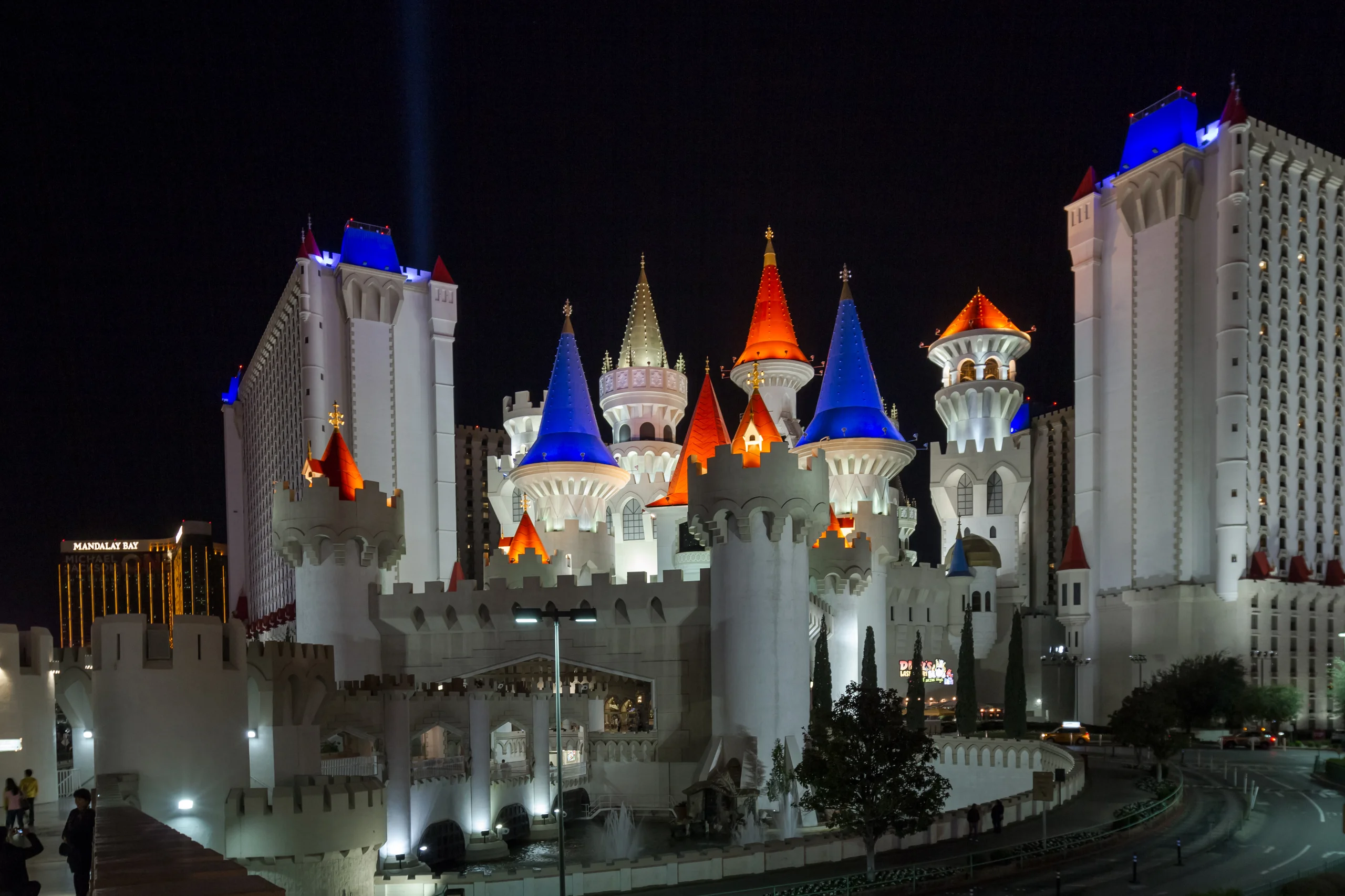
Excalibur takes its identity from the legend of King Arthur, using castle walls and brightly colored towers to make the resort recognizable from the boulevard. The exterior is the clearest expression of that theme. Allow time to see how the turrets and entrances form the castle composition before moving inside, where the experience becomes a mixture of casino, restaurants and entertainment rather than a continuous medieval reconstruction.
The strongest extension of the theme is Tournament of Kings, a dinner show built around mounted knights, staged combat and an arena audience. It is a different commitment from a quick architectural stop and works best when booked as the evening’s main activity. The operator welcomes all ages, with accompanying-adult rules for younger visitors. Horses, pyrotechnics and loud effects are part of the production, which is useful to know when choosing a family performance. Official show information
Combine Excalibur with Luxor and Mandalay Bay rather than making a separate journey for each resort. The connecting tram serves that group, although its stations do not remove all walking within the properties. A castle exterior stop followed by Luxor’s pyramid creates a straightforward architectural pairing; adding the dinner show turns Excalibur into a longer visit. Official tram information
Plan your visit
Southern Strip; 20–40 minutes for the exterior and public areas, excluding transport; show and other entertainment require their own booking. Resort transportation · Tournament of Kings
In the film: #18. Watch our Las Vegas guide.
6. The Big Apple Coaster at New York-New York
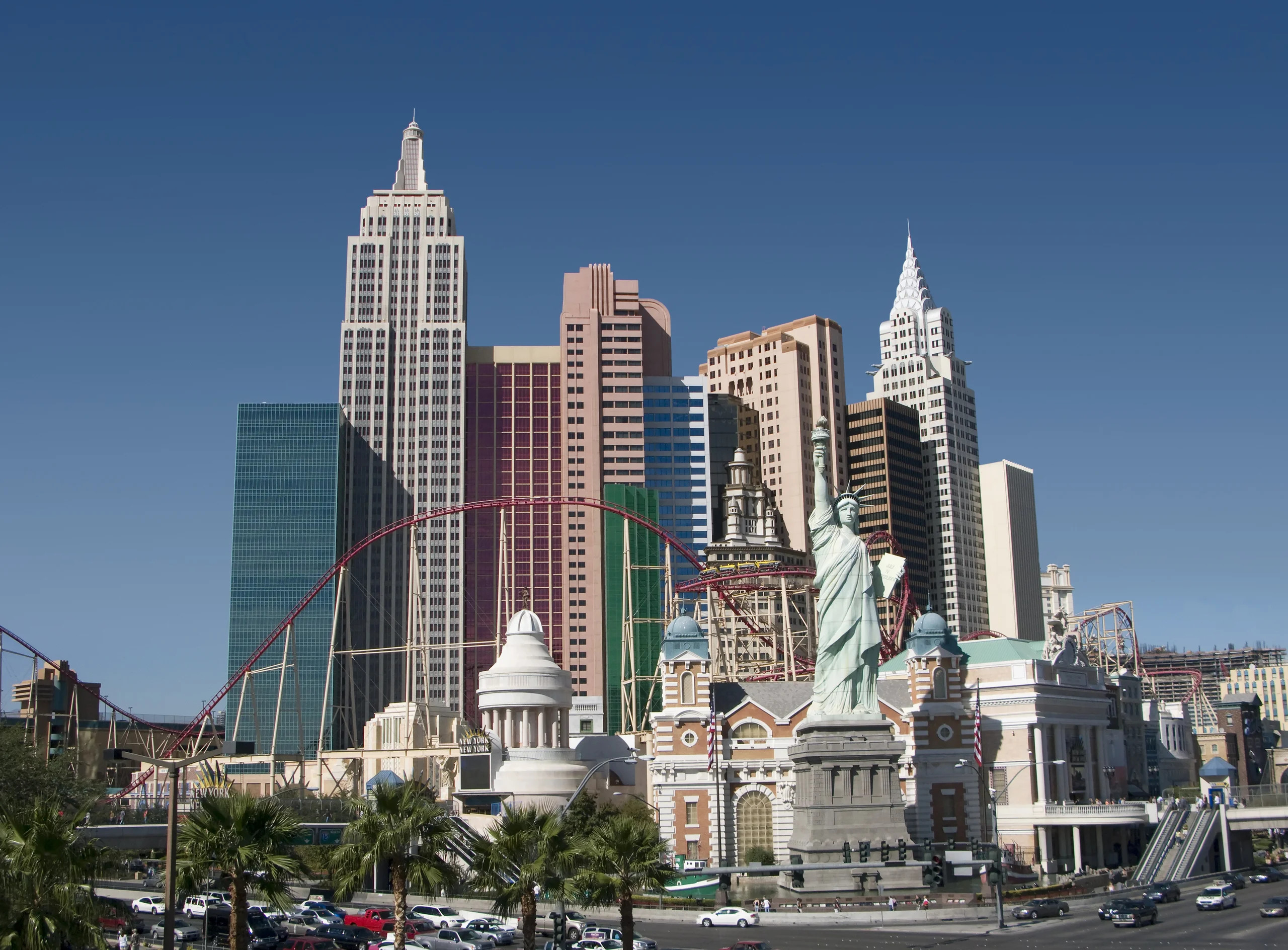
The Big Apple Coaster makes New York-New York’s replica skyline part of a working thrill ride. Its track curves around the buildings rather than sitting in a separate amusement park, so the attraction contributes to the view from surrounding pedestrian areas as well as the experience of those riding it. Among its maneuvers is a 180-degree heartline twist-and-dive, giving the route a different character from a simple out-and-back coaster. Official ride information
Before treating it as a family activity, check who can ride. The operator requires a minimum height of 54 inches without footwear, approximately 137 centimeters. The indoor arcade offers another activity within the same part of the resort, but it should not be presented as an equivalent experience for someone expecting the coaster. Weather and other operating conditions can affect the ride, so keep some flexibility if it is one of the main reasons for visiting.
Pair the coaster with an exploration of New York-New York’s exterior and nearby southern Strip resorts. Non-riders can still appreciate how the track threads through the hotel setting, while riders should allow for finding the entrance and waiting in line. Check the operator’s ticket options and avoid building the next fixed appointment immediately after the ride.
Plan your visit
Southern Strip, New York-New York; 30–60 minutes including a variable queue, excluding transport; paid ride, minimum height 54 inches without footwear. Official tickets and requirements
In the film: #19. Watch our Las Vegas guide.
7. MGM Grand
MGM Grand is marked by green hotel towers and the bronze lion at its entrance. The present resort opened on December 18, 1993, according to its official fact sheet. Its identity draws on the MGM name and Hollywood imagery, giving it a different architectural character from the castle and New York skyline around the same southern-Strip intersection.
For a short visit, the lion is the clearest focal point. It provides a recognizable exterior subject before you enter a building whose restaurants, gaming areas and performance venues extend well beyond the frontage. Pick a destination inside rather than relying on an aimless walk to reveal the whole resort. Hotel maps are particularly useful here, since the entrance closest to your next stop may be some distance from the venue you choose.
MGM Grand works best as either a brief architectural stop or the setting for a planned meal, show or sporting event. Pair the exterior with New York-New York and Excalibur, then add an indoor experience only if it suits the day’s schedule. The bronze statue is the attraction to look for; the operator confirms in its resort FAQ that the former live-animal Lion Habitat has closed.
Plan your visit
South Strip, at Las Vegas Boulevard and Tropicana Avenue. Estimated time: 20–40 minutes for the exterior and a brief interior stop, excluding travel; editorial estimate. Entry: public resort areas; shows, events and guest facilities have separate admission rules. Official information: MGM Grand.
In the film: #12. Watch our Las Vegas guide.
8. Allegiant Stadium
Allegiant Stadium adds professional sport and large-event engineering to a city itinerary. The enclosed, climate-controlled venue seats approximately 65,000 and became the Las Vegas home of the Raiders in 2020. One of its less obvious features is the movable natural-grass playing field: a powered tray allows the turf to be rolled outside the building. That makes the stadium an interesting stop even for visitors whose interest lies more in its construction than in football. Official stadium facts
A guided tour is the clearest way to understand the interior without attending a game or concert. Depending on stadium operations, the route can include spaces such as suites, the broadcast booth, press facilities and the Al Davis Memorial Torch. Specific rooms and field access are not guaranteed. The operator describes tours as approximately 75 minutes long, covering more than a mile (1.6 kilometers) on foot. Official stadium tours
Pair the visit with Mandalay Bay and the southern Strip, but give the stadium its own appointment in the day. An exterior photograph is a brief stop; a tour needs advance planning, arrival time and attention to the venue’s entry rules. Event days also require a different transport plan from an ordinary sightseeing afternoon.
Plan your visit
West of the southern Strip; about 90 minutes including tour check-in, excluding transport; tour or event ticket required for planned interior access. Tours and booking · Bag policy
In the film: #27. Watch our Las Vegas guide.
The central Strip: art, fountains and viewpoints
This is the densest part of the guide. Several entries share the same complex, so combine connected public spaces and reserve separate time for the ticketed views.
9. ARIA Resort & Casino
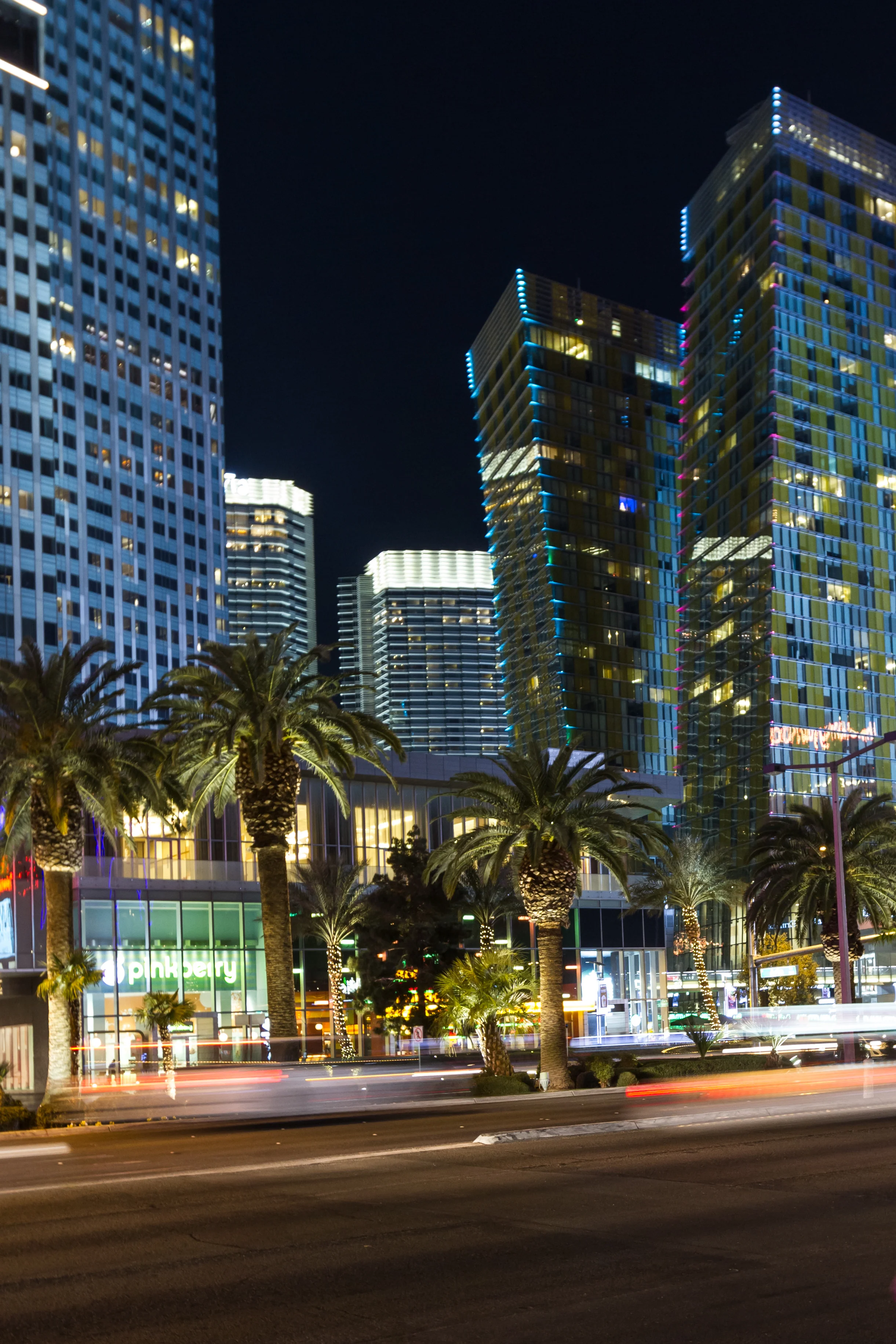
ARIA offers a different kind of sightseeing from the Strip’s more explicitly themed resorts. Its public art collection places sculpture and installations within a contemporary hotel and shopping environment, so looking closely at individual works becomes the main activity. The collection includes artists such as Maya Lin, Jenny Holzer, Nancy Rubins and Frank Stella, and the resort describes the walking experience as complimentary. Official ARIA Fine Art Collection
A useful starting point is Maya Lin’s Silver River in the grand lobby. The work depicts the Colorado River in an 84-foot (26-meter) silver cast, introducing the region’s geography into an interior that might otherwise be read only as a casino resort. Using a named work as the first stop makes the wider collection easier to explore with purpose. Consult the official collection information and choose a few pieces rather than expecting every work to sit along one obvious corridor. Operator’s art description
Combine ARIA with nearby central Strip stops and the Shops at Crystals. The ARIA Express serves the surrounding resort group, including Bellagio and Park MGM, and can help organize this part of the day. It is a local connection between properties, so plan the rest of the Strip journey separately. Official tram information
Plan your visit
Central Strip, CityCenter area; 30–60 minutes, excluding transport and dining; art collection complimentary. Collection and visitor information
In the film: #21. Watch our Las Vegas guide.
10. The Cosmopolitan of Las Vegas
The Cosmopolitan’s main architectural attraction is inside: the Chandelier, a cocktail venue spread across three levels beneath a curtain of crystal beads. The operator identifies the levels as 1, 1.5 and 2 and describes the installation as containing two million beads. That scale makes it part of the resort’s interior architecture as well as a place to drink. See the official Chandelier guide for the venue’s layout.
The interesting detail is how the hanging strands frame different spaces as you move through the building. From a distance, they read as a single luminous enclosure; closer views reveal the separate lounge areas within it. Keep to public circulation routes when looking around, and respect any seating, reservation or photography instructions. A quick look at the installation and a seated bar visit are different ways to use the same stop.
The resort fits naturally into a walk between ARIA and Bellagio. It offers a compact architectural visit if you focus on the Chandelier, or a longer break if you choose a restaurant or lounge. Guest-room balconies seen in hotel photographs belong to booked accommodation and should not be treated as public viewpoints. Plan around the interior spaces available to visitors, then continue to the neighboring resorts.
Plan your visit
Central Strip, beside Bellagio and near ARIA. Estimated time: 20–40 minutes for a brief interior visit, excluding travel; editorial estimate. Entry: public resort circulation areas; bar seating, meals, clubs and guest facilities have separate conditions. Official information: The Cosmopolitan.
In the film: #13. Watch our Las Vegas guide.
11. Bellagio Hotel & Casino
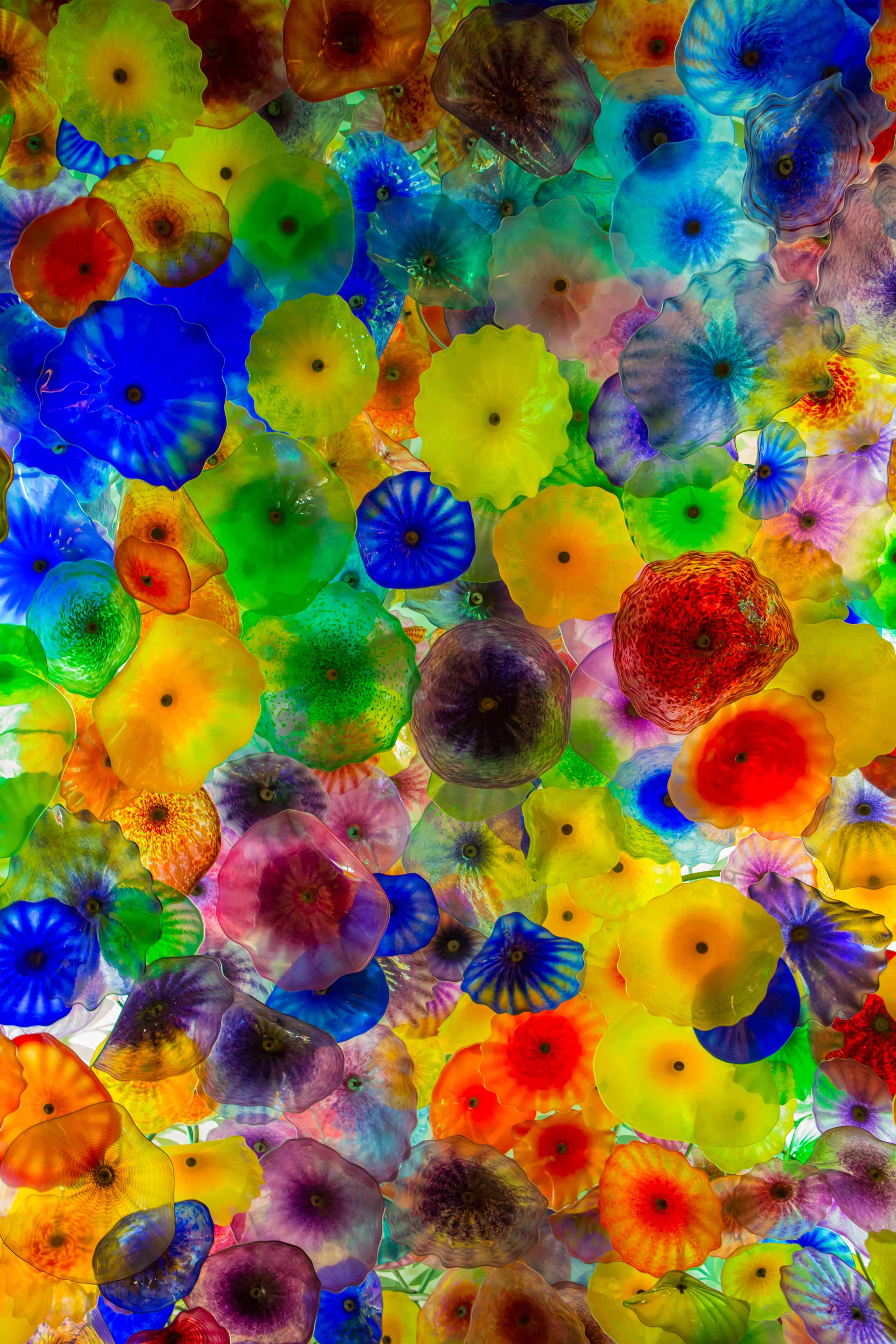
Bellagio opened in 1998, taking its name and inspiration from the Italian town on Lake Como. The hotel’s identity extends beyond the fountain lake: its entrance and lobby introduce a resort where art, horticulture and performance are part of the public experience. This section covers the building and its interior details; the Conservatory and fountains have their own entries because the film treats them separately. MGM’s Bellagio facts establish the opening date.
The most distinctive lobby feature is Fiori di Como, Dale Chihuly’s ceiling installation of colored glass forms. Created for Bellagio in 1998, it takes its floral name from the resort’s Lake Como inspiration. Look up from the public lobby area without blocking the reception queues, then notice how the glass ceiling changes the character of what is otherwise a working hotel entrance. Chihuly’s own account provides the artwork’s attribution and context.
Link the lobby to the Conservatory and then the lakefront, allowing the three Bellagio stops to form one visit. If you want a longer cultural stop, the Gallery of Fine Art has its own exhibition program and admission arrangements; check the actual exhibition before adding it. Restaurants, the theater, guest accommodation and pools remain distinct from this public-area walk.
Plan your visit
Area: central Strip, west side. Editorial allowance: 20–30 minutes for the lobby and public passages, excluding the Conservatory and fountains. Bellagio visitor information and Gallery of Fine Art.
In the film: #7. Watch our Las Vegas guide.
12. Bellagio Conservatory & Botanical Gardens
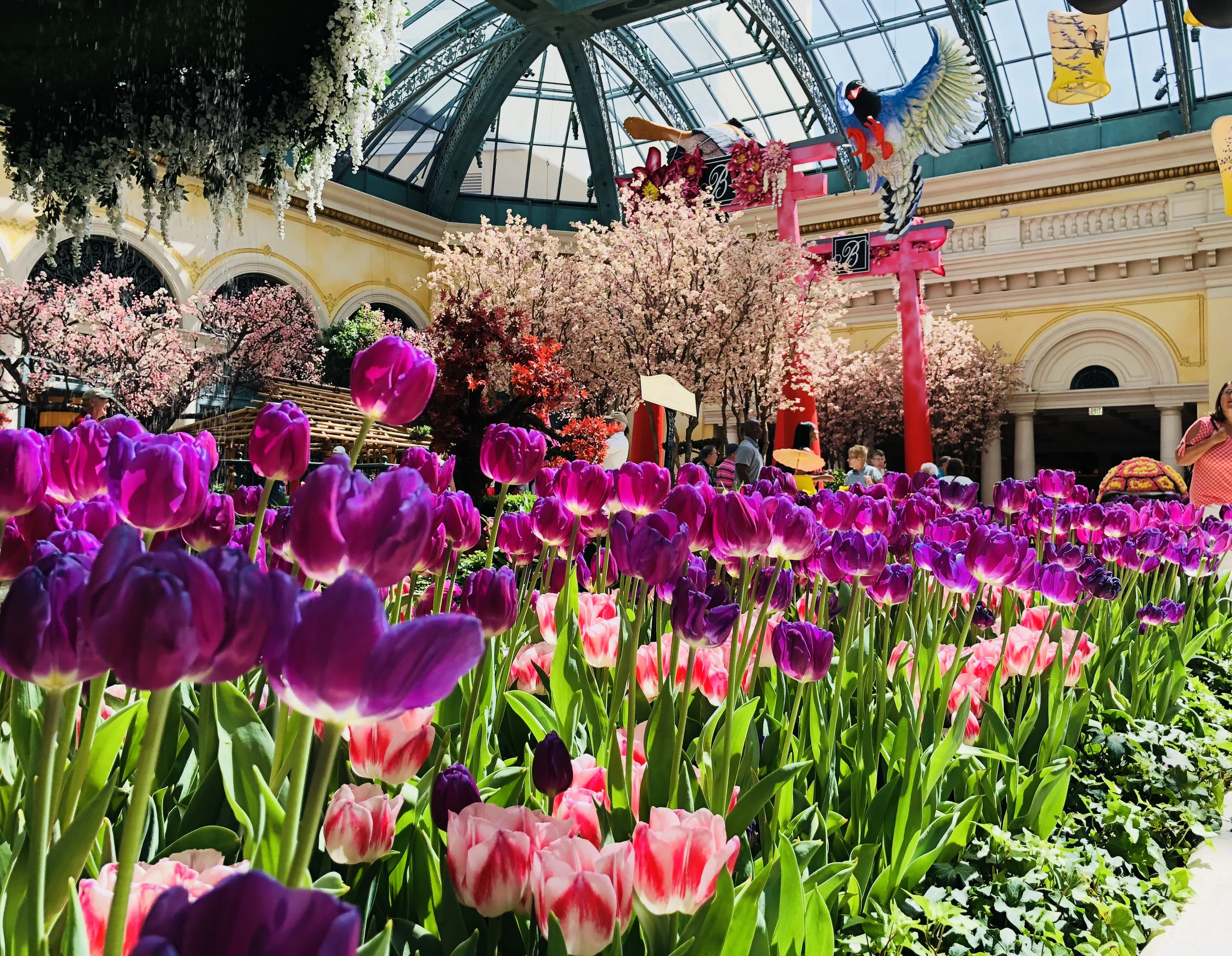
Bellagio’s Conservatory turns an indoor garden into a succession of large floral installations. Its 14,000-square-foot space—about 1,300 square meters—is redesigned around spring, summer, autumn, winter and Lunar New Year. Horticulture and engineering teams work together on the displays, combining living plants with decorative structures and water features. The official conservatory page explains the seasonal approach and provides the display calendar.
Follow the paths around the planting beds rather than judging the installation only from its entrance. The smaller details can be as interesting as the main figures: changes in flower texture, repeated colors and the way plants cover a built framework. Because the design changes, a photograph in a guide represents one installation. The garden’s layout and purpose endure while its individual characters and scenes are replaced.
Treat this as part of one Bellagio visit with the lobby’s glass ceiling and the lakefront fountains. The film gives those sights separate places in its selection, but visitors can link them without another transfer. Admission is complimentary, making the conservatory a practical stop even on a modest budget. Check the display calendar before setting aside a particular day, especially if the floral installation is a priority.
Plan your visit
Inside Bellagio, Central Strip. Estimated time: 20–40 minutes, excluding travel; editorial estimate. Entry: free public admission, subject to display access and the operator’s calendar. Official information: Bellagio Conservatory & Botanical Gardens.
In the film: #14. Watch our Las Vegas guide.
13. Fountains of Bellagio
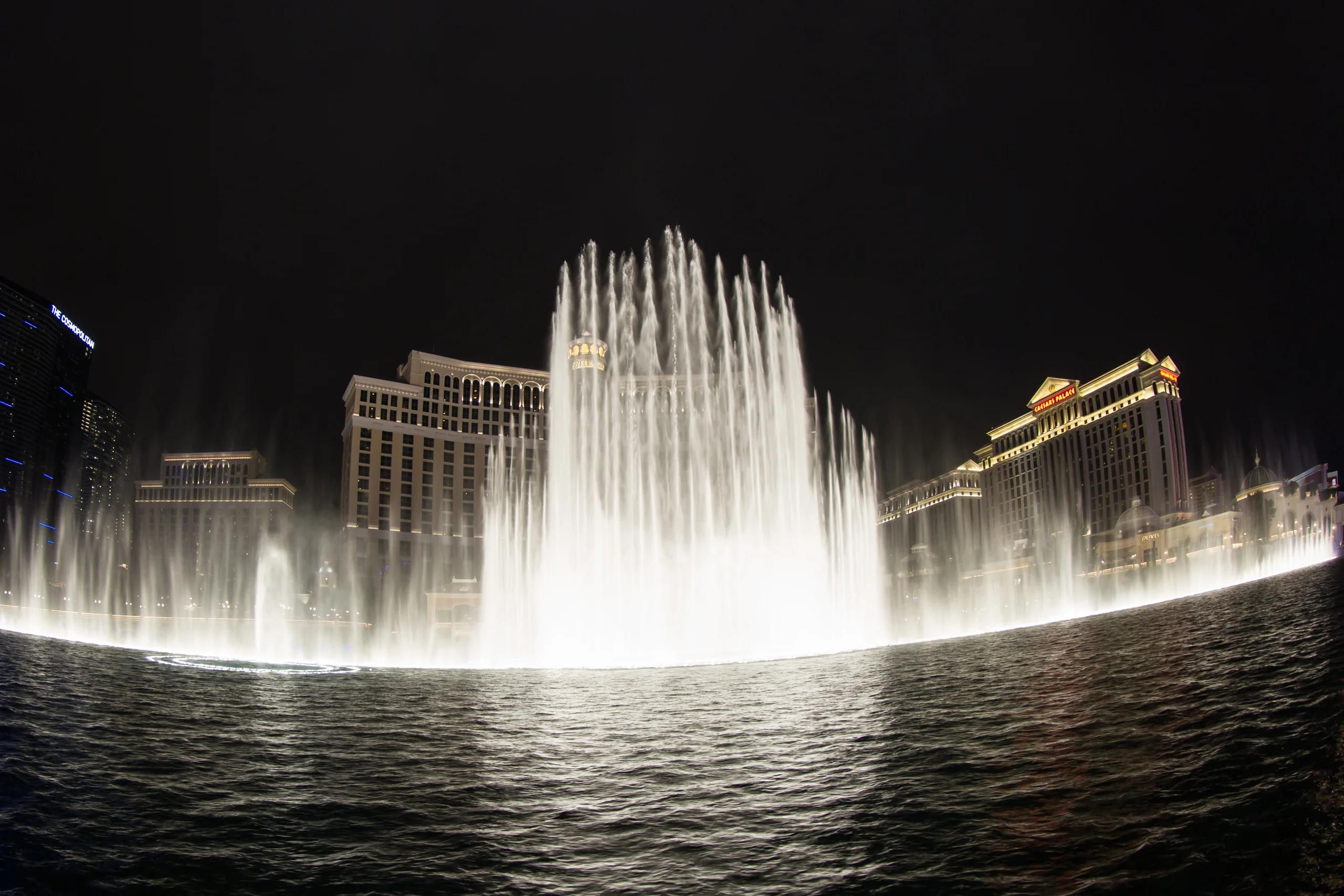
The Fountains of Bellagio take the film’s first place. Across the lake in front of the hotel, water movements are synchronized with music and lighting, with different choreography for different songs. Bellagio developed the installation with WET Design; the operator describes more than a thousand fountains and water reaching as high as 460 feet, about 140 meters. Those figures refer to the system’s capabilities, not to every jet in every performance. Bellagio’s fountain information explains the installation and performance arrangements.
Watch from the public lakefront for the most straightforward visit. A broad view helps you follow patterns across the water, while a position farther to one side brings the hotel facade and boulevard into a different relationship. If you enjoy the first performance, returning for a second can be more rewarding than rushing to another distant viewpoint.
Seeing the show from an elevated restaurant or the Eiffel Tower involves a separate booking or ticket; the street-level performance is free. Plan around the operator’s live schedule and leave room for weather-related changes. An evening visit works particularly well after the Conservatory, dinner nearby or a walk through Bellagio’s lobby, with no extra cross-city journey.
Plan your visit
Area: Bellagio lakefront, central Strip. Editorial allowance: 20–40 minutes including a modest wait, longer for multiple performances. Free from public viewing areas. Official performance schedule.
In the film: #1. Watch our Las Vegas guide.
14. Eiffel Tower Viewing Deck at Paris Las Vegas
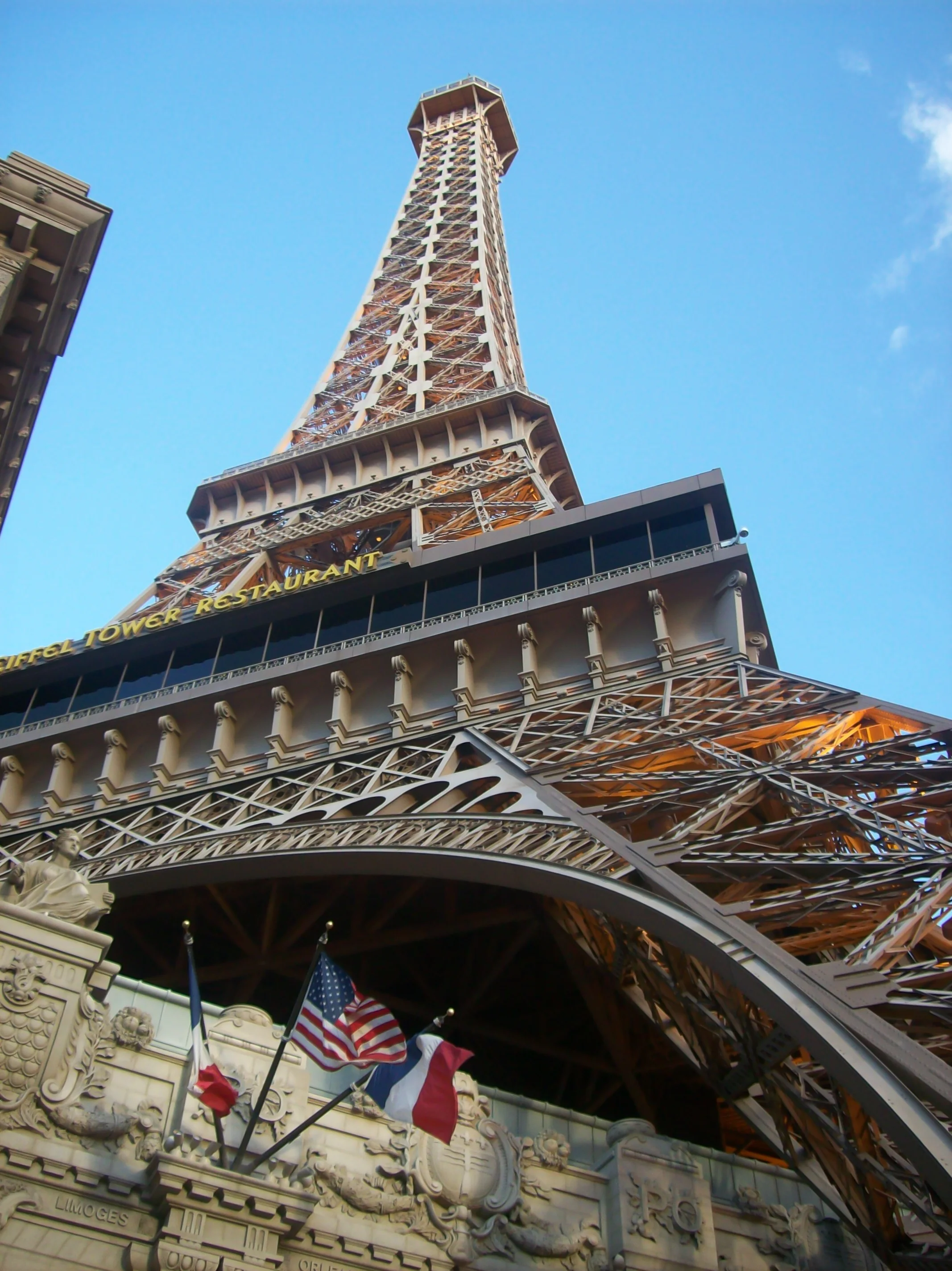
Paris Las Vegas centers its skyline around a half-scale Eiffel Tower replica, opened with the resort in 1999. The viewing experience takes visitors 46 stories above the Strip. The tower’s proportions and steel framework make it an architectural stop from street level as well as a paid viewpoint. These details are documented in the official Paris Las Vegas fact sheet.
The main reason to go up is the position. Bellagio’s lake lies across Las Vegas Boulevard, with the surrounding hotels close enough to distinguish individual entrances, terraces and facades. A fountain performance adds movement to that view, although its timing should not be the only reason for choosing a particular admission slot. Daylight favors architectural detail; an evening visit emphasizes the illuminated boulevard.
Combine the tower with a central-Strip walk that includes Bellagio and the Cosmopolitan. Allow time for the approach through Paris and for entry procedures instead of treating it as an instant elevator stop. The Eiffel Tower Restaurant is a separate venue, so a dining reservation should not be assumed to include observation-deck admission. Choose the deck, the restaurant or both according to the experience you actually want.
Plan your visit
Central Strip, at Paris Las Vegas opposite Bellagio. Estimated time: 45–75 minutes, excluding travel and substantial queues; editorial estimate. Entry: paid viewing-deck ticket; street-level views are free. Official information: Eiffel Tower Viewing Deck.
In the film: #15. Watch our Las Vegas guide.
15. Caesars Palace
Caesars Palace opened in 1966, helping establish the themed resort as a Las Vegas attraction in its own right. Its Roman references extend from the exterior columns and statues into arrival halls and public interiors. The resort’s founder, Jay Sarno, wanted guests to feel like a Caesar: an idea expressed through architecture, ceremonial entrances and the scale of the property. Caesars’ account of its main entrance records that history.
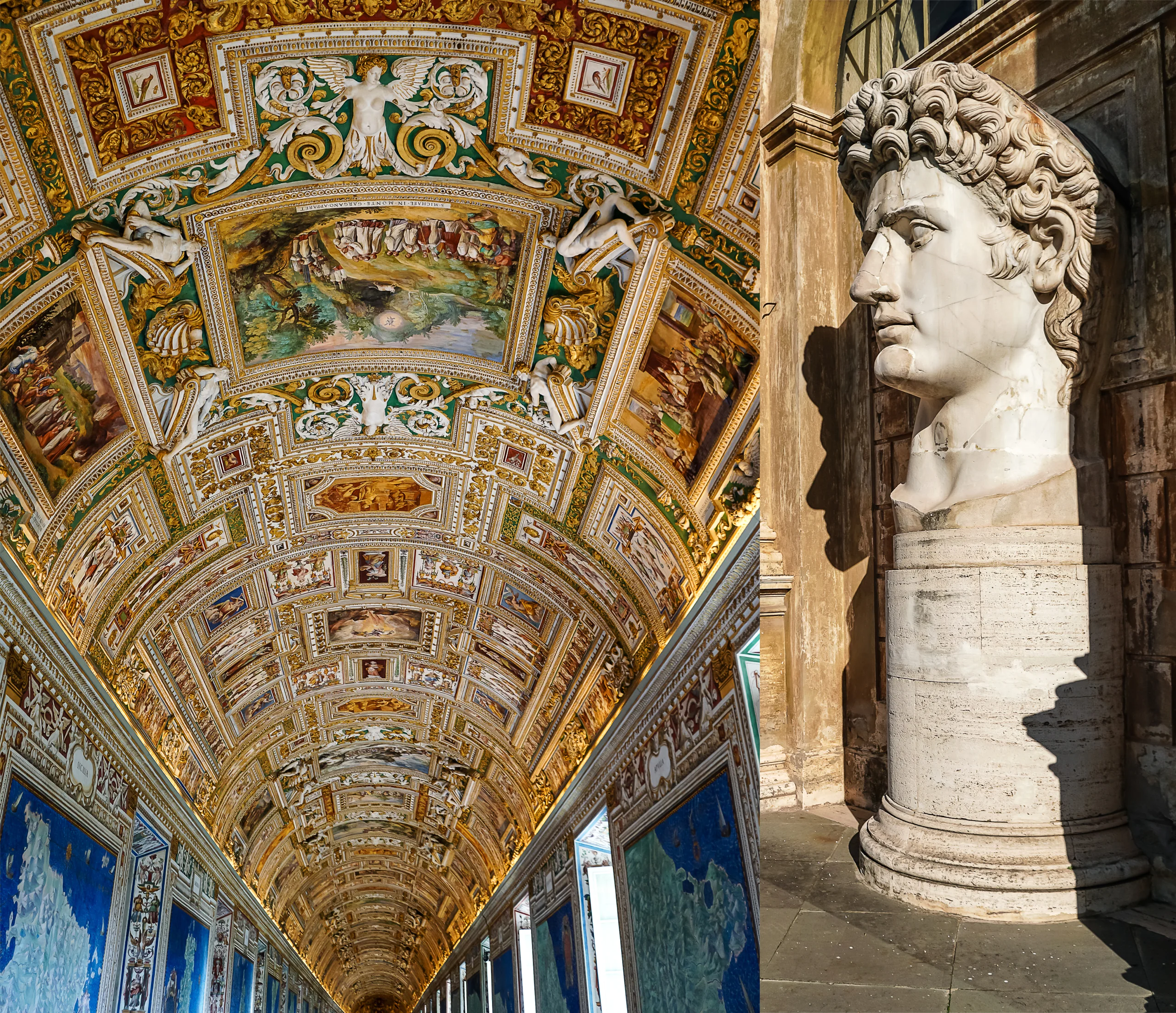
At the main entrance, look for the coffered ceiling, mosaic floor and statue of Augustus. These are useful details to seek out deliberately; otherwise a first visit can turn into a long search through casino corridors. The Forum Shops continue the classical theme but occupy their own section of this guide, allowing the hotel architecture and shopping attraction to be appreciated separately.
Combine the public areas with the Forum Shops and nearby Bellagio. If a concert at the Colosseum or a restaurant reservation is your main reason to visit, build the day around that booking. The Garden of the Gods is a resort pool complex with its own access arrangements, rather than a public garden to include automatically in a free walking route.
Plan your visit
Area: central Strip, west side. Editorial allowance: 30–45 minutes for entrances and public interiors, excluding the Forum Shops and events. Official resort information and entertainment.
In the film: #5. Watch our Las Vegas guide.
16. The Forum Shops at Caesars Palace
The Forum Shops turn an indoor shopping center into an architectural attraction. Roman-style columns, statues and fountains create a sequence of spaces that can be explored without making shopping the purpose of the visit. At the Fountain of the Gods, figures including Neptune, Jupiter, Venus and Pegasus stand beneath a painted sky that shifts through a simulated day. The setting is deliberately theatrical, extending Caesars Palace’s classical theme into its retail corridors. Official center information
Look for the three-level spiral escalator, introduced in 2004 and designed by Mitsubishi for this location. Its curving movement is easier to appreciate from the surrounding floors than while standing on it. Elsewhere, the Atlantis attraction and neighboring saltwater aquarium provide another reason to continue through the complex. Check the operator’s program if the animated show is a priority; the shopping passages themselves remain the main focus of a casual visit.
Combine the Forum Shops with Caesars Palace as one geographical stop while treating them as two different experiences. Give the resort entrances and fountains their own time, then use the indoor passages for a slower architectural walk or meal. Choosing a few landmarks in advance also helps avoid turning the visit into an aimless search through the shops.
Plan your visit
Central Strip, adjoining Caesars Palace; 30–60 minutes, excluding meals and substantial shopping; public shopping areas, with purchases and dining extra. Official website and directory
In the film: #26. Watch our Las Vegas guide.
17. High Roller Observation Wheel
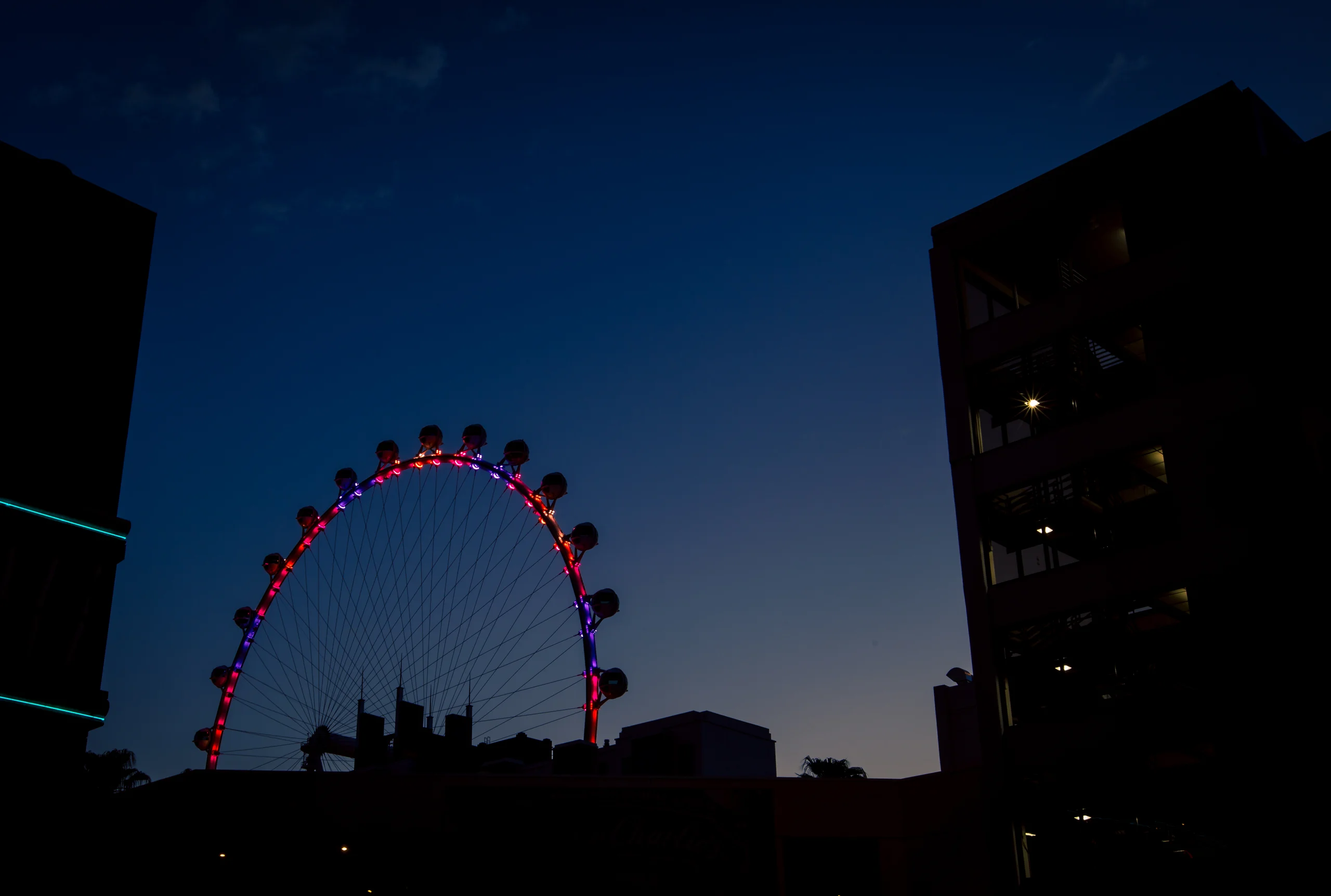
The High Roller rises 550 feet, or about 168 meters, at the eastern end of the LINQ Promenade. Its 28 climate-controlled cabins make one revolution in approximately 30 minutes. Those figures describe the ride itself; entry, waiting and exiting add to the visit. The LINQ Promenade’s official attraction page confirms the height, cabin arrangement and rotation time.
The experience changes gradually as the cabin climbs. Nearby hotel roofs give way to a wider view of the Strip and the mountains beyond, then the angle shifts again during the descent. An enclosed cabin makes this a different proposition from an open-air viewing terrace. The slow circuit also gives a group time to move between viewpoints, subject to the space available and the attraction’s boarding arrangements.
Use the promenade as the approach and leave time for the journey back to Las Vegas Boulevard afterwards. The wheel is a sensible choice when you want one paid elevated view during a central-Strip outing. Compare it with the Eiffel Tower or STRAT according to location and the kind of view you prefer. Standard observation tickets and drinks-focused cabin packages have different conditions, so check the product carefully before booking for a mixed-age group.
Plan your visit
East end of the LINQ Promenade, Central Strip. Estimated time: around 60 minutes overall, excluding travel and major queues; editorial estimate. Entry: paid ride; walking the promenade does not require a wheel ticket. Official information: High Roller.
In the film: #11. Watch our Las Vegas guide.
The Venetian, Sphere and the northern resorts
The Venetian’s three entries fit into one visit. Sphere events and the farther northern resorts benefit from deliberate booking and transport decisions.
18. The Venetian Resort
The Venetian opened in 1999 on the former Sands Hotel site, replacing one chapter of Las Vegas entertainment history with a large-scale interpretation of Venice. Its exterior brings together references to the Campanile, Rialto Bridge and Venetian waterfront architecture. These buildings function as a collection of recognizable landmarks rather than a geographically exact reconstruction of the Italian city. The resort’s history explains the redevelopment and the research behind its design.
Inside, the Grand Colonnade deserves attention before you head straight for the shops. The resort documents imported Italian stone, solid marble columns and hand-painted ceiling frescoes. Its geometric marble floor was modeled on the floor of Venice’s Church of Santa Maria del Rosario. Looking at those materials gives this stop more substance than simply checking off the familiar tower outside.
Treat the Venetian as three connected experiences: the exterior and colonnade, the Grand Canal Shoppes, and an optional gondola ride. You can appreciate the architecture without booking a boat. Keep a little orientation time in your plan, particularly if you are continuing to a Sphere event; the correct venue approach and entrance matter more than the apparent closeness of the buildings on a map.
Plan your visit
Area: east side of the Strip, Venetian–Palazzo complex. Editorial allowance: 30–45 minutes for exterior and colonnade, excluding shops and gondolas. Public architectural browsing has no general attraction ticket. Official resort history and visitor links.
In the film: #6. Watch our Las Vegas guide.
19. Grand Canal Shoppes
Grand Canal Shoppes provides an indoor canal-and-shopping experience at the Venetian: shopping passages, bridges and canals sit beneath painted ceilings that suggest an open sky. The distinction matters when planning a visit. Admiring the resort’s exterior, exploring these passages and taking a gondola ride are three different activities, even though the film includes them within the same larger setting. The shopping area is on the Venetian’s second level. Official Grand Canal Shoppes information
Focus on the spaces around the canal and the recreation of St. Mark’s Square rather than trying to cover every retailer. Watching boats pass beneath the bridges offers a way to appreciate the setting before deciding whether a ride is worthwhile. Seating areas around the canal, square and other named spaces make this a useful indoor break, particularly when the afternoon has involved a lot of walking. Visitor facilities
Combine the passages with the Venetian’s exterior architecture in one visit, leaving the gondola as an optional activity. Families should also distinguish the visual interest of the canals from a dedicated children’s attraction: the shopping center does not provide a children’s playground, so its appeal depends on whether the group enjoys browsing and watching the boats.
Plan your visit
Central-to-northern Strip, inside The Venetian; 30–60 minutes, excluding meals, shopping and gondola rides; public shopping passages, with paid activities extra. Official visitor information
In the film: #20. Watch our Las Vegas guide.
20. Venetian Gondola Rides
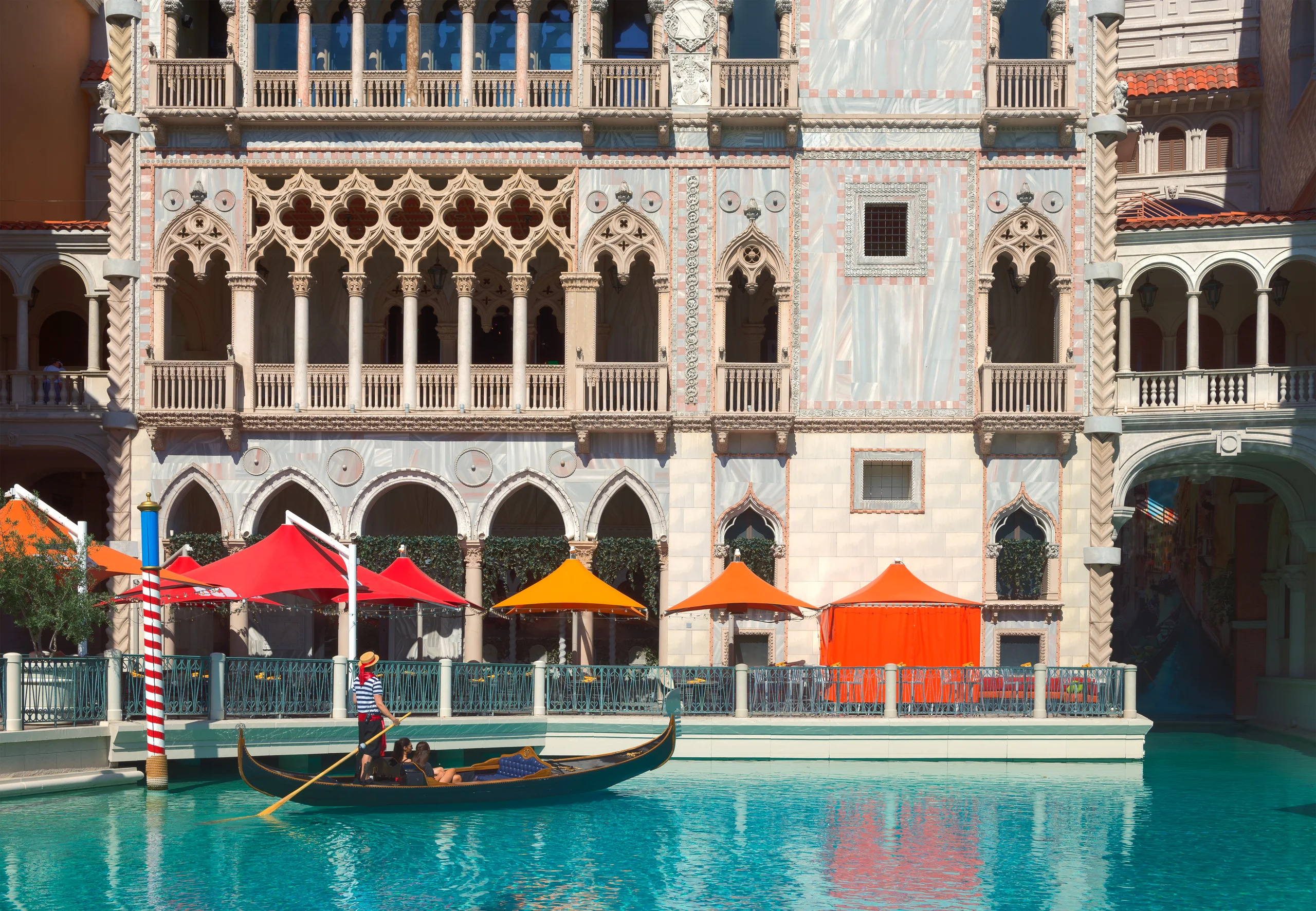
The Venetian’s gondolas turn part of the resort’s Italian-inspired setting into a short boat experience. A singing gondolier steers beneath bridges and past recreated facades, with a choice between an indoor canal beside the Grand Canal Shoppes and an outdoor route overlooking the resort’s architecture and the Strip. The official gondola page describes the two routes and their booking arrangements.
Choose the setting before buying. Indoors, the painted sky, storefronts and canal bridges are the main surroundings. Outside, the resort’s frontage and the actual daylight or evening light shape the experience. These are separate routes, so an indoor booking should not be understood as including a trip outside. The outdoor service also depends on season and weather, which makes the operator’s booking information useful when deciding between them.
Keep the ride within a single Venetian visit that also includes the Grand Canal Shoppes and the resort’s exterior landmarks. Those places appear separately in the film, but they belong to the same complex. You can explore the shopping passages and watch the boats without purchasing a ride; book the gondola if being on the water is part of the appeal. Allow for ticket collection, check-in and waiting instead of reserving only the time spent aboard.
Plan your visit
The Venetian, at the indoor Grand Canal or outdoor canal. Estimated time: 30–60 minutes including check-in and possible waiting, excluding travel; editorial estimate. Entry: paid boat ride; public shopping passages are separate. Official information: Venetian Gondola Rides.
In the film: #10. Watch our Las Vegas guide.
21. Sphere Las Vegas
Sphere has two visitor experiences that are easy to confuse. The Exosphere is its programmable exterior, visible from surrounding public viewpoints. Inside is an event venue with its own screen, seating and sound systems, entered with a ticket for a particular performance. The exterior alone does not show what an indoor experience will be like. Sphere’s engineering overview gives the Exosphere’s LED surface as 580,000 square feet, about 53,900 square meters. Official technology information.
For an exterior visit, choose a permitted public sidewalk or an established viewing location and allow the display to change. What appears on the surface is programmed content; there is no promise that a particular eye, planet or animation from the film will be showing when you arrive. Avoid treating roadways, parking areas or private hotel balconies as public photo platforms.
If you are considering an indoor event, read that production’s description before purchasing. Program lengths, age conditions and sensory effects depend on the event. Build in time for the approach, security and finding your seats, and use the venue’s arrival instructions rather than assuming you can enter from whichever side you happen to reach. The nearby Venetian complex makes a useful before-or-after stop.
Plan your visit
Area: Sands Avenue, east of the Strip. Editorial allowance: 20–40 minutes for an exterior viewpoint; indoor visits require the event’s full running time plus arrival buffer. Exterior viewing from public space is free; indoor events are ticketed. Official tickets, access and event policies.
In the film: #2. Watch our Las Vegas guide.
22. Wynn Las Vegas & Encore
Wynn and Encore form a connected resort complex on the former Desert Inn property. Wynn opened in 2005, followed by Encore in 2008, linking the site of an older Las Vegas resort with a new pair of bronze-glass towers. The chronology and connection are documented in Wynn’s development history and its Encore opening record.
For visitors, the landscaped approaches and public interiors provide the architectural introduction. Continue to Lake of Dreams, where puppetry, sound, lighting and projected imagery turn an outdoor lake into a performance setting. The show gives a resort walk a specific destination, especially for travelers who enjoy the design of Las Vegas hotels but have little interest in gaming. Different viewing areas provide different ways to include it in the evening.
The operator identifies the North Show Terrace as a complimentary viewing location. Restaurant patios and cocktail areas offer alternatives for those planning a meal or drink, with their own booking and spending arrangements. Combine Wynn and Encore with the Venetian area, allowing time to move through the large properties. A room reservation is unnecessary for the public show, while pools, clubs and other guest or ticketed facilities have separate entry rules.
Plan your visit
North-central Strip, Wynn and the adjoining Encore resort. Estimated time: 45–75 minutes for a brief resort visit and show, excluding travel and meals; editorial estimate. Entry: public interiors and complimentary show viewpoint; other venues have separate conditions. Official information: Wynn Las Vegas.
In the film: #9. Watch our Las Vegas guide.
23. Fontainebleau Las Vegas
Fontainebleau’s blue-glass tower marks a different phase of Strip development from the castles, pyramids and replica European streets farther south. The 67-story resort opened in December 2023, extending the Fontainebleau brand beyond its established Miami association. Its interest for a visitor lies in the interior design as much as the building’s scale: this is a useful stop for comparing how contemporary resorts create an identity without reproducing another city. Operator’s opening announcement
One detail to look for is the chandelier over Bleau Bar, assembled from thousands of crystal bowtie shapes. The bowtie motif gives the space a recognizable visual signature and rewards a closer look after the broader casino and lobby areas. For a more casual stop, the Promenade Food Hall occupies the second level. Dining, nightlife and the resort’s other attractions can extend the visit, but they do not all belong to the same casual sightseeing experience. Bleau Bar · Resort orientation
Group Fontainebleau with Resorts World when planning the northern Strip. Choosing this cluster deliberately makes more sense than adding it as an unplanned detour from Bellagio. Arrive with a particular interior, restaurant or attraction in mind, and allow for the distance between resort entrances.
Plan your visit
Northern Strip; 30–60 minutes, excluding meals and booked experiences; public-area browsing, with venue admission and reservations handled separately. Official website
In the film: #24. Watch our Las Vegas guide.
24. Resorts World Las Vegas
Resorts World combines three hotel brands within one property: Las Vegas Hilton, Conrad Las Vegas and Crockfords Las Vegas. Opened in June 2021, it illustrates how a single resort can contain different hotel identities while sharing restaurants, entertainment and other facilities. The site also connects to an earlier chapter of the Strip: the Stardust previously occupied this location, and references to that history remain within the property. Official property facts · Operator’s property guide
For a sightseeing visit, Famous Foods Street Eats provides a practical focus. The food-hall format brings multiple counters together, making it useful when a group wants different dishes without committing to a single full-service restaurant. Another option is the resort’s self-guided art program, which uses information beside selected works to explain the artists and installations. Those details give the stop a clearer purpose than simply walking through another casino. Dining directory
Combine Resorts World with Fontainebleau and other northern Strip stops, preferably around a meal. There is little reason to explore every hotel component on a first visit. Pick the food hall, the art or a booked performance, then continue with the surrounding area; access to public dining and shopping spaces does not imply access to guest pools or accommodation floors.
Plan your visit
Northern Strip; 45–90 minutes with a casual meal, excluding transport; public dining and shopping areas, with food and booked experiences extra. Official website
In the film: #23. Watch our Las Vegas guide.
25. The STRAT Tower & Observation Deck
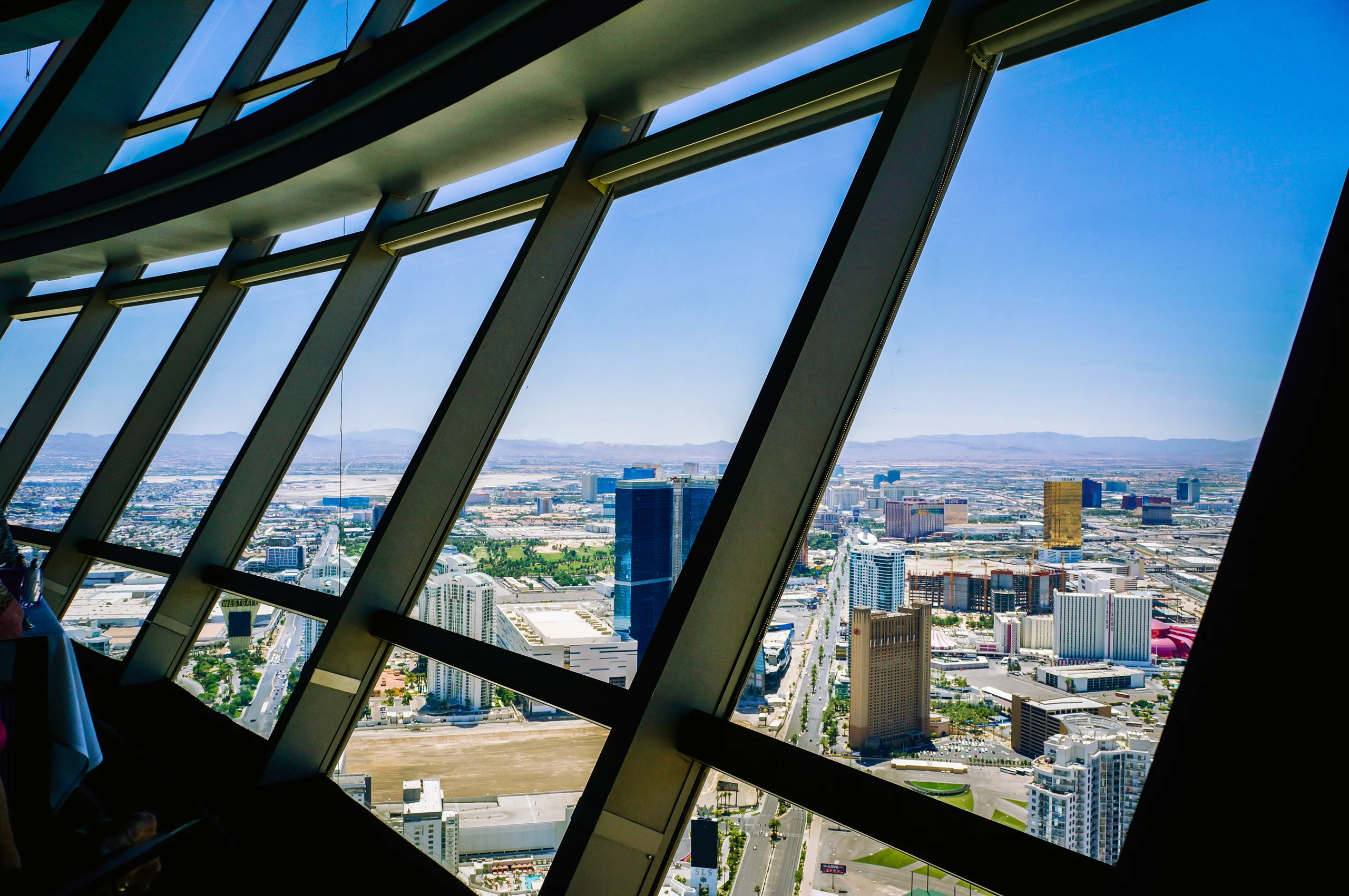
The STRAT offers a broad view of the Las Vegas Valley from the northern end of the resort corridor. The tower reaches 1,149 feet, or about 350 meters, while its indoor and outdoor observation areas occupy levels 108 and 109. That distinction matters: the full tower height is not the elevation of the viewing platform. The operator’s tower guide explains the viewing areas and ticket options.
This is a useful place to understand how Las Vegas spreads beyond its famous hotels. The Strip becomes one part of a much larger pattern of roads, residential neighborhoods and desert mountains. Daylight makes the geography easier to read; after dark, illuminated streets emphasize the scale of the valley. The enclosed viewing area also provides an alternative to spending the whole visit outside.
Choose the STRAT if that wider perspective interests you, then allow for the journey to and from the central Strip. It is more efficient as a deliberate northern stop than as an extra squeezed between Bellagio and the Venetian. Compare the observation ticket with any dining or thrill-attraction options separately, and check the operator’s access guidance when booking. A meal or additional activity changes the time needed considerably.
Plan your visit
Northern Las Vegas Boulevard, between the main Strip cluster and Downtown. Estimated time: 60–90 minutes on site, excluding transport and major queues; editorial estimate. Entry: paid observation ticket; dining and other attractions have their own conditions. Official information: STRAT Tower & Observation Deck.
In the film: #16. Watch our Las Vegas guide.
Downtown Las Vegas
Plan Downtown as its own outing. Fremont Street Experience, Circa and Container Park offer different reasons to visit, with age restrictions that matter for families.
26. Fremont Street Experience
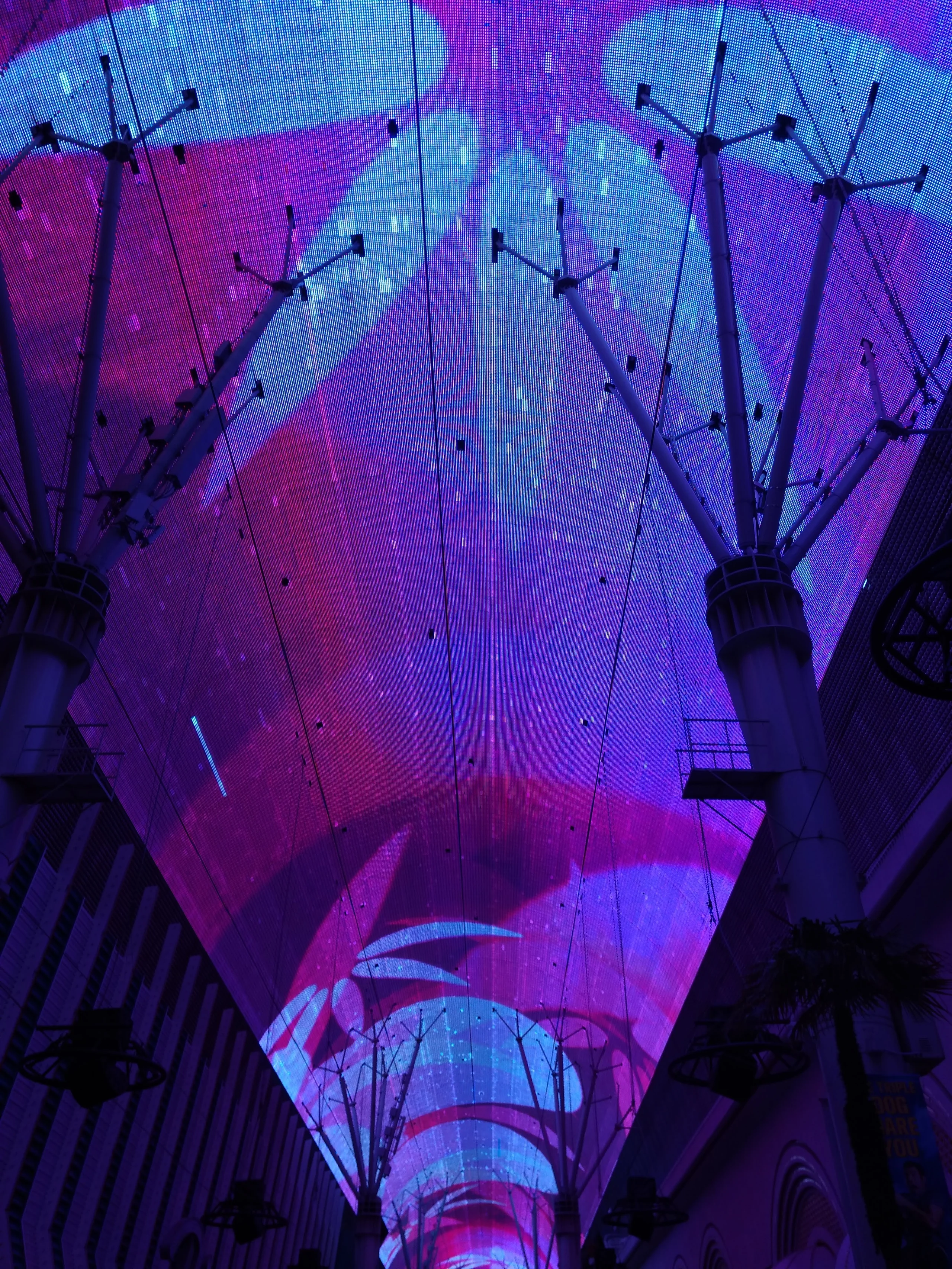
Fremont Street Experience brings a different scale and history into a Las Vegas itinerary. Downtown’s casino fronts sit close to a pedestrian corridor, while the Viva Vision canopy turns the space overhead into an illuminated display. The Golden Nugget, Four Queens and neighboring casino facades help explain why this is a separate destination from the large resort campuses farther south. The Fremont Hotel itself opened in 1956, a useful reminder that Downtown’s history predates many familiar Strip towers. The operator’s Downtown history provides that context.
Come for a walk through the signs and public spaces, then stay for a scheduled canopy show or live performance if it suits your plans. SlotZilla’s zip lines add movement above the street, but riding them is a separate paid activity. Check Fremont Street Experience’s own listings for the program and any event-specific entry conditions.
An evening visit is lively and often loud; families may prefer daylight or an earlier visit, with a plan to leave before the late-night crowd builds. Combine the western end with Circa only if everyone is 21 or older, and continue toward Fremont East for Container Park when its age rules allow. Use transport between Downtown and the Strip rather than treating them as one short walk.
Plan your visit
Area: Downtown Las Vegas. Editorial allowance: 60–90 minutes, longer with a show, meal or zip line. Ordinary pedestrian sightseeing is free; paid attractions and special events have separate conditions. Official Fremont Street Experience.
In the film: #4. Watch our Las Vegas guide.
27. Circa Resort & Casino
Circa provides a useful example of how Downtown Las Vegas incorporates its older identity into newer developments. Its most distinctive historical feature is Vegas Vickie, the neon cowgirl that first appeared above Fremont Street in 1980. The restored sign now stands indoors at its namesake cocktail lounge, where the figure can be examined at closer range than its original street-level audience could manage. Vegas Vickie’s history and current location
This makes Circa worth considering as more than a casino stop. Spend time looking at the sign’s outline, colors and placement within the lobby, then decide whether to continue with a drink or another booked experience. The contrast between a reused neon landmark and a contemporary resort is the main reason to include it in a sightseeing guide. Stadium Swim is a different experience with its own admission arrangements; it should not be confused with a quick lobby visit.
Circa fits naturally into a Fremont Street outing as an indoor stop. Its age policy is unusually important: the entire property is restricted to visitors aged 21 and over, including hotel guests and restaurant customers. A family itinerary therefore needs an alternative stop rather than an assumption that children can enter with accompanying adults. Official guest guide
Plan your visit
Fremont Street, Downtown; 20–40 minutes, excluding dining or pool experiences; public-area visit subject to 21+ entry and valid ID. Official visitor information
In the film: #25. Watch our Las Vegas guide.
28. Downtown Container Park
Downtown Container Park offers a smaller-scale stop on Fremont Street, with shops and places to eat arranged around an outdoor courtyard. Its entrance is marked by a steel praying mantis rather than a casino marquee. Its flame effects give the sculpture a different character after sunset. The operator describes a drum-circle activation, but the performance depends on operating arrangements and weather; treat it as a possible extra rather than the only reason to come. Official visitor information
Inside, the appeal is the combination of independent businesses, outdoor seating and the Treehouse play area. It works particularly well when a downtown afternoon needs a food stop or a change of pace between larger attractions. General admission is free, although special events can change access to individual areas. This is a place to browse and pause, rather than an attraction requiring a tightly scheduled visit.
Combine it with Fremont East and Fremont Street Experience, allowing time to explore the streets between them. Families should prioritize a daytime visit: the park becomes adults-only in the evening. Check the operator’s age policy before planning a later visit with children.
Plan your visit
Fremont East, Downtown; 30–60 minutes, excluding transport and extended dining; general entry free, with possible event exceptions and evening age restrictions. Official website
In the film: #28. Watch our Las Vegas guide.
Choose your visits before buying tickets
Las Vegas becomes easier to plan when you separate public sightseeing from experiences that need a booking. Seeing the Venetian’s architecture does not require a gondola ride. A Bellagio visit can combine three entries in this guide without three admission charges. By contrast, a Sphere performance or stadium tour deserves a protected block of time.
Which observation experience should you choose?
For most first visits, one paid elevated view is enough. Choose the position and experience that interests you; buying all three makes more sense for a dedicated architecture or photography trip than for a short stay.
| Experience | Main reason to choose it | Editorial time allowance on site | Planning trade-off |
|---|---|---|---|
| Eiffel Tower Viewing Deck | Close view of Bellagio’s lake and the central Strip | 45–75 minutes, before substantial queues | Fits a Bellagio–Paris outing; check outdoor access conditions |
| High Roller | A slow circuit in an enclosed cabin | About 60 minutes overall; the rotation itself is approximately 30 minutes | Includes an approach along the LINQ Promenade; choose the correct ticket type |
| STRAT Observation Deck | A broader view of the valley, mountains and resort corridor | 60–90 minutes | Requires a deliberate northern journey; combine with the north Strip or onward transport to Downtown |
Use the Eiffel Tower, High Roller and STRAT pages to compare the actual admission products. A restaurant, bar package or thrill ride may have different conditions from basic observation access.
Tickets and reservations
Book the experiences that anchor your day
Reserve a priority Sphere event, Allegiant Stadium tour or theater performance before building a route around it. Choose the indoor or outdoor gondola experience deliberately. Check Big Apple Coaster rider requirements before paying for a mixed-age group. For a day trip, check Red Rock Canyon reservations separately from the entrance-fee arrangements.
For a mostly free day, concentrate on Bellagio’s public lobby, Conservatory and lakefront, the Venetian’s public passages, the Forum Shops and exterior resort architecture. Circa’s lobby has a 21+ rule, and some venues or special events restrict access. “Free sightseeing” also excludes transport, parking, meals and any optional paid attraction.
Avoid booking several timed entries close together on opposite sides of the city. For an indoor Sphere event, read the production’s age and sensory information. For a stadium visit, confirm the specific tour and entry conditions; an event-day ticket and a guided-tour ticket are different products.
How the main clusters fit together
Four useful sightseeing areas
South Strip ↗
1–8 Welcome sign, Mandalay Bay, Luxor, Excalibur, New York-New York, MGM Grand and Allegiant Stadium.
Treat the sign and a stadium tour as deliberate appointments; use the resort tram where it fits.
Central Strip ↗
9–17 ARIA, Cosmopolitan, the three Bellagio sights, Paris, Caesars, Forum Shops and High Roller.
Combine Bellagio’s connected sights and choose one paid viewpoint.
Venetian & North Strip ↗
18–25 Venetian architecture, shopping passages, gondolas, Sphere, Wynn, Fontainebleau, Resorts World and STRAT.
A Sphere event anchors the day; farther northern resorts benefit from transport.
Downtown ↗
26–28 Fremont Street Experience, Circa and Container Park.
Use a separate transfer from the Strip. Circa is 21+; check Container Park’s evening rules.
The individual map links in the attraction directory provide a place-by-place reference. For large resorts, open the operator’s property map as well: the nearest street address may not be the entrance closest to your restaurant, show or transport stop.
Las Vegas photo spots worth planning around
These are editorial choices for architecture and recognizable views, rather than a ranking of Instagram popularity. Each location below is in Las Vegas or the adjoining resort corridor in Clark County, Nevada, United States. An elevated or interior photograph may require the admission shown; hotel-room balconies and private rooftops are not included as public photo stops.
Photo tip: choose the subject before the time of day
Daylight helps distinguish architectural details; evening lighting changes the appearance of signs, facades and water. The exact display at Sphere or Bellagio’s Conservatory can differ from the film. Keep walkways clear, stay in visitor areas and follow each venue’s photography rules.
Bellagio lakefront
Central Strip: Include the fountain patterns and hotel frontage; stay on the public promenade.
Best time: Evening for illuminated water and hotel reflections; the show follows the operator’s schedule.
Access: Free public view
Eiffel Tower Viewing Deck
Central Strip: Frame Bellagio’s lake within the surrounding resort skyline.
Best time: Late afternoon for architectural detail, or after dark for illuminated views.
Access: Viewing-deck ticket
Bellagio Conservatory
Central Strip: Combine a wide view with one floral detail; the installation changes.
Best time: Daytime for softer light through the glass roof; display access follows the calendar.
Access: Free public display access
Bellagio lobby / Fiori di Como
Central Strip: Look upward toward the colored glass while keeping reception routes clear.
Best time: Any time the lobby is accessible; expose for the colored glass rather than the surrounding darker room.
Access: Public lobby; follow house rules
Venetian exterior
Venetian area: Use the canal-side visitor paths to frame the campanile and architectural facades.
Best time: Morning or late afternoon for exterior detail; blue hour for lights and sky.
Access: Public visitor areas
Grand Canal Shoppes
Venetian area: Place a canal bridge beneath the painted sky; keep clear of boat boarding.
Best time: Any time during public access; use the indoor lighting and painted ceiling as part of the composition.
Access: Public shopping passages
Welcome sign
South of the main resort cluster: Use the designated visitor area for a centered portrait or a quieter angled composition.
Best time: Early morning for a less demanding outdoor photo stop; allow for other visitors.
Access: Free general view
Luxor exterior
South Strip: Include the pyramid and sphinx from permitted pedestrian areas.
Best time: Morning or late afternoon for the sphinx and pyramid exterior.
Access: Public exterior view
New York-New York exterior
South Strip: Combine the replica skyline and coaster track in one architectural composition.
Best time: Daylight for the skyline and track; evening for illuminated facades.
Access: Public exterior view; ride extra
The Chandelier
Central Strip: Use public circulation areas to show the hanging strands and different levels.
Best time: During public access; work with the interior light and avoid flash or obstructing circulation.
Access: Public circulation; bar seating separate
Sphere exterior
Sands Avenue area: Use a permitted sidewalk viewpoint and leave space around the sphere; displays vary.
Best time: Blue hour or after dark; the programmed exterior content varies.
Access: Free public exterior view
Fremont Street canopy
Downtown: Frame the length of the canopy with the casino signs beneath it.
Best time: After dark for canopy and neon; an earlier visit may suit families better.
Access: Ordinary pedestrian access; event rules vary
Vegas Vickie at Circa
Downtown: Show the restored neon cowgirl in its lobby setting without obstructing the lounge.
Best time: During permitted lounge access; keep the neon exposure controlled.
Access: Entire property 21+; valid ID
The Mantis at Container Park
Fremont East: Include the steel sculpture and entrance; a daylight image does not depend on a flame show.
Best time: Daylight for steel details; after dark only if entry rules and operating conditions suit.
Access: General exterior view; park entry rules apply
STRAT Observation Deck
Northern Las Vegas Boulevard: Compose a wide valley view with the Strip as one part of the scene.
Best time: Late afternoon or after dark for the valley; visibility depends on weather.
Access: Observation ticket
High Roller
LINQ Promenade: From the promenade, include the wheel’s full outline; from a cabin, watch for glass reflections.
Best time: Blue hour from the promenade; for cabin views, choose a ticket time and watch glass reflections.
Access: Exterior free; cabin requires ticket
Getting to Las Vegas and moving around
From Harry Reid International Airport
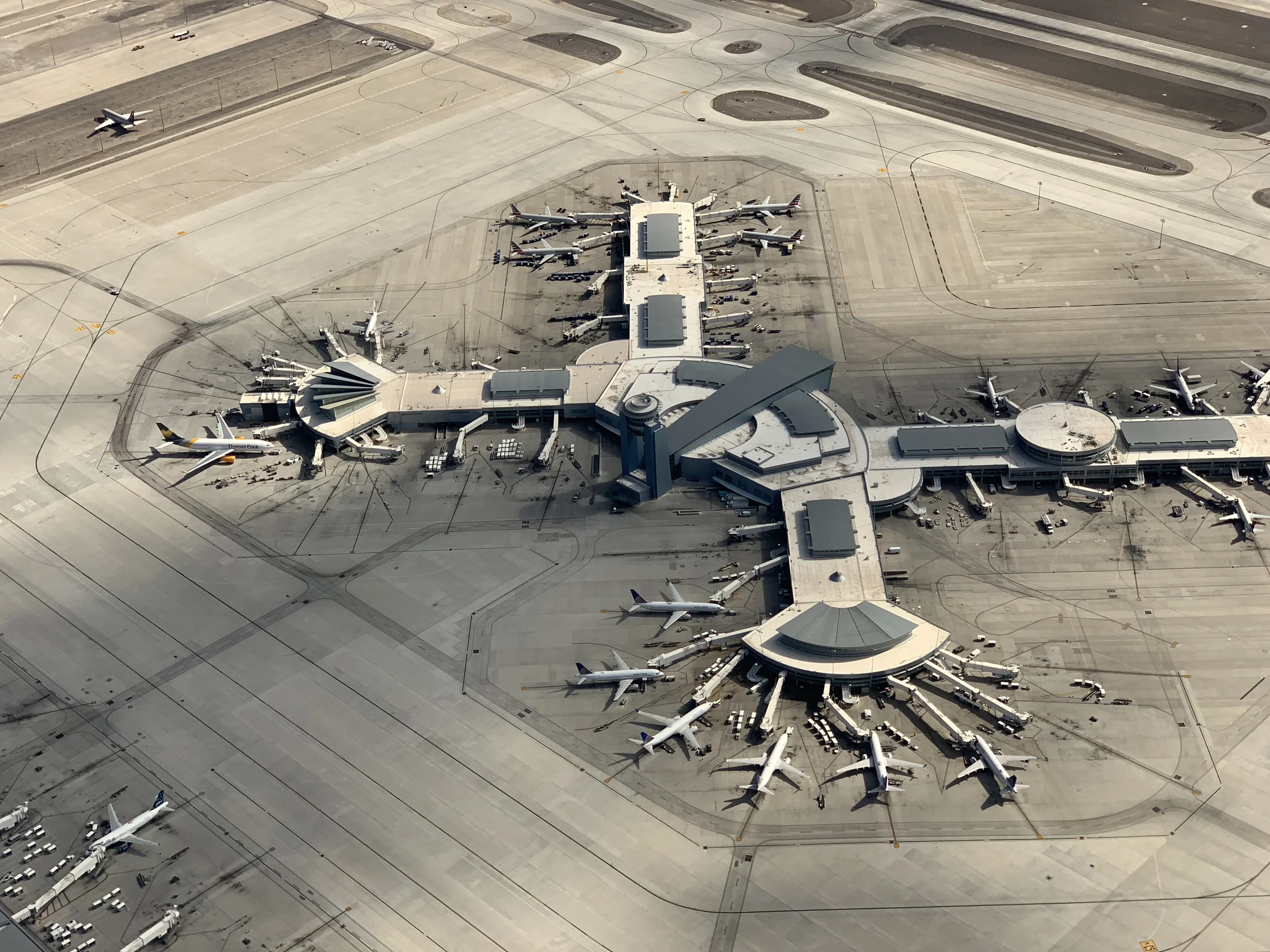
Harry Reid International Airport (LAS) is the main airport for this trip. Its official transport guide covers taxis, rideshare, buses, shuttles and rental cars. Follow the signs for the option you have chosen: rideshare pickup areas and taxi queues are separate, so ordering a car while standing at an arbitrary terminal exit can create unnecessary confusion. Airport ground transport · Taxi and rideshare information.
Public buses can be useful when their route fits your accommodation and luggage. Check the airport’s current terminal instructions and the RTC journey planner instead of relying on old route numbers. The Las Vegas Monorail does not serve the airport. A hotel near a Monorail station therefore still needs a separate airport transfer. Airport public-bus guidance.
Which transport works for which journey?
| Option | Useful for | Main limitation |
|---|---|---|
| Walking | Neighboring resorts within one cluster | Large sites, pedestrian bridges and heat can make short map distances demanding |
| RTC Deuce | Traveling along the Strip and between the Strip and Downtown | Road traffic and stops affect journey time; check the current route and fares |
| Las Vegas Monorail | East-side resort and Convention Center journeys between MGM Grand and SAHARA | No airport or Downtown service; stations can involve a substantial walk through a resort |
| MGM resort trams | Excalibur–Luxor–Mandalay Bay and the ARIA/Bellagio/Crystals/Park MGM area | Separate, limited routes; they do not form a continuous rail line along the Strip |
| Taxi or rideshare | Direct transfers, late returns, luggage and journeys outside the main corridor | Use designated hotel pickup points; traffic and event demand affect the journey |
| Rental car | A desert excursion or a wider Nevada–Arizona road trip | Parking, collection and driving can add friction to a day of central-Strip sightseeing |
Official references: RTC visitor services, RTC fares and passes, Monorail route map and MGM transportation.
A car is optional for a trip focused on the Strip and Downtown. If you rent one for an excursion, compare collecting it just for that part of the trip with keeping it throughout the stay. When choosing a rail or bus pass, work out your actual journeys first; passes from different operators are not automatically interchangeable.
When to visit Las Vegas
For a walking-heavy visit, spring and autumn are generally the most comfortable starting points. Summer requires more attention to heat and outdoor exposure, while winter evenings can feel cold. These are planning conclusions from the area’s desert climate, not a guarantee of conditions on particular dates. National Weather Service climate information.
| Season | How to adapt the guide |
|---|---|
| Spring | Use the milder parts of the day for resort exteriors and consider a desert excursion; keep a layer for cooler or windy periods |
| Summer | Put outdoor stops early or late, protect an indoor midday break, and reduce walking distances; check the forecast before any desert outing |
| Autumn | Combine daytime architecture with evening shows, allowing for changing temperatures |
| Winter | Bring layers for exposed viewpoints and evening walks; choose a hotel for location and indoor convenience rather than assuming pool time |
During heat, bring water, use shade and air-conditioned breaks, and shorten the outdoor plan when necessary. Desert thunderstorms can produce hazardous flooding; follow local forecasts and road or park instructions for excursions. See NWS heat guidance and the Las Vegas forecast office.
Where to stay for this itinerary
Choose a base around the places you expect to revisit, especially your evening activities. A room with a distant skyline view can be less convenient than a less dramatic room near the walks and restaurants you will actually use.
Central Strip, around Bellagio and Paris
A first visit focused on the largest concentration of sights
Compare the complete stay cost and how far the room elevators are from the street
South Strip, around MGM Grand and the themed resorts
Southern landmarks, shows and a stadium-centered visit
Northern resorts and Downtown require longer transfers
Venetian–Wynn area
Venetian attractions, dining and a Sphere-focused stay
Check the actual route to the event entrance and hotel pickup point
North Strip, around Resorts World and Fontainebleau
A stay centered on those resorts, their dining or events
Fewer of the central guide’s stops fall into a short walk
Downtown
Fremont Street, neon history and an evening-focused Downtown plan
Allow transfers for Strip sightseeing and assess the noise environment; Circa is 21+
Compare the total reservation cost, including applicable resort fees, taxes, parking and occupancy conditions. These vary by property and booking. A hotel’s advertised pool, club or rooftop may also have separate access rules. Read the booking terms for the room you are buying rather than assuming that all resort facilities are included. MGM’s fee and reservation guidance.
What and where to eat between attractions
Make meals part of the route rather than another series of cross-city transfers. On a north-Strip day, Famous Foods Street Eats at Resorts World offers several food counters in one place, useful when a group wants different dishes. Consult the resort’s dining directory for the current selection rather than choosing a dish from an old menu.
Around Caesars Palace and the Venetian, the Forum Shops and Grand Canal Shoppes make it possible to combine a restaurant break with the architecture already on your route. For a special meal, choose the restaurant first and reserve it; do not assume a good view will be available simply because the venue overlooks a landmark.
Las Vegas dining also extends beyond hotel restaurants. The Spring Mountain Road/Chinatown area, west of the Strip, contains Chinese regional cooking alongside Japanese, Korean and other Asian cuisines. It deserves a deliberate food outing rather than a detour squeezed between two timed attractions. The tourism authority’s Chinatown guide provides a useful introduction.
For variety, combine a quick food-hall meal, one restaurant you actively want to try, and a casual Downtown stop. A buffet or steakhouse can be part of that plan, but neither needs to dominate every day. Allow a real meal break before an evening show and check dietary requirements directly with the restaurant.
A buffet: variety in one sitting
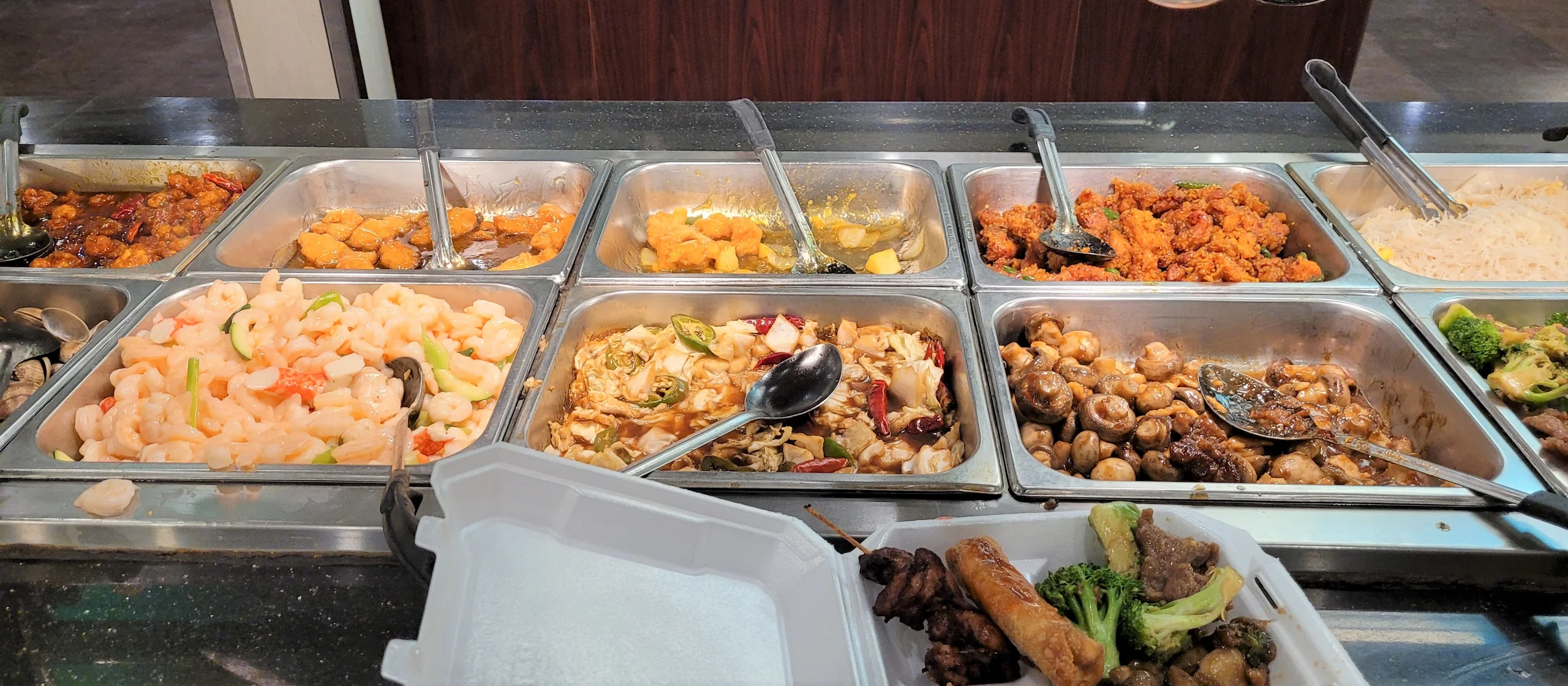
Buffets are one of Las Vegas’s familiar dining formats: several stations let a group choose different dishes without ordering separate restaurant meals. The image illustrates the format rather than a particular hotel buffet. Check the actual menu, service period and reservation arrangements before choosing one.
Treat it as a substantial lunch or dinner, with time to sit down. Compare the complete price and included drinks; a long buffet immediately before a fixed-time show leaves little flexibility.
A steakhouse meal: make dinner the evening’s anchor

A grilled steak is a straightforward choice for a longer sit-down dinner. Ask about the cut, cooking preference and whether sides are included. The photograph shows the dish style; individual restaurant presentation and portion sizes vary.
Reserve a restaurant that fits your route around Bellagio, Caesars or the Venetian, then allow time for service and the walk to your next venue. A viewpoint, show and lengthy dinner are separate commitments.
Dim sum and Chinatown: small plates to share
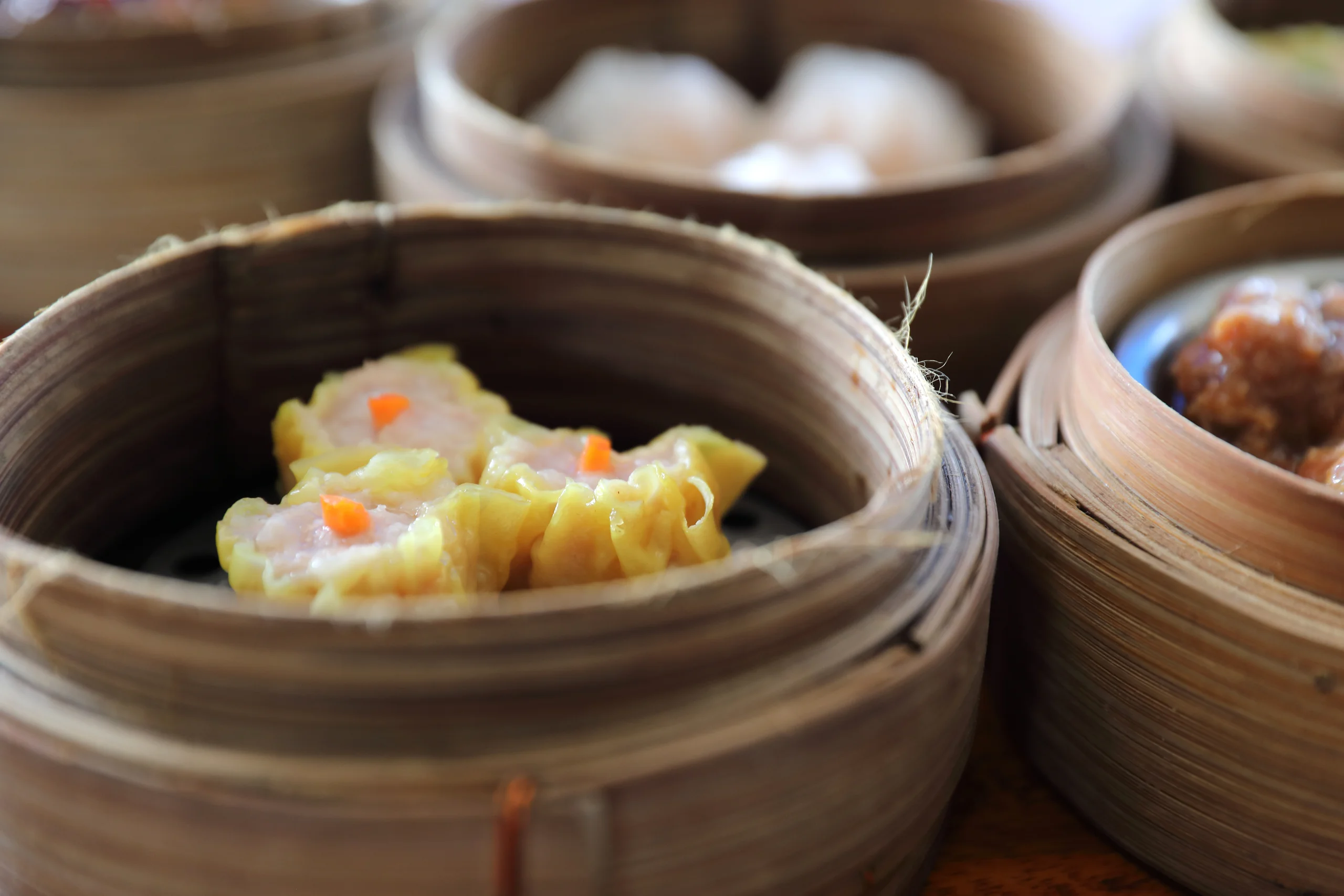
Dim sum offers steamed dumplings and other small dishes that work well for sharing. Ask which fillings contain pork, shrimp or other allergens, and order in stages if portion sizes are unfamiliar. It is one option within the much wider range of Asian cuisines around Spring Mountain Road.
Make Chinatown a deliberate food outing, with transport from the Strip and an unhurried meal. Confirm that your chosen restaurant serves dim sum at the time you intend to visit. Read the tourism authority’s Chinatown guide.
Costs: where to save and where to spend
| Approach | What it looks like | What to account for |
|---|---|---|
| Mostly free sightseeing | Public architecture, Bellagio’s main free sights, the Welcome sign and ordinary Fremont Street sightseeing | Transport, food, parking and any special-event restrictions |
| Free sights plus one viewpoint | The same core route with Eiffel Tower, High Roller or STRAT | The exact admission product, ticket validity and queue allowance |
| One major booked experience per day | A Sphere production, stadium tour, show or another chosen attraction | Arrival time, ticket conditions, meals and the transport needed to reach it |
| Resort-focused stay | Pool time, dining, shows and fewer sightseeing transfers | Full room costs, access rights and separately charged experiences |
Choose paid experiences by the time you want to spend doing them. A sightseeing pass is useful only if its actual inclusions, reservation rules and validity match that plan. Avoid filling the day with unwanted activities to justify a pass already purchased.
Visiting with children and planning for accessibility
Families can build a substantial visit around the Conservatory, fountains, themed architecture, public shopping passages and selected ticketed attractions. Circa is exclusively 21+, including its restaurants and hotel. Container Park has evening age restrictions, so plan a daytime family visit and check its rules. The Big Apple Coaster has a minimum height of 54 inches without shoes, approximately 137 centimeters; read the full rider requirements before booking. Circa · Container Park · Coaster requirements.
For a mixed-age group, choose a standard observation product rather than assuming a bar package has the same admission rules. Check the individual show’s age guidance. A grand hotel entrance is not an invitation for children to remain in gaming areas; follow the property’s marked public routes and staff directions.
For travelers with reduced mobility, the biggest planning issue can be the cumulative distance through resorts and between entrances. Identify suitable entrances, elevators and pickup locations before the day begins. Sphere provides accessible-ticket guidance, while Allegiant offers accessible tours but also notes the substantial length of its route and asks visitors to arrange accommodations in advance. An accessible venue does not make every approach, seating product or optional activity equivalent. Sphere access information · Allegiant tour access.
An indoor plan for heat, wind or rain
Spend a central-Strip morning with Bellagio’s lobby and Conservatory, then add the Cosmopolitan or ARIA according to your interests. Use transport for the move to the Venetian, where the colonnade, Grand Canal Shoppes and an optional indoor gondola provide another self-contained block. Reserve a relaxed lunch rather than turning every indoor stop into a rushed crossing between hotels.
For a Downtown alternative, the Mob Museum provides a more substantial indoor visit than moving repeatedly between casino floors. Outdoor terraces, rides and displays depend on conditions, so keep one flexible block in the day and check the operator before setting off.
Las Vegas itineraries for 1, 2, 3 and 4 days
Build the day around one appointment
Add meals, transfers and entry queues. A major indoor event replaces other visits in a short itinerary.
These plans assume a central-Strip base, ordinary sightseeing rather than a major event day, and a mix of walking and transport. They include time for meals and pauses. Start with the booked experience that matters most, then adjust the surrounding visits. The attraction numbers refer to this article, not the film ranking.
1 Day: the central Strip and an evening choice
Morning: Start with Bellagio’s lobby and Conservatory, then explore Caesars Palace and the Forum Shops. Stop for lunch in the same area. Keep these as focused visits rather than attempting every shopping corridor.
Afternoon: Choose the Venetian complex or ARIA and the Cosmopolitan. Adding a gondola ride means giving it a proper booking and waiting allowance; omit an additional hotel interior to make space.
Evening: Watch a Bellagio fountain performance and, if desired, visit the Eiffel Tower deck. Alternatively, transfer to Downtown for Fremont Street and dinner. Choose one evening plan: a Downtown transfer, a central-Strip viewpoint and a theater performance together would make the day unnecessarily tight.
2 Days: selected highlights
Best for: a first visit with one central-Strip day and one choice of southern landmarks or Downtown. These are two full sightseeing days; airport travel is additional.
Day 1 — Bellagio, Caesars and Venetian. Begin with Bellagio’s lobby and Conservatory, then explore Caesars Palace and selected Forum Shops passages. Pause for lunch. Transfer or walk onward to the Venetian, keeping a gondola optional. Finish with dinner and the Bellagio fountains; choose one viewpoint only if its ticket and remaining time fit.
Day 2 — choose your second area. For themed architecture, start with the Welcome sign, then Mandalay Bay, Luxor and Excalibur, with a real lunch break. Add New York-New York or a prebooked Shark Reef visit, rather than both as substantial activities. For Downtown history and neon, instead give the main daytime block to the Mob Museum or Container Park, pause for lunch, and see Fremont Street later. Circa is for a 21+ group only.
Booking and swaps: a Sphere production, stadium tour or long restaurant meal replaces the afternoon’s casual resort visits. Keep northern resorts, desert excursions and a second observation deck for a longer trip. Do not combine both versions of Day 2 into a single checklist.
3 Days: a first-visit highlights plan
| Day | Morning and afternoon | Evening | What to leave out if you add a major booking |
|---|---|---|---|
| 1 — Central Strip | Bellagio’s lobby and Conservatory; Caesars and Forum Shops; lunch, then ARIA or Cosmopolitan | A Bellagio fountain performance, dinner and one chosen viewpoint or show | Drop the extra resort interior if a long show or extended restaurant meal is the priority |
| 2 — Southern landmarks | Welcome sign; Mandalay Bay, Luxor and Excalibur; lunch near the southern resort cluster; New York-New York and a brief MGM Grand stop | A relaxed dinner or a booked show | A stadium tour or Shark Reef visit replaces several casual interiors; it is not an extra minute-long stop |
| 3 — Venetian and Downtown | Venetian architecture and shops; optional gondola; lunch; choose Wynn or an indoor Sphere event | Transfer to Downtown for Fremont Street, with Circa only for a 21+ group | A full Sphere experience replaces the Wynn detour; a family Container Park visit belongs earlier in the day, before evening restrictions |
This is a highlights itinerary. It deliberately does not promise every northern resort or every paid viewpoint. With children, move Downtown into the afternoon or keep it as a separate daytime outing.
4 Days: broader coverage with the northern resorts
Day 1 — Central Strip, article 1 and 9–16. Begin with ARIA and the Cosmopolitan, continue through Bellagio’s lobby and Conservatory, and take a proper lunch break. Explore Caesars Palace and the Forum Shops later. Keep Paris/Eiffel Tower and the fountains for the appropriate part of the evening. If you book the deck, a performance or a long dinner, reduce the morning interiors. This is a full day of nearby sights, not eight equally long visits.
Day 2 — South Strip, article 2–8. Start with the Welcome sign, then group Mandalay Bay, Luxor and Excalibur. After lunch, choose the coaster and MGM Grand or give that block to an Allegiant Stadium tour. An exterior stadium look and a guided interior visit require different plans. To experience the stadium, coaster, aquarium and a show without rushing, spread this cluster over an additional day.
Day 3 — LINQ, Venetian, Sphere and Wynn, article 17–22. Choose the High Roller if it is your preferred observation experience, then spend time at the Venetian’s architecture, shopping passages and optional gondola. Have lunch within the cluster. An indoor Sphere booking becomes the main afternoon or evening event; Wynn can be an alternative or a shorter resort visit if the timing works. Avoid buying every optional ticket in this block automatically.
Day 4 — Northern resorts and Downtown, article 23–28. Pair Fontainebleau with Resorts World and use one of them for lunch. A STRAT visit can follow before a transfer to Downtown. Families should put Container Park ahead of the late-night part of the plan and omit Circa; adults can combine Circa with Fremont Street. If a museum is the priority, shorten the northern-resort visits and protect a separate museum block.
Four days covers the geographic groups behind all 28 entries. Five or more days is more comfortable if “seeing everything” means entering every paid attraction, rather than selecting views and public spaces. A Red Rock Canyon or Hoover Dam outing takes its own block of the trip and should replace a city day or extend the stay.
Four additional places beyond the film
These options are not part of the film’s 28-place selection. Add them because they suit your interests, not to increase the number of stops.
The Neon Museum
The Neon Museum adds context to the signs seen around Downtown by preserving examples from the city’s changing streetscape. Its outdoor Neon Boneyard makes this a history-and-design visit rather than simply another illuminated casino frontage. Select the visit or tour that interests you and check weather, entry and photography rules before booking. Editorial allowance: around 1–2 hours plus transport, depending on the chosen product. Official visit information · Google Maps.
The Mob Museum
The Mob Museum occupies a former federal courthouse and post office completed in 1933. Its historic courtroom hosted a 1950 Kefauver Committee hearing, connecting the building itself with the history examined in the exhibits. It is a useful Downtown option for visitors who want more social history between the resort visits. Some material is graphic; consult the museum’s family guidance. Editorial allowance: 2–3 hours plus transport. Historic courtroom · Visitor FAQ · Google Maps.
Red Rock Canyon National Conservation Area
Red Rock Canyon, west of the city, changes the trip from resort architecture to desert landscapes. Its one-way 13-mile/21-kilometer Scenic Drive provides access to viewpoints and trailheads. Allow at least a half-day excursion for a scenic circuit with short stops, and more for hiking; transport is additional to time inside the area. Seasonal timed-entry reservations and entrance charges are separate considerations. BLM visitor information · Official timed-entry booking · Google Maps.
Hoover Dam
Hoover Dam belongs in a separate excursion toward Boulder City and the Nevada–Arizona border. Decide whether you want the exterior viewpoints, Visitor Center, Power Plant Tour or the more extensive Dam Tour: they have different purchase arrangements and access conditions. Protect at least a half-day travel block rather than attaching the dam to the end of a full Strip itinerary. Check accessibility for the exact tour, since access to one product does not imply access to all tunnels and routes. Bureau of Reclamation visitor guide · Google Maps.
Frequently asked questions
How many days do you need in Las Vegas?
Three to four full days is a useful first-visit plan for the Strip, Downtown and several chosen experiences. Two days suits highlights. Allow additional days for several shows, all the paid attractions that interest you, or a desert excursion; the 28 entries are not intended as a one-day checklist.
Can you enjoy Las Vegas without gambling?
Yes. This guide focuses on architecture, public art, gardens, shows, views, shopping passages and nearby history or landscapes. The Bellagio sights, Venetian architecture and free public exteriors can fill substantial time, with paid experiences added according to your interests.
What can you see for free?
The Bellagio fountains and Conservatory, the Welcome sign, many public resort passages and ordinary Fremont Street sightseeing are useful starting points. Check the individual venue and event rules. Free entry does not include meals, transport, pools, reserved seating or optional attractions.
Is Downtown the same as the Strip?
No. Downtown centers on Fremont Street and the older city grid. The main resort Strip lies farther south, much of it in unincorporated Clark County. Plan a transfer between them. Clark County location guidance.
Do you need a car?
A Strip-and-Downtown visit can work with clustered walks, public transport and occasional taxis or rideshare. A rental car becomes more useful for desert excursions or a wider road trip. Check parking costs and the practical route from the garage to the places you want to visit.
Does the Monorail go to the airport or Fremont Street?
No. Its route runs between MGM Grand and SAHARA on the eastern side of the resort corridor. Use a separate airport transfer and a suitable bus or road transfer for Downtown. Official route map · Airport transport.
Which is better: the Eiffel Tower, High Roller or STRAT?
Choose the Eiffel Tower for the close central-Strip and Bellagio view, the High Roller for an enclosed moving viewpoint, or the STRAT for the wider valley panorama. Location and experience matter more than collecting all three tickets. Their public viewing products and optional packages differ.
Can you visit resort attractions without staying at the hotel?
Many public lobbies, shopping passages and separately ticketed attractions welcome non-guests. Guest-room floors, pools, lounges, clubs and reserved dining spaces have their own rules. Check the specific experience rather than treating access to the hotel entrance as access to every facility.
Is this itinerary suitable for children?
It can be adapted around daytime architecture, gardens, fountains and suitable ticketed activities. Circa must be omitted for anyone under 21; Container Park has evening age restrictions. Check each ride and show’s own requirements, and keep the daily walking load realistic. Circa rules · Container Park rules.
Should you reserve Sphere before arrival?
If a particular production or event matters to the trip, book it before building the day around it. Reading the event description is essential because the indoor program is distinct from the free exterior display. Confirm the arrival route, ticket conditions and event-specific guidance through Sphere’s official website.
Sources and editorial approach
This guide combines the places identified in the accompanying Let’s Visit film with independently checked operator, museum, transport and public-authority information. The attraction selection is editorial. Visit durations and itinerary choices are planning estimates; access conditions and event programs should be checked through the linked official pages before travel.
The descriptions link to the relevant evidence and visitor information. Useful reference groups include:
- City geography and history: City of Las Vegas history and Clark County.
- Bellagio: Fountains, Conservatory and Chihuly’s Fiori di Como account.
- The Venetian: Resort history, Grand Canal Shoppes and gondola information.
- Caesars and viewpoints: Caesars Palace, Forum Shops, High Roller and STRAT.
- Resort art and public interiors: ARIA collection, the Chandelier and Wynn Lake of Dreams.
- North-Strip resorts: Fontainebleau and Resorts World.
- Ticketed venues: Sphere, Allegiant Stadium tours, Big Apple Coaster and Shark Reef.
- Downtown: Fremont Street Experience, Circa guest rules and Container Park.
- Transport and climate: Harry Reid International Airport, RTC, Monorail, MGM trams and National Weather Service.
- Additional visits: Neon Museum, Mob Museum, Red Rock Canyon and Hoover Dam.
Which Las Vegas attraction would you plan your day around: the architecture, a show, a view or an excursion into the desert?
GetYourGuide links in this article are affiliate links. We may earn a commission from bookings made through them.