
NIAGARA FALLS · TRAVEL GUIDE
Niagara Falls: the USA & Canada
Find your way between the viewpoints, islands and boat trips on both sides of the border.
By Let’s Visit By Radon · About 37 minutes
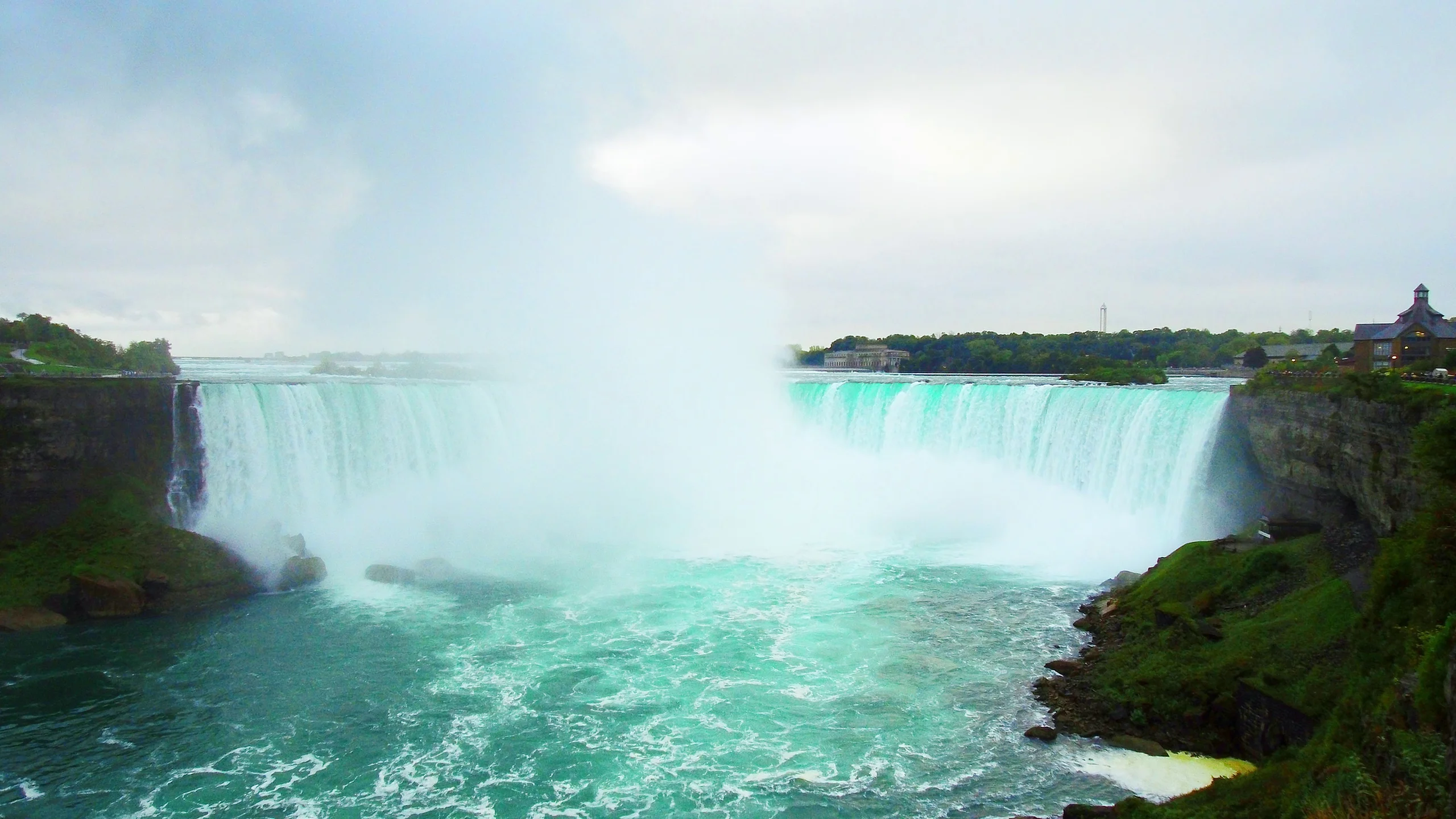
Niagara Falls is best understood from several viewpoints. From the Canadian riverfront, the waterfalls spread across the gorge in a broad panorama. On the American side, park paths lead beside the river, onto islands and close to the places where the water drops. A boat trip adds the view from below; an evening return reveals the illuminated falls. Together, these perspectives explain why a visit can easily fill more than a quick photo stop. The official Canadian park guide and American park map show how the main viewing areas fit together.
How much time to allow
For a first visit, two days and one overnight stay is a useful planning target. That gives you time for both countries, one boat excursion, a second attraction and the waterfalls after dark, with room for meals and border formalities. A single day still works well if you concentrate on one side; a third day opens up the downstream gorge, gardens or nearby historic towns.
This guide covers Niagara Falls, Ontario, and Niagara Falls, New York, with clearly identified excursions beyond the central falls area. It explains which viewpoints to prioritize, how the main attractions differ, what to book, where to stay and how to organize a realistic visit.
Scope
Ontario and New York
Best pace
Two days and one overnight stay
Book first
One boat trip or close-up attraction
Getting around
Walk each side; allow time for the border
Niagara Falls at a glance
| Planning question | A useful starting point |
|---|---|
| How long should you stay? | Allow two days for both sides at a comfortable pace; use one day for a focused visit or three for regional excursions. |
| Where are the broadest classic views? | Start with the Canadian falls promenade, then move toward Table Rock for a close view of the Horseshoe Falls brink. |
| Where can you walk beside the waterfalls? | Explore the American park, especially Prospect Point and the Goat Island viewpoints. |
| Which boat should you choose? | Maid of the Mist departs from New York; Niagara City Cruises departs from Ontario. Choose the departure side that fits your day. |
| Can you see the falls free? | Public parkland provides free viewing on both sides. Parking, boat trips and other attractions are separate. |
| Can you cross on foot? | Rainbow Bridge has a pedestrian crossing, subject to international border requirements. |
| What needs checking close to travel? | Boat seasons, attraction access, ticket procedures, construction notices, transport timetables and border documents. |
The free-access distinction is confirmed by New York State Parks and Niagara Parks. For the bridge, use the official pedestrian information.
In this guide
- Watch Niagara Falls in 4K
- Understand the three waterfalls
- Choose between the Canadian and American sides
- Explore the Canadian side
- Explore the American side
- Choose your boat trip and close-up attraction
- Find the best viewpoints and photo opportunities
- Find the best Instagram photo spots · Google Maps
- See the falls at night
- Explore the gorge and nearby destinations
- Plan one, two or three days
- Cross the border
- Get to Niagara and travel locally
- Decide when to visit and where to stay
- Plan tickets, accessibility and family visits
- Read the FAQ and final checklist
Watch Niagara Falls in 4K
Watch the accompanying Niagara Falls film in 4K for a scenic introduction, then use this guide to plan a visit to the American and Canadian sides.
Watch the Niagara Falls film on YouTube. This scenic film combines views from both countries with instrumental music; it is a visual companion to the guide.
Understanding Niagara: three waterfalls, two countries and one river
Horseshoe Falls, American Falls and Bridal Veil Falls
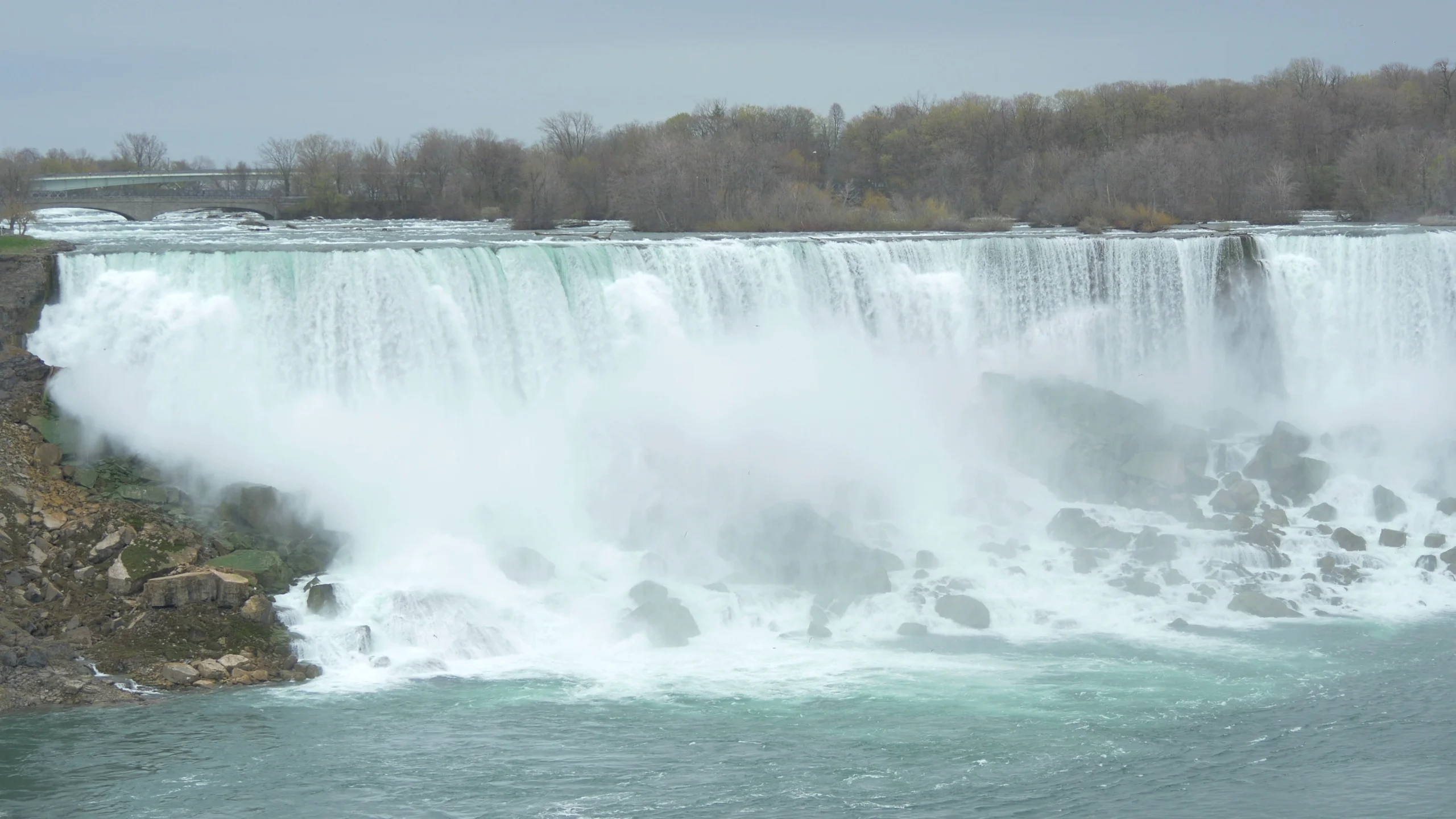
The name Niagara Falls refers to three waterfalls on the Niagara River. The river carries water from Lake Erie toward Lake Ontario, linking two of the Great Lakes. The American and Bridal Veil Falls are entirely in New York; the larger Horseshoe Falls sits along the international boundary and is commonly called the Canadian Falls. These names describe parts of one connected landscape. Official geographical overview
| Waterfall | How to recognize it | Useful viewing approach |
|---|---|---|
| Horseshoe Falls | The broad, curved waterfall with a large plume of mist. | Compare the Canadian panorama with the brink views at Table Rock and Terrapin Point. |
| American Falls | The wide waterfall on the New York side, with a conspicuous rock pile below. | View it across the river from Canada and from the Prospect Point area in the American park. |
| Bridal Veil Falls | The narrower waterfall beside the American Falls, separated from it by Luna Island. | See its setting from Canada, then approach it from Luna Island or Cave of the Winds. |
The waterfall names and relative scale are described by Destination Niagara USA; the American viewpoints appear in the park’s overlook guide.
The visible height of Niagara can be confusing because different measurements use different endpoints. In particular, the American Falls drops onto a talus pile of fallen rock, so the drop to that pile differs from the height measured down to river level. For most visitors, recognizing the three falls and their position is more useful than comparing figures that measure different things. Niagara Parks geology and figures
How the gorge formed
Niagara’s present landscape developed after the last Ice Age. As drainage patterns changed, water flowed across the Niagara Escarpment and wore away the rock beneath the falls. The waterfall gradually retreated upstream, leaving the gorge behind it.
The International Joint Commission places the earlier falls near present-day Queenston, Ontario, and Lewiston, New York, about 12,500 years ago. It describes an upstream migration of roughly 11 kilometres, or 6.8 miles, to the present Horseshoe Falls crest. The shape and rate of erosion have changed over time. International Joint Commission: Niagara Falls is Moving
This history adds meaning to a visit downstream. At the central falls, you see the current edge of the process. In the gorge, you see the channel that process helped create. A visit to the rapids therefore broadens the story beyond the waterfall itself.
A landscape shaped by people as well as water
Indigenous connections to the Niagara region long predate its modern tourism industry and continue today. Niagara Parks highlights places where visitors can learn more, including the Landscape of Nations Memorial at Queenston Heights and the reproduction of Onondaga faithkeeper and artist Oren Lyons’s Maid of the Mist and the Thunder Beings at Journey Behind the Falls. These provide specific cultural context beyond the familiar tourism imagery. Niagara Parks: Indigenous culture
The river is also a managed source of electricity. The 1950 Niagara Treaty establishes minimum flows over the falls to protect their scenic appearance, while allowing water beyond those requirements and other priority uses to be shared for hydropower. The minimum scenic flows vary by season and time of day. International Joint Commission: the Niagara Treaty
The Power Station attraction on the Canadian side makes that engineering story tangible. It helps explain a landscape where tourism, conservation and electricity generation have developed alongside one another.
Is the Canadian or American side better?
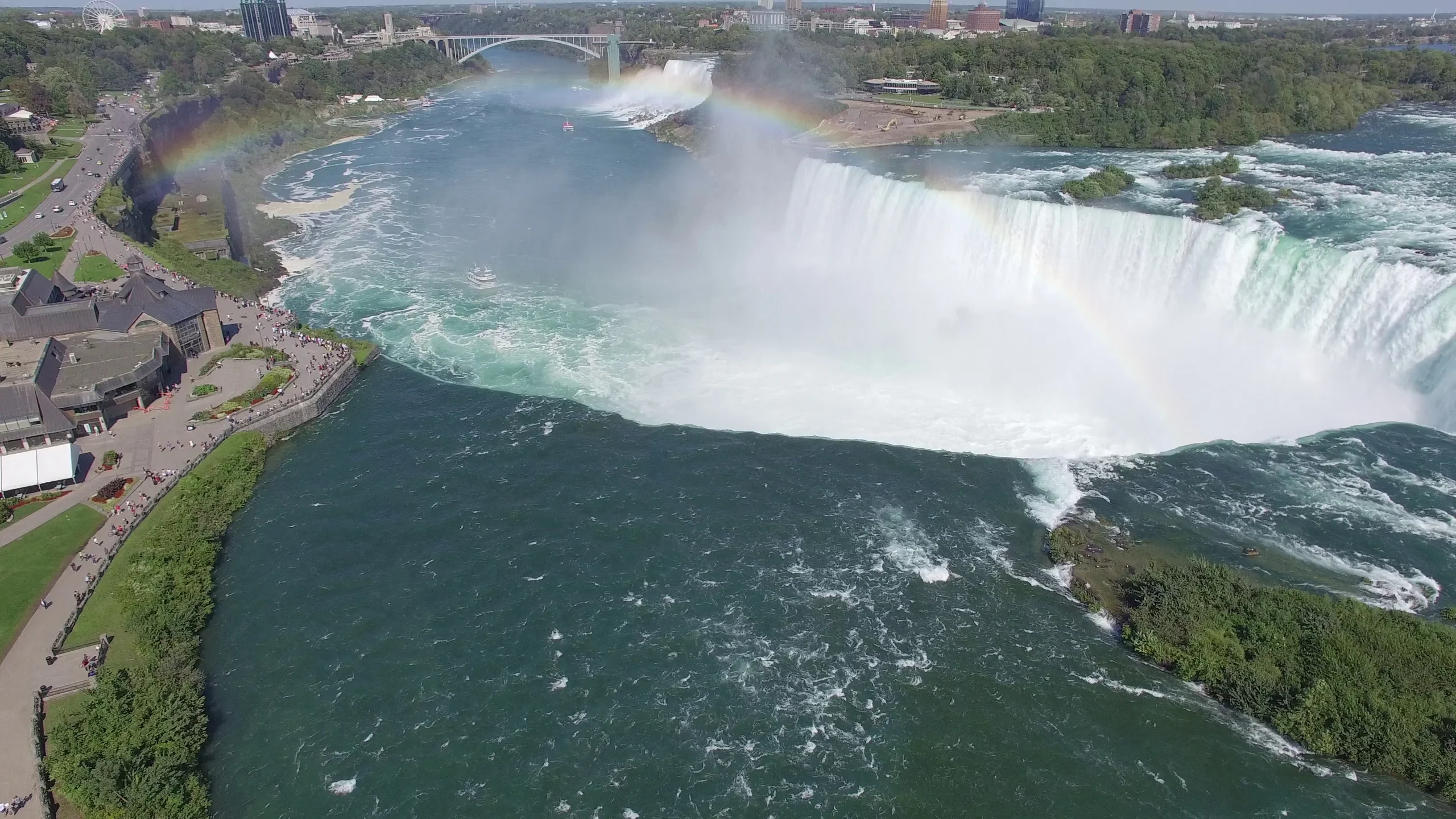
For a first broad view, start in Canada. For a day built around riverside paths and island viewpoints, give the American park plenty of time. The strongest itinerary combines the two, provided everyone in your party can enter and return across the border.
The comparison below is an editorial guide to choosing a visit, based on the locations and experiences described in the following sections.
| Your priority | Canadian side | American side |
|---|---|---|
| A wide view of the waterfalls | The promenade offers a useful overall composition across the gorge. | The Observation Tower adds a wider perspective to the park’s closer viewpoints. |
| Standing near the brink | Table Rock brings you beside Horseshoe Falls. | Prospect Point, Luna Island and Terrapin Point provide several different approaches. |
| A boat excursion | Niagara City Cruises. | Maid of the Mist. |
| A close encounter from land | Journey Behind the Falls. | Cave of the Winds. |
| Hydroelectric history | Power Station exhibits and the former discharge tunnel. | Historic context within the park and further regional sites. |
| A walk with frequent photo stops | Follow the riverfront and pause in Queen Victoria Park. | Build a circuit around the mainland viewpoints and Goat Island. |
| A short visit without a border crossing | Choose it when your trip is based in Canada. | Choose it when your trip is based in the USA. |
You can have a rewarding Niagara visit from either country. If your available time is short, keep the day geographically coherent. A relaxed promenade walk and one well-chosen attraction usually leave more room to appreciate the falls than several reservations separated by repeated border crossings.
The Canadian side: panoramic views and experiences below the falls
Table Rock and the Horseshoe Falls brink
Table Rock is a useful place to begin a Canadian-side visit because it puts you beside the lip of Horseshoe Falls. Watch the river approach the edge, then follow the curve as the water disappears into the mist below. The viewpoint offers a different sense of scale from the wider views farther along the promenade.
Inside Table Rock Centre, the Niagara Parks welcome centre provides visitor information and help with attraction planning. It operates year-round and is directly beside Horseshoe Falls. This makes it a practical orientation stop before arranging the rest of the day. Official welcome-centre information
Give the outdoor viewpoint time of its own. Stand back for the curve of the brink, then move along the public path to see how the shape changes. When spray blows toward the railing, keeping a little distance can produce a clearer photograph and a more comfortable pause.
Plan your visit: Allow around 30–45 minutes for the viewpoint and orientation, longer if photography is a priority. Pair it with the promenade, Journey Behind the Falls or the Power Station, according to your ticket times.
The falls promenade and Queen Victoria Park
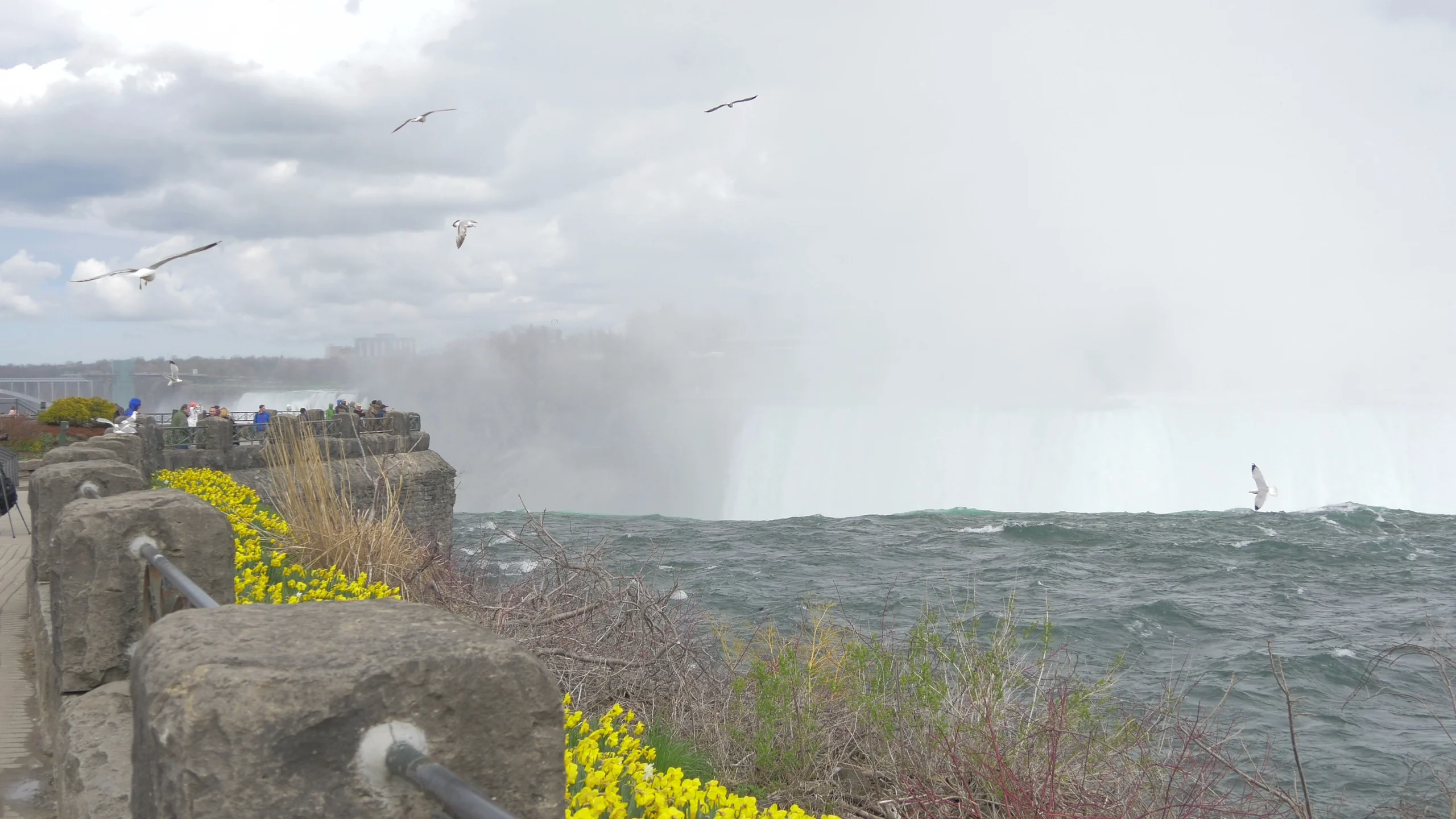
The Canadian riverfront is where Niagara becomes easiest to read as a whole. Walking along it gives you successive views across to the American Falls and Bridal Veil Falls, followed by changing angles toward Horseshoe Falls.
Queen Victoria Park adds gardens, lawns and benches to this waterfront setting. Its planted areas make useful pauses between viewpoints, particularly when you want to stop looking through a camera and simply watch the changing spray. Niagara Parks lists the park as accessible and open year-round. Queen Victoria Park
For a first visit, resist treating the promenade as a corridor between ticketed attractions. It is one of the main experiences. Walk part of it before committing to your paid activities: the view can help you decide whether you most want a boat trip, an elevated panorama or a closer encounter beside the falls.
Plan your visit: Set aside roughly 1–2 hours for an unhurried riverfront walk with stops. This overlaps with time at Table Rock rather than necessarily adding a separate two-hour block. Public park access is free; parking and individual attractions are separate.
Journey Behind the Falls
At Journey Behind the Falls, an elevator takes visitors roughly 125 feet below ground into a tunnel system behind Horseshoe Falls. Openings in the rock reveal the moving curtain of water, while outdoor viewing areas provide a close side-on perspective beside the base. The experience emphasizes the proximity and force of the waterfall. Official destination information
The tunnel portals and outdoor platforms serve different purposes. At the portals, the water dominates the opening and limits the wider view. Outside, you can better understand the height and volume of the falls. If the broad panorama is your main goal, enjoy the promenade as well.
Plan your visit: Budget around 1–1½ hours including ordinary waiting and time to look around. Confirm the available platforms for your date, especially in winter, when ice can restrict access. Visitors requiring a step-free route should check the precise current arrangement with the operator.
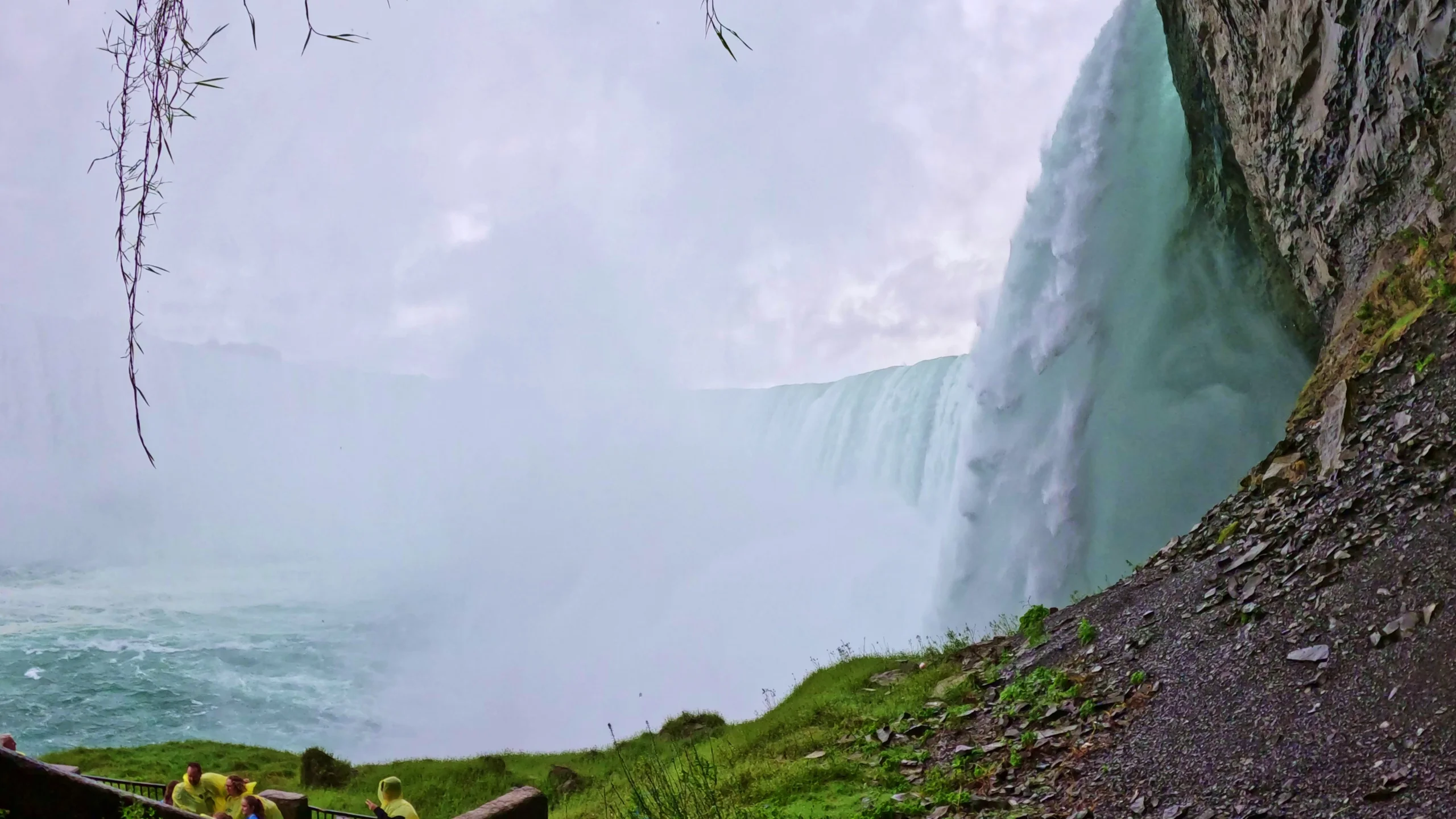
Niagara City Cruises: the boat trip from Canada
Niagara City Cruises operates the Canadian departure for the Voyage to the Falls boat tour. The route passes the American and Bridal Veil Falls and approaches Horseshoe Falls, where the spray becomes part of the experience. Niagara Parks lists the attraction as seasonal; the cruise operator includes a poncho with admission. Niagara Parks attraction page
The main boat journey is approximately 20 minutes, but the entire visit takes longer because you need to reach the lower landing, queue and board. The entry plaza is at 5920 Niagara Parkway, Ontario. Official destination listing and boarding information
Current booking uses a selected date and time slot. That helps organize the day, but the operator warns that peak-season queues can push actual departure beyond the booked window. Read the arrival and cancellation conditions on your ticket. Niagara City Cruises FAQ
Choose this excursion when your day is already centred on the Canadian riverfront. Keep your next reservation flexible enough to accommodate a busy boarding queue.
Plan your visit: Allow approximately 1–2 hours overall, with more flexibility on busy days. Bring a waterproof pouch and suitable footwear; a poncho does not protect every exposed item.
Niagara Parks Power Station and the Tunnel
The Niagara Parks Power Station combines industrial heritage with a riverside viewpoint. Its former generating building introduces the machinery and infrastructure used to turn Niagara’s water into electricity. Construction began in 1901, and the first generators operated in 1905. The building’s stone exterior, arched windows and low profile make it a distinct stop among the falls attractions. Building the Power Station
The visit continues underground. An elevator descends about 180 feet, or 55 metres, to a former water-discharge tunnel roughly 2,200 feet, or 670 metres, long. This passage once returned water used by the station to the river; visitors now follow it to an observation platform at the water’s edge. The Tunnel: official visitor information
The Tunnel and Journey Behind the Falls are separate attractions. Choose the Power Station for its engineering story and the walk through a former working structure. Choose Journey Behind the Falls for access to the tunnel portals and platforms beside Horseshoe Falls. Visitors especially interested in the river can enjoy both, but they need separate time in the itinerary.
Niagara Parks describes the Tunnel route as level, with benches, and the tunnel and platform as accessible. The length still matters when planning for walking stamina or limited mobility. Allow around two hours for the station and tunnel together, plus any entry queue. Check the selected ticket carefully if you want an evening experience, as daytime and night offerings can differ. Power Station visitor options
Skylon Tower: see how the landscape fits together
Skylon Tower offers an elevated view of the three waterfalls, the Niagara River and the surrounding cities. The observation area includes an indoor level and an outdoor deck that circles the tower. Skylon Tower observation deck
This is a useful choice when you want to understand the shape of Horseshoe Falls and the relationship between the falls, islands and gorge. From above, features that seem separate during a walk become part of the same scene.
Choose the timing according to visibility. Low cloud, rain and dense mist can affect the view, so leave some flexibility if possible. An indoor viewing level offers shelter, but clear conditions still matter for distant photographs.
Plan your visit: Allow around 45–75 minutes for observation, plus queues. Make dining a separate decision: compare the current restaurant and observation offers rather than assuming every reservation includes the same access.
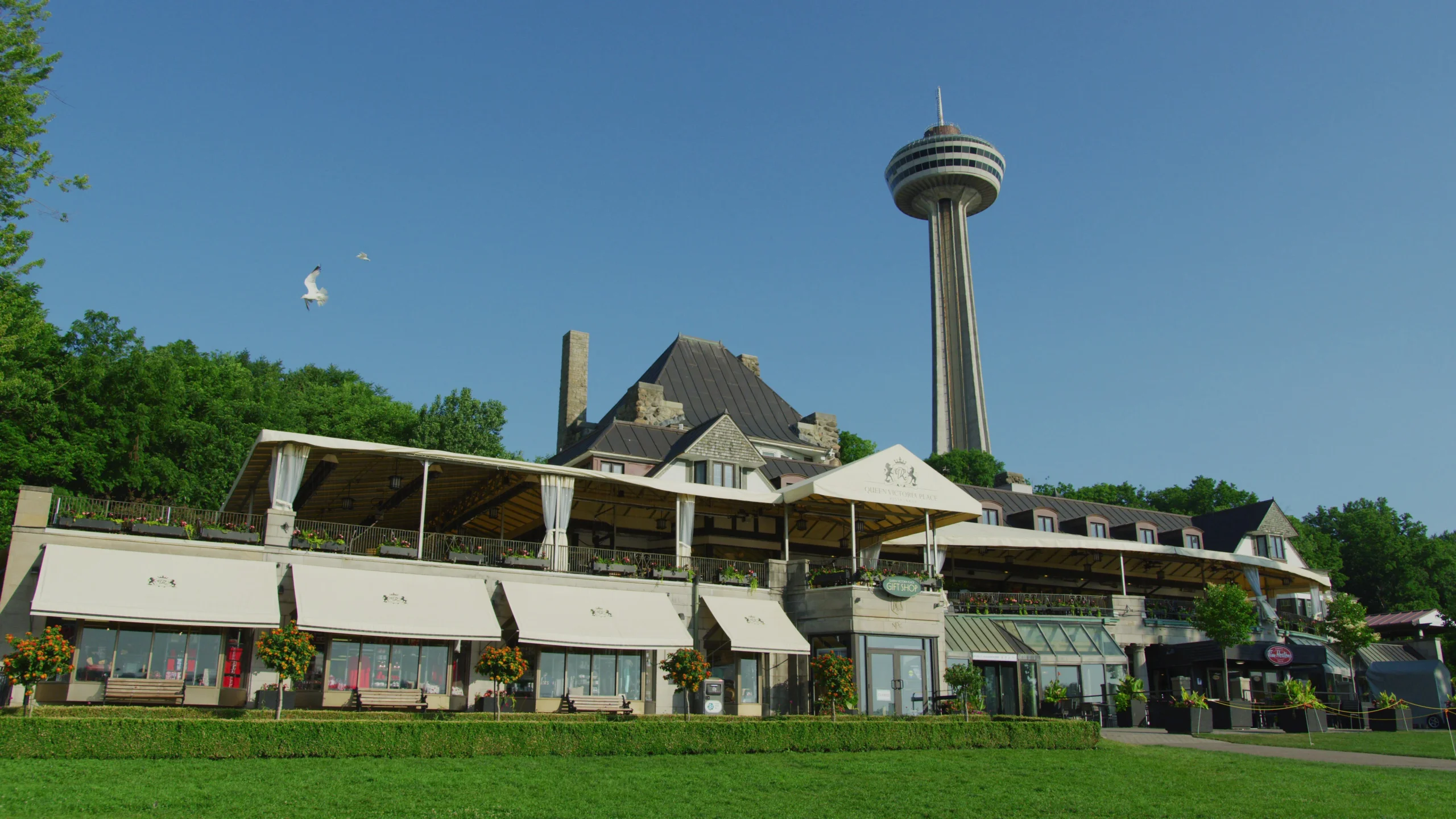
Clifton Hill and the Niagara SkyWheel
Clifton Hill adds a busy entertainment district to the Canadian visit, with games, themed attractions and places to eat. It can provide a change of pace after several hours of waterfall viewing, particularly when different members of a family want different activities. Clifton Hill neighbourhood guide
The Niagara SkyWheel offers views from enclosed, climate-controlled gondolas and operates across the seasons, subject to conditions. Its appeal combines the ride itself with a view over the surrounding attractions and falls area. Niagara SkyWheel operator information
Treat this district as an optional extension. If the waterfalls are your main reason for visiting, complete the riverfront viewpoints before spending a substantial part of the day on games or rides.
The American side: Niagara Falls State Park and Goat Island
Why the park deserves a full part of the visit
Niagara Falls State Park gives the American visit a clear structure: explore the mainland viewpoints near Prospect Point, then continue to Goat Island and its surrounding overlooks. Walking into the park is free, with separate charges for parking and individual attractions. New York State Parks visitor information
The park landscape has a history of its own. The Free Niagara movement sought to protect the scenery from commercial and industrial encroachment. The Niagara Reservation was created in 1885, and Frederick Law Olmsted and Calvert Vaux helped shape the paths and planted spaces that characterize the American side. National Park Service: Niagara’s landscape history
A practical way to visit is to separate your walking circuit from your ticketed experiences. If you plan to visit Cave of the Winds, arrange its timed entry first, then fit the viewpoints and any boat trip around it. Keep the official park map handy to organize the route.
Prospect Point and the Observation Tower
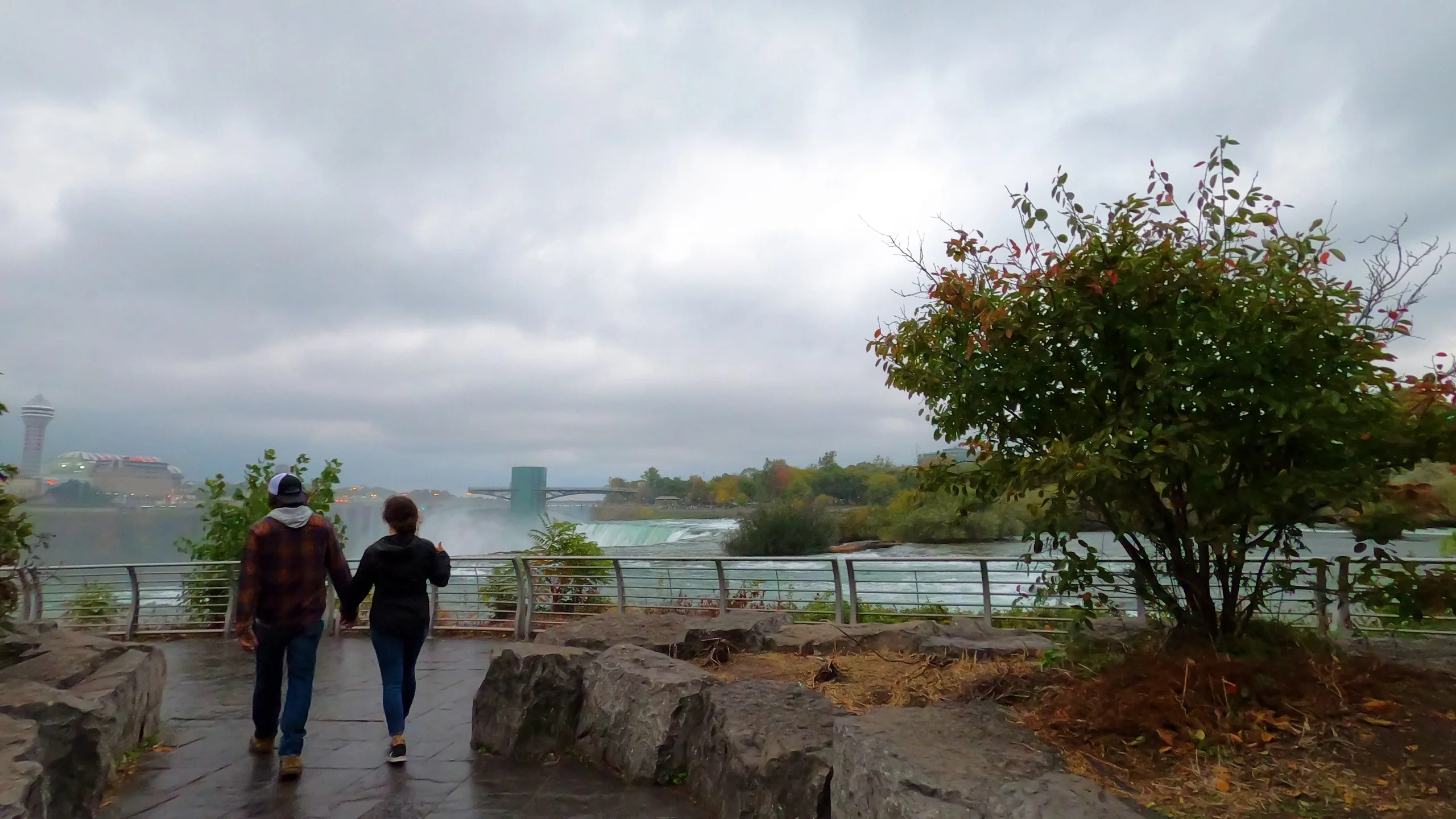
Prospect Point places you beside the American Falls and works well as an introduction to the New York side. The perspective emphasizes the edge of the waterfall and its relationship with the park around it. The official destination guide identifies it as one of the park’s main viewpoints.
Nearby, the Observation Tower projects out over the gorge. Its deck gives a broader perspective than a viewpoint immediately beside the brink, while elevators connect with the Maid of the Mist boarding area below. The operator states that you can visit the deck and elevator without purchasing a boat ticket; check the current admission arrangements. Observation Tower visitor information
Plan your visit: Allow roughly 30–60 minutes for the viewpoint and tower, excluding a boat trip and substantial queues. If you are taking Maid of the Mist, check the inclusions before buying separate observation access.
Goat Island: organize the viewpoints into one walk
Goat Island is a useful centre for the American-side walking experience. Paths connect the area with Luna Island, Terrapin Point, Three Sisters Islands and Cave of the Winds. The island lets you move between different parts of the river rather than see everything from a single platform. Goat Island visitor listing
Allow approximately 1½–2½ hours for a viewpoint circuit with pauses, excluding a long meal or a ticketed attraction. Shorten it by choosing two priority viewpoints if walking stamina or weather is a concern. Use the park map to build the route around your arrival point and any timed admission.
Terrapin Point: the American approach to Horseshoe Falls
Terrapin Point brings you to the Horseshoe Falls brink from Goat Island. Its value lies in watching the river reach the edge and disappear below, with the Canadian waterfront across the gorge. It adds a close lateral view to the broader scene seen from Canada. Park viewpoint information
Take time to observe how mist alternately reveals and obscures the curve. A photograph made in the first few seconds may not be the clearest one available during your stop.
Luna Island and Stedman’s Bluff
Luna Island sits between the American Falls and Bridal Veil Falls, making their separation easy to understand. It also gives a view down toward the Cave of the Winds area. Destination Niagara USA park guide
At nearby Stedman’s Bluff, the Nikola Tesla statue adds a reference to Niagara’s electrical history, with views toward the falls and Luna Island. Official overlook guide
Together, these stops work well for visitors interested in the smaller details of the landscape: the division of the water, the islands and the rock beneath the drops.
Three Sisters Islands: see the river before the drop
Historic pedestrian bridges link Goat Island with Three Sisters Islands, where the main subject is the upper rapids. This is an opportunity to look at the river before it reaches the falls, with water moving around the islands and toward the brink. Three Sisters Islands
Include the islands when you want a fuller river walk. If time is limited, prioritize the falls viewpoints first, then decide whether to extend your circuit upstream.
Maid of the Mist: the boat trip from New York
Maid of the Mist departs from the American side at Prospect Point. Its approximately 20-minute sailing provides close views of the American, Bridal Veil and Horseshoe Falls. The operator includes a poncho and admission to the Observation Tower deck with the boat ticket. Maid of the Mist FAQ
The boat departs from and returns to the United States. The operator says a passport is not required to board the boat itself; any international crossing needed to reach the American landing is a separate matter. Boarding and identification FAQ
Plan your visit: Budget about 1–2 hours overall and leave extra room at busy times. Keep valuables protected before boarding so you can concentrate on the view once the spray increases.
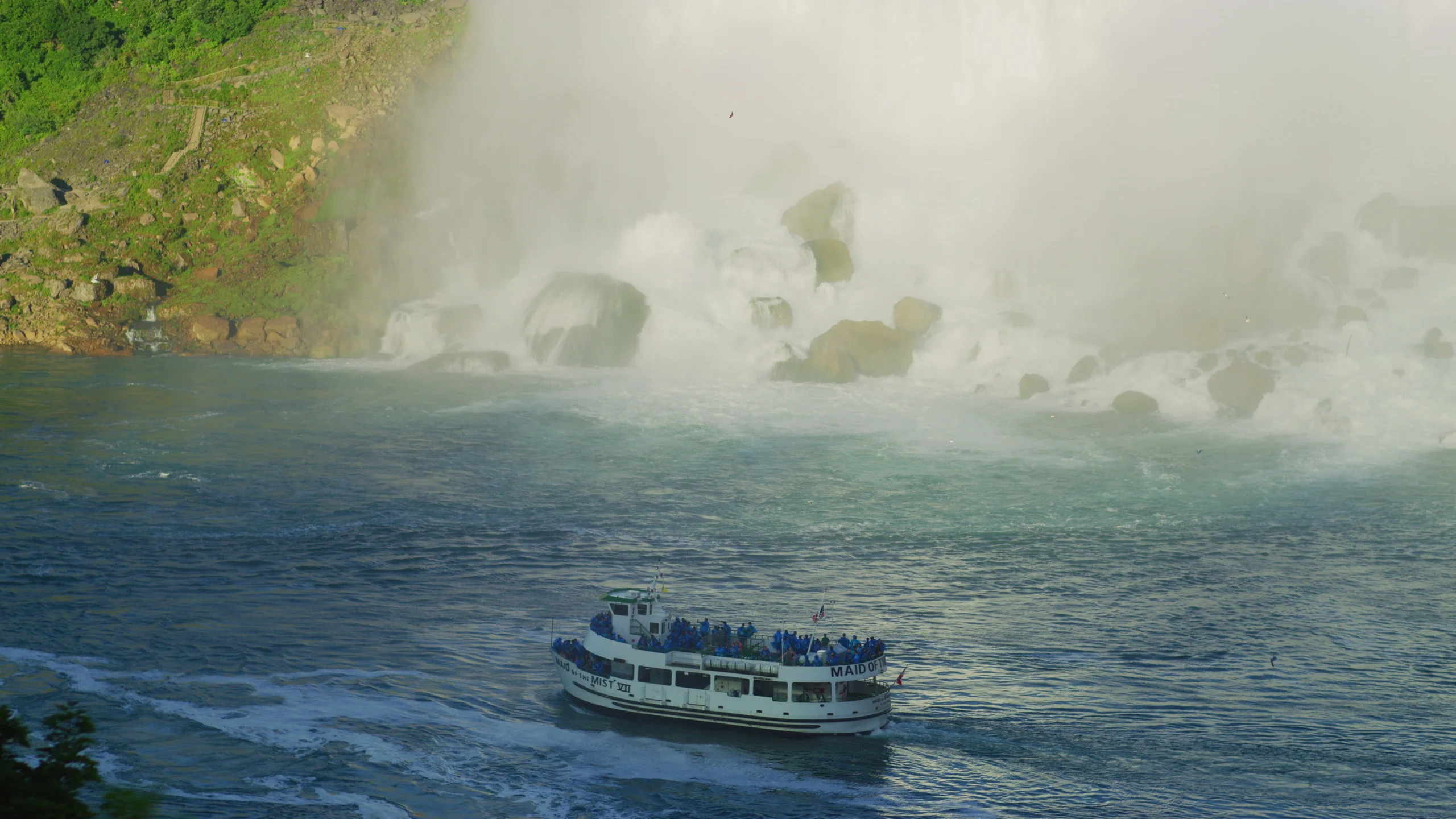
Cave of the Winds: close to Bridal Veil Falls
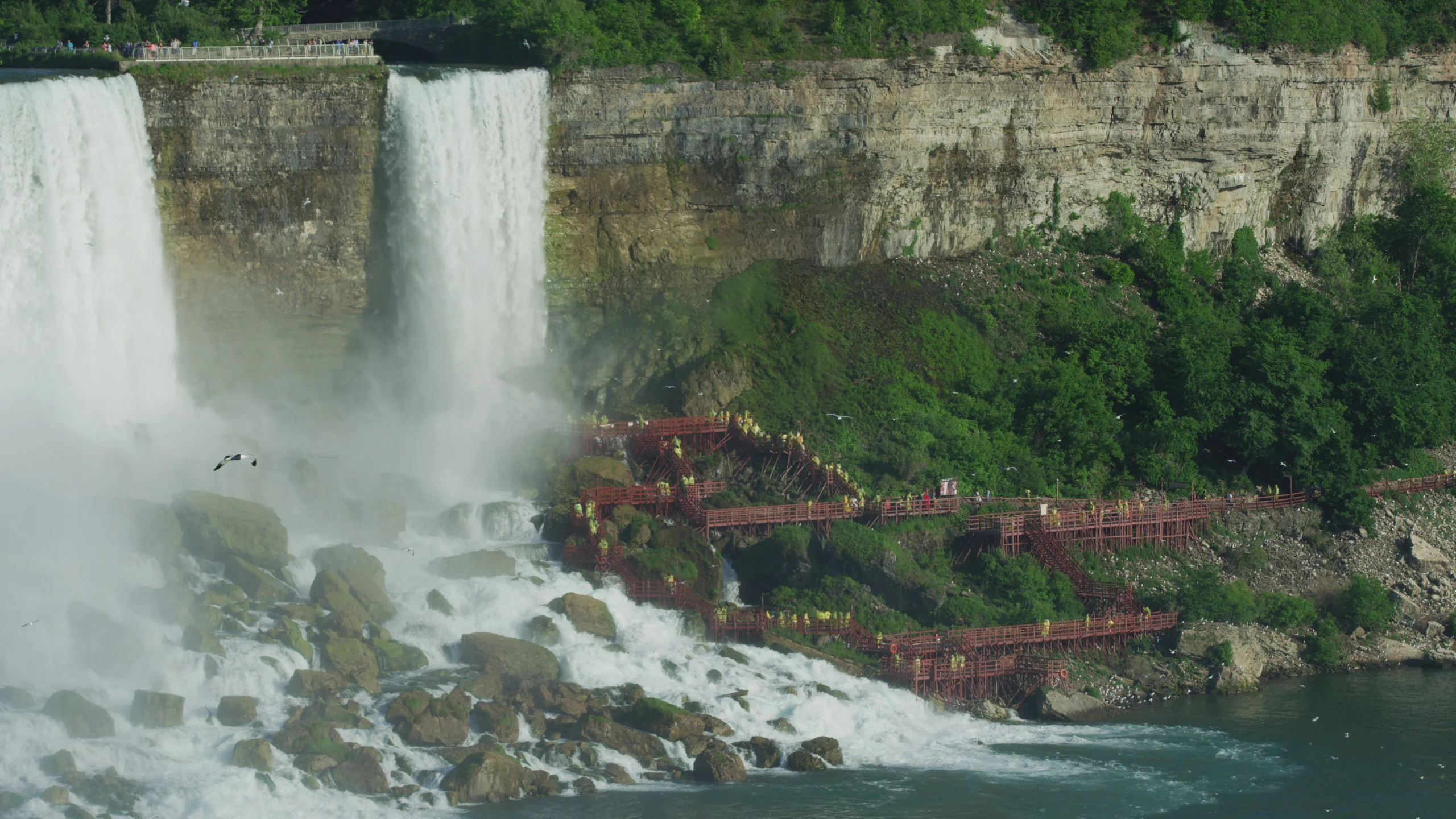
At Cave of the Winds, visitors descend into the gorge and approach Bridal Veil Falls from outdoor viewing areas. In the full seasonal experience, the wooden deck route brings you close to the falling water. The World Changed Here Pavilion introduces the site’s story before the outdoor portion. Destination Niagara USA attraction guide
The name can suggest a conventional cavern visit, but the main attraction is the waterfall encounter outside. Prepare for wet conditions, especially on the closer decks. The park has phased out the sandals once supplied to visitors, so bring footwear you are comfortable getting wet. Official Cave of the Winds information
There is a practical reason the visit changes with the season. The wooden Hurricane Deck route is dismantled to protect it from winter ice and rebuilt for the following season. Winter visitors can still find a gorge-viewing experience, but should confirm which platforms are available. How the seasonal decks are rebuilt
Plan your visit: Allow roughly 1–1½ hours, depending on admission timing and the open route. As checked in October 2026, the park sold individual tickets on site at the attraction or welcome centre, with timed entry. Confirm the current process and arrange a slot early in your park visit. Official ticket instructions
Which boat trip and close-up attraction should you choose?
Before you choose your tickets
Pick a boat on the side where you will board: Maid of the Mist in New York or Niagara City Cruises in Ontario. Add a close-up land attraction if you want a different perspective; two boat trips are optional.
Most first-time visitors can build a satisfying paid-attraction plan around one boat trip and one different experience on land. The table below is an editorial comparison; use the linked operator pages in the attraction sections for current tickets and access.
| Experience | Choose it when… | Factor into the decision |
|---|---|---|
| Maid of the Mist | Your main sightseeing day is on the American side. | Boarding queues and the seasonal sailing calendar. |
| Niagara City Cruises | You are exploring the Canadian riverfront. | The selected entry window, arrival instructions and possible boarding delays. |
| Cave of the Winds | You want to approach Bridal Veil Falls on foot after descending into the gorge. | The available deck route, wet footwear and on-site ticket procedure. |
| Journey Behind the Falls | You want tunnel portals and a platform perspective beside Horseshoe Falls. | Current construction and seasonal platform access. |
| Power Station and Tunnel | Engineering history and a substantial underground walk appeal to you. | The time needed to explore the building and walk the tunnel. |
| Skylon Tower | You want an elevated overview with an indoor viewing option. | Visibility on the day and the exact ticket inclusions. |
If your schedule is tight, match the boat departure to the country you are already visiting. Taking both boat tours is a personal choice, but it uses time that could otherwise add a different viewpoint or part of the river.
Leave generous time for the public viewpoints when choosing any combination of tickets. The itineraries below show how to distribute the main experiences across different lengths of stay.
Best Niagara Falls viewpoints and photography tips
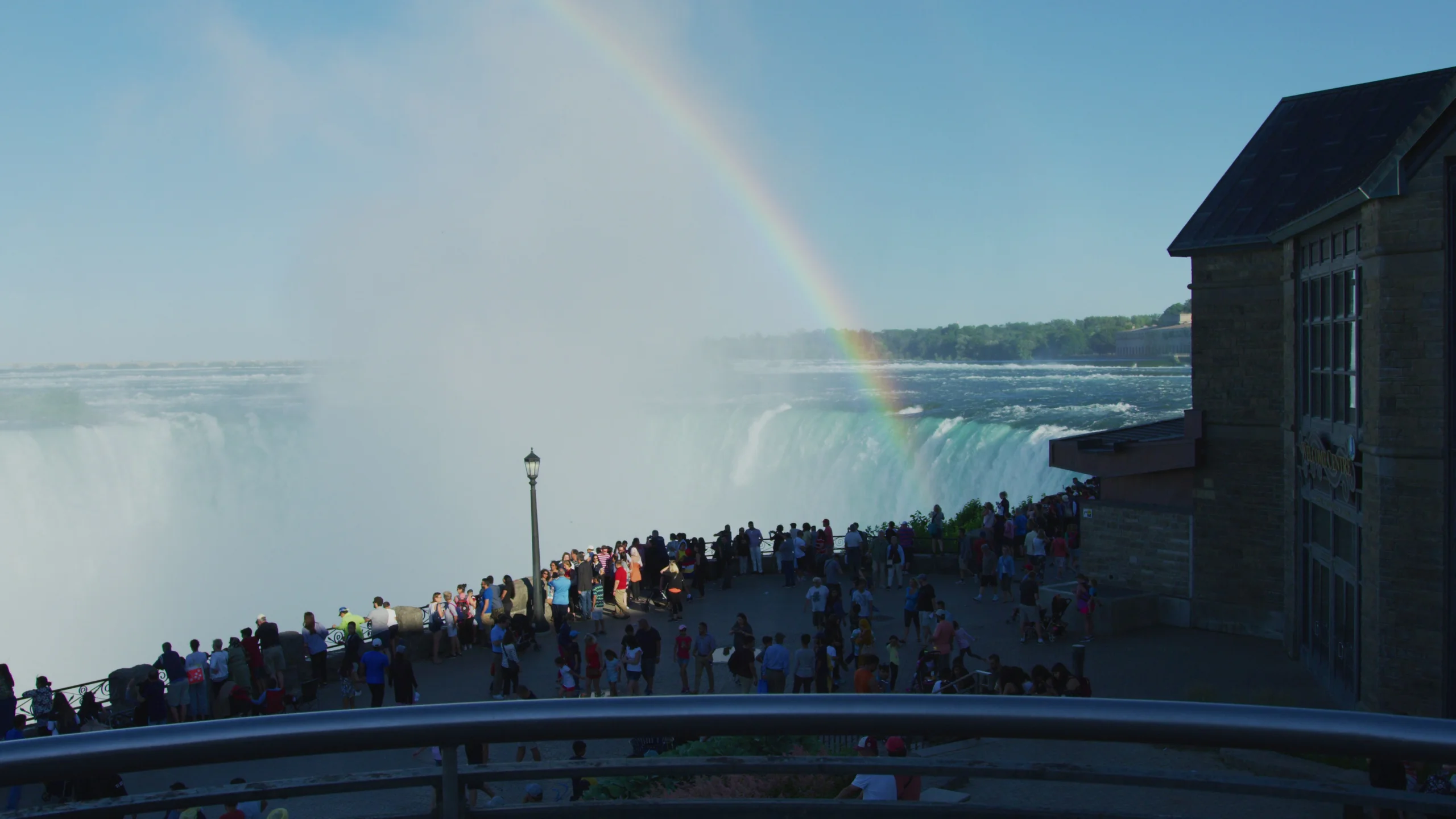
The most useful photo plan covers four perspectives: a broad view across the gorge, the brink, the river below and the illuminated falls. The following choices are editorial recommendations based on the viewpoints described above.
| Photograph or view | Start here |
|---|---|
| A broad scene with the falls and gorge | Canadian falls promenade. |
| Water moving over the Horseshoe Falls brink | Table Rock or Terrapin Point. |
| The American Falls from across the river | Canadian promenade opposite the New York side. |
| The separation of American and Bridal Veil Falls | Luna Island area. |
| The river before it reaches the falls | Three Sisters Islands. |
| A high overview of the river and cities | Skylon Tower. |
| A close view from the lower river | One of the seasonal boat excursions. |
| Colour on the water after dark | Public viewpoints along the Canadian riverfront. |
The American viewpoint guide and Canadian illumination information can help refine these choices.
For photographs, carry a clean lens cloth and check the lens frequently. Fine spray can soften an image even when you do not feel particularly wet. Take a few frames from each position, then review one at full size before moving on.
Try both a wide composition and a tighter detail. A wide photograph explains the setting; a closer frame can show the ridges of water approaching the brink, the texture of the American Falls rock pile or a boat against the scale of the gorge. Avoid placing every subject in the centre simply to fit everything into one shot.
At dusk, take photographs while there is still some light in the sky as well as after darkness falls. Keep a tripod out of pedestrian routes, remain behind barriers and secure straps before visiting wet decks. Rainbows depend on sunlight, mist and viewing angle, so leave them as a possible bonus.
New York State Parks prohibits drones in Niagara Falls State Park and says no permit will be issued. Use ground-level viewpoints there. On Niagara Parks property in Canada, drone operation requires authorization, and the operator also highlights restricted airspace. New York park rules · Niagara Parks drone policy
Best Instagram spots in Niagara Falls
Six places to capture Niagara Falls from different angles, from the brink to an elevated panorama. Each location below includes a photo idea and a Google Maps link. Choose viewpoints on the side of the border you can visit, and allow for admission to ticketed attractions.
1. Table Rock
Canada · public riverfront
Frame the water curling over the Horseshoe Falls brink, with mist filling the gorge. A compact composition works well here; keep the camera dry between shots.
2. Queen Victoria Park riverfront
Canada · public riverfront
Use the riverside promenade for a wider composition of American Falls and Bridal Veil Falls. Return after dark for a different image when the waterfalls are illuminated.
3. Journey Behind the Falls
Canada · ticketed attraction
Photograph the falling water from the outdoor viewing area for a sense of scale. Spray can be heavy: protect the lens and keep the marked visitor route clear.
4. Terrapin Point
USA · public park viewpoint
Compose the Horseshoe Falls brink with the plume of mist and the Canadian skyline beyond. The viewpoint gives a close perspective from Goat Island.
5. Stedman’s Bluff
USA · public park viewpoint
Look towards Luna Island, Bridal Veil Falls and American Falls. It is a useful place to show the islands and waterfall edges together in one frame.
6. Skylon Tower
Canada · ticketed observation deck
Choose the elevated view to show how the falls, islands and river fit together. Clear visibility matters more than a particular time of day; avoid promising a panorama in mist or low cloud.
Photo tip
Rainbows depend on sunlight, spray and your viewing angle. Stay behind barriers, leave room for other visitors and keep a cloth ready for the lens.
Viewpoint references: Niagara Falls State Park overlooks, Journey Behind the Falls and Skylon Tower observation deck.
Niagara Falls at night: illumination and fireworks
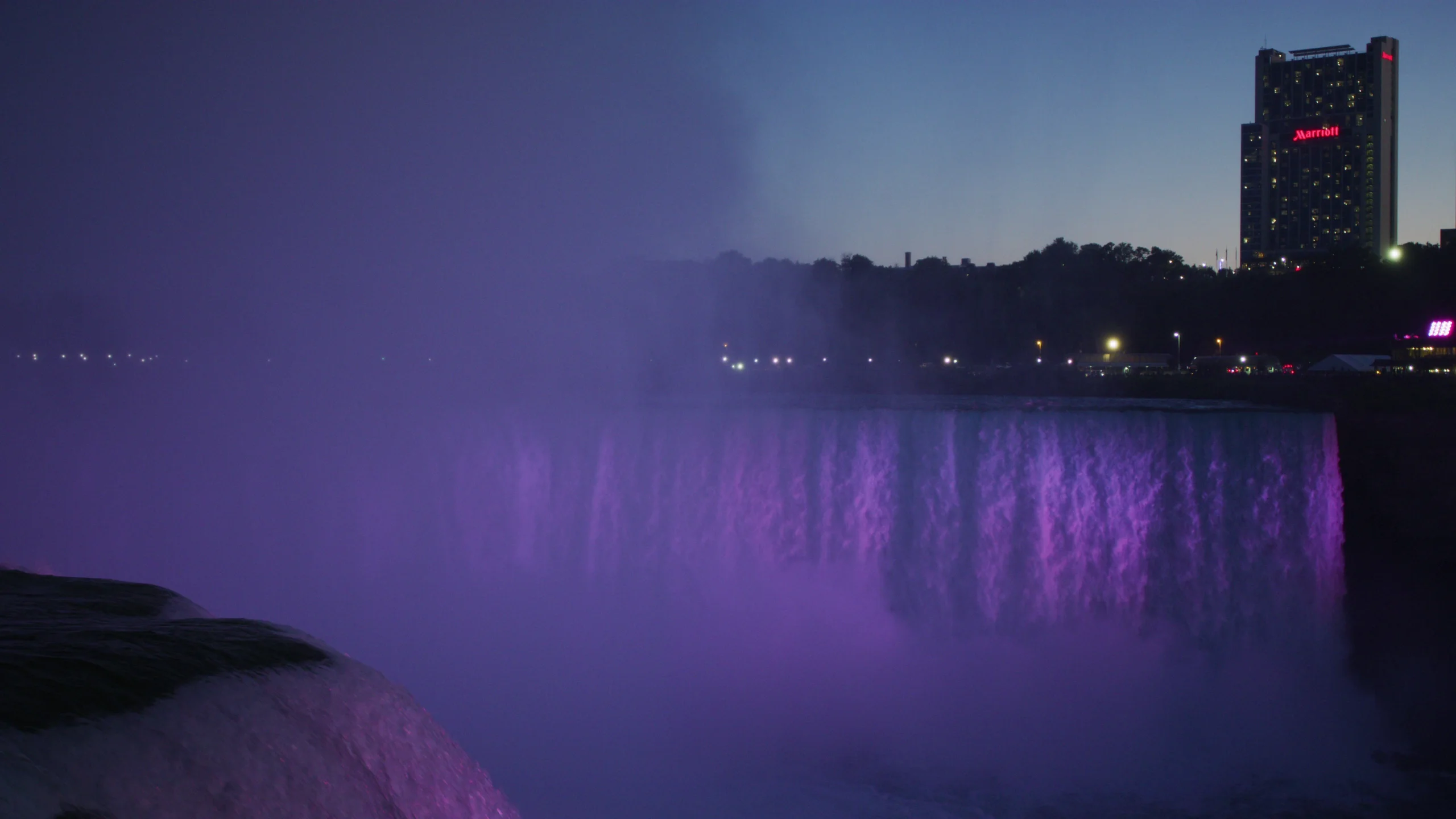
The falls are illuminated every evening throughout the year, following a timetable that changes with the season. Lighting positions around the gorge cast colour onto the water, and special colour combinations can mark significant dates or causes. Official falls illumination schedule
An overnight stay makes this easy to include without rushing the daytime visit. Have dinner, return to the riverfront and give your eyes a few minutes to adjust. Even a viewpoint visited earlier can feel visually different when the bright water stands against a dark background.
Viewing the illumination from the Canadian public parkland is free. It is also possible to combine evening views with a paid attraction, but first confirm what its particular ticket offers. Niagara Falls Tourism illumination guide
Fireworks have a separate schedule. Displays take place on published dates or seasonal runs and can be affected by weather. Check the official programme for your exact evening rather than assuming a display will accompany the lights. Niagara Falls fireworks programme
Beyond the main falls: the gorge, gardens and nearby destinations
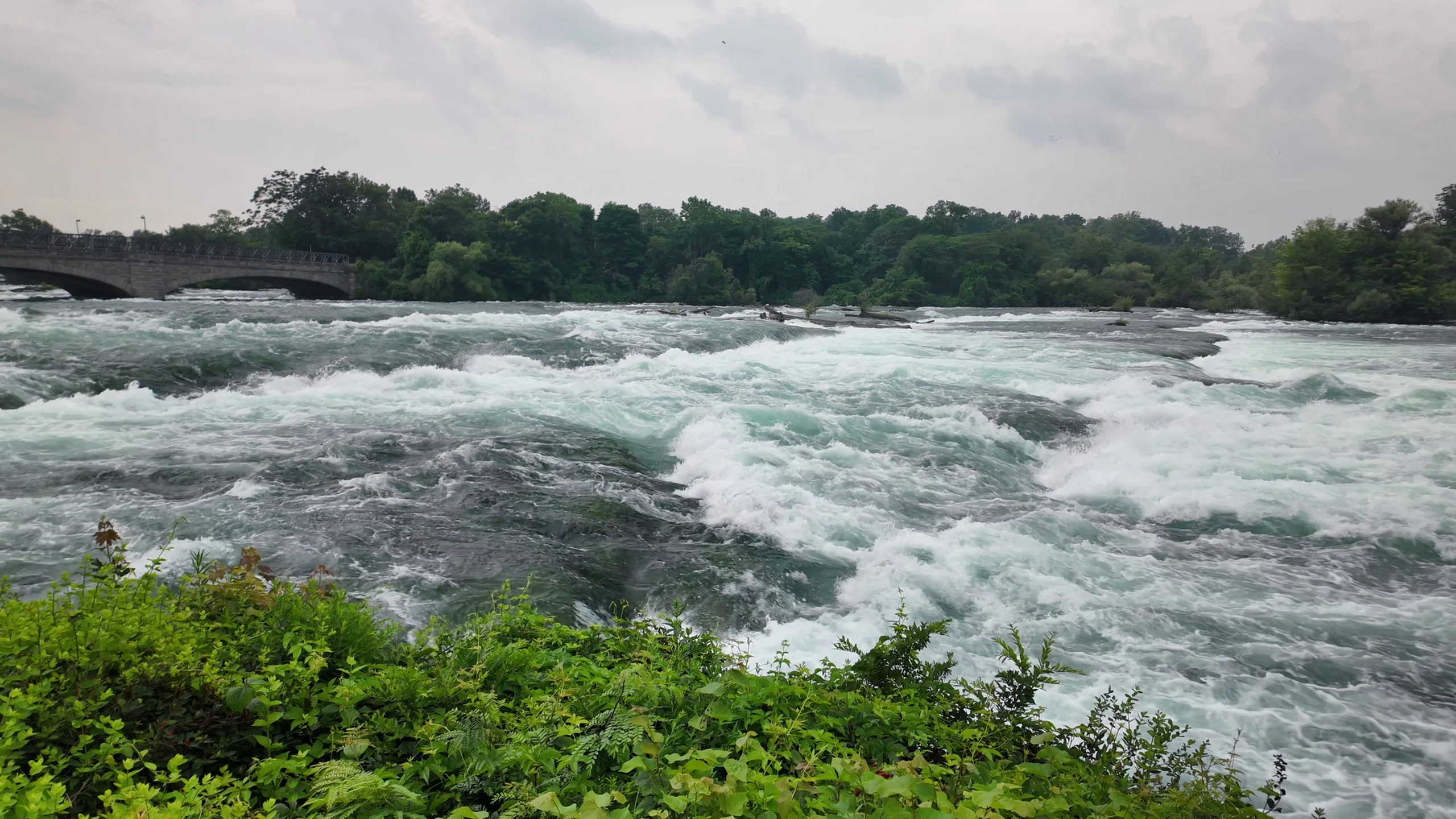
These places extend the trip beyond the central waterfall viewpoints. They are best treated as separate outings, with their own transport and visiting time.
White Water Walk, Canada
White Water Walk follows the river downstream in the Niagara Gorge. An elevator provides access to a riverside boardwalk and platforms beside the rapids. The attraction adds information about the gorge’s geology and natural environment, giving you another way to understand the water after its descent over the falls. White Water Walk
Allow around an hour on site, plus travel and queues. The attraction is seasonal and described by Niagara Parks as partially accessible; confirm which parts of the route suit your needs. It is a useful addition for visitors particularly interested in the river, with a different subject from the central falls panorama.
Whirlpool Aero Car, Canada
The Whirlpool Aero Car travels over the Niagara Whirlpool between points on the Canadian shore. Designed by Spanish engineer Leonardo Torres Quevedo, the attraction has operated since 1916. The ride emphasizes the river’s bend, gorge and swirling water. Whirlpool Aero Car
The operator says a passport is not needed for the ride, which starts and finishes in Canada, even though its path passes over the international boundary. This does not change the document requirements for a separate land-border crossing.
The Aero Car is seasonal and not accessible to wheelchairs or mobility scooters. The operator specifies stair access and no seats in the car. Check the conditions before choosing it for anyone with limited mobility or difficulty standing. Plan roughly 45–60 minutes on site, allowing more for a queue.
The American gorge and Whirlpool area
On the New York side, the Whirlpool area, still widely known as Whirlpool State Park, provides gorge-rim views and access to more demanding trails below. The current state website includes it within Niagara Falls State Park and confirms free entry and parking. Official Whirlpool area information
Choose between a viewpoint visit and a lower-gorge hike before arriving. The park warns about rough surfaces, stairs, exposed edges and the strenuous climb back out. Entering the rapids is prohibited. A rim-view stop can fit into a short excursion; a hike deserves its own plan, suitable footwear and a check of current trail access.
Botanical Gardens and Butterfly Conservatory, Canada
The Niagara Parks Botanical Gardens provide a change of pace, with formal planting, rose, herb and vegetable gardens across a large landscaped site. What is in flower varies with the season. Botanical Gardens
The Butterfly Conservatory adds an indoor tropical habitat with freely flying butterflies and paths through the planting. Niagara Parks lists it as accessible and open year-round, making it a useful option when you want an indoor nature attraction. Butterfly Conservatory
Allow a flexible half-day for transport, the conservatory and a garden walk if you want to enjoy both without watching the clock.
Niagara-on-the-Lake, Ontario
Niagara-on-the-Lake is a separate town beside Lake Ontario. Its Old Town, historic buildings, wineries and Shaw Festival make it a different kind of destination from the falls precinct. Town visitor information · Regional tourism guide
Consider a half-day or longer here if you have a third day. Decide whether your priority is a town walk, a performance or a winery visit, and build the outing around that choice. Trying to add all three after a full falls itinerary can make the day unnecessarily rushed.
Old Fort Niagara, New York
Old Fort Niagara, near Youngstown at the Niagara River’s mouth on Lake Ontario, explains the region’s strategic importance. The surviving French Castle was begun in 1726. The fort’s history reflects competition over the river, the portage around the falls and access to the Great Lakes interior. Old Fort Niagara history
Choose it for a separate history-focused outing. Allow a substantial part of a day once travel is included, and check the fort’s current opening and demonstration schedule before setting out.
Niagara Falls itineraries: one, two or three days
Build your day around one main experience
Use one main paid activity per half-day as a starting point. Keep room for walking, meals and queues; shorten the route if you add another attraction.
These are suggested sightseeing plans for visitors already in the Niagara area at the start of the day. Travel from Toronto, Buffalo or an airport needs additional time. Adjust the order to your tickets, mobility, weather and the season; preserve breaks rather than trying to fit every attraction into each plan.
One day on the Canadian side
Morning: Begin at Table Rock and spend time beside Horseshoe Falls. Follow the riverfront far enough to see the broader panorama, then visit Journey Behind the Falls or take Niagara City Cruises during its operating season. Choose one as the main morning activity.
Midday: Have lunch and continue through the Queen Victoria Park area. Leave a proper pause after a wet attraction to dry off, change footwear if needed and reorganize camera equipment.
Afternoon: Choose one further experience. The Power Station suits an interest in history and engineering; Skylon Tower suits an elevated overview. If the morning has taken longer than expected, keep the afternoon for the promenade and gardens instead.
Evening: Return for illumination if your onward travel allows it. Keep dinner and the final journey flexible; a day trip with an early return departure may need to omit the evening portion.
One day on the American side
Morning: Start in Niagara Falls State Park and check the day’s Cave of the Winds ticket arrangements if that is a priority. Explore Prospect Point and the Observation Tower area. Take Maid of the Mist if you have chosen it as your main water experience.
Midday: Allow time for lunch, then continue to Goat Island. Follow the available Cave of the Winds entry time rather than placing it at a rigid hour in the plan.
Afternoon: Explore Luna Island, Stedman’s Bluff and Terrapin Point. Add Three Sisters Islands if you have the time and energy. A boat trip plus Cave of the Winds can fill much of the day once queues are included, so shorten the walking circuit if necessary.
Can you see both sides in one day?
Yes, a focused visit can include both countries, provided border entry and return requirements are satisfied. Keep the plan to the main viewpoints and one paid attraction. A workable structure is the American park in one part of the day and the Canadian promenade in the other, using Rainbow Bridge to cross on foot.
Do not place a non-flexible attraction reservation immediately after the crossing. If your car or hotel is on the starting side, include the return crossing in the plan as well. Border waiting can change the day’s pace, so have a clear priority on each bank and treat extra activities as optional.
Two days: the recommended first-visit plan
| Day | Main focus | Suggested structure |
|---|---|---|
| Day 1: Canada | Understand the full panorama. | Table Rock, riverfront walk, one selected close-up attraction, a meal break and evening illumination. Add Skylon only if time and visibility suit. |
| Day 2: USA | Explore the river and islands. | Prospect Point, Goat Island viewpoints and one main attraction. Choose Maid of the Mist only if you still want a boat trip; choose Cave of the Winds for a different land-based encounter. |
Reverse the days when your arrival makes the American side more convenient. Keep one hotel for a short stay unless your onward route gives you a clear reason to change countries overnight. Staying in one place also means checking the documents and time needed to return after your day across the border.
Three days: add a distinct regional experience
Use the third day for one of three themes:
- River and geology: White Water Walk and the Whirlpool area, choosing activities on the same side where possible.
- Gardens and a town visit: Botanical Gardens and Butterfly Conservatory, or a longer outing to Niagara-on-the-Lake.
- American regional history: Old Fort Niagara, with time for the journey and a stop in the wider river corridor if transport permits.
Keeping a third day flexible also gives you another opportunity for clear views if the first day brings heavy rain or dense mist.
Crossing between the USA and Canada
Check entry and return documents
Before planning both countries, confirm the official entry requirements for everyone in your party, including the journey back. A sightseeing boat does not replace a designated border crossing.
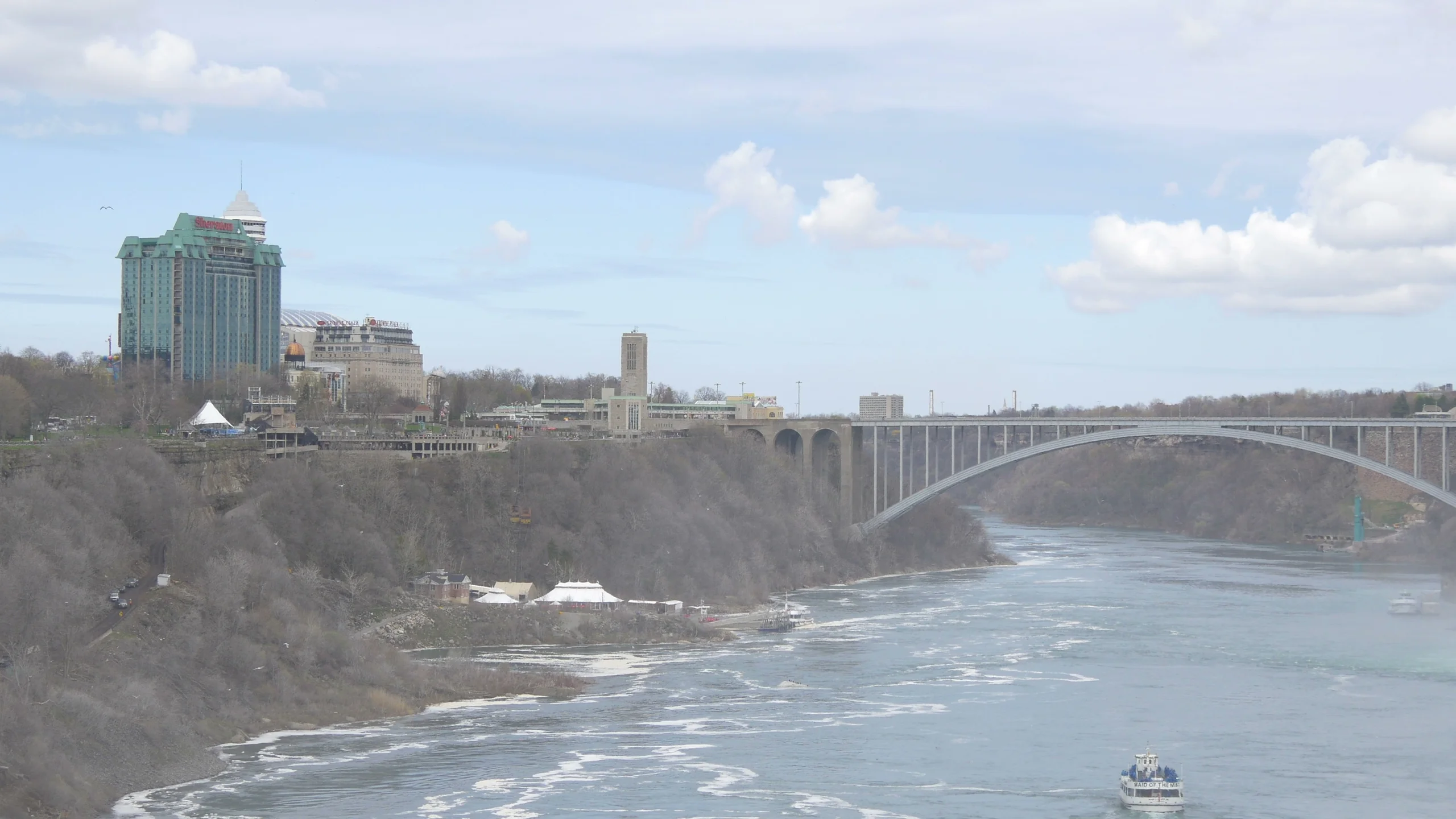
Rainbow Bridge connects the two tourist districts and provides the pedestrian route used for a central falls visit. The Niagara Falls Bridge Commission states that pedestrians are not permitted on its Lewiston–Queenston or Whirlpool bridges. Check the official crossing information before choosing a route.
A walk across Rainbow Bridge is an international border crossing, including when the purpose is only a few hours of sightseeing. Confirm the travel documents required for every person in the party, including children, and for the return journey. Requirements depend on nationality, immigration status and mode of travel.
For Canada, visa-exempt foreign nationals generally do not need an eTA for land entry. That does not remove other entry requirements. Some travellers eligible for an eTA when flying still need a visitor visa for a land visit; their status and any applicable exceptions matter. Use the Canadian government’s entry guidance and visa/eTA checker.
For the United States, travellers entering under the Visa Waiver Program need an approved ESTA for land entry. Other categories of traveller have different document rules. Check the U.S. Customs and Border Protection guidance in advance; a Canadian admission or travel authorization does not establish U.S. entry permission.
The bridge has a pedestrian toll collected when heading from Canada toward the United States. Confirm the current amount and accepted payment methods with the Bridge Commission. Keep documents accessible and allow a flexible border buffer. If driving a rental car, also check the rental agreement’s cross-border conditions.
Getting to Niagara Falls and moving between attractions
Plan the return journey
Group your stops by country, then check walking routes, parking or local transport. Leave time for border formalities and confirm the last return departure before adding an evening visit.
From Toronto and the Canadian side
GO Transit provides Niagara Falls service throughout the year. Check the actual day’s journey planner: direct trains, connecting options and track works can affect the route. When the Niagara train is unavailable, GO describes a connection using the Lakeshore West train to Burlington and GO Bus Route 12 onward to Niagara Falls. GO Transit: Toronto to Niagara Falls
The railway station and bus terminal are separate from the main waterfall viewpoints. Plan the final local connection, along with your return service, before leaving Toronto. A combined transport product may be convenient, but check the current inclusions and validity rather than assuming every local journey is covered.
From Buffalo and western New York
NFTA Route 40 serves downtown Buffalo and downtown Niagara Falls. Airport passengers need to plan their connection separately: Buffalo Niagara International Airport identifies Route 24 Genesee for its regular public-bus service. NFTA Route 40 · Buffalo airport public transport
When arranging any transfer, specify whether your destination is Niagara Falls, New York, or Niagara Falls, Ontario. The difference affects the route and potential border formalities. A flight into one country should be considered together with the country where you intend to stay.
Local transport, walking and parking
On the Canadian side, WEGO connects visitor areas and attractions, with lines meeting at Table Rock Centre. It runs year-round, while its routes and service frequencies should be checked for the travel date. Official WEGO information
In the American park, the Niagara Scenic Trolley can reduce walking between sightseeing areas. Its service is seasonal and first come, first served; the operator warns that capacity and waiting times can affect boarding. Niagara Scenic Trolley
The Discover Niagara Shuttle is a different service, covering regional stops toward Old Fort Niagara. It is free to ride, but check its current operating calendar and routes before using it as the basis for an excursion. Discover Niagara Shuttle FAQ
For the central falls area, consider parking once and combining walking with the available local transport. Select a car park according to your starting attraction, and compare the total parking cost when considering a hotel outside walking distance.
Useful orientation links: American park map, Canadian parking and getting around and WEGO routes.
When to visit Niagara Falls
Choose the season according to the experiences you most want. Niagara has distinct seasons, and the availability of water-based attractions matters as much as the scenery. Destination Niagara USA seasonal guide · Niagara Falls Tourism weather information
| Season | What it offers | What to plan around |
|---|---|---|
| Spring | Changing gardens and the transition into the main outdoor season. | Variable temperatures and attraction openings; confirm boat operations for your date. |
| Summer | The broadest opportunity to combine the falls with water-based activities. | Busy sightseeing areas, queues and the need for realistic daily priorities. |
| Autumn | Seasonal colour in the parks and gorge. | Shorter daylight and attractions moving toward their seasonal closing dates. |
| Winter | A different landscape, sometimes with substantial ice and snow. | Outdoor access restrictions, cold weather and the absence of the usual boat season. |
For a first visit focused on walking and a boat trip, late spring through early autumn is a practical starting window, subject to the operators’ calendars. If you choose a quieter-looking shoulder-season date, check the desired attractions before booking transport and accommodation.
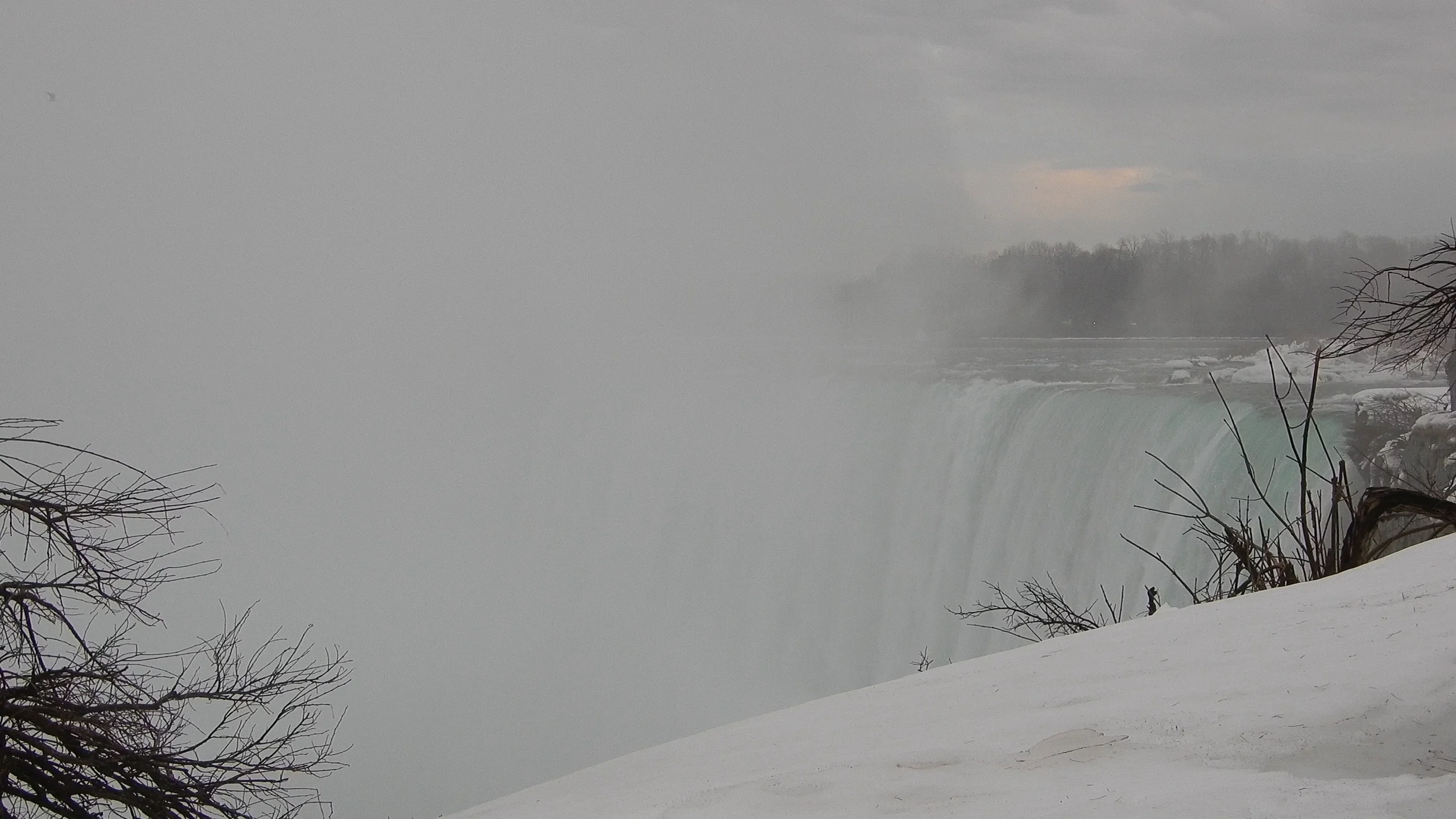
Winter photographs sometimes make Niagara appear completely frozen. Niagara Parks explains that water continues moving beneath and around the ice formations created by spray and cold conditions. The appearance varies with the weather. The Frozen Falls
Whatever the season, pack for the riverfront as well as the forecast. A light waterproof layer can be useful on a warm day, while cold-weather visitors should plan shorter outdoor sessions with places to warm up between them.
Where to stay: choose an area that matches your itinerary
For a short visit, location can save more useful sightseeing time than an extra hotel amenity. Compare the actual walking route to the attractions you have chosen, the total parking charge and how you will return after the evening illumination.
| Area | A good fit for | What to check before booking |
|---|---|---|
| Fallsview area, Ontario | A Canadian-side stay centred on the falls and a possible room view. | The exact room category, which falls are visible and the route down to the riverfront. |
| Clifton Hill area, Ontario | Visitors who want entertainment and dining close to their accommodation. | Evening activity, room position and the walk to your priority attraction. |
| Downtown Niagara Falls, New York, near the park | An American-side itinerary with convenient park access. | The actual entrance you will use and any parking charges. |
| Niagara-on-the-Lake | A longer regional stay with town, theatre or winery plans. | Transport to the falls and the effect of repeated journeys on a short itinerary. |
The Canadian tourism board provides a Fallsview accommodation category; check the specific hotel and room description before paying for a view. The Clifton Hill guide and Niagara-on-the-Lake visitor information help distinguish those areas. The table’s suitability judgments are editorial recommendations.
Tickets, passes and a sensible sightseeing budget
Tickets & reservations: start here
Choose your departure country and one main paid experience first. Compare individual tickets with passes only after deciding which attractions you actually want to visit.
Canada: Niagara Parks tickets & passes · Niagara City Cruises.
USA: Maid of the Mist · Cave of the Winds ticket information.
Check dates, timed entry, inclusions and cancellation terms with the operator. Keep CAD and USD separate when comparing costs.
Start with the experiences you want, then compare individual tickets with any current package. A pass is useful when its included attractions, reservation rules and transport match the trip you actually intend to take. An advertised saving is less meaningful if it requires additional activities you would otherwise skip.
Build the budget around these separate items:
- Accommodation, taxes and parking.
- Transport to Niagara and any local travel.
- One boat excursion if desired and operating.
- A second attraction chosen for a different perspective.
- Meals, drinks and optional entertainment.
- Any border tolls and relevant currency-conversion costs.
Budget tip
Keep CAD and USD clearly separated when comparing prices. Check the final checkout amount, the children’s age bands, cancellation terms and whether an item such as parking or an observation deck is already included.
For a lower-cost visit, give more time to the public viewpoints and choose one paid experience. For a more extensive visit, add an attraction because it contributes something distinct: an elevated view, engineering history, a close waterfall platform or a downstream river walk.
Use the live Niagara Parks ticket options and individual U.S. attraction links above. Prices and package contents are deliberately left to the operators’ current booking pages.
Visiting with children, limited mobility or rainy weather
With children
Choose one main activity for each half-day and leave room for food, toilets and changing wet clothes. Some children enjoy a boat trip’s spray; others may prefer to start with a more distant viewpoint. Describe the noise and wet conditions before committing to the closest experiences.
For variety, combine a falls viewpoint with the gardens, Butterfly Conservatory or an activity on Clifton Hill. Keep regional outings separate from an already full cross-border day, and check each operator’s age bands and participation rules when booking.
Accessibility and walking stamina
Accessible entrances do not mean every part of an attraction has the same conditions. Check the precise route you want, including elevator availability, stairs, walking distances and the return journey.
The American park FAQ identifies access to the main Cave of the Winds viewing platform, rather than promising access to every seasonal deck. Niagara Parks describes White Water Walk as partially accessible and the Whirlpool Aero Car as unsuitable for wheelchairs and mobility scooters. The Power Station’s Tunnel offers a level route, but it still involves a substantial walk. American park accessibility FAQ · White Water Walk · Aero Car
Build the day around fewer, better-spaced stops when fatigue is a concern. Reserve energy for returning to the hotel or car, and do not depend on immediate trolley or bus boarding.
When it rains
A practical rainy-day alternative
Consider the Power Station exhibits or Butterfly Conservatory for time indoors. Observation decks still depend on visibility, and attractions with tunnels may also include outdoor viewing.
The Power Station exhibits and Butterfly Conservatory provide useful indoor alternatives; Skylon Tower has an indoor observation level, although visibility still matters. Journey Behind the Falls contains tunnels but also outdoor viewing, and the Power Station’s river platform is outdoors. Choose according to whether you need shelter, a clearer view or simply a shorter spell outside. Power Station · Butterfly Conservatory
Frequently asked questions
Is Niagara Falls in the USA or Canada?
It is on the border between New York and Ontario. American Falls and Bridal Veil Falls are entirely in the USA; Horseshoe Falls lies along the international boundary and is commonly associated with the Canadian side. Official geography
Is one day enough for Niagara Falls?
One day is enough for a focused visit to the main viewpoints and a selected attraction. Two days are a more comfortable choice if you want both countries, several different perspectives and an evening return. This is an editorial planning recommendation.
Can you see the falls without paying for an attraction?
Yes. Public parkland provides free waterfall viewing on both sides. Parking and ticketed activities are separate. Canadian park access · American park access
Does a boat tour take you from one country to the other?
Worth knowing
The sightseeing cruises described here return passengers to their departure side. Choose the operator according to where you will board, and use a designated border crossing for a visit to the other country. Maid of the Mist boarding information · Niagara City Cruises
Do you need a passport to walk across Rainbow Bridge?
You need travel documents accepted for your nationality and immigration status, plus any required visa or authorization. A passport is the straightforward starting point for many international visitors, but document rules and exceptions differ. Check both countries’ official requirements and the return journey in the border section.
Do the lights and fireworks run every night?
Illumination follows a year-round nightly programme, with seasonal start and end times. Fireworks have their own published dates and weather conditions. Check the illumination and fireworks schedules separately.
Is Niagara worth visiting in winter?
Winter can suit visitors interested in ice formations, photography and a shorter outdoor visit combined with indoor attractions. Choose it with the understanding that the activity selection differs from the main boat season. Niagara Parks winter information
A final checklist before your visit
- Choose your priority viewpoints and one main paid activity per half-day.
- Check attraction operations, ticket conditions and current construction notices.
- Confirm entry and return documents if crossing the border.
- Check local transport and the final return departure.
- Pack comfortable footwear, a waterproof layer and protection for electronics.
- Leave time for meals, queues and an evening view if staying overnight.
For a different perspective, see our Niagara Falls visit in 2010, with original travel photographs and video.
Sources and editorial approach
This guide uses official park, attraction, transport and government information, with additional destination material from the Niagara tourism organizations. Source links appear beside the relevant facts so readers can check current details. The geographical groupings, comparisons and itineraries are editorial recommendations; visit allowances are estimates rather than operator guarantees.
Recheck changing details through Niagara Parks operating information, the American park website, the boat operators and the official border resources before travelling.