
Illuminated waterfalls after dark, a panorama from above and a boat ride into the spray beneath Horseshoe Falls: our 2010 visit gave us several very different views of Niagara. These are the moments we brought home in our photographs and film.
The mist is one of Niagara’s most distinctive features. It rises above the falling water in a great cloud, partly hiding the view and making the scale of the falls difficult to judge from a distance. During our visit, we saw that spray lit by colored lights at night, caught in the daylight and, eventually, all around us on the Maid of the Mist.
We visited Niagara Falls in 2010. Our time there included the illuminated American Falls and Bridal Veil Falls, views across the river toward the Canadian skyline, and a boat trip toward Horseshoe Falls. A rainbow in the mist added one more memorable scene before we left.
Seeing Niagara from above and from the river gave us a much better sense of the place. The wide views helped us understand its shape. The boat ride brought us close enough to hear the full roar of the water and feel the spray that had looked so distant from shore.
Our visit at a glance
Destination
Niagara Falls, USA–Canada border
Travel year
2010
Main experience
Maid of the Mist boat trip
Views
Evening lights, daylight panoramas and a rainbow
On this page
FilmNight viewsDaylightBefore the boatMaid of the MistPanoramaRainbowThe landscapeFinal thoughts
Watch our Niagara Falls travel film
Our film follows the visit from the illuminated falls after dark to the daytime views and our trip on the Maid of the Mist. It also includes the rainbow we saw in the spray and a short introduction to Niagara’s natural history.
The approach to Horseshoe Falls is particularly well suited to film: moving water and thick spray make the view change continuously as the boat draws closer.
Niagara Falls after dark
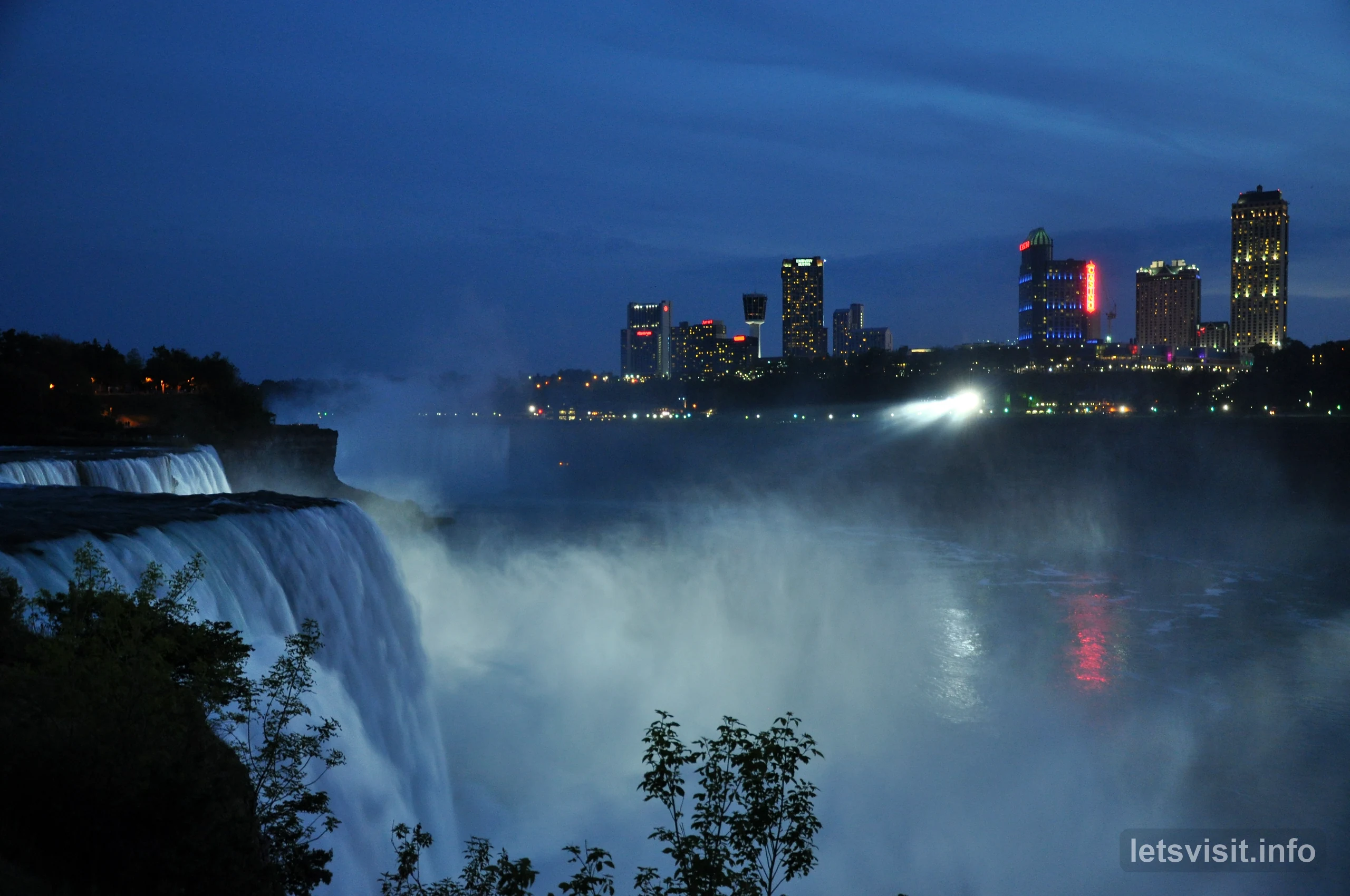
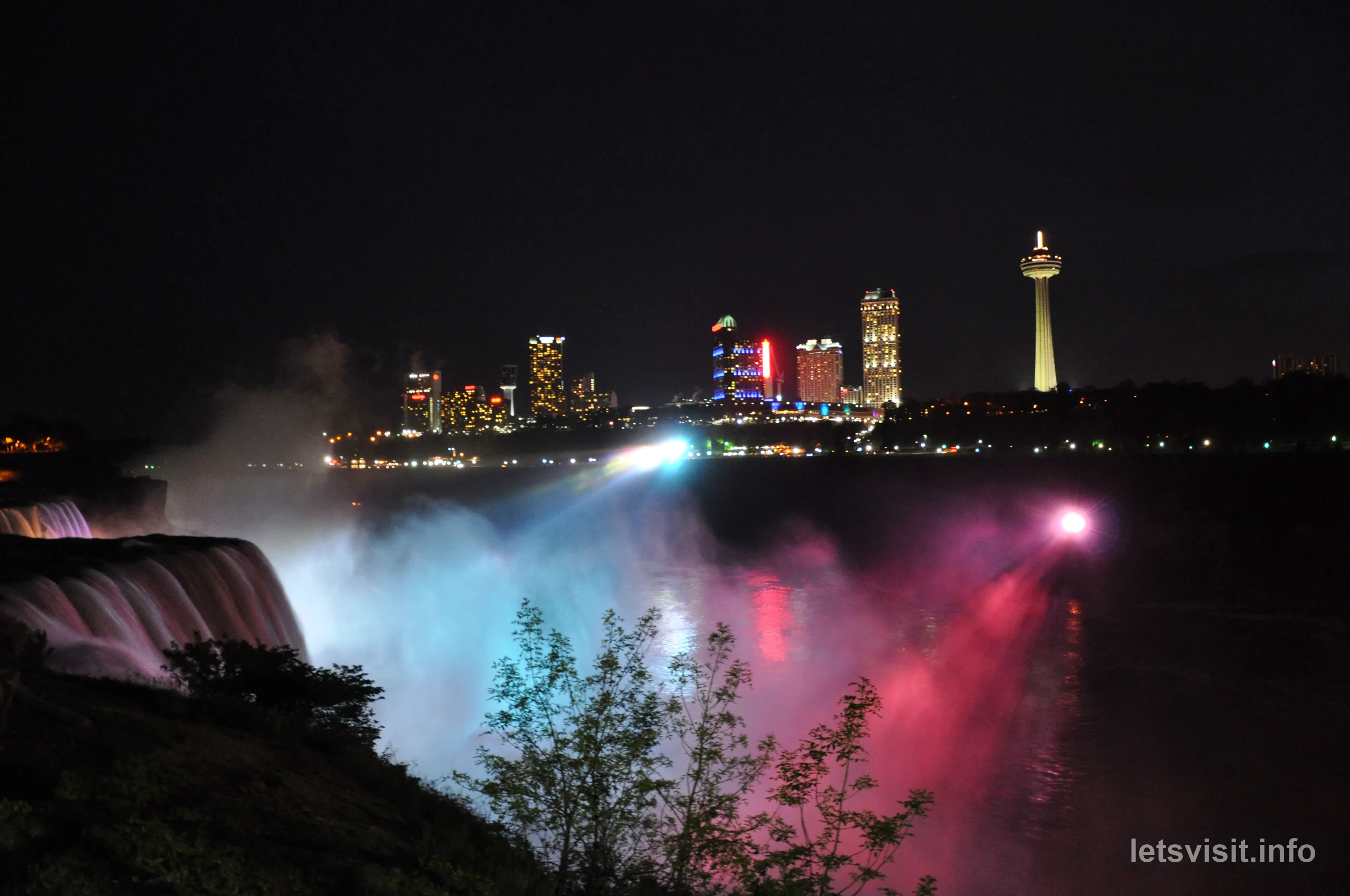
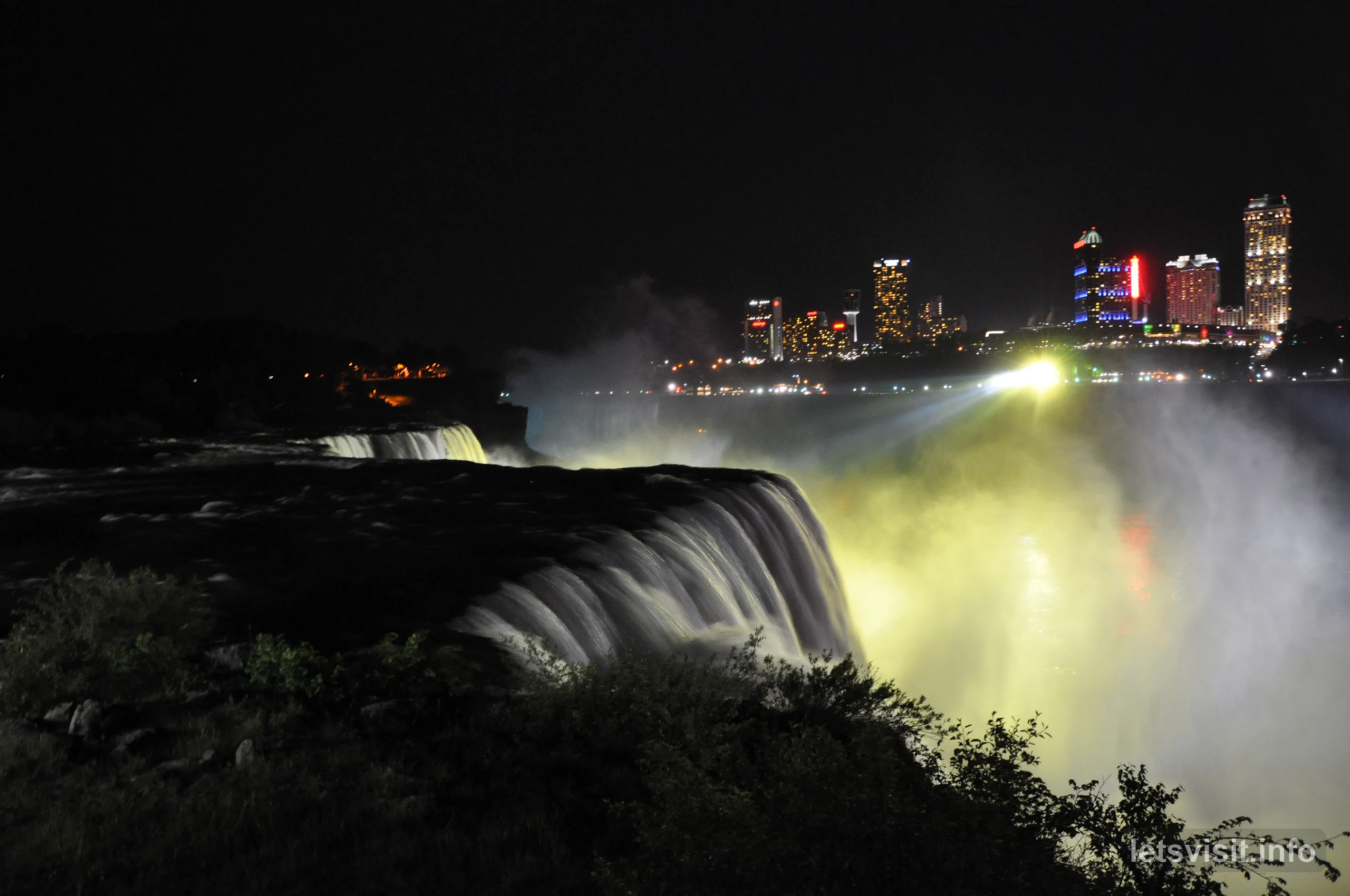
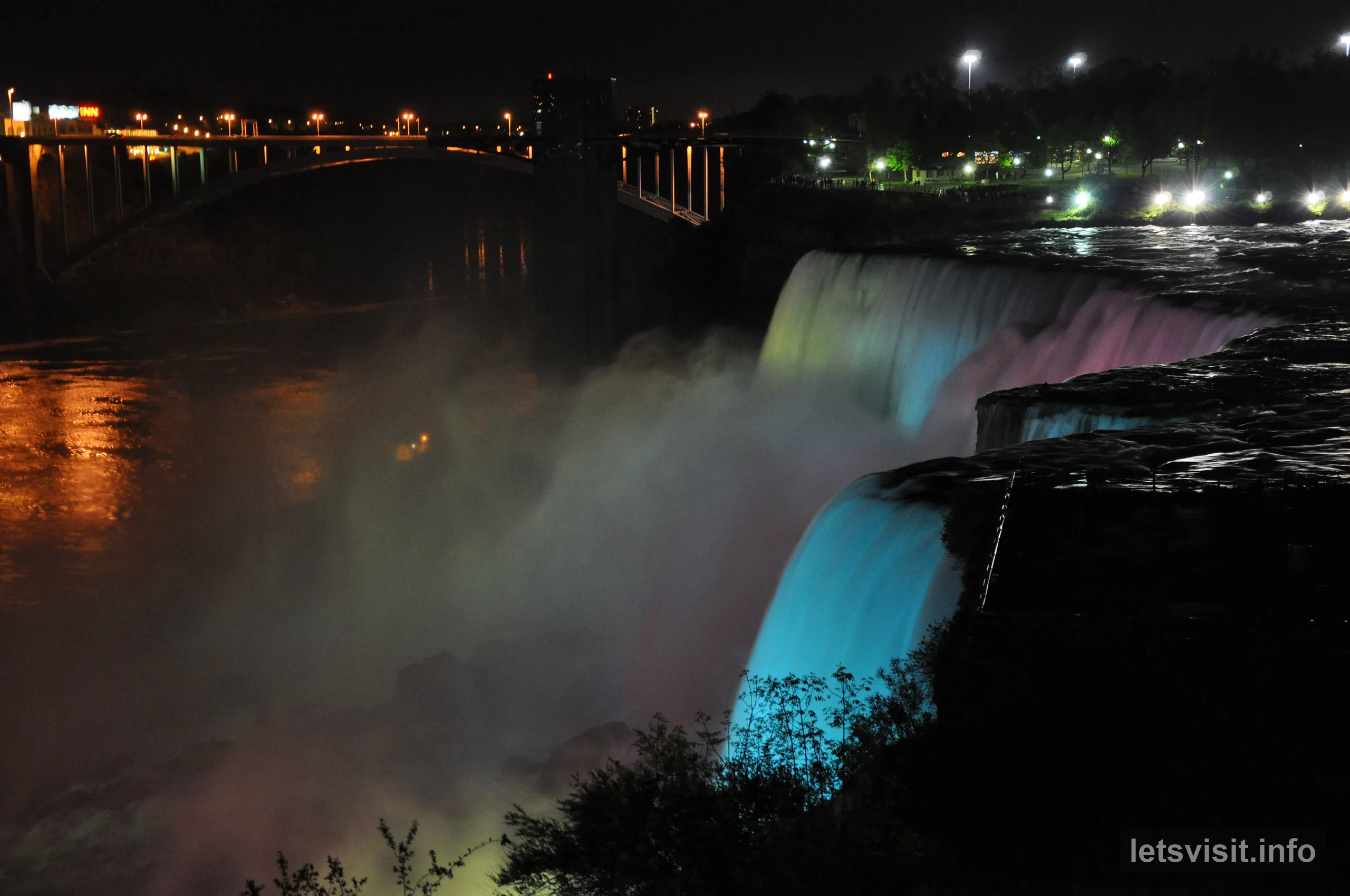
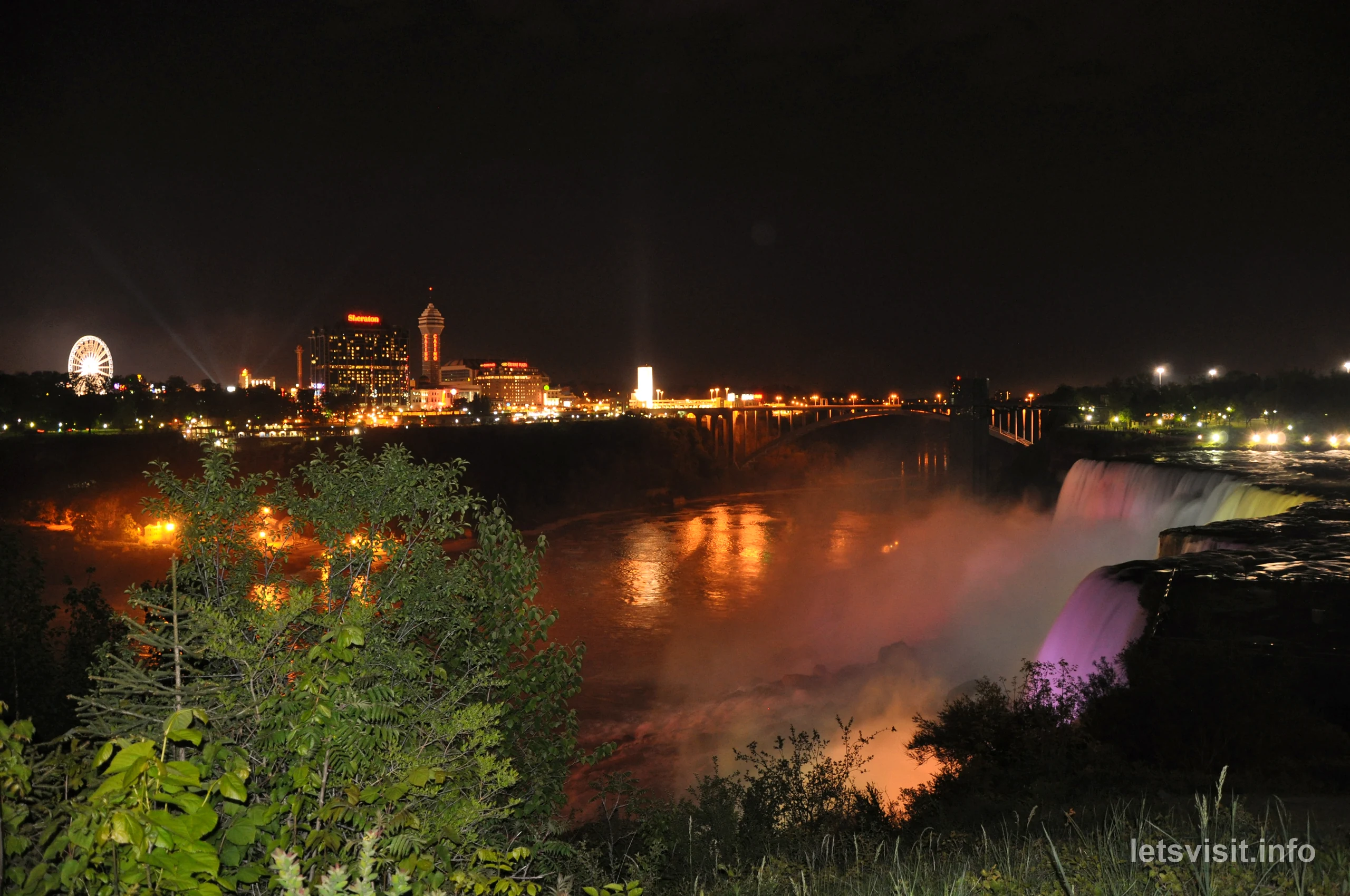
We drove through Niagara Falls as daylight was fading. By the time we were looking at the waterfalls after dark, colored illumination had transformed the scene. The falling water stood out against the darkness, with the bright American Falls and the narrower Bridal Veil Falls drawing our attention across the view.
The Canadian skyline was lit up on the other side of the river. Together, the buildings, the waterfalls and the rising spray made a striking night scene. There was an unusual combination of city lights and powerful moving water, all within the same view.
The illumination made the shapes of the falls especially clear. Against a dark background, the broad face of the American Falls and the smaller cascade beside it were easy to distinguish. The mist softened parts of the scene without hiding the constant movement of the water.
Lighting the falls was already a long-established tradition by the time of our visit. A special illumination was arranged in 1860, and the Niagara Falls Illumination Board was formed in 1925. Those earlier displays are part of the history of Niagara’s nighttime illumination.
For us, the evening views were a worthwhile part of the visit in their own right. They gave us a different impression from the daylight scenes that followed.
Three waterfalls in the daylight
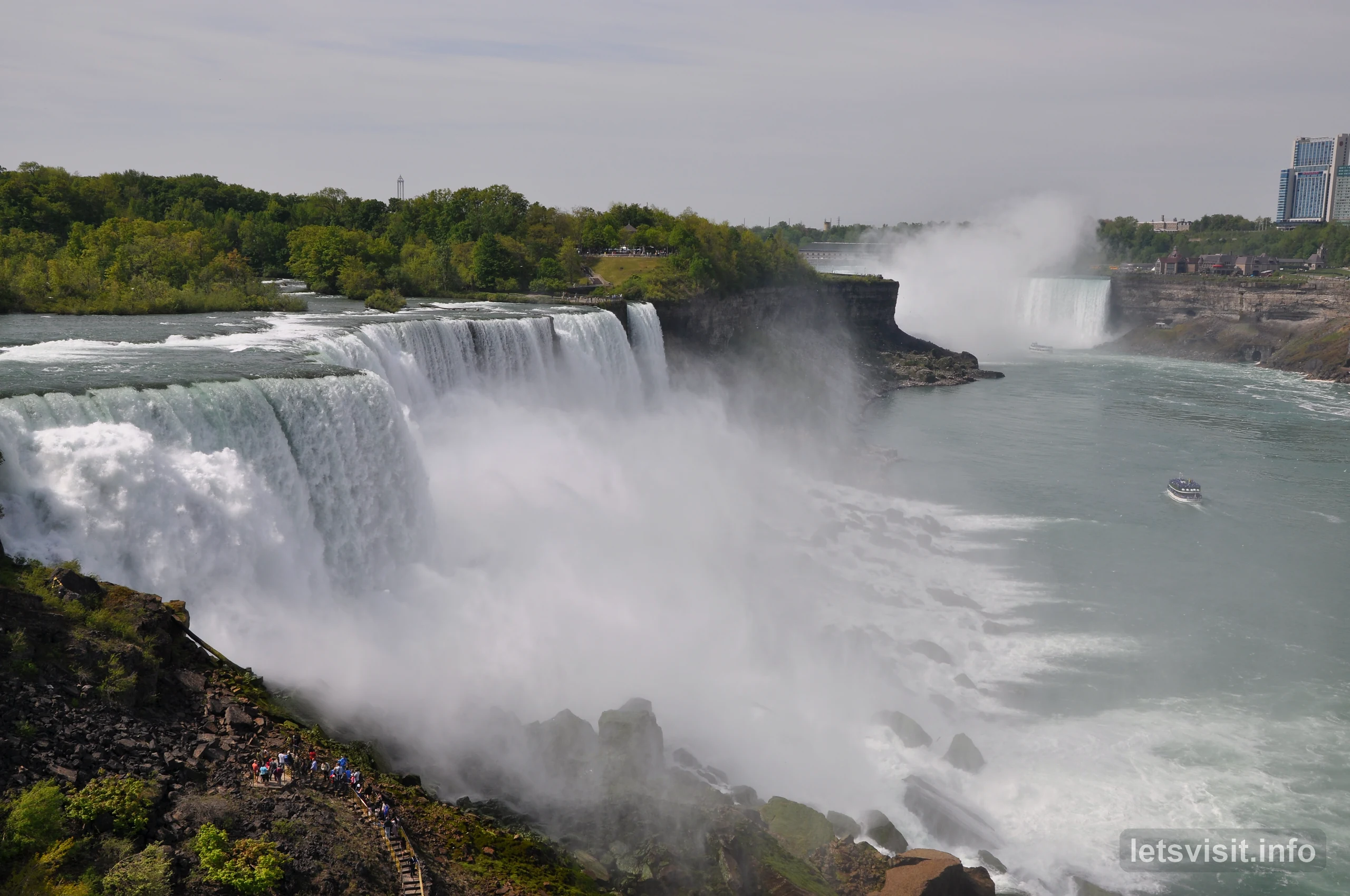
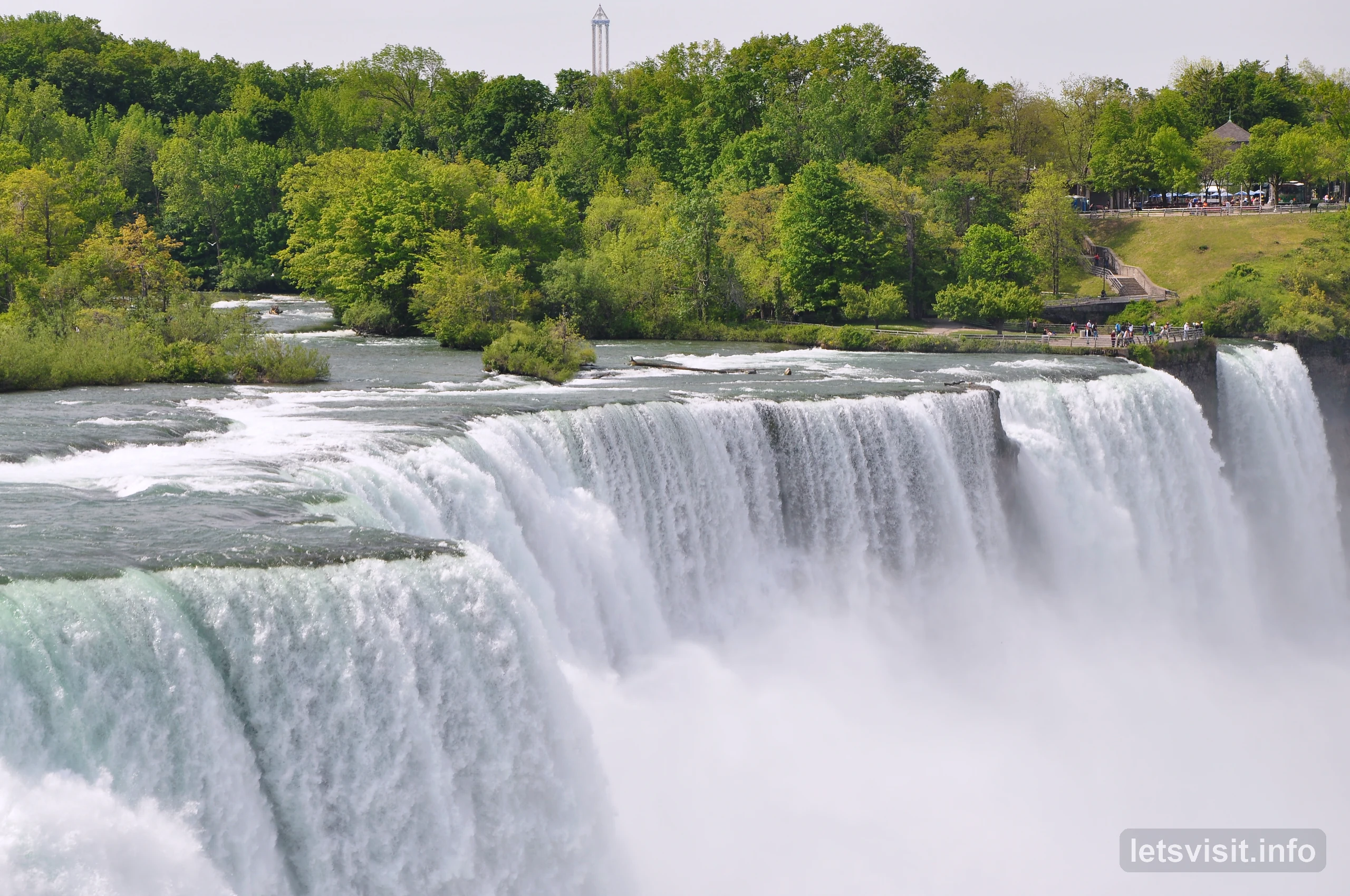
In daylight, more of the landscape became visible: the river, the banks, the edges of the falls and the clouds of spray rising from below. The night views had emphasized light and color; the morning panorama made it easier to see how the different parts fitted together.
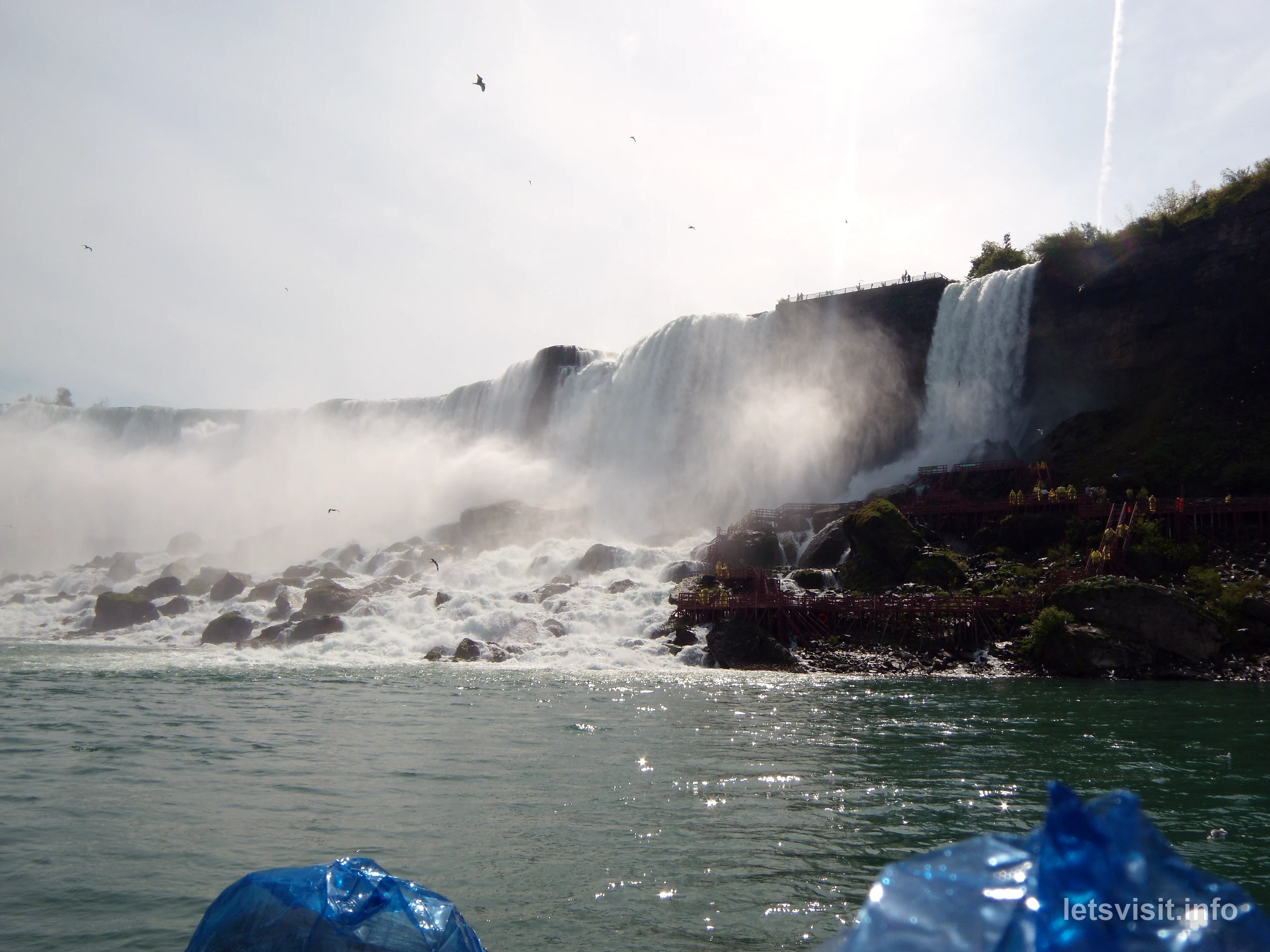
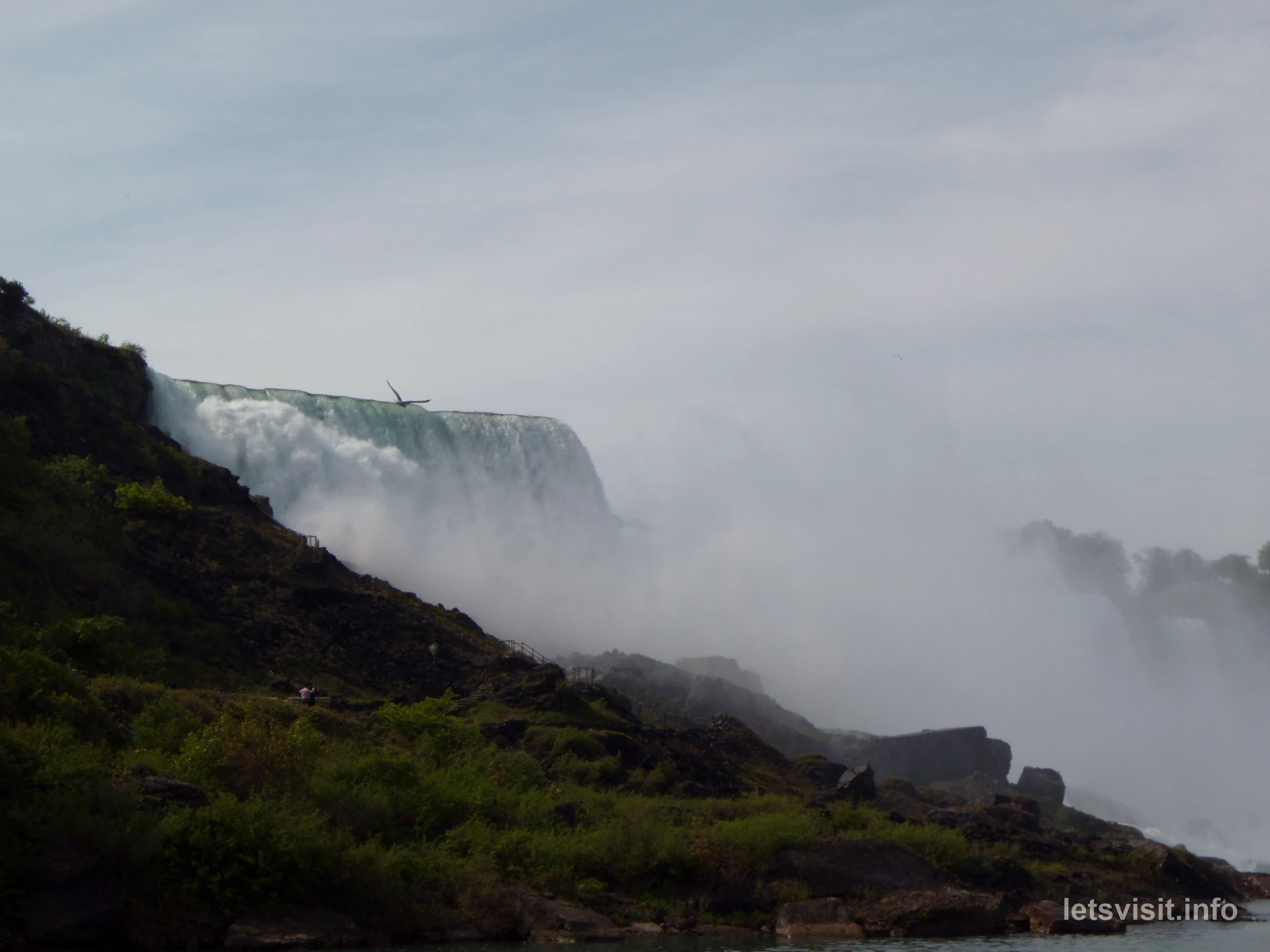
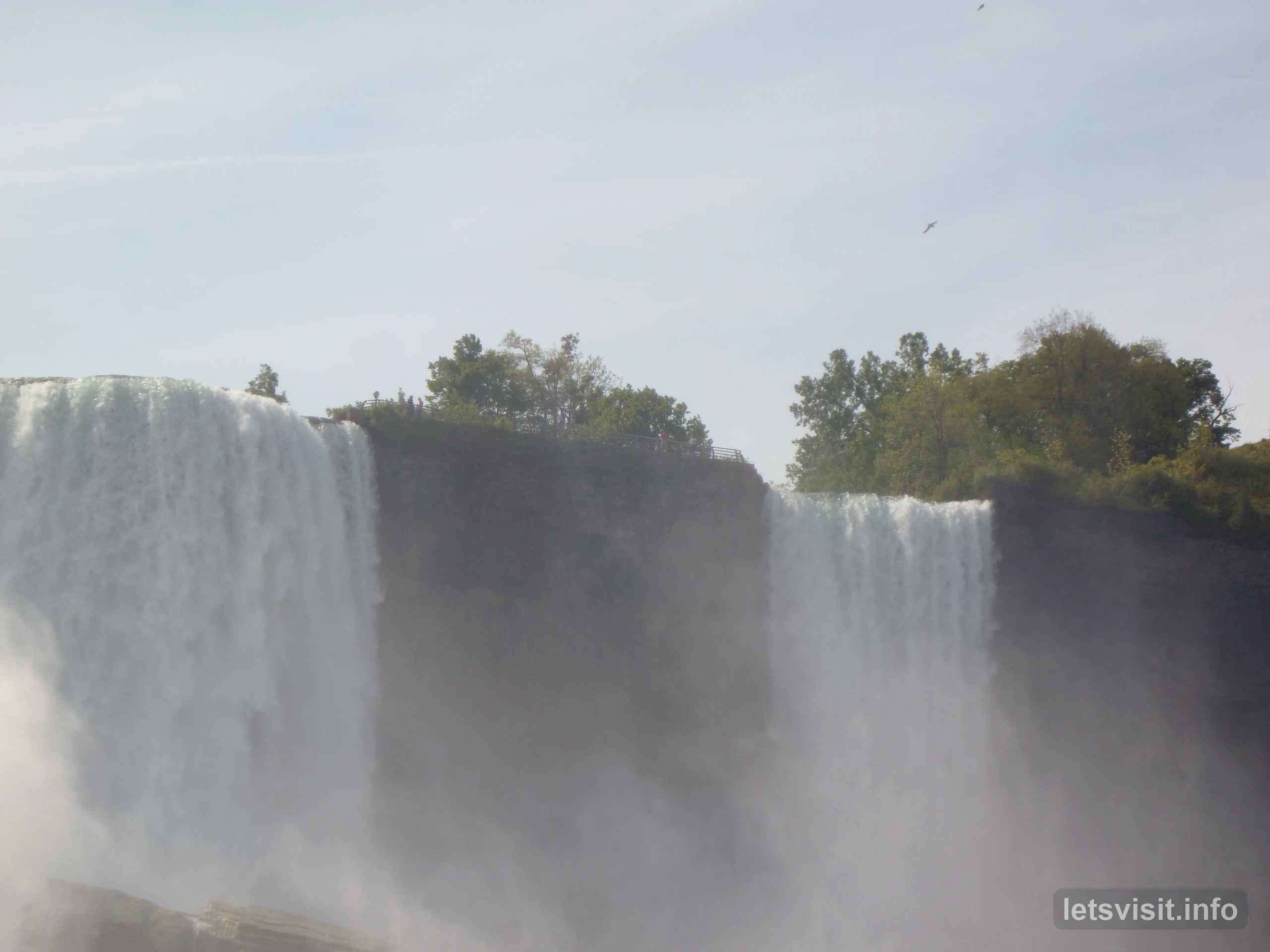
Niagara Falls is the collective name for three waterfalls. The broad American Falls and the much narrower Bridal Veil Falls lie on the United States side. Luna Island separates those two cascades. Horseshoe Falls, the largest, forms the great curve between Goat Island and the Canadian shore. Destination Niagara USA explains the three falls and their geography.
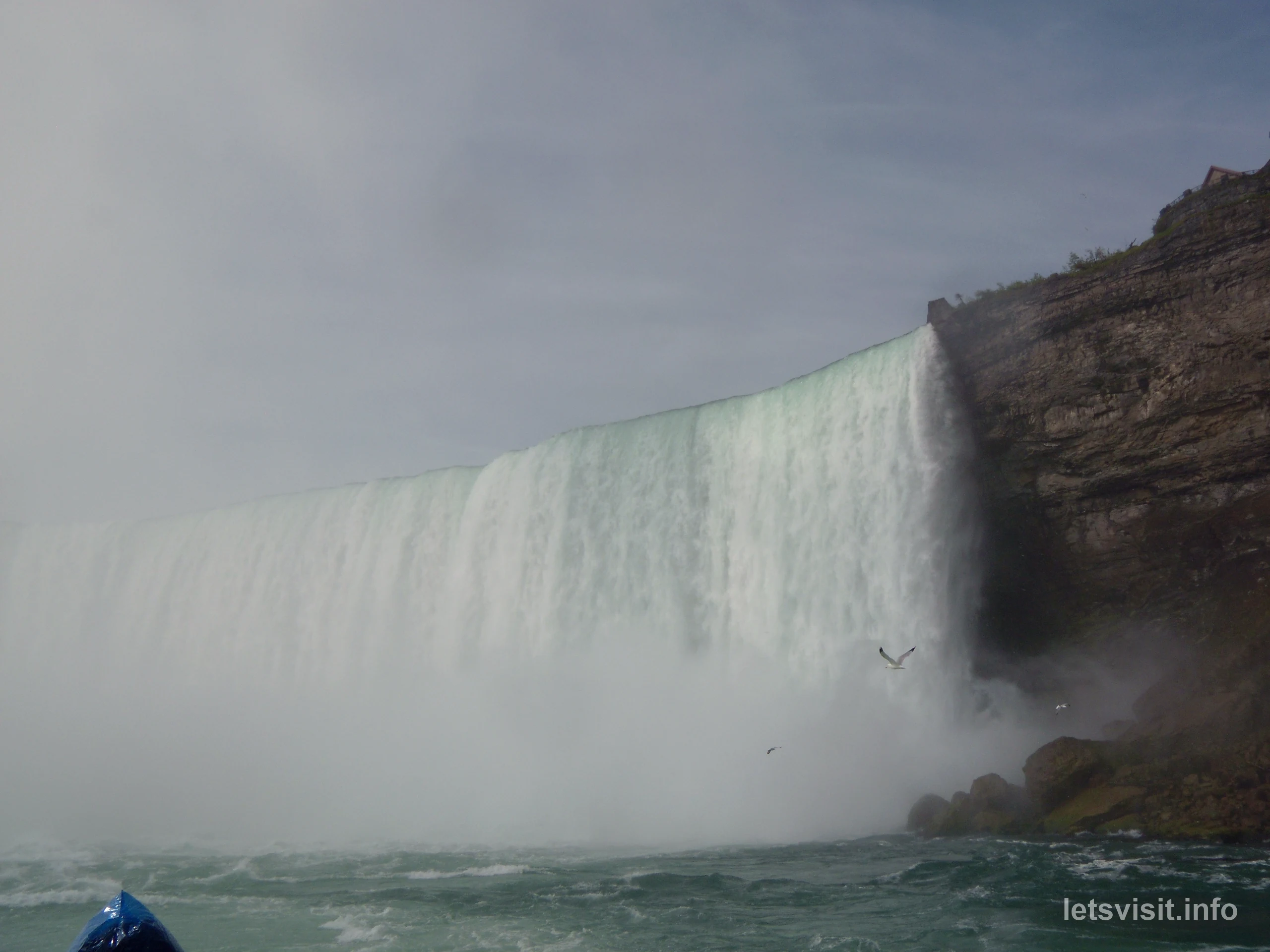
Their different shapes give the panorama much of its character. The American Falls presents a broad front of falling water, while Bridal Veil Falls is a smaller neighboring cascade. Horseshoe Falls curves inward, with a large cloud of mist rising from its base.
Blue ponchos and a view from above
Our morning included a view from the observation tower before heading down toward the river. From above, there was space to take in the panorama and see the falls as part of a much larger landscape.
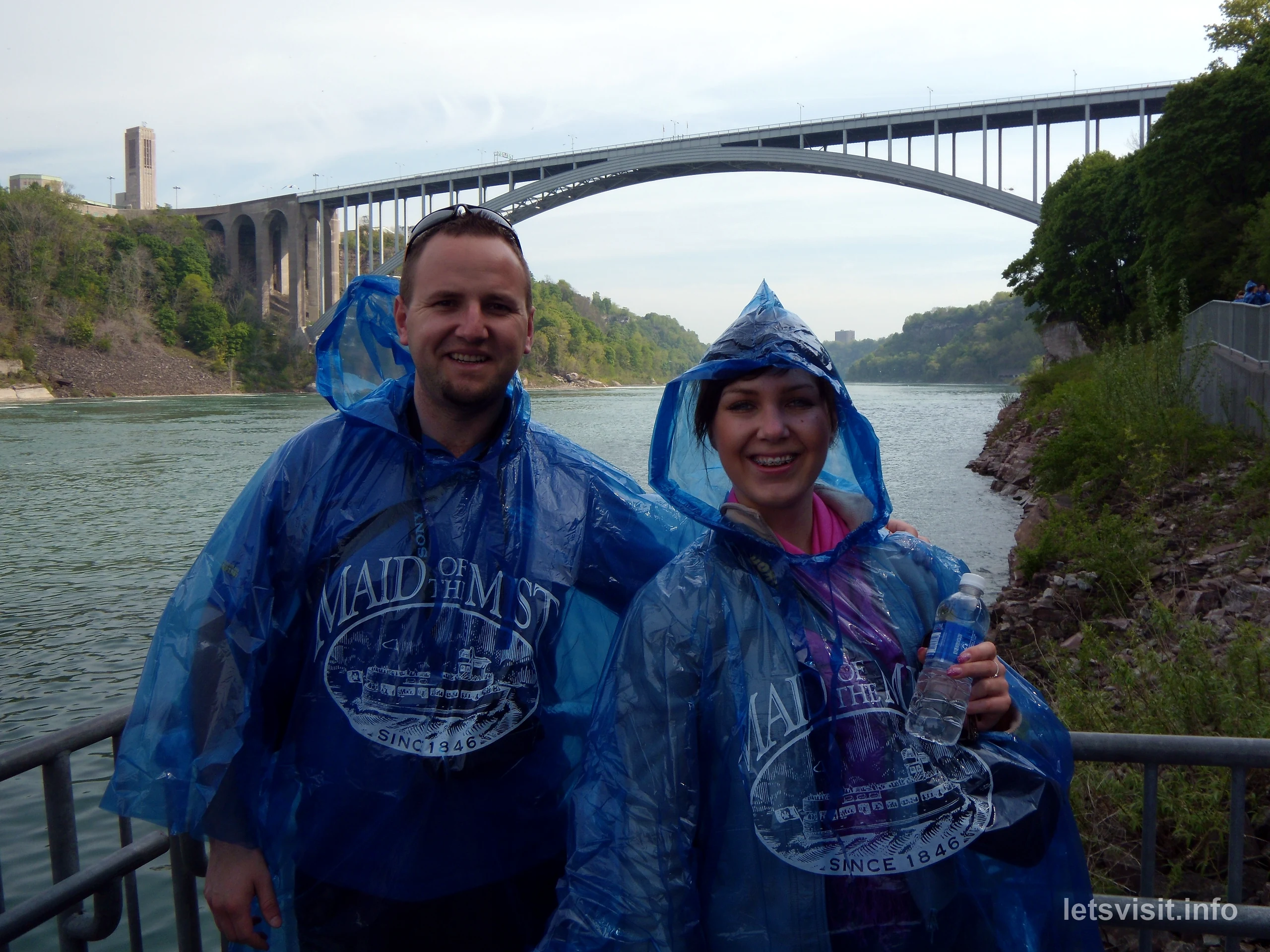
Then came the blue ponchos. We put them on for the Maid of the Mist, ready to exchange that elevated view for a much closer encounter with the water. The ponchos are one of the most recognizable details of our boat-trip footage, and their purpose became very clear once we approached the spray.
Down at river level, our attention shifted upward toward the falling water.
Our Maid of the Mist boat trip
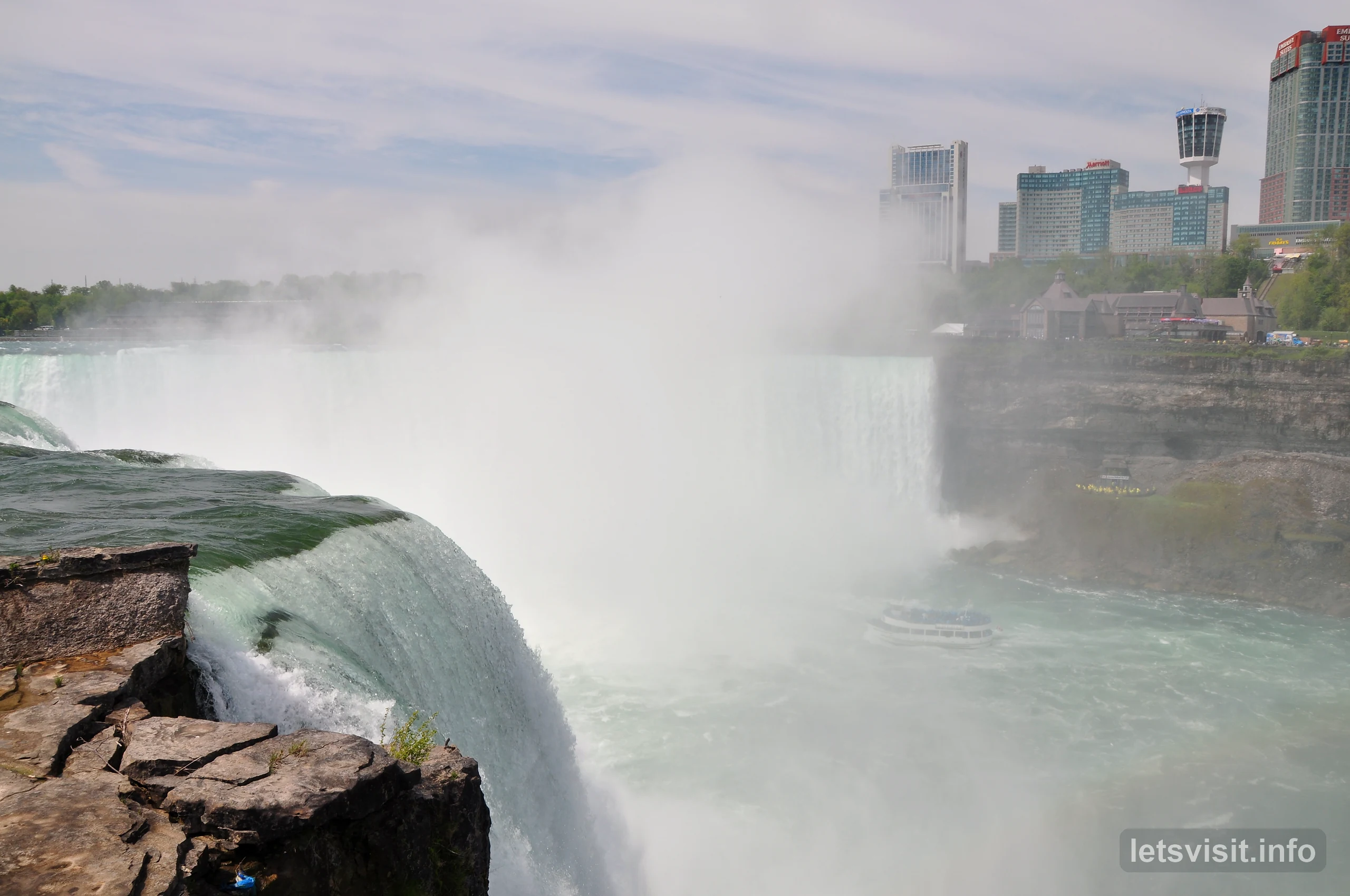
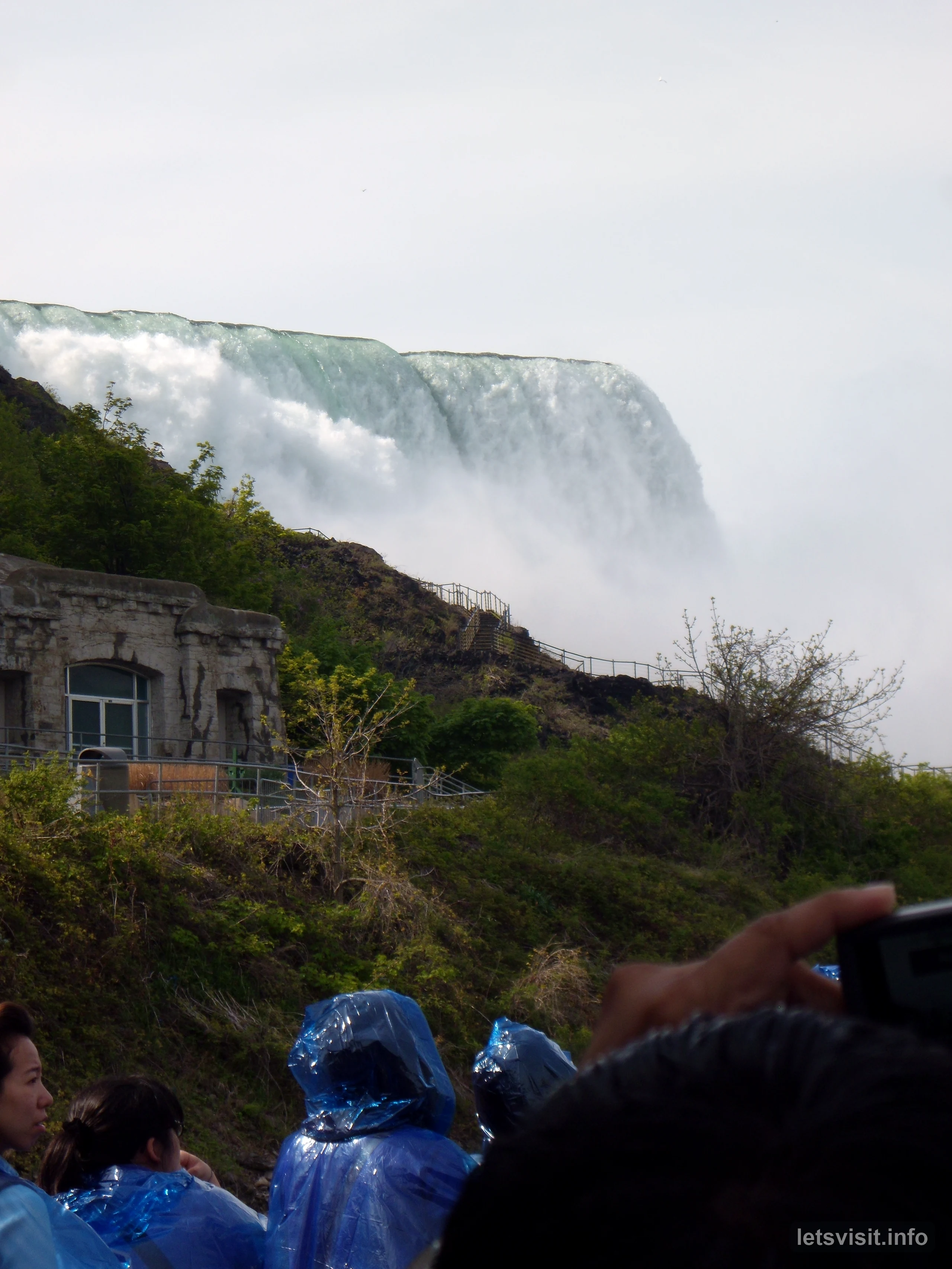
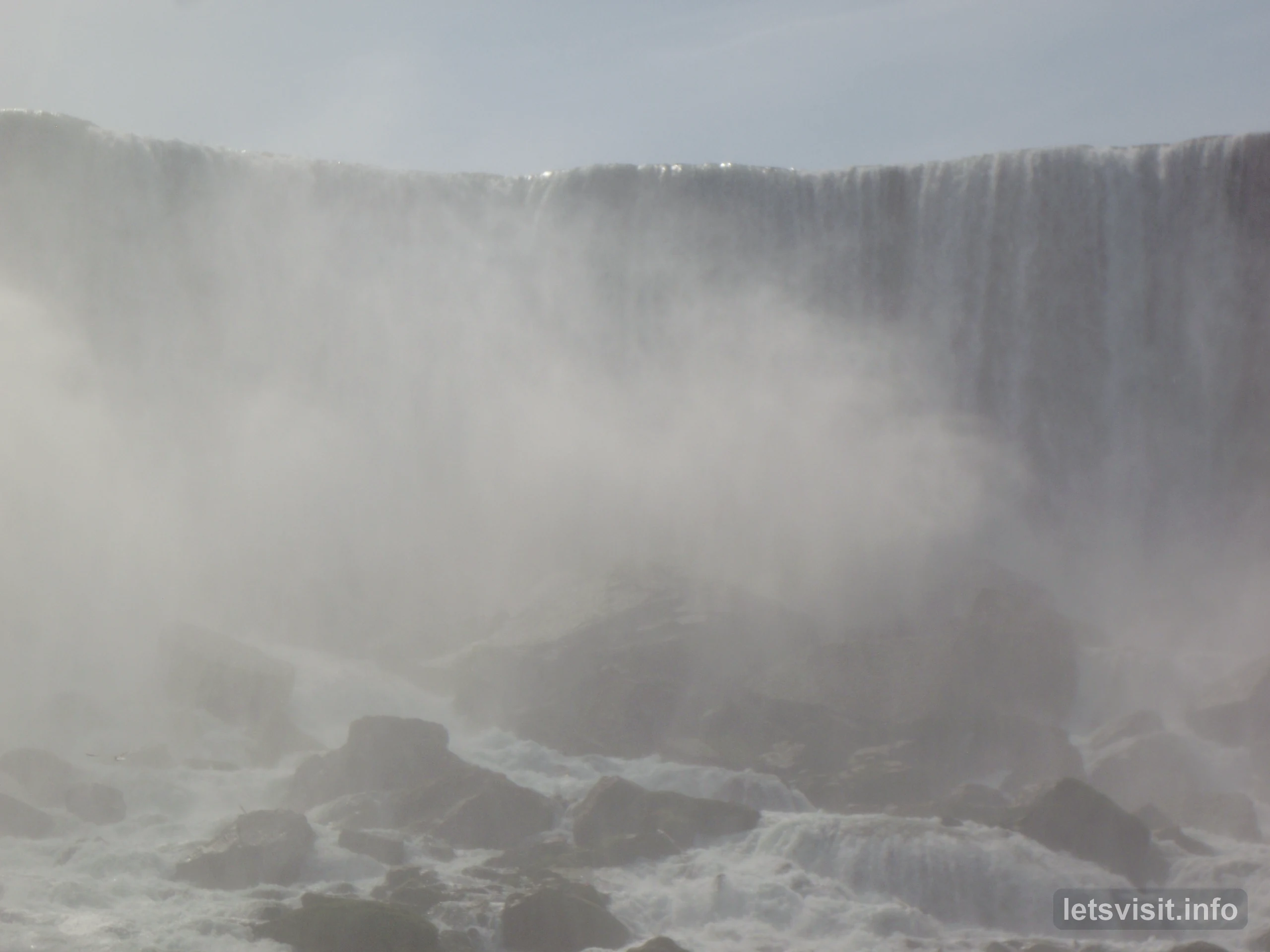
The Maid of the Mist was the most direct encounter we had with Niagara’s force. As we approached Horseshoe Falls, the sound grew louder and the spray became denser. The view that had been so clear from a distance began to disappear behind moving water and mist.
From the boat, Horseshoe Falls rose in a broad curve ahead of us. Its size was easier to feel than to take in all at once. There was falling water across the view, a loud, continuous roar and spray filling the space between the boat and the falls.
This was the part of the trip that made the strongest impression. From shore, we had watched the mist rise above the river. Here, we were inside it. The blue ponchos became part of the experience, and the clear panorama gave way to glimpses through the spray.
There is a long history behind this way of experiencing Niagara. The first Maid of the Mist steamboat began operating in 1846, carrying passengers and cargo across the river. After a suspension bridge opened in 1848, sightseeing became its main purpose. The operator’s history of the Maid of the Mist traces that change from a river crossing to a waterfall excursion.
Knowing that background adds another dimension to the blue ponchos and familiar boat name. Visitors had been seeking this close view of Niagara long before our cameras, and our own trip made the appeal easy to understand.
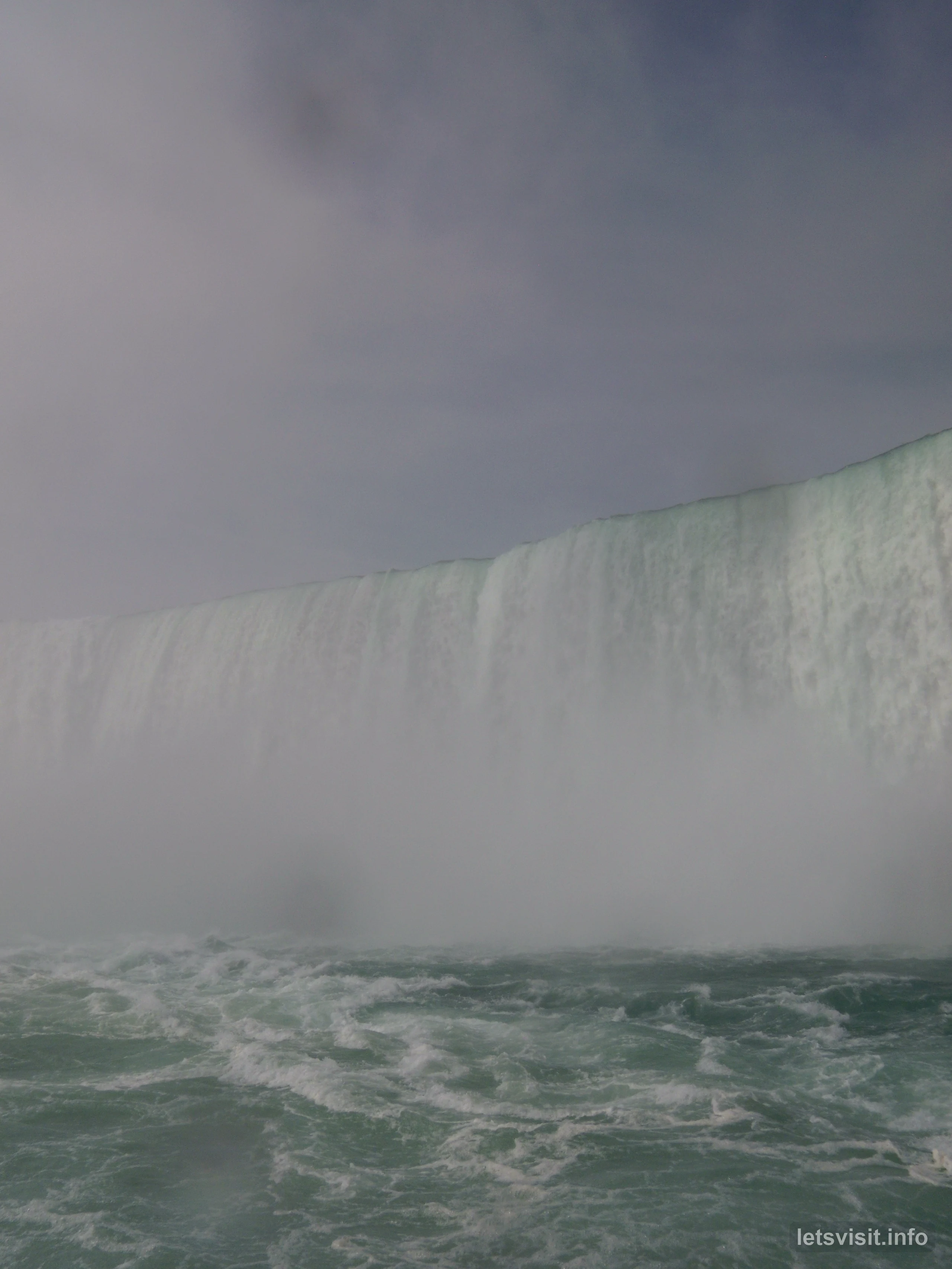
Taking in the wider panorama
The wider views gave us a chance to appreciate the waterfalls together again. The broad American Falls and the sweeping curve of Horseshoe Falls have very different outlines, yet the river and drifting mist connect them in one landscape.
The panorama also showed the distance between the separate cascades and the width of the setting around them. After the close views through the spray, we could take in the whole scene again.
A rainbow in the mist
One of the last scenic moments of our visit was a rainbow appearing in the spray. After the colored lights of the evening and the dense mist around the boat, it gave us another way to see the water catching the light.
The same droplets that made the view difficult near Horseshoe Falls could produce this clear band of color when the sunlight and viewing angle aligned. Sunlight bends as it enters and leaves a water droplet and reflects inside it, separating the light into visible colors. The National Weather Service explains the process behind a rainbow.
We were pleased to catch that moment. The rainbow became a fitting final image for the scenic part of our film: a small, clearly defined detail within the much larger scene of falling water and drifting spray.
The landscape behind the view
Niagara’s scale becomes more interesting when you consider where the water comes from. The Niagara River carries water from Lake Erie toward Lake Ontario, linking two of the Great Lakes. The waterfalls are one dramatic part of that larger waterway.
The landscape began developing around 12,000 years ago, as the last ice sheets retreated from the region. The falls originally lay farther downstream, near Queenston and Lewiston. Over thousands of years, erosion cut into the rock and moved the falls upstream toward their present position. Niagara Parks describes this changing landscape in its guide to Niagara Falls geology.
The river has also helped power the surrounding region. By the time of our 2010 visit, Niagara’s water had been used to generate electricity for more than a century. For example, the Canadian Niagara Power generating station first operated in 1905, as described in Niagara Parks’ history of the station’s construction.
These facts help explain why Niagara is more than a famous view. The same moving water that shapes the gorge has drawn visitors, supported industry and changed the landscape over a very long time.
What stayed with us from Niagara
Our strongest impressions came from the different ways we saw the falls: the illumination after dark, the clear panorama in daylight and the close approach on the Maid of the Mist. Each revealed something that the other views could not show as clearly.
The boat ride gave us the sound and spray. The wider viewpoints gave us the shapes of the American Falls and Horseshoe Falls. The rainbow added a final moment that was entirely dependent on the light.
Those are the experiences we wanted to share through our photographs and film. Niagara gave us plenty to look at from a distance, but getting close to the water made its scale much more tangible. The blue ponchos, the roar of Horseshoe Falls and that rainbow are the details that stayed with us.
Photos & video: Original material from our 2010 visit to Niagara Falls — Let’s Visit by Radon.