
CHICAGO · TOP 23 · TRAVEL GUIDE
23 Best Things to Do in Chicago
Architecture, lakefront museums and neighborhood landmarks — with realistic routes, ticket advice and places to pause.
By Let’s Visit By Radon · About 50 minutes
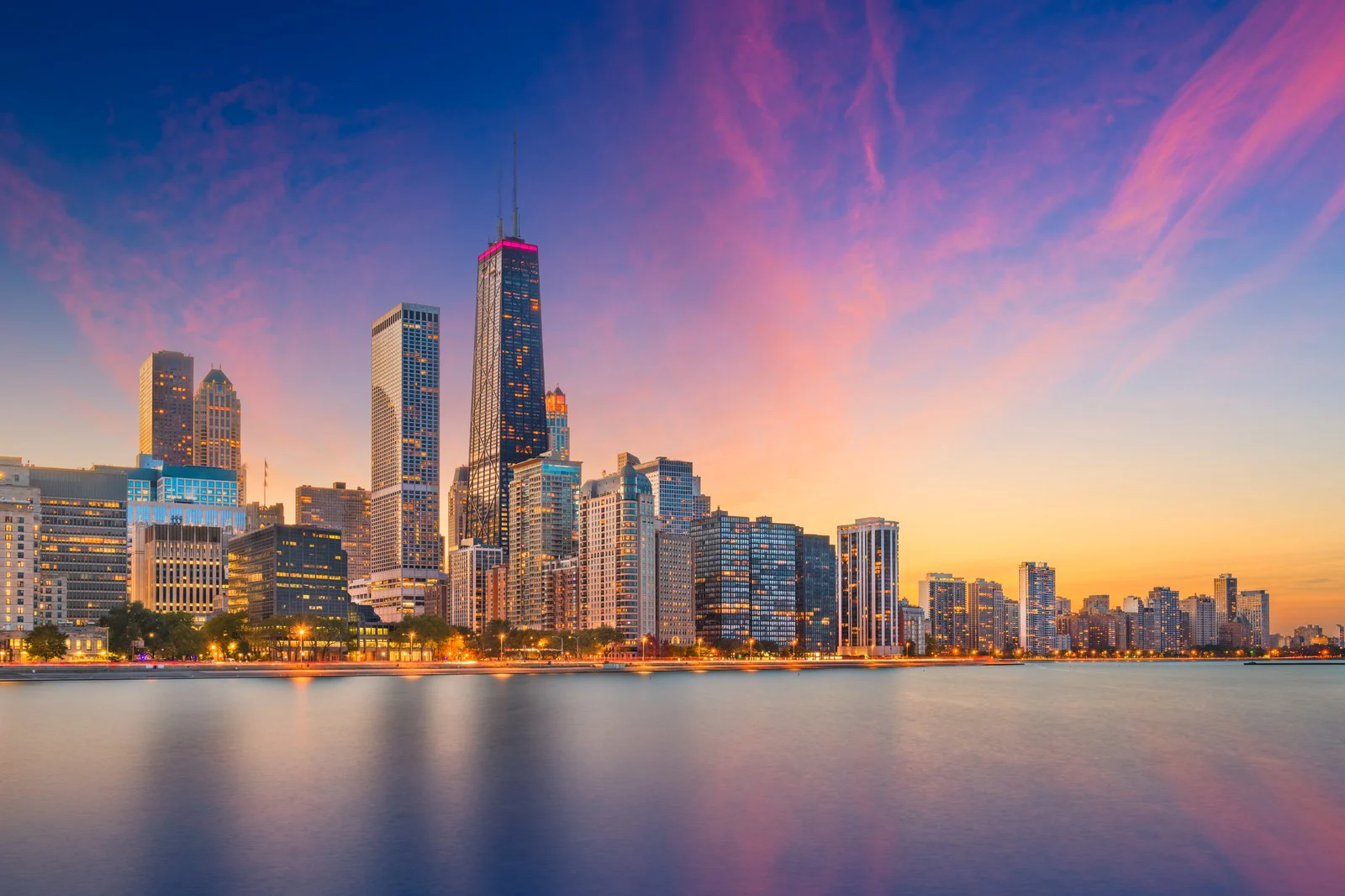
Chicago is easiest to understand when you change your point of view. At river level, bridges and towers make the city feel like an architectural canyon. From the lakefront, the same buildings gather into a long, remarkably varied skyline. In its parks and museums, the story becomes more intimate: a reflection in polished steel, a dinosaur skeleton, a stained-glass dome above a former public library.
This guide brings together the 23 Chicago attractions featured in our film, from Cloud Gate and the architecture river cruise to Wrigley Field and the Griffin Museum of Science and Industry. The places are arranged by area, so you can turn the list into a trip. Their article numbers are separate from the film’s countdown.
Allow four full days for a varied first visit. That gives you room for the central landmarks, a river cruise, a skyline viewpoint and selected museums. To visit all 23 places with selective museum visits, use the six-day plan near the end and consider a seventh day if you want a baseball game, longer museum visits or a gentler pace. A weekend is enough for a satisfying introduction, provided you choose.
Coverage: 23 places across downtown, the lakefront, Lincoln Park, Lakeview and Hyde Park.
Suggested stay: Four days for highlights; six active days, or seven with more breathing room, for the full selection.
Book first: Your chosen cruise, major museum visits, observation deck and any game or performance.
Getting around: Walk within each sightseeing area, then use CTA, suitable regional trains or a taxi between more distant groups.
Visit allowances and itineraries below are editorial estimates. Add time for meals, travel, security and queues, and arrange indoor visits around the official opening calendars.
First visit? Start with these Chicago highlights
For a first taste of Chicago, build your trip around the park, the river and one skyline view. These six choices give you a useful starting point without working through all 23 attractions.
- The city icon: Cloud Gate, with Crown Fountain and the pavilion nearby in Millennium Park.
- Architecture from the water: an architecture river cruise, booked first so the dock and departure shape the day.
- A free downtown walk: Chicago Riverwalk and the Wrigley Building, with time to pause by the bridges.
- One view from above: choose Skydeck or 360 CHICAGO; both are optional paid additions, and one is enough for a short stay.
- One major museum: the Art Institute for art, Field for natural history or Shedd for aquatic life. Choose one for a two-day visit.
- An outdoor finish: the waterfront beside Adler or North Avenue Beach, chosen to match the part of the city you are already visiting.
Choose your plan: 2 days — the essential weekend · 3 days — highlights-and-neighborhoods · All itinerary options
Watch our Chicago travel guide
The film counts down from the Wrigley Building at #23 to Cloud Gate at #1, introducing the history and architecture behind the places. Watch it for a sense of the city, then use the geographical groups below to decide how you want to explore.
Watch the Chicago travel guide on YouTube.
In this guide
Explore the 23 places
- Cloud Gate, also known as The Bean
- Crown Fountain
- Jay Pritzker Pavilion
- Chicago Cultural Center
- Art Institute of Chicago
- Chicago Theatre
- Skydeck Chicago at Willis Tower
- Chicago Riverwalk
- Chicago Architecture River Cruise
- Wrigley Building
- Magnificent Mile
- Historic Chicago Water Tower
- 360 CHICAGO Observation Deck
- Navy Pier
- Centennial Wheel
- Buckingham Fountain
- Field Museum
- Shedd Aquarium
- Adler Planetarium
- Lincoln Park Zoo
- North Avenue Beach
- Wrigley Field
- Griffin Museum of Science and Industry
All 23 Chicago attractions on one map
Match each numbered place to its section in this guide. Colors group nearby attractions into six sightseeing areas; open the layer menu to show or hide an area. Select a place for admission notes, suggested visit time, directions and a link back to the full description.
01–07 · Millennium Park & the Loop
08–13 · River & Magnificent Mile
14–15 · Navy Pier
16–19 · Grant Park & Museum Campus
20–22 · Lincoln Park & Lakeview
23 · Hyde Park & Jackson Park
Open the full map in Google My Maps →
Use the map to group visits, not as one continuous walking route. Point 9 marks the CAC / First Lady dock at 112 E Wacker Drive; another operator may use a different dock. Point 19 marks Adler Planetarium, with the free skyline viewpoint on the nearby public waterfront.
A short history that helps explain Chicago
Three events help connect many of the places in this guide: the Great Chicago Fire of 1871, the World’s Columbian Exposition of 1893 and the reversal of the Chicago River in 1900. Together, they show a city repeatedly reshaping its buildings, public spaces and infrastructure.
The fire destroyed a large part of the urban core. The rebuilding that followed became a setting for experiments in construction and, eventually, the modern skyscraper. The Historic Water Tower is a visible link to the city before the disaster, while the varied towers along the river show how Chicago kept developing new architectural answers. The history is more complicated than a single moment of invention; looking at buildings from several generations is more revealing than searching for one definitive style. 26
The 1893 world’s fair left another set of connections. The Field Museum grew from its collections, and the fair’s Palace of Fine Arts became the home of the science museum in Jackson Park. The Art Institute’s Michigan Avenue building also dates to that year. These institutions help explain why the city’s cultural ambitions extend well beyond its office towers. 5 17 23
The river reversal was a public-health engineering project. By directing wastewater away from Lake Michigan through the Chicago Sanitary and Ship Canal, it sought to protect the region’s drinking-water source. Remember that industrial history when you walk beside the river or take a cruise: the waterfront’s role in daily city life has changed profoundly. 27
Millennium Park and the Loop
Begin around Millennium Park, where several short outdoor visits sit close together. Across Michigan Avenue, the Cultural Center adds a free architectural interior; farther south, the Art Institute needs a much larger part of the day. The Chicago Theatre and Willis Tower extend this group into the Loop, rather than forming one uninterrupted park walk.
1. Cloud Gate, also known as The Bean
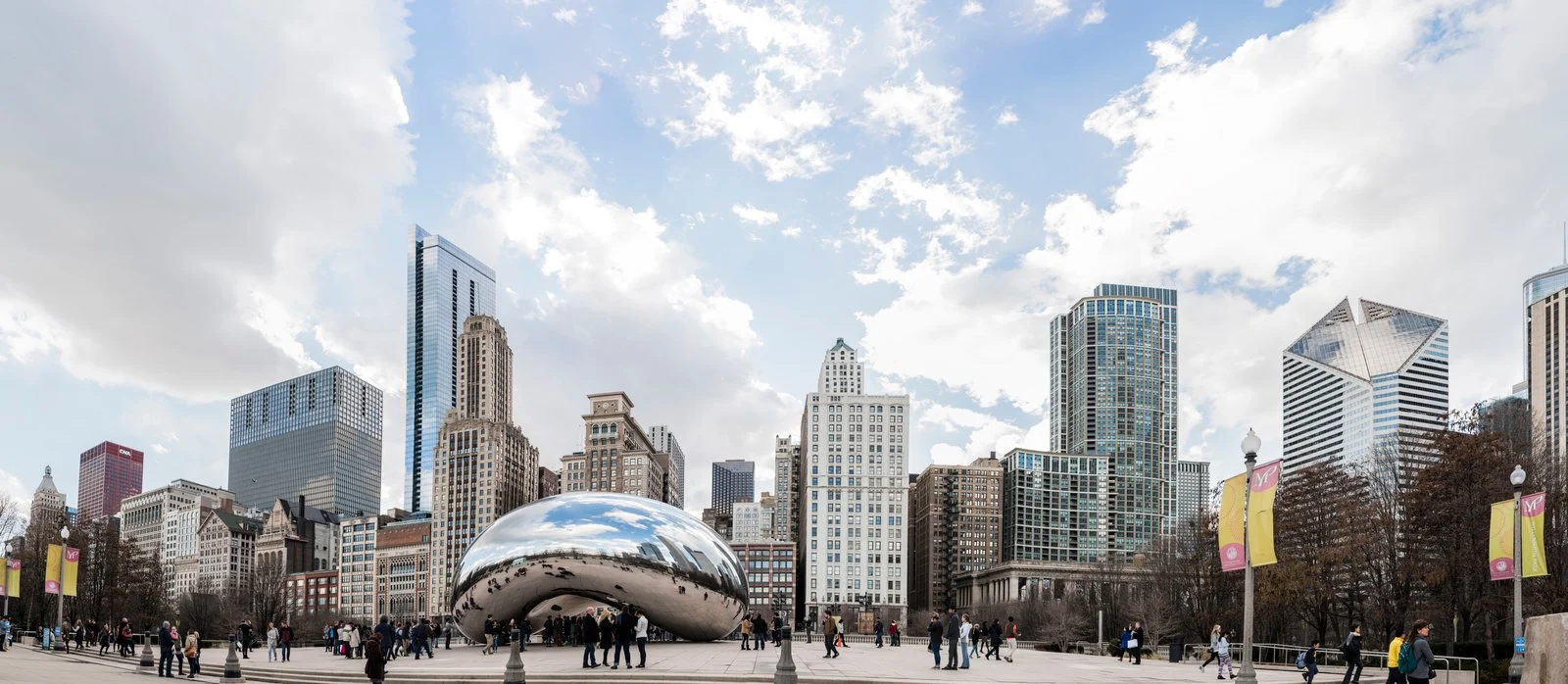
Cloud Gate draws people into Millennium Park by reflecting the place around them. Anish Kapoor’s polished stainless-steel sculpture bends the Michigan Avenue skyline across its curved shell, catching buildings, clouds and visitors in the same continuous surface. Its nickname, The Bean, describes the outline; its formal name makes more sense when you walk beneath the arch.
FREE — park entry
Cloud Gate is part of the free Millennium Park visit. No attraction ticket is needed; park entry rules still apply.
Official park visitor information
Suggested time: 20–30 minutes.
Kapoor took inspiration from liquid mercury. The sculpture appeared with the park’s opening in 2004, with its final completion following in 2006. What looks like a single seamless object is as much an achievement of fabrication and polishing as a simple sculptural gesture. 1
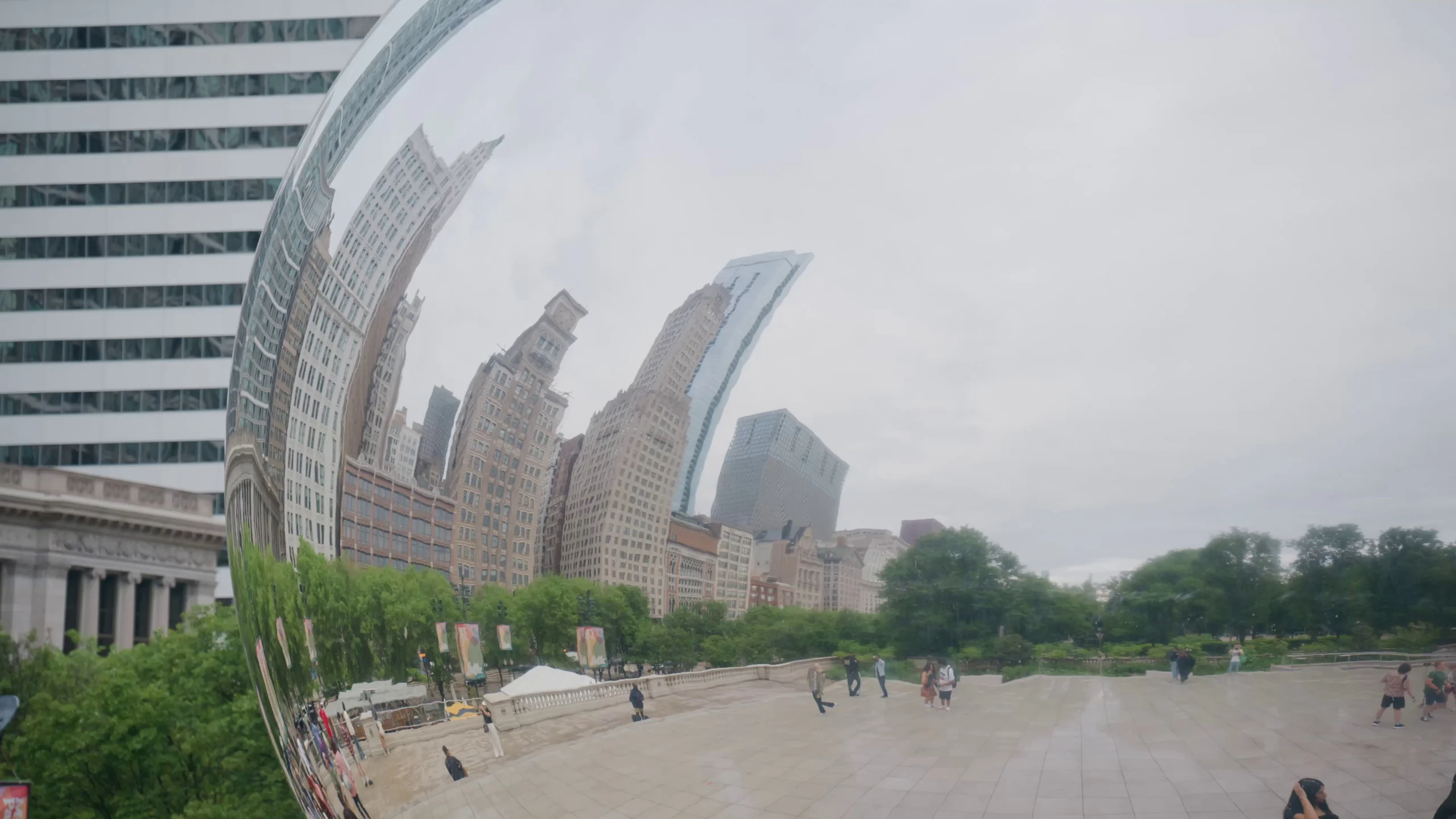
Circle it before stepping underneath. From a distance, the reflected skyline is the main subject; below the concave center, your reflection multiplies and changes scale. Moving a few steps can be more interesting than staying in one position for a photograph.
Allow 20–30 minutes, within a combined Millennium Park visit. Access is free under the park’s visitor rules. An earlier arrival may make framing easier, but treat the people gathering around it as part of the scene rather than expecting an empty plaza. Check the official park information.
In the film: Cloud Gate — countdown #1.
2. Crown Fountain
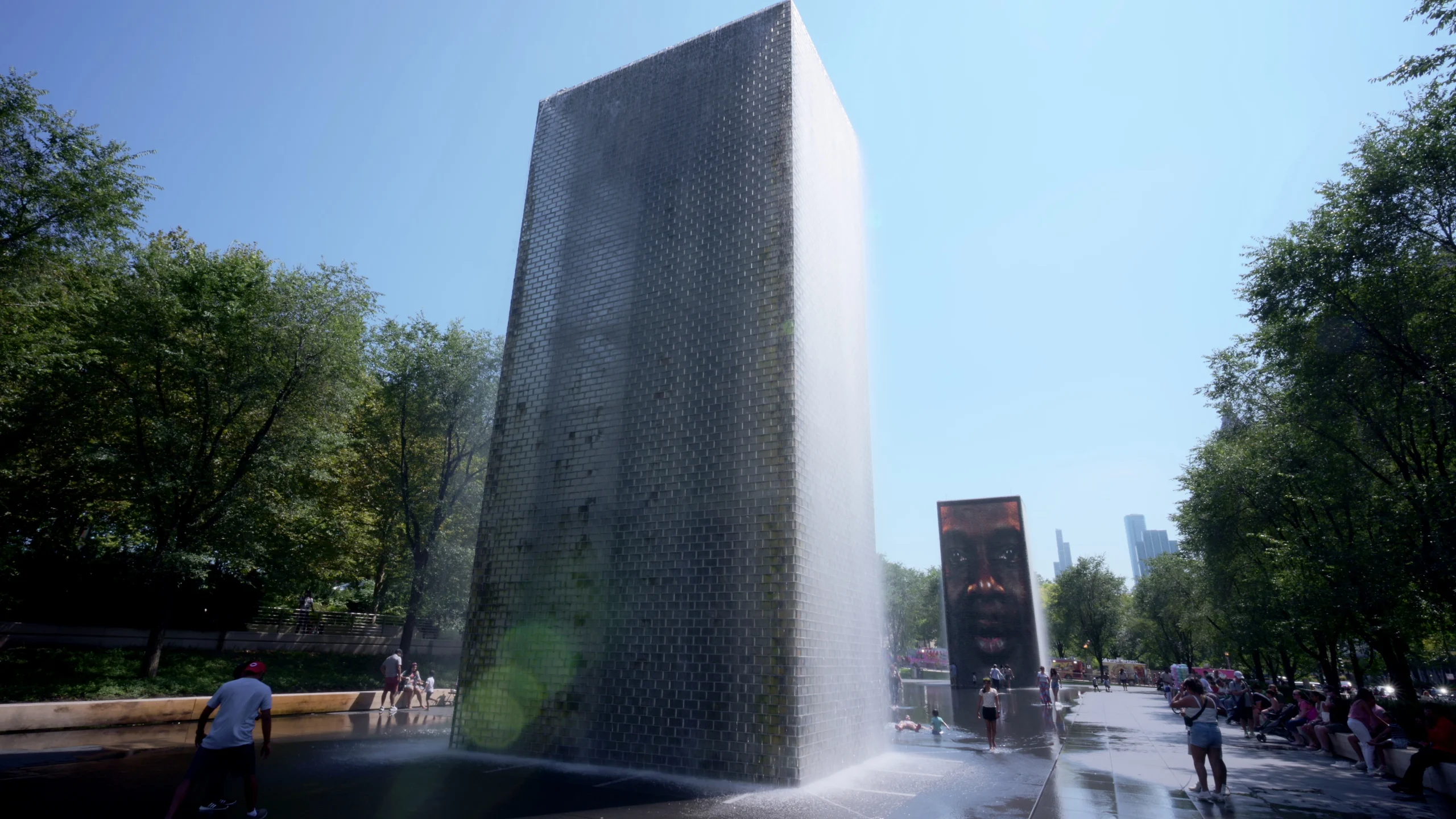
A short walk south of Cloud Gate, Crown Fountain shifts attention from the skyline to the city’s people. Jaume Plensa’s two glass towers face each other across a shallow black-granite reflecting pool. Video portraits turn the towers into enormous, changing faces.
FREE — fountain and park
There is no separate ticket for Crown Fountain. Water play is seasonal, so check the park’s visitor information.
Official park visitor information
Suggested time: 15–20 minutes.
The portraits were recorded from a cross-section of Chicago residents. At intervals during the water season, a face appears to release a stream from its mouth, a playful reference to the gargoyles and sculpted heads of older European fountains. Public art becomes an encounter with ordinary people rather than a monument to one famous individual. 2
Stay long enough to watch the expression change. The composition works at several scales: a whole face across the plaza, reflections on the dark surface and children approaching the water. The fountain’s seasonal water operation is part of its character; the experience differs in colder weather.
Plan 15–20 minutes, or longer for a family break when the water is operating. Bring a change of clothes if children are likely to play, keep equipment away from splashes and leave room for others to move around the pool. Crown Fountain fits into the same free Millennium Park visit as Cloud Gate and the pavilion.
In the film: Crown Fountain — countdown #14.
3. Jay Pritzker Pavilion
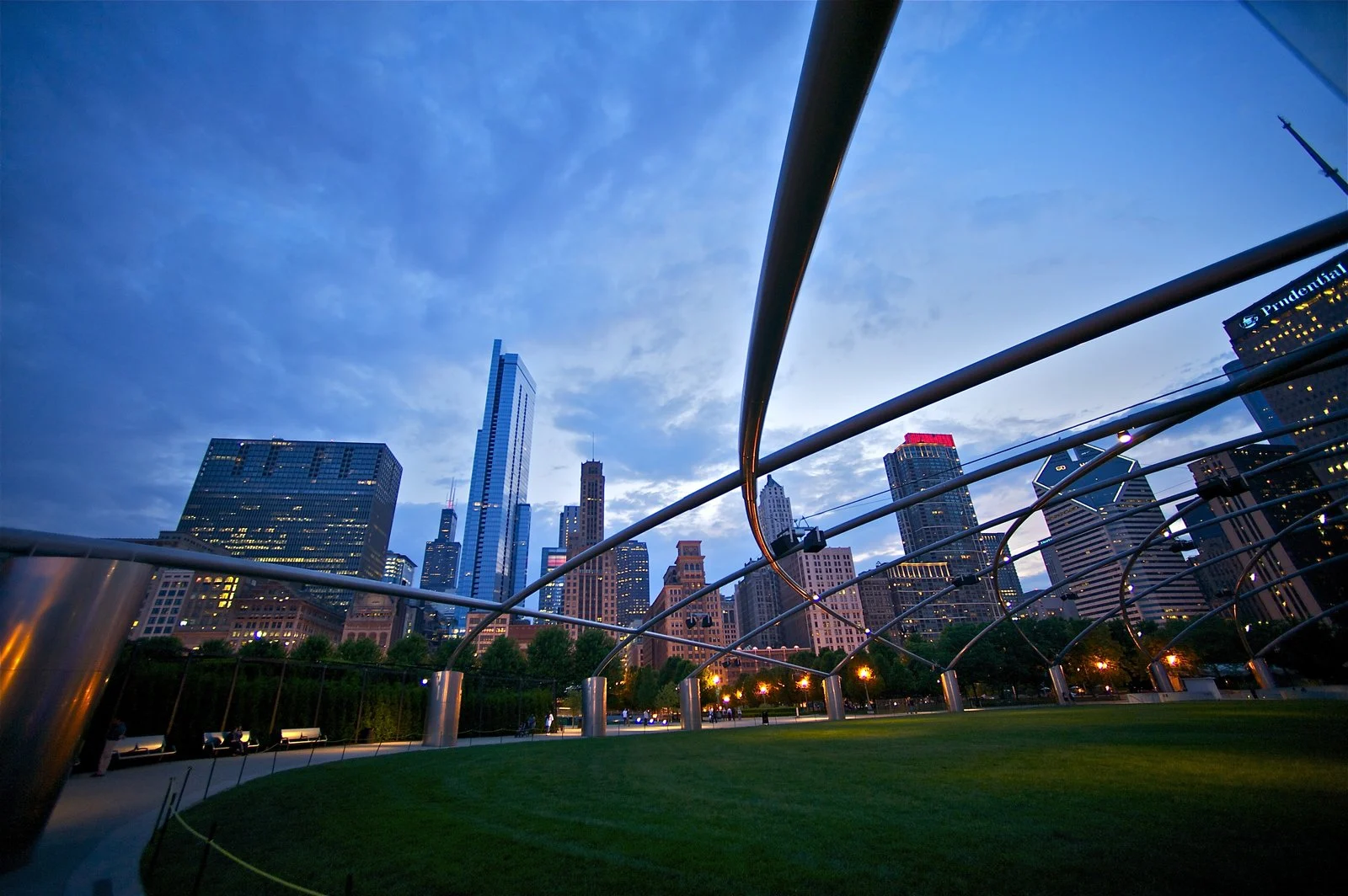
The Jay Pritzker Pavilion gives Millennium Park an unmistakable sculptural profile. Frank Gehry designed its bandshell as a gathering of stainless-steel ribbons, while a lattice of steel tubes reaches over the seating and Great Lawn. The structure is striking even when the stage is quiet.
FREE — architecture and park visit
Seeing the pavilion as part of Millennium Park is free. Admission and seating for a particular concert follow that event’s rules; check its listing separately.
Official park and event information
Suggested time: 15–25 minutes.
The overhead trellis has a practical purpose: it carries a distributed sound system, extending the performance space beyond the fixed seats. That relationship between dramatic form and everyday use is the detail to look for. The pavilion is a working outdoor venue as well as an architectural landmark. 3
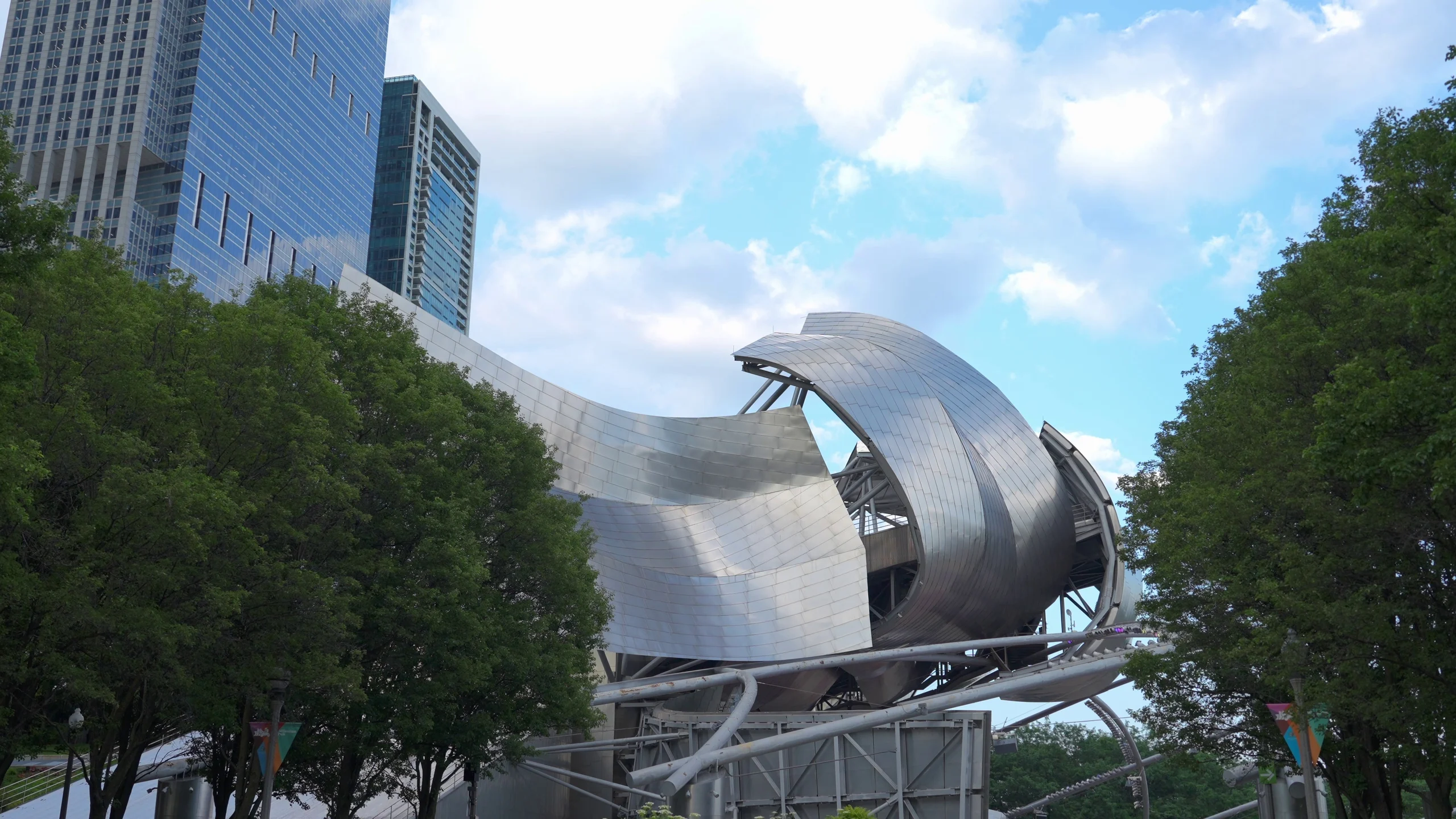
Walk toward the lawn to see how the curved stage enclosure relates to the long grid overhead. Up close, the ribbons catch light individually; from farther away, the whole ensemble reads against the buildings behind it. A brief daytime stop and an evening performance offer quite different experiences.
Allow 15–25 minutes for the architecture, or reserve the relevant part of your evening for an event. The park is free, and many performances are free, but seating, admission arrangements and permitted items depend on the program. Consult the Millennium Park calendar and visitor information before treating an event as part of your plan.
In the film: Jay Pritzker Pavilion — countdown #15.
4. Chicago Cultural Center
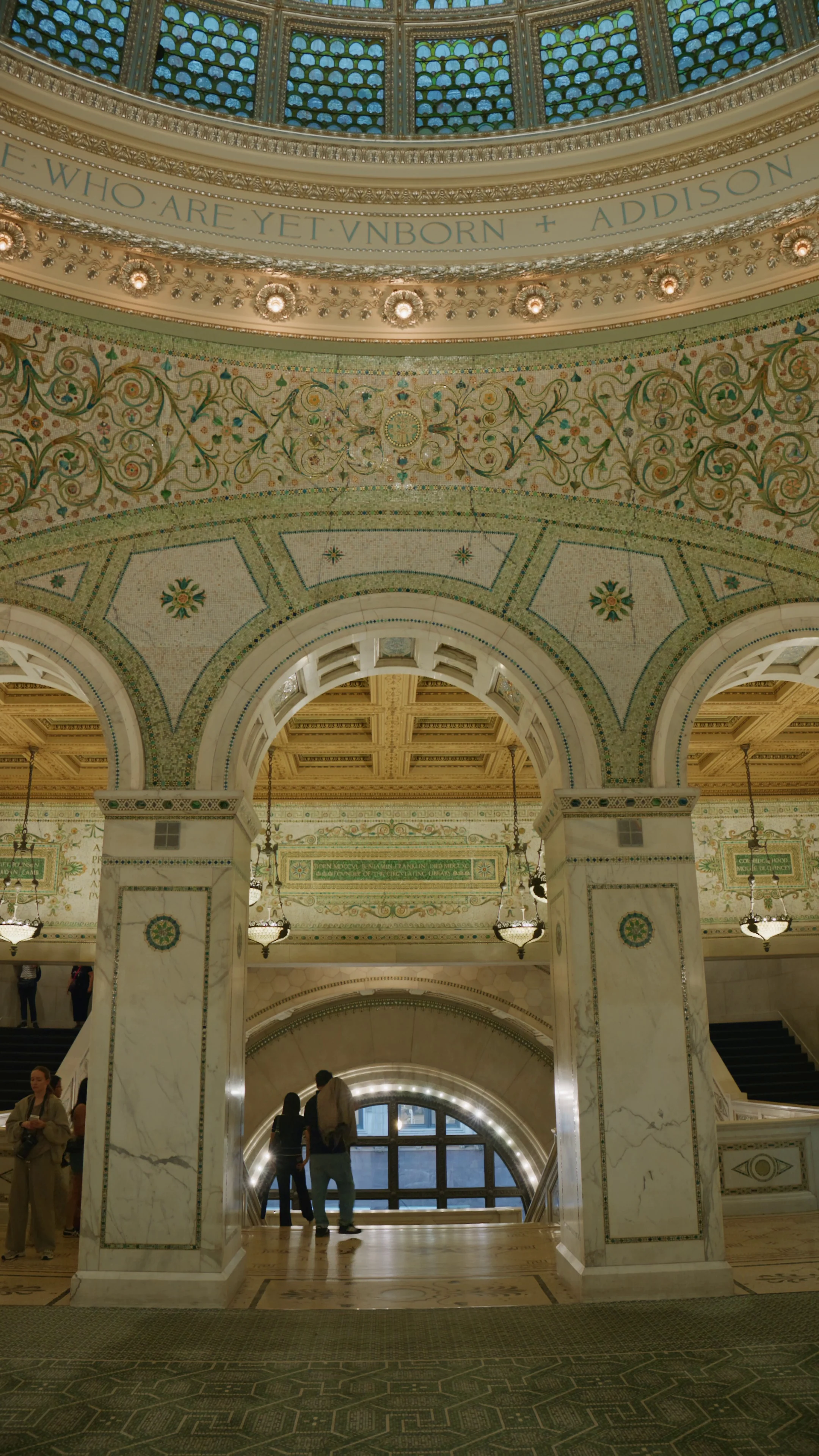
Across Michigan Avenue from the park, the Chicago Cultural Center offers one of downtown’s most rewarding interiors. Completed in 1897, the building originally combined the city’s central public library with a memorial for Civil War veterans. Marble stairways, mosaics and richly decorated rooms express the idea of a public building as a civic palace.
FREE — Cultural Center admission
Ordinary admission is free. Room access follows the building’s program; formal posed photo shoots have separate permit requirements.
Official Cultural Center visitor information
Suggested time: 45–60 minutes.
The Tiffany glass dome in Preston Bradley Hall is the best-known feature, but it is not the building’s only dome. The Grand Army of the Republic spaces contain a separate dome by Healy & Millet. Visit both to compare the color, pattern and atmosphere of the two interiors. 4
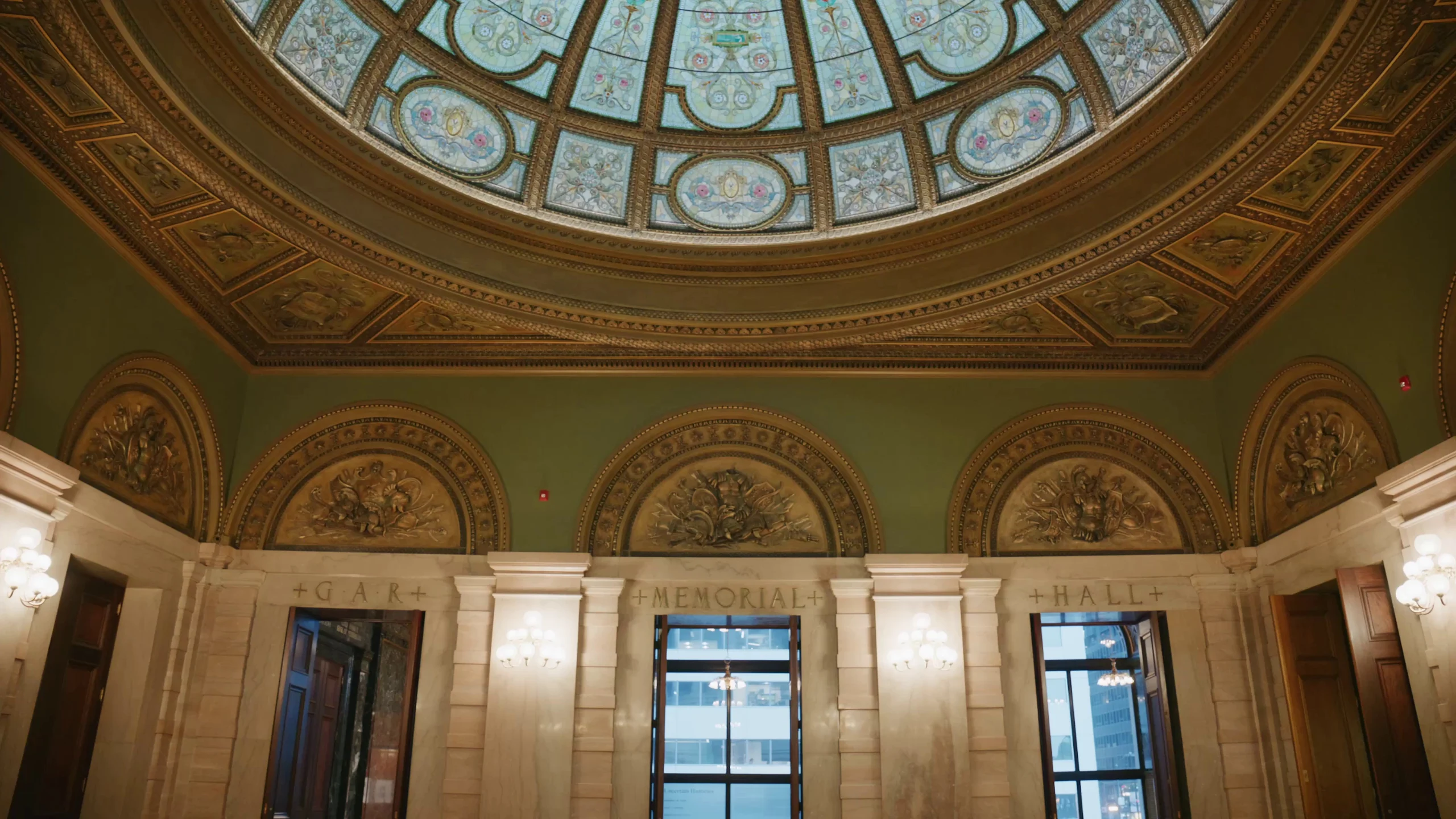
Look beyond the ceiling. The staircases, stone surfaces and decorative details reward a slower walk through the building, while exhibitions and cultural programming give it an active purpose. This is a particularly useful stop between outdoor sightseeing and a longer museum visit.
Admission is free. Allow 45–60 minutes, adding time for an exhibition or performance that interests you. Individual rooms follow the venue’s program, so consult the official Cultural Center page. Organized or formally posed photo shoots have different permission requirements from an ordinary sightseeing visit.
In the film: Chicago Cultural Center — countdown #21.
5. Art Institute of Chicago
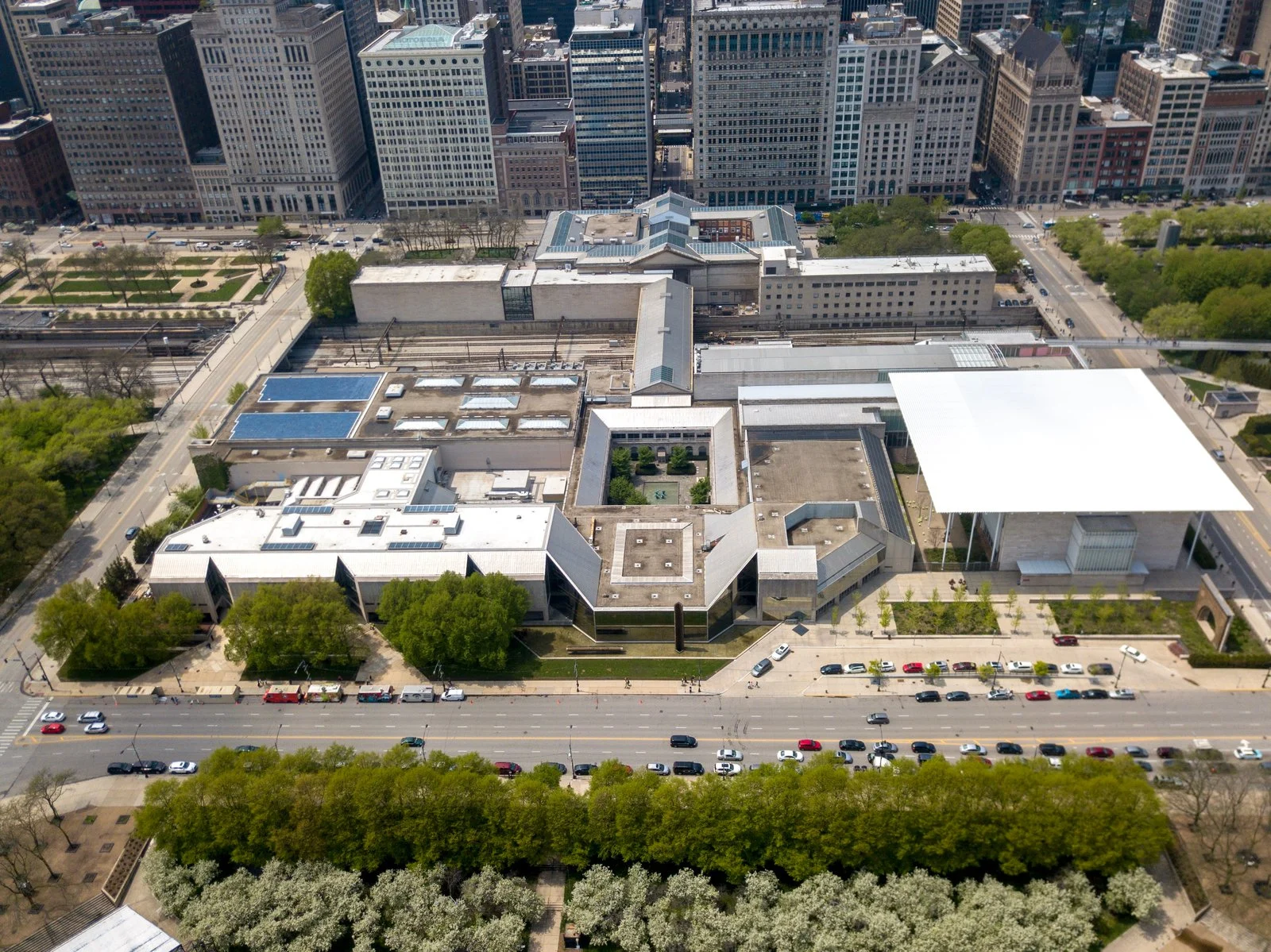
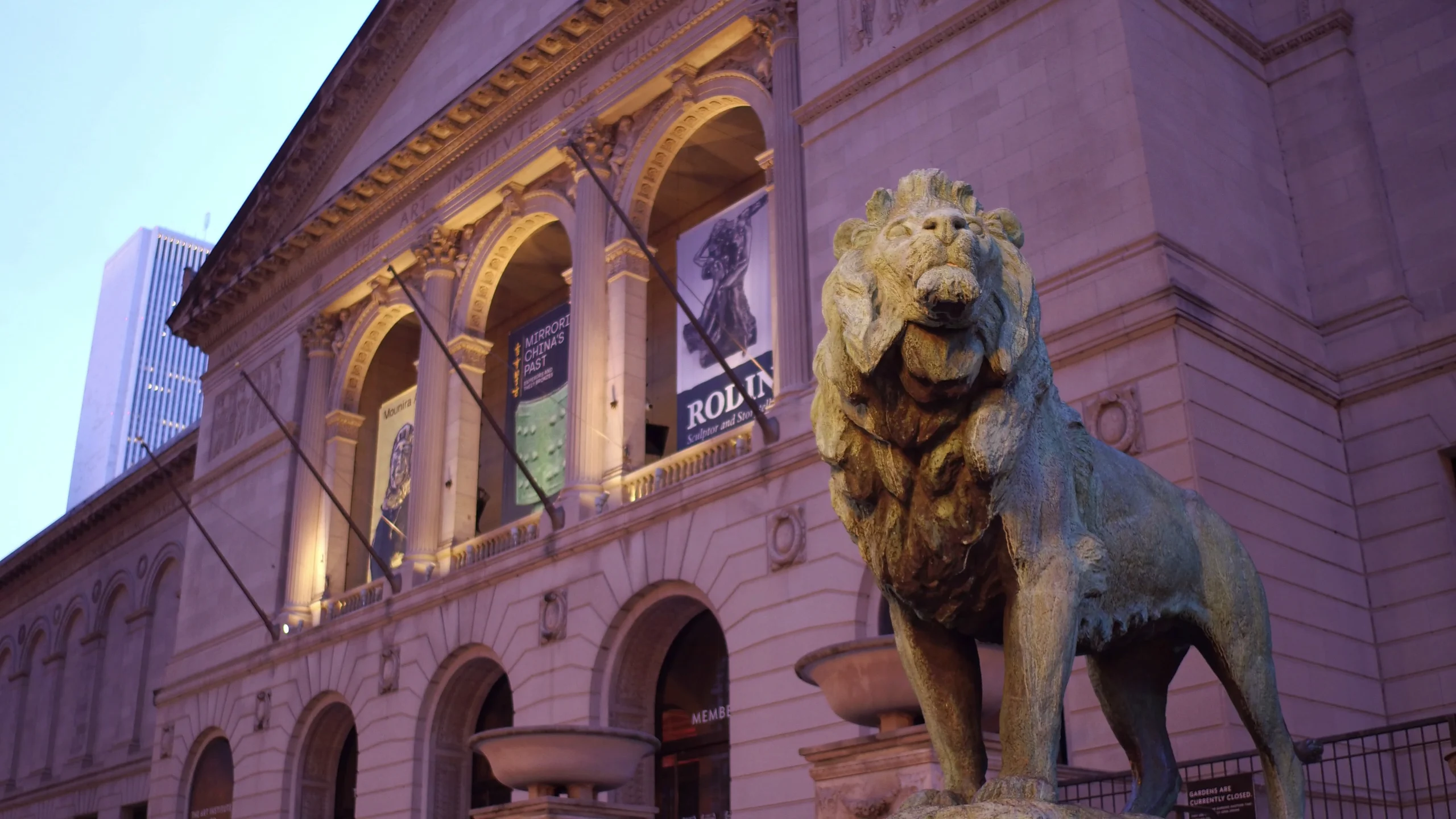
The Art Institute’s Michigan Avenue entrance is easy to recognize by its bronze lions. Edward Kemeys created the two animals in different poses; they were installed in 1894, the year after the museum building opened. Pause outside to compare them before making your way into the galleries. 5
Tickets — museum admission
The galleries require museum admission. Check whether your chosen exhibition needs an additional ticket. Seeing the bronze lions from the public sidewalk is free.
Official Art Institute tickets and visiting information
GetYourGuide: Fast-Pass tickets
Suggested time: 2–3 hours.
Inside, the scale of the collection calls for a few choices. Seurat’s A Sunday on La Grande Jatte—1884, Grant Wood’s American Gothic and Edward Hopper’s Nighthawks are among the works associated with the museum. They offer very different ways of looking: structured points of color, an intensely familiar American portrait and the isolated glow of a nighttime diner. Individual works can move or go on loan, so consult the museum’s collection and visitor information for your visit. 5
For a first visit, choose two or three areas rather than attempting every gallery. Give a handful of works enough time to become more than names you recognize. If art is a central reason for your trip, a half-day here is easy to justify.
Allow 2–3 hours for a selective visit. Museum admission is paid, while the exterior lions are a free stop. Some exhibitions require separate tickets; use the official visitor page and ticket calendar to check opening days and inclusions. Adding the museum to a short itinerary means removing other stops, rather than compressing it into an hour between reservations.
In the film: Art Institute of Chicago — countdown #6.
6. Chicago Theatre
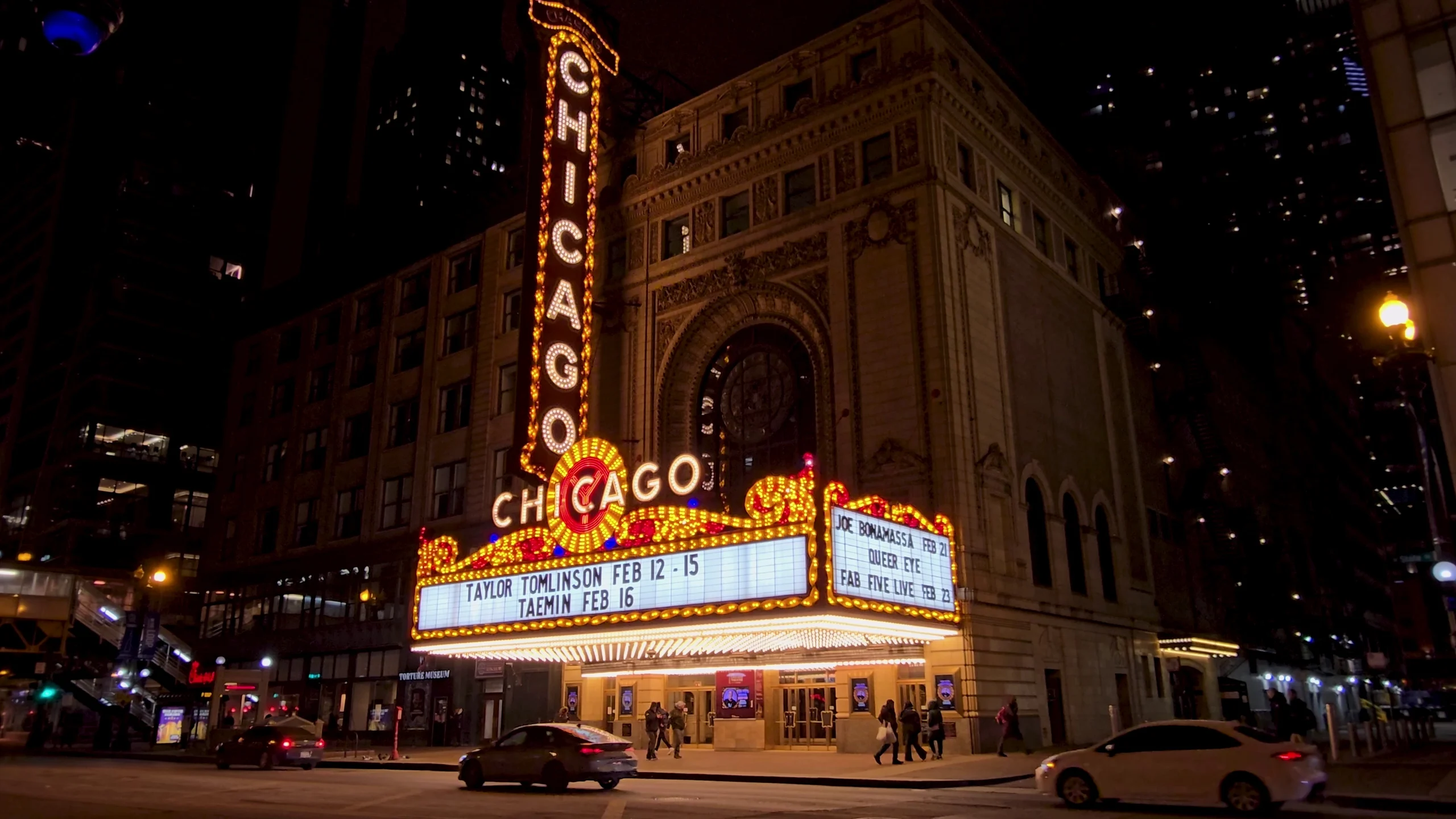
The vertical CHICAGO sign on State Street is a familiar city image, but the theatre behind it has its own architectural story. Opened in 1921 as a lavish movie palace, it used French-inspired ornament to make an evening at the cinema feel like a grand occasion. Its role as a live-performance venue continues that sense of arrival. 6
Tickets — interiors; exterior FREE
The State Street exterior and marquee can be viewed from the public sidewalk without a ticket. An interior visit needs a booked tour or performance ticket, subject to the venue’s calendar.
Official theatre tour tickets · Performance listings
GetYourGuide: theatre tour tickets
Suggested time: 10–15 minutes outside.
Begin on the public sidewalk, where the sign’s scale and relationship to the street are easiest to understand. The facade is an enjoyable short stop even if there is no performance in your plans. Going inside, however, requires a separate decision and the appropriate ticket.
A scheduled tour provides an opportunity to learn about the building and see spaces that an exterior photograph cannot explain. A performance offers something different: the chance to experience the auditorium in use. Tour access varies with productions, so particular backstage spaces should never be assumed.
Allow 10–15 minutes outside, or roughly an hour to a little longer for an available tour. Use the official theatre listings and tour information. If you book a show, leave a proper dinner and arrival window rather than finishing a distant museum visit immediately beforehand.
In the film: Chicago Theatre — countdown #16.
7. Skydeck Chicago at Willis Tower
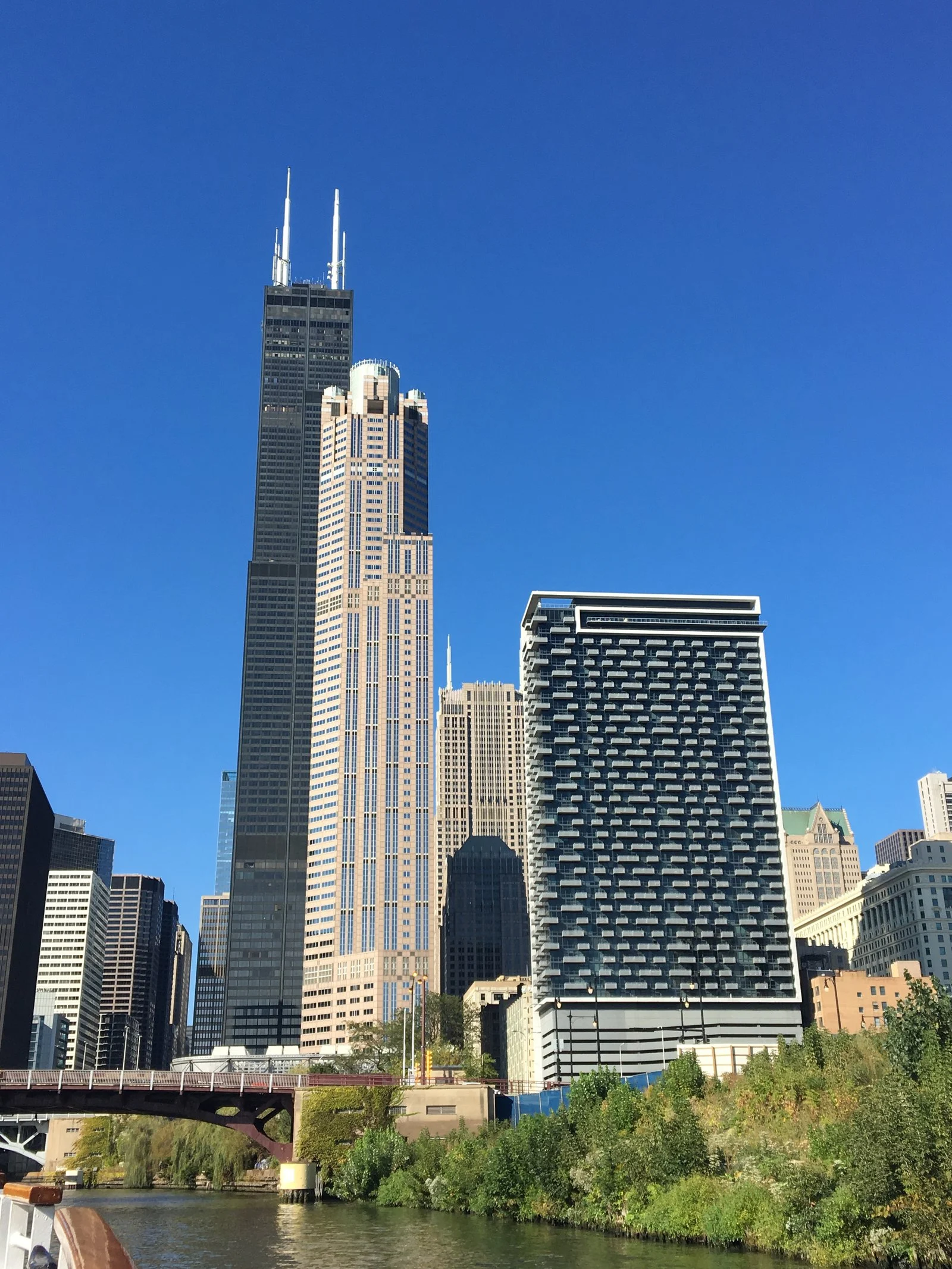
Willis Tower stands toward the western side of the Loop, giving Skydeck a different perspective from the observation deck on North Michigan Avenue. Built for Sears in the early 1970s, the tower uses a system of nine bundled structural tubes. As those tubes end at different heights, they create the stepped outline visible from the street. 7
Tickets — timed Skydeck entry
Book a date and entry time. General admission includes the observation deck and The Ledge; expedited entry is a different ticket option.
GetYourGuide: Skydeck and The Ledge tickets
Suggested time: 90 minutes–2 hours.
Up on the 103rd floor, the experience changes from studying a single skyscraper to reading the city beneath it. Look for the Loop’s street grid, the river’s branches and the contrast between dense development and the open lake. A clear view makes the geography you have walked through easier to connect.
The Ledge adds glass-enclosed boxes projecting beyond the facade, with the street visible beneath your feet. It is optional to step into them; the surrounding observation windows provide plenty to see if a glass floor is not appealing. General Admission includes the museum experience, observation deck and The Ledge. 7
Allow 90 minutes–2 hours including queues, and reserve an entry time through Skydeck’s official visitor page. The entrance is on Jackson Boulevard. Weather affects visibility, and the photo time on The Ledge can be limited, so build your visit around the overall panorama as well as the glass-box moment.
In the film: Skydeck Chicago — countdown #4.
The river and the Magnificent Mile
This group makes a coherent downtown day: experience the buildings from river level, then walk north along Michigan Avenue. The Wrigley Building and Historic Water Tower are stops within that walk. Their separate entries explain their significance; they do not require separate journeys.
8. Chicago Riverwalk
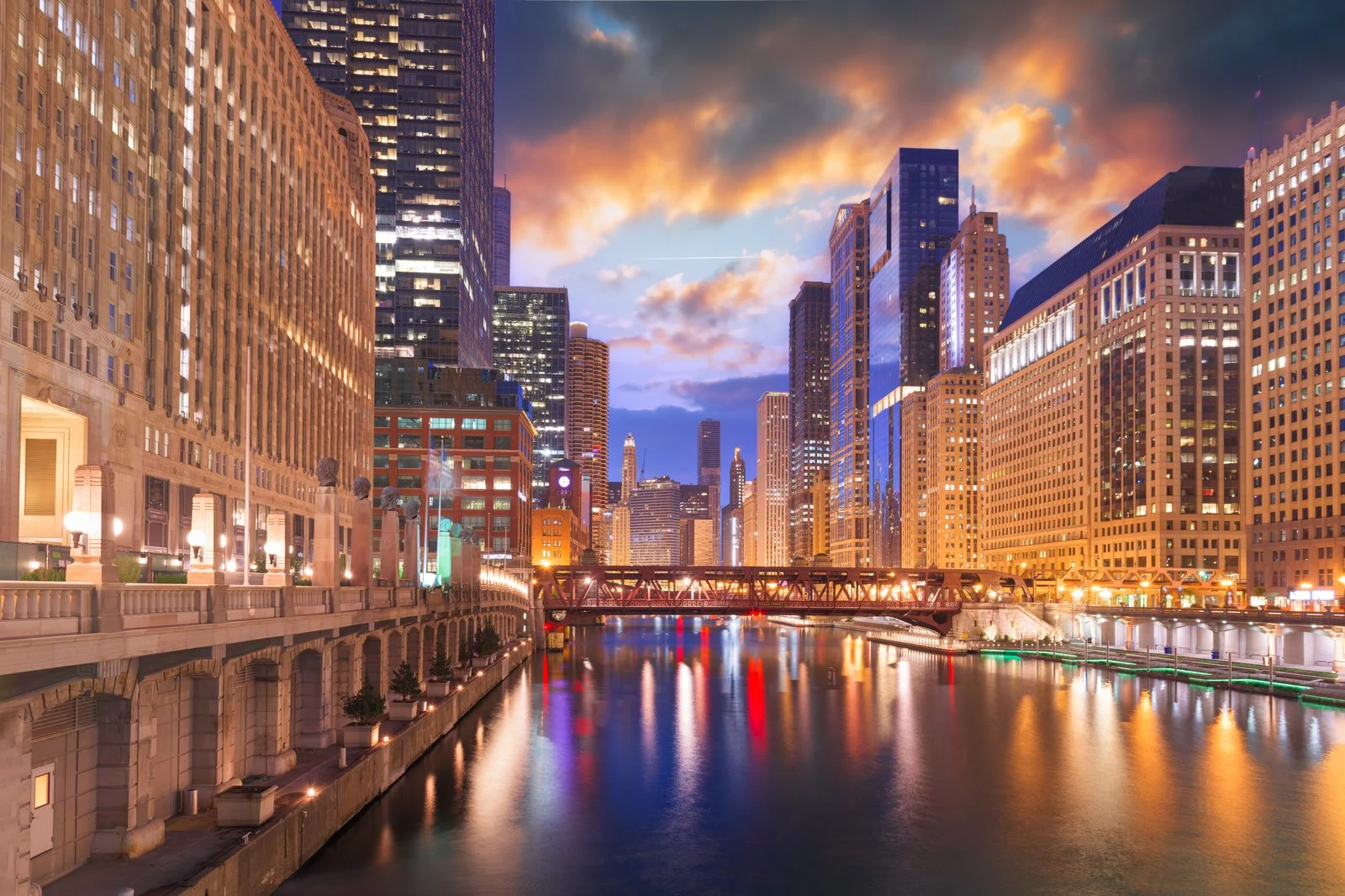
The Chicago Riverwalk brings you down from the road to the south bank of the river’s Main Branch. At this lower level, bridges pass overhead and tour boats move close by, while the towers seem to rise directly from the water. It is one of the most useful places to slow an architecture-heavy itinerary into an ordinary walk.
FREE — public Riverwalk
Walking the public Riverwalk does not require a ticket. Cruises, kayak rentals, meals and other commercial activities are paid separately.
Official Riverwalk visitor information
Suggested time: 45–90 minutes.
The promenade extends from Lake Street toward Lake Michigan. Its major expansion in 2015–2016 introduced six distinct public spaces, including stepped seating, waterside gathering areas and planted edges. These are designed parts of the newer project, rather than six separate neighborhoods. 8
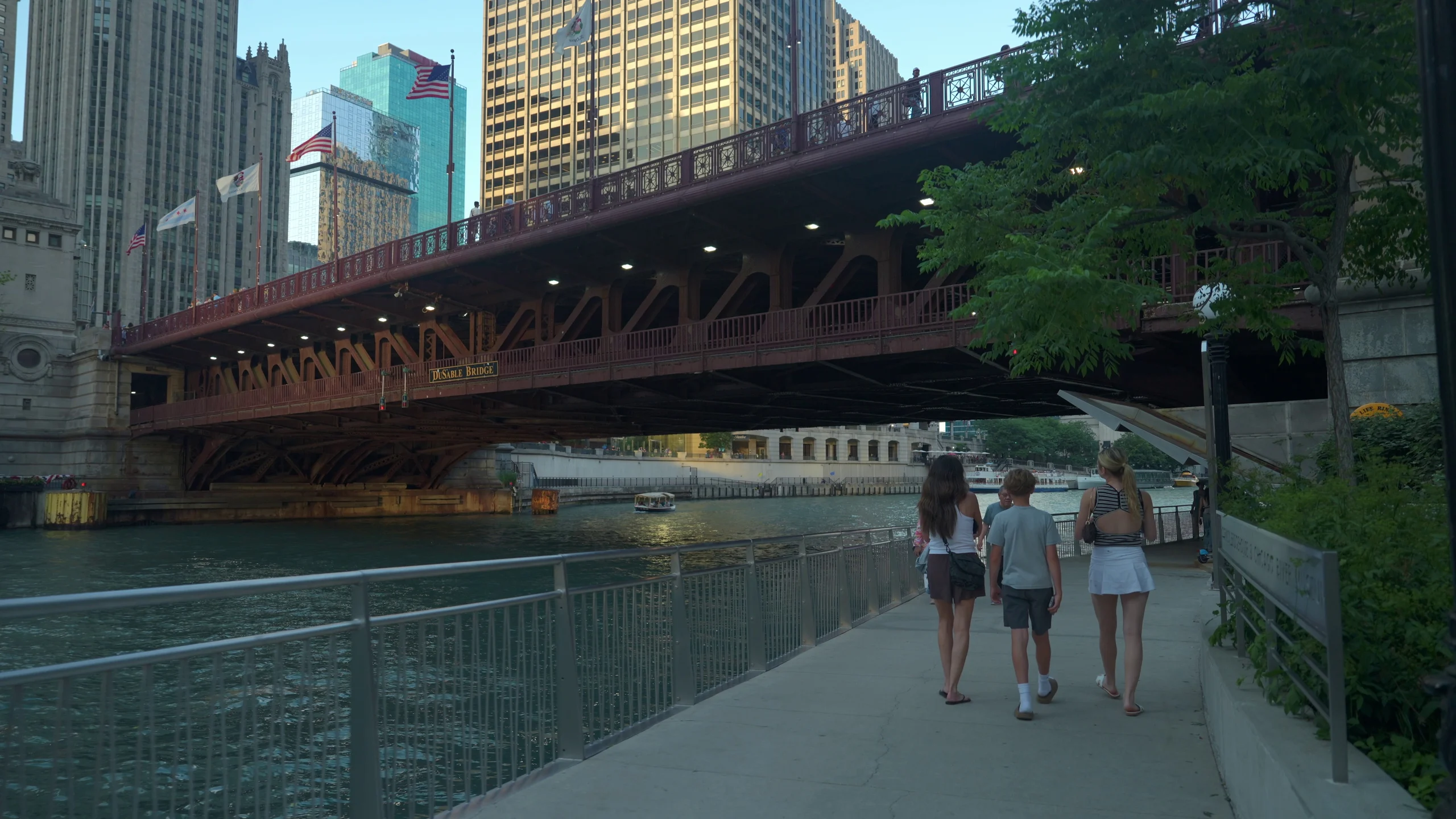
Notice how each stretch changes your relationship with the river. Some encourage sitting and watching boats; others make the underside of a bridge the main feature. Around State Street, the rounded balconies of Marina City provide a strong contrast with the straighter forms nearby.
The public walk is free; restaurants, rentals and cruises cost extra. Allow 45–90 minutes for a selected stretch, or incorporate it around your boat departure instead of adding an entirely separate outing. Steps are common, but ramps also provide access: use the city’s Riverwalk information and access map to choose an appropriate entrance.
In the film: Chicago Riverwalk — countdown #5.
9. Chicago Architecture River Cruise
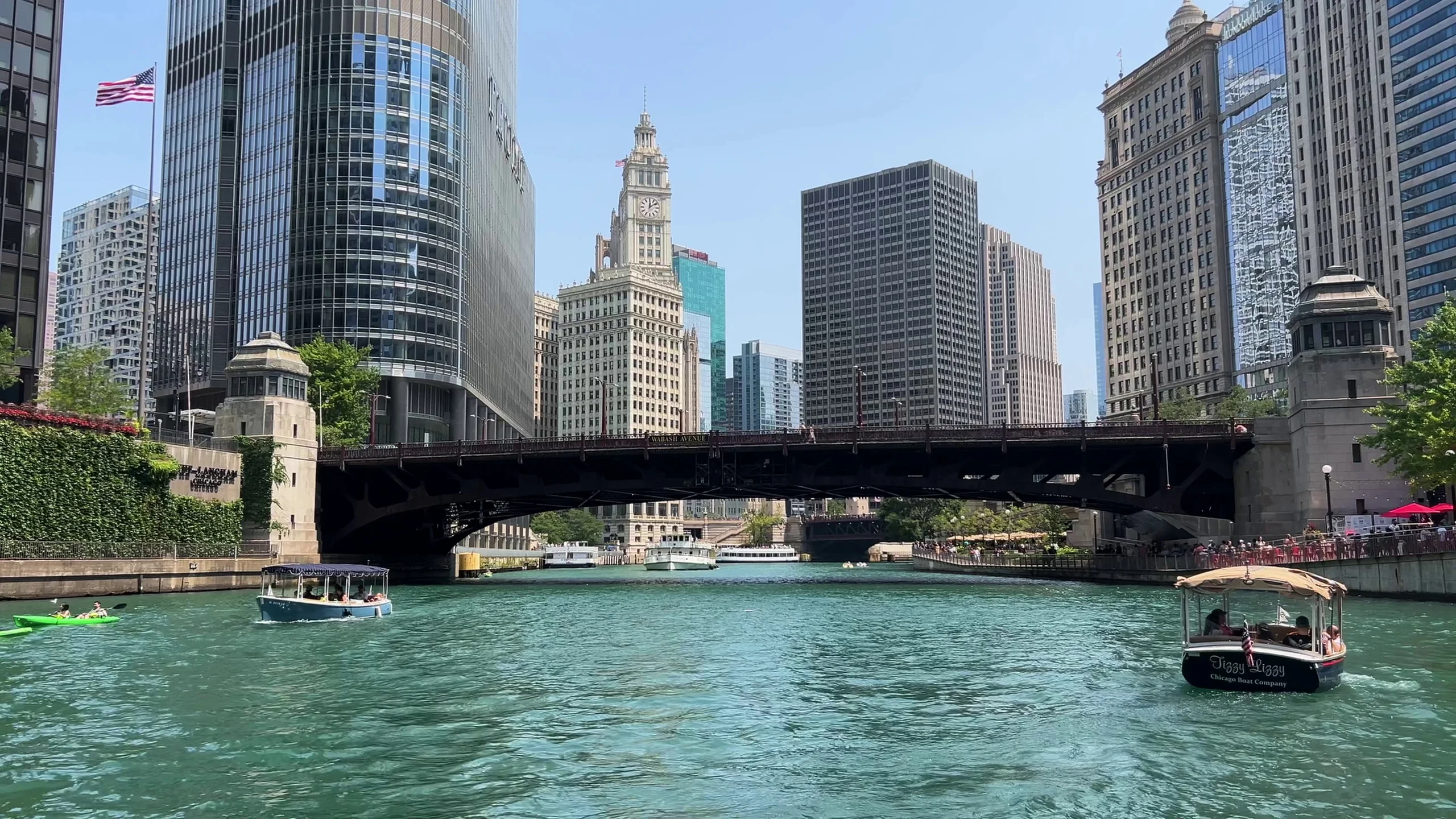
An architecture cruise makes Chicago’s skyline easier to read. From the water, you can compare the proportions of older masonry towers, curved residential buildings and reflective glass facades without constantly stopping at intersections. Bridges become part of the foreground, and the changing river course opens successive views.
Tickets — architecture cruise
Book the sailing you want with the official operator. Confirm the exact dock, boat and check-in instructions; allow the operator’s recommended early-arrival window.
Official First Lady architecture cruise booking · Chicago Architecture Center cruise information
GetYourGuide: First Lady cruise tickets
Suggested time: About 2 hours at dock and aboard.
Choose the type of cruise deliberately. A narrated architecture tour concentrates on buildings and city history; a river-and-lake sightseeing trip may emphasize a broader panorama. The river’s industrial past and its 1900 reversal add context to the scene, reminding you that this attractive visitor route began as essential urban infrastructure. 9 27
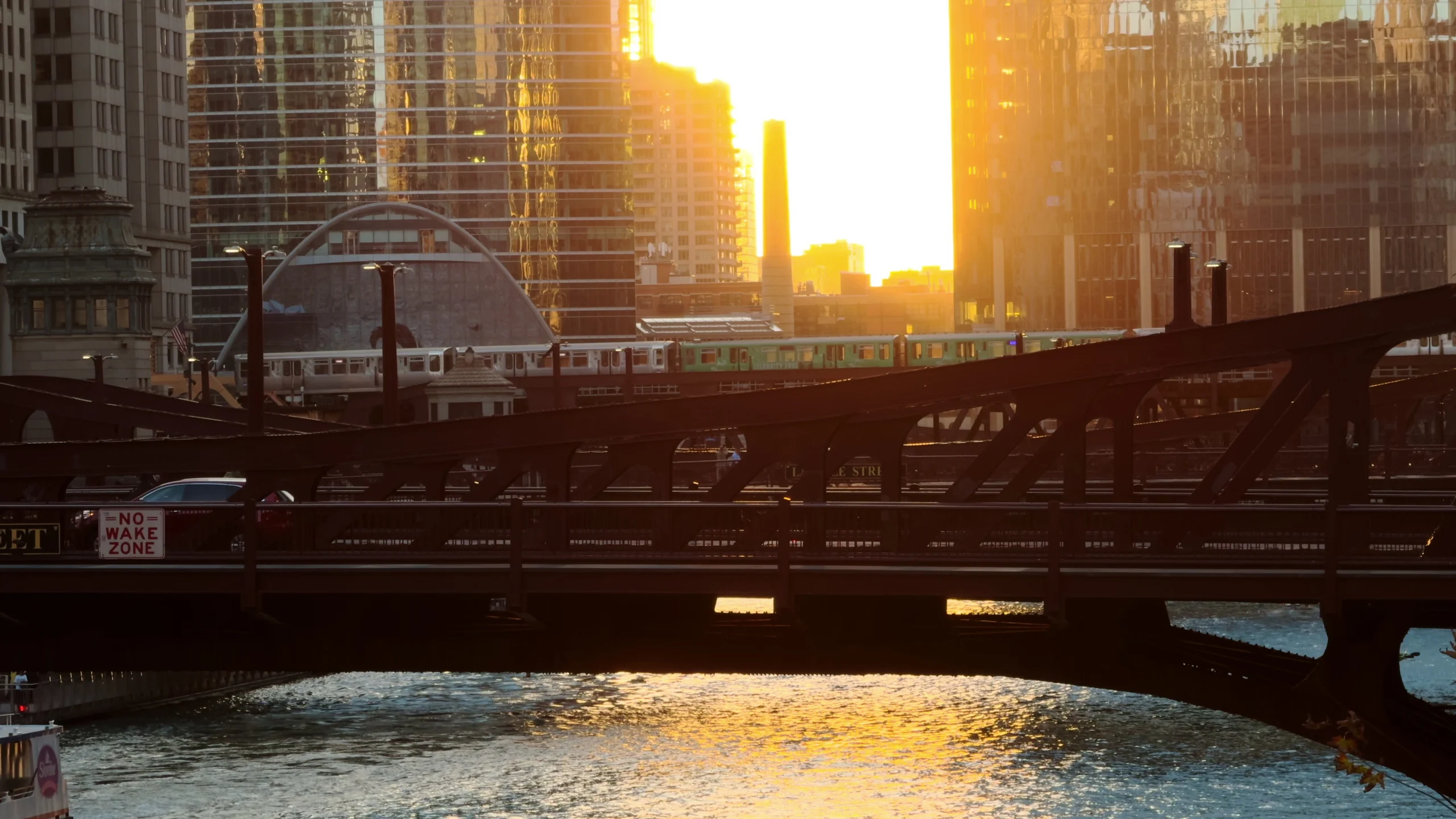
One established option is the Chicago Architecture Center River Cruise aboard First Lady, narrated by trained volunteer docents. Its 90-minute trip requires a larger block in your day: the operator asks passengers to arrive at least 30 minutes before departure. That means about two hours at the dock and aboard, plus the journey to the dock. Its departure point is near the southeast side of DuSable Bridge, not Navy Pier. 9
Use the CAC cruise page or First Lady’s official booking page, checking the precise dock and departure. If you need step-free access, consult the operator’s detailed accessibility guidance before purchasing: vessel arrangements differ, upper decks involve stairs, and electric wheelchairs and scooters cannot be used aboard. A layer for the breeze is useful even when the pavement feels warm.
In the film: Chicago Architecture River Cruise — countdown #3.
10. Wrigley Building
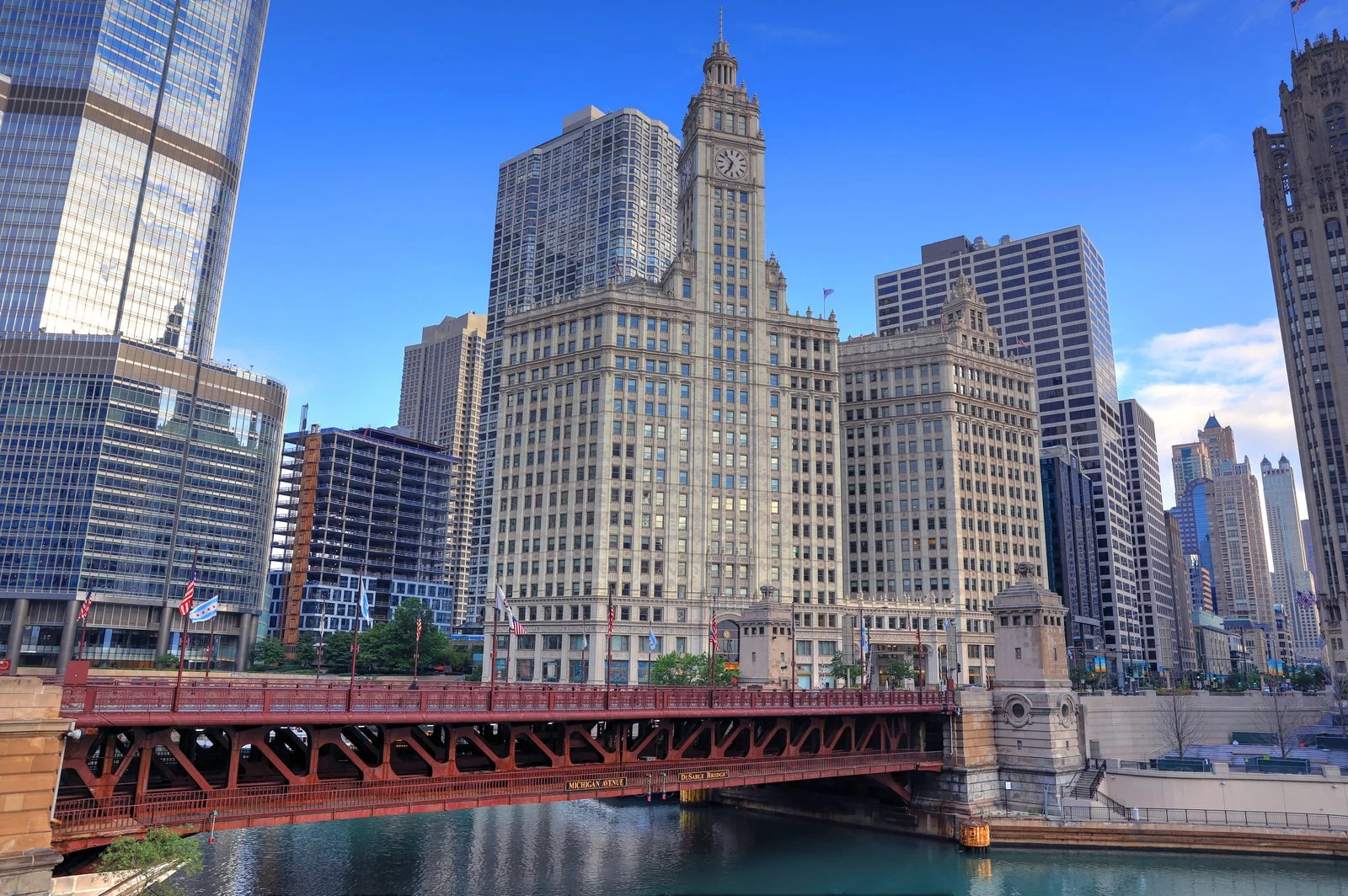
At the north end of DuSable Bridge, the Wrigley Building makes a memorable gateway to the Magnificent Mile. Built for William Wrigley Jr.’s chewing-gum company, the complex consists of a south tower opened in 1921 and a north tower opened in 1924. The clock tower gives it a silhouette that remains easy to pick out among much taller neighbors. 10
FREE — Wrigley Building exterior
Viewing the clock tower from the public street or DuSable Bridge is free. This exterior stop does not include access to private office interiors.
Official Wrigley Building information
Suggested time: 10–20 minutes outside.
The pale exterior deserves a close look. Six shades of glazed terra cotta become lighter toward the top, while molded ornament gives the surface a depth that disappears in a distant skyline photograph. Elevated enclosed walkways join the towers. The design draws on European architectural references, including Seville’s Giralda for the clock-tower form. 10
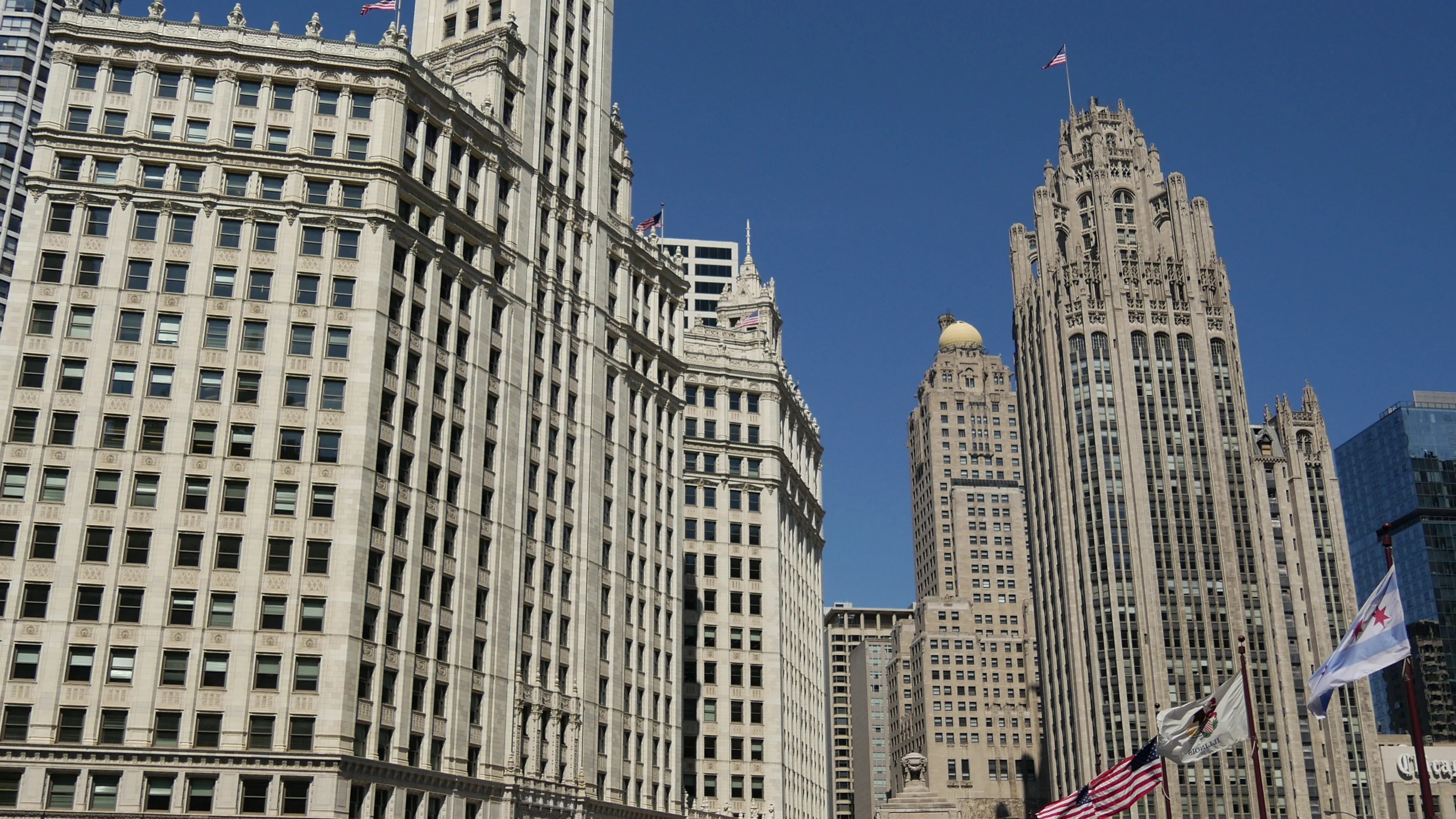
Begin across the river to understand the whole composition, then move closer to see the decoration and connecting bridges. After dark, illumination gives the light-colored surfaces a different presence against the surrounding towers. Both views fit naturally into a riverfront walk.
Allow 10–20 minutes outside, counted within your Magnificent Mile route. The landmark is a commercial office building; an exterior visit does not include access to its tower or overhead walkways. The building’s history provides useful background. Wrigley Field, the baseball park, is a separate destination farther north.
In the film: Wrigley Building — countdown #23.
11. Magnificent Mile
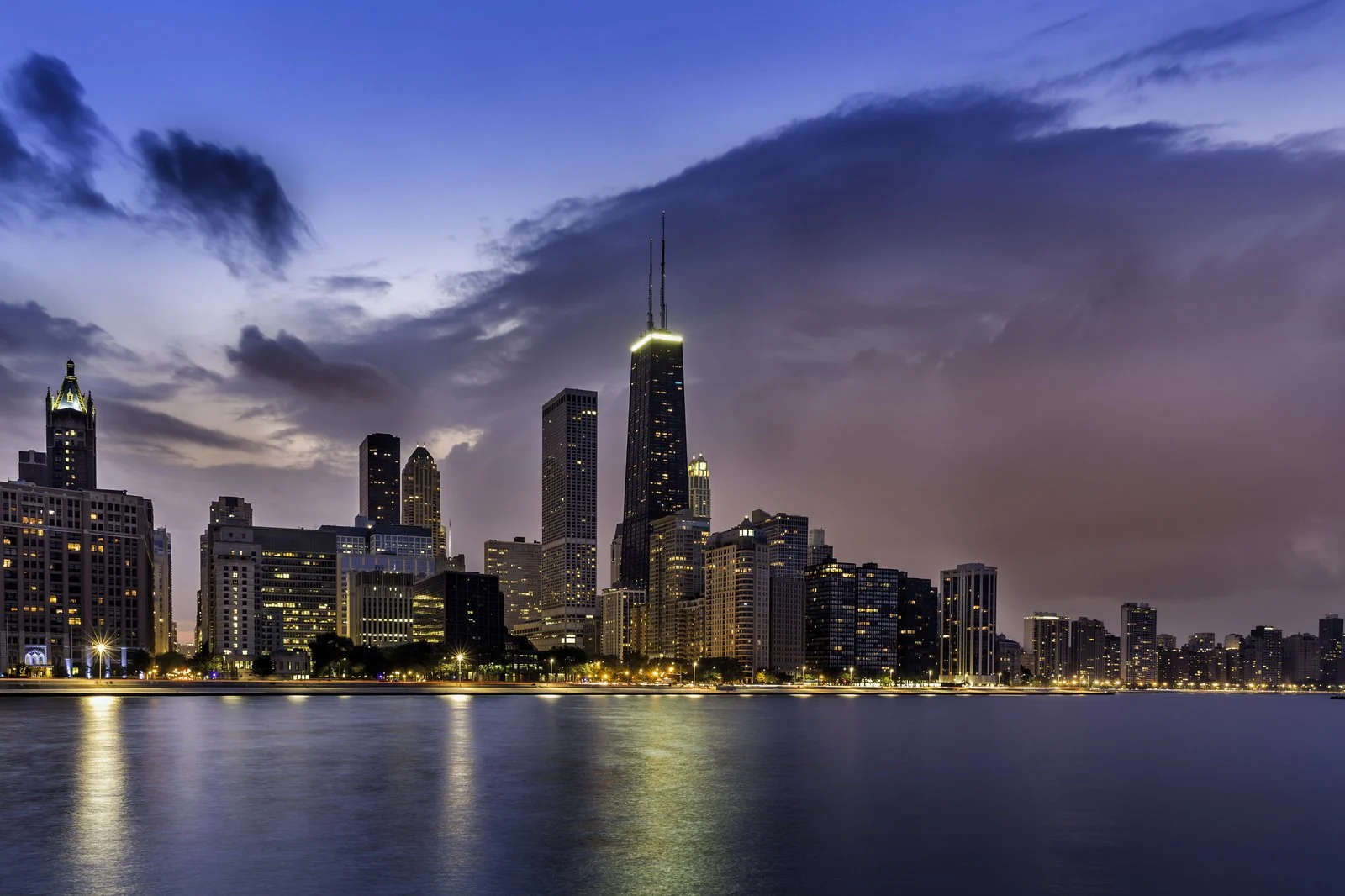
The Magnificent Mile is the stretch of North Michigan Avenue between the Chicago River and Oak Street. Its shops and hotels are only part of the interest. Walking north also takes you through a compact sequence of architectural periods, from the Wrigley Building’s pale ornament to the Water Tower’s limestone and the dark diagonal bracing of 875 North Michigan Avenue. 11
FREE — avenue walk
There is no ticket to walk the Magnificent Mile and see its architecture. Shopping, meals and individual attractions have their own charges.
Official district architecture guide
Suggested time: 60–90 minutes.
The opening of the Michigan Avenue Bridge in 1920 helped transform the earlier Pine Street corridor. The bridge connected the developing district with the downtown street system, encouraging the avenue’s growth. That history is visible in the concentration of major buildings near the river crossing. 11
Use the walk to compare details rather than simply cover its length. Look upward at the Gothic character of Tribune Tower, pause at the Historic Water Tower, and study the exterior structure of the former John Hancock Center before visiting 360 CHICAGO. A cafe break gives the route a more comfortable rhythm.
Allow 60–90 minutes for an architectural stroll, including brief Wrigley Building and Water Tower stops. Shopping, meals and an observation-deck visit need additional time. The Magnificent Mile Association’s architectural guide helps identify what you are passing. You can enjoy the district without making shopping the purpose of the visit.
In the film: Magnificent Mile — countdown #8.
12. Historic Chicago Water Tower
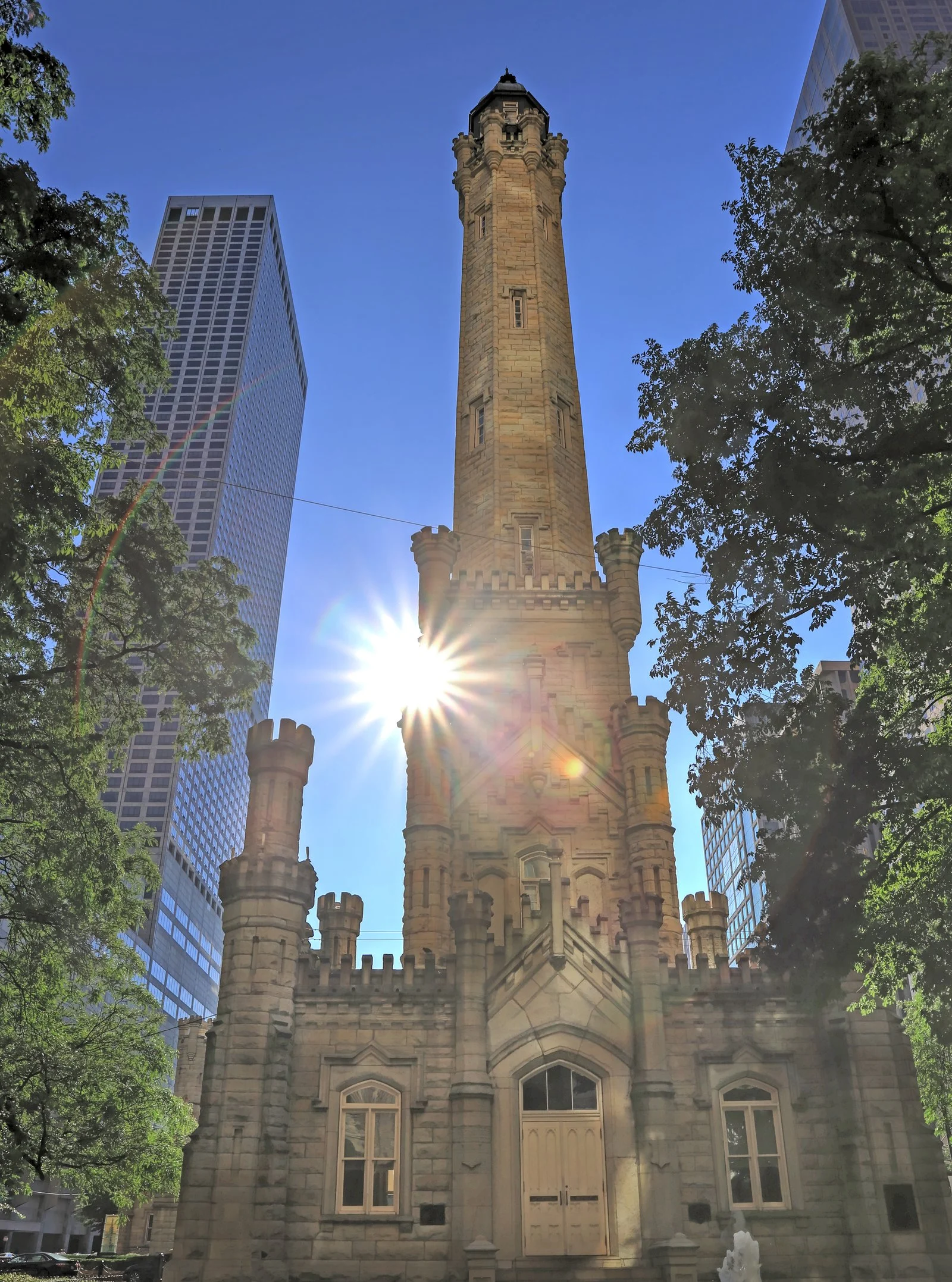
The Historic Water Tower looks like a small limestone castle surrounded by much larger buildings. William W. Boyington designed it for the municipal water system, and it was completed in 1869. Its original purpose was to enclose a standpipe that helped regulate pressure, giving an essential piece of infrastructure an unexpectedly elaborate exterior. 12
FREE — Water Tower exterior
The exterior is a free sightseeing stop. If you want to enter City Gallery, check its own visitor information and exhibition program.
City Gallery visitor information
Suggested time: 10–20 minutes outside.
The tower survived the Great Chicago Fire of 1871, but it was not the only building to do so. The associated pumping station across Michigan Avenue also survived. Looking at the pair makes the waterworks story more understandable than treating the tower as an isolated curiosity. 12
Walk around the exterior to see the pointed openings, crenellations and changes in scale. The contrast with the surrounding high-rises is the most revealing view: a practical structure from the nineteenth century has become a landmark within a much denser city. The small plaza provides room to stop without interrupting the main avenue’s pedestrian flow.
Allow 10–20 minutes outside. The historic tower also houses the City Gallery; an exhibition can be an additional free visit when the program and opening arrangements allow. Check the gallery’s visitor information. Do not confuse the landmark with Water Tower Place, the nearby shopping complex.
In the film: Historic Chicago Water Tower — countdown #22.
13. 360 CHICAGO Observation Deck
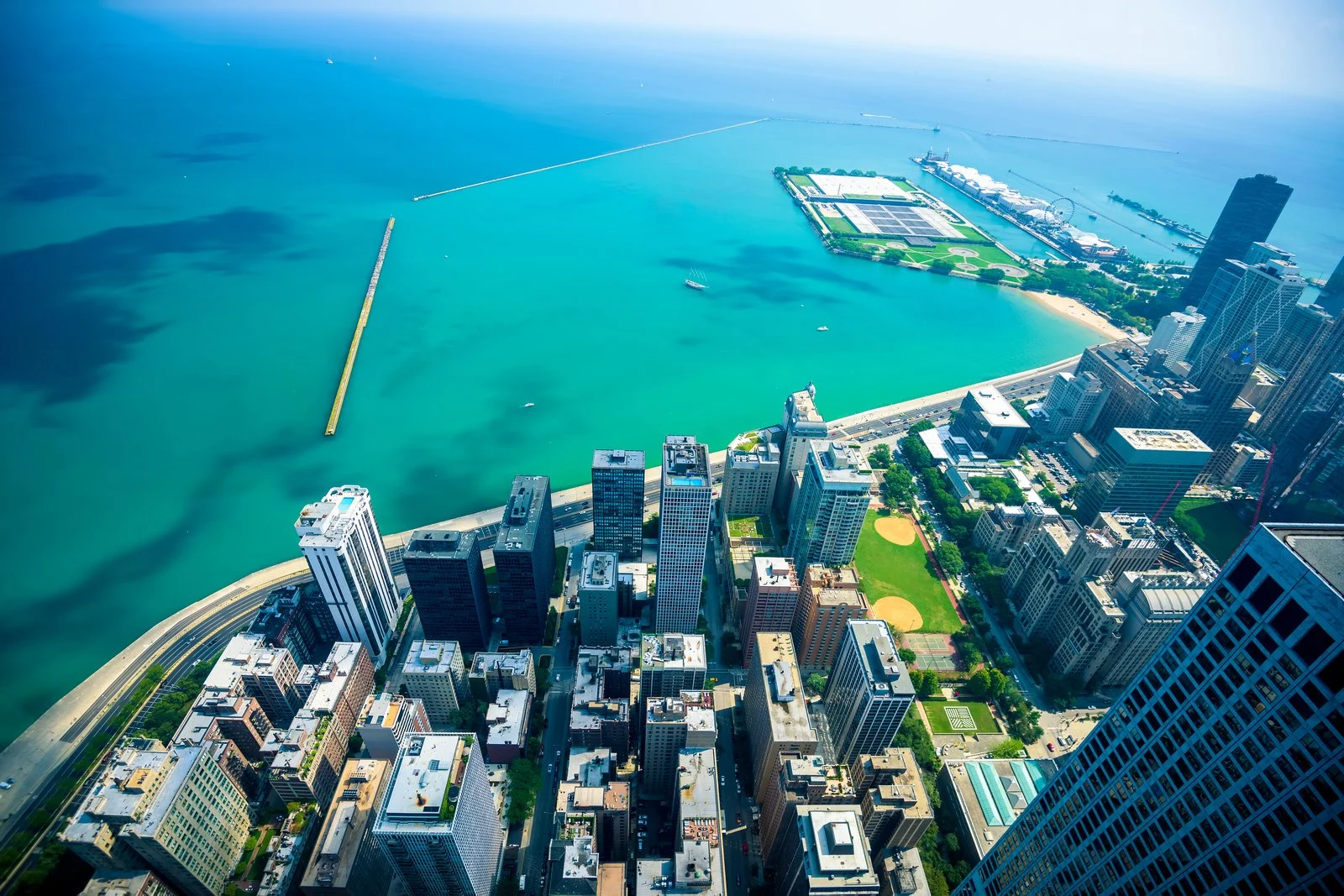
360 CHICAGO occupies the 94th floor of 875 North Michigan Avenue, the skyscraper long known as the John Hancock Center. Its position near the northern end of the Magnificent Mile makes the lakefront especially rewarding: beaches, parks and the shoreline stretch away from the dense downtown core. 13
Tickets — observation deck; TILT extra
Choose your observation-deck ticket and visit slot. Standard General Admission does not include the TILT ride; select a package that includes it or purchase the add-on separately.
Official 360 CHICAGO ticket options
GetYourGuide: observation-deck tickets
Suggested time: 60–90 minutes plus queues.
Before going inside, look at the large X-shaped braces crossing the facade. Architect Bruce Graham and engineer Fazlur Khan of SOM made the building’s structural system a visible part of its design. The diagonal bracing helps resist wind loads and reduces the need for interior columns. The tower is interesting at pavement level as well as from the observation floor. 13
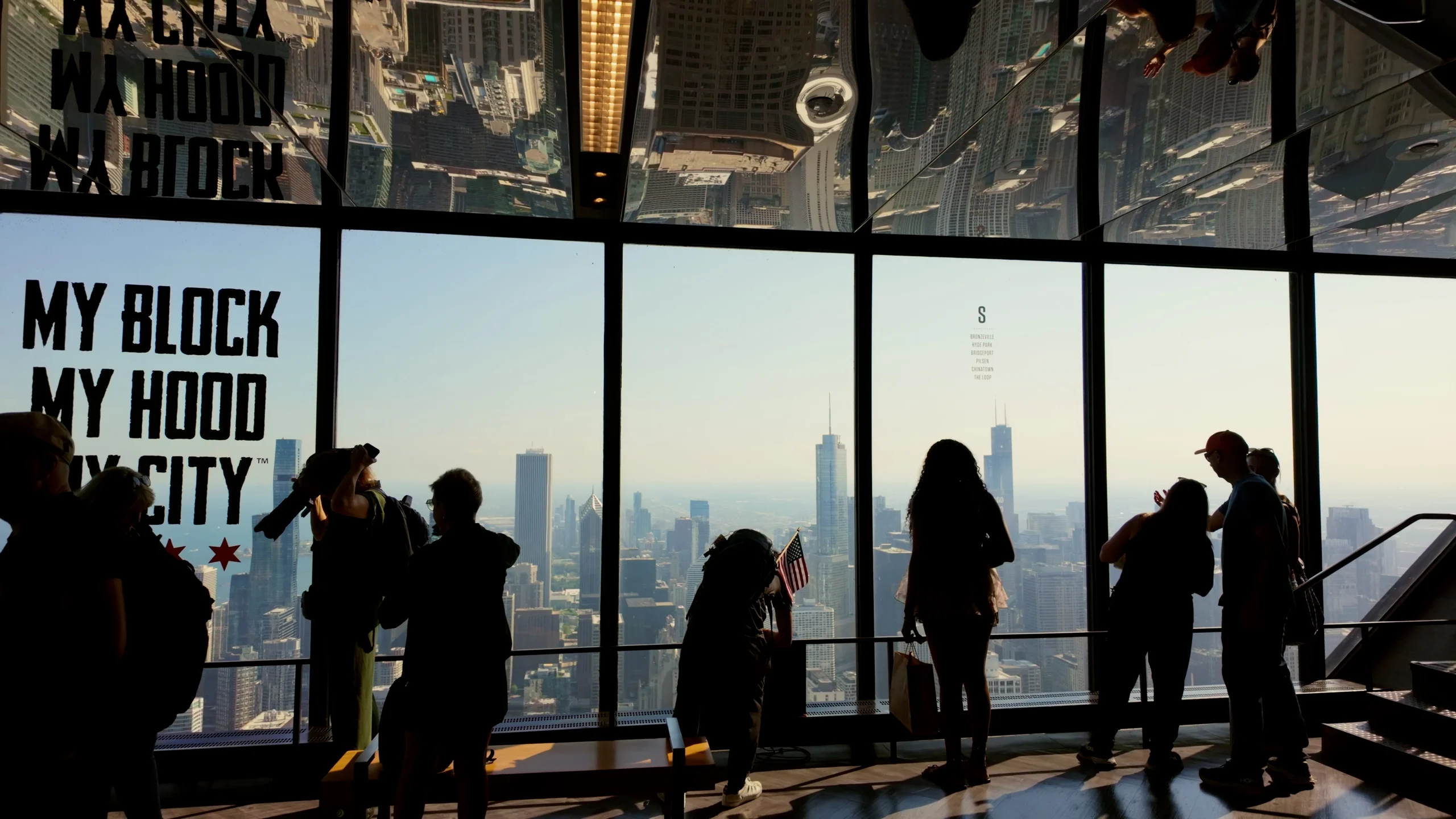
Upstairs, walk around the deck before settling on the familiar south-facing skyline. The northern shoreline gives a different understanding of Chicago’s long relationship with Lake Michigan. TILT adds a moving platform that leans outward from the building, but it is a separate optional experience requiring an additional ticket.
Allow 60–90 minutes plus any entry queue, with extra time if you choose TILT. Check official tickets and accessibility details; the observation deck accommodates mobility devices, while the moving part of TILT requires standing. On a short visit, compare this view with Skydeck and choose one rather than booking both automatically.
In the film: 360 CHICAGO — countdown #7.
Navy Pier and the lake
Navy Pier and the Centennial Wheel are two places in the film but one geographical outing. Plan the walk, a meal and any ride together. Reaching the pier and returning from its far end take time that a map marker can easily conceal.
14. Navy Pier
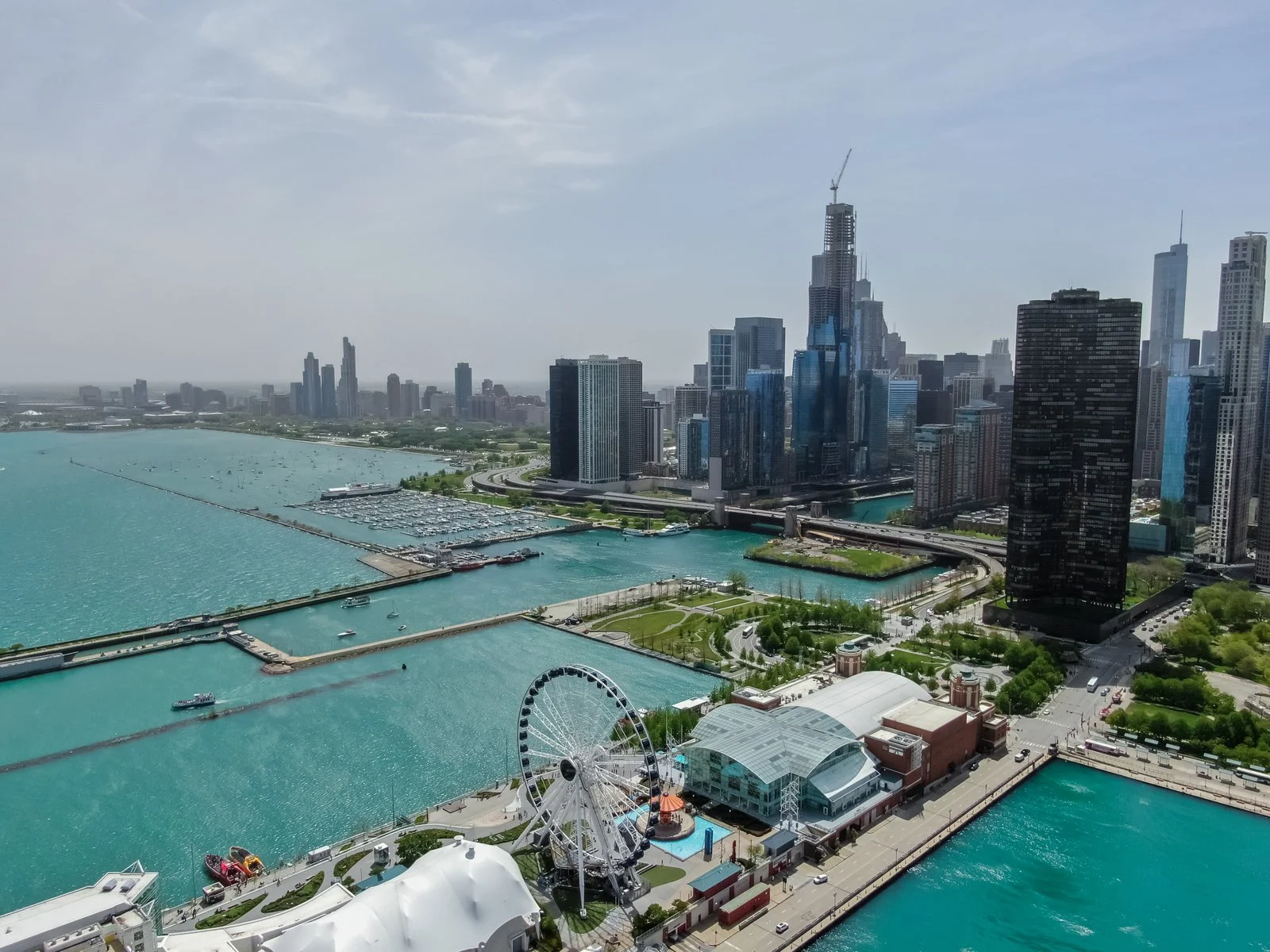
Navy Pier projects into Lake Michigan from Streeterville, opening the city toward the water. Walking along it gradually changes the skyline from a wall of nearby buildings into a broader silhouette. Turn back toward the city as you go; looking straight east takes your attention out across the lake.
FREE — pier admission
Entering and walking Navy Pier is free. The Centennial Wheel, other rides, cruises and individual venues have separate tickets or charges.
Official Navy Pier admission information
Suggested time: 90 minutes–2 hours.
Opened in 1916 as Municipal Pier, it originally combined commercial shipping with public recreation. It received the Navy Pier name in 1927, later served as a naval training facility during the Second World War and became a University of Illinois campus. The entertainment-focused redevelopment of 1995 was another chapter in an unusually varied working life. 14
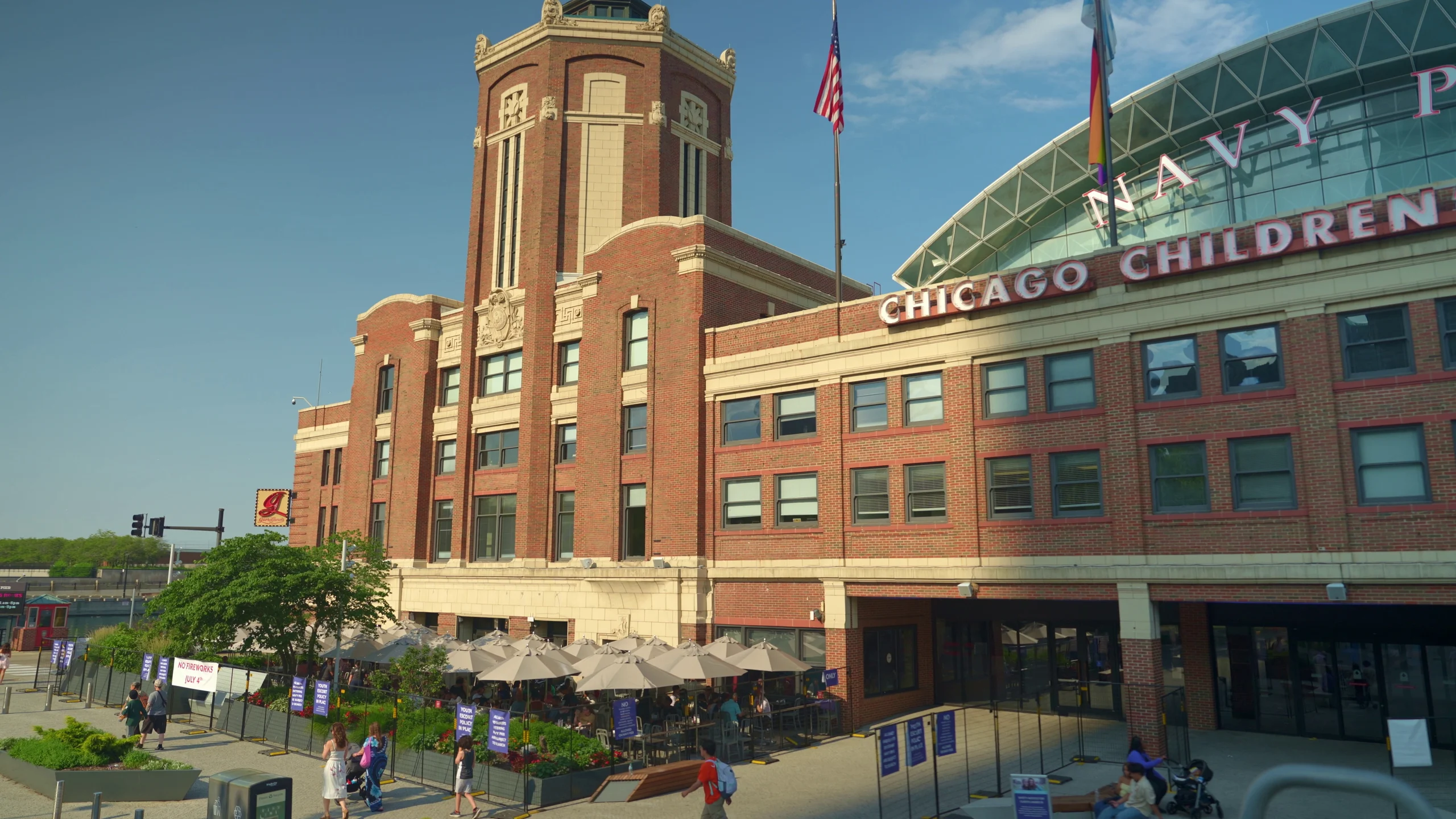
That background makes the pier more interesting than a collection of rides and food counters. You can come simply for a lakefront walk, or build a longer visit around a venue such as the Chicago Children’s Museum or Chicago Shakespeare Theater. A museum or performance needs its own time; it is not a small extra between two other reservations.
Entry to Navy Pier is free, while individual attractions charge separately. Allow 90 minutes–2 hours for a walk and pauses, or 2–3 hours with the wheel and food. Consult the official visitor information for access rules and the event program. Leave enough energy for the return walk.
In the film: Navy Pier — countdown #2.
15. Centennial Wheel
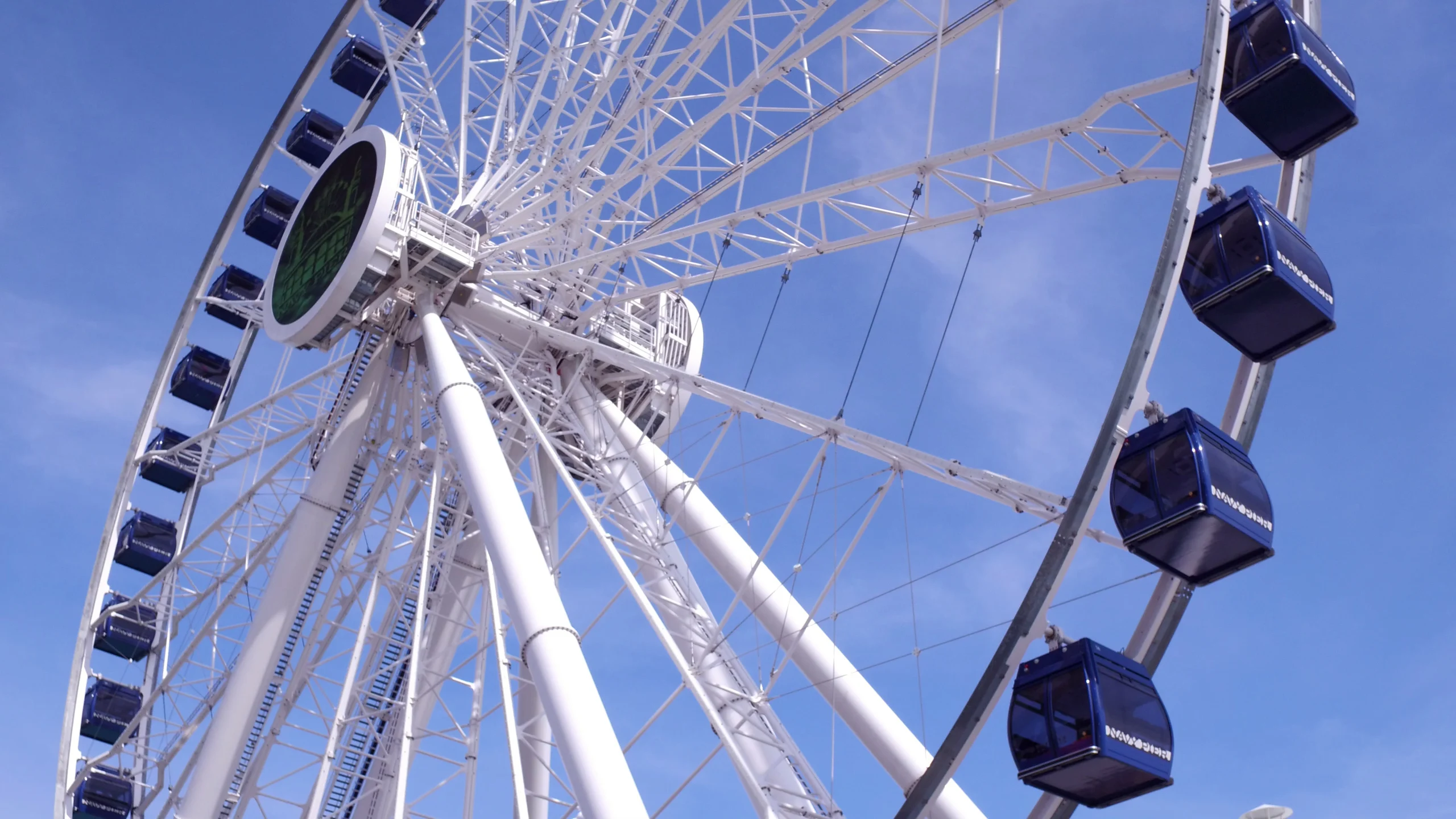
The Centennial Wheel provides an elevated lakefront view without taking you into a skyscraper. Installed in 2016 for Navy Pier’s centennial, it replaced the wheel introduced with the pier’s 1995 redevelopment. Its enclosed, climate-controlled gondolas look over the surrounding lake, the length of the pier and the downtown skyline. 15
Tickets — Centennial Wheel ride
The wheel requires its own ride ticket, even though entering Navy Pier is free. Check ride options, booking terms and weather-related operating information with the pier.
Official Centennial Wheel tickets and information
Suggested time: Allow 30–60 minutes with queue.
The experience is less about reaching the city’s greatest height than understanding the pier’s position in the water. From above, the relationship between the long waterfront platform and the shoreline becomes clearer. The blue cabins also make the wheel a recognizable subject from the ground.
It is a different structure from the Ferris wheel associated with Chicago’s 1893 world’s fair. The connection is part of the city’s wider history of observation rides, not a claim that the original fair wheel has survived here. A ride is particularly easy to combine with a family visit already planned around Navy Pier. 15
The wheel needs a separate paid ticket. Allow 30–60 minutes within your pier visit for the queue, boarding and ride; the ride itself is shorter, and loading cycles vary. Enclosed cabins do not guarantee operation in unsuitable weather. Check official wheel tickets and information and the pier’s accessibility guidance.
In the film: Centennial Wheel — countdown #9.
Grant Park and Museum Campus
South of Millennium Park, Grant Park opens into a much larger lakefront landscape. Buckingham Fountain is an outdoor stop; Field, Shedd and Adler are major indoor destinations with separate tickets. Their shared Museum Campus address makes them easy to locate together, but it does not make three substantial museum visits fit comfortably into one day.
16. Buckingham Fountain
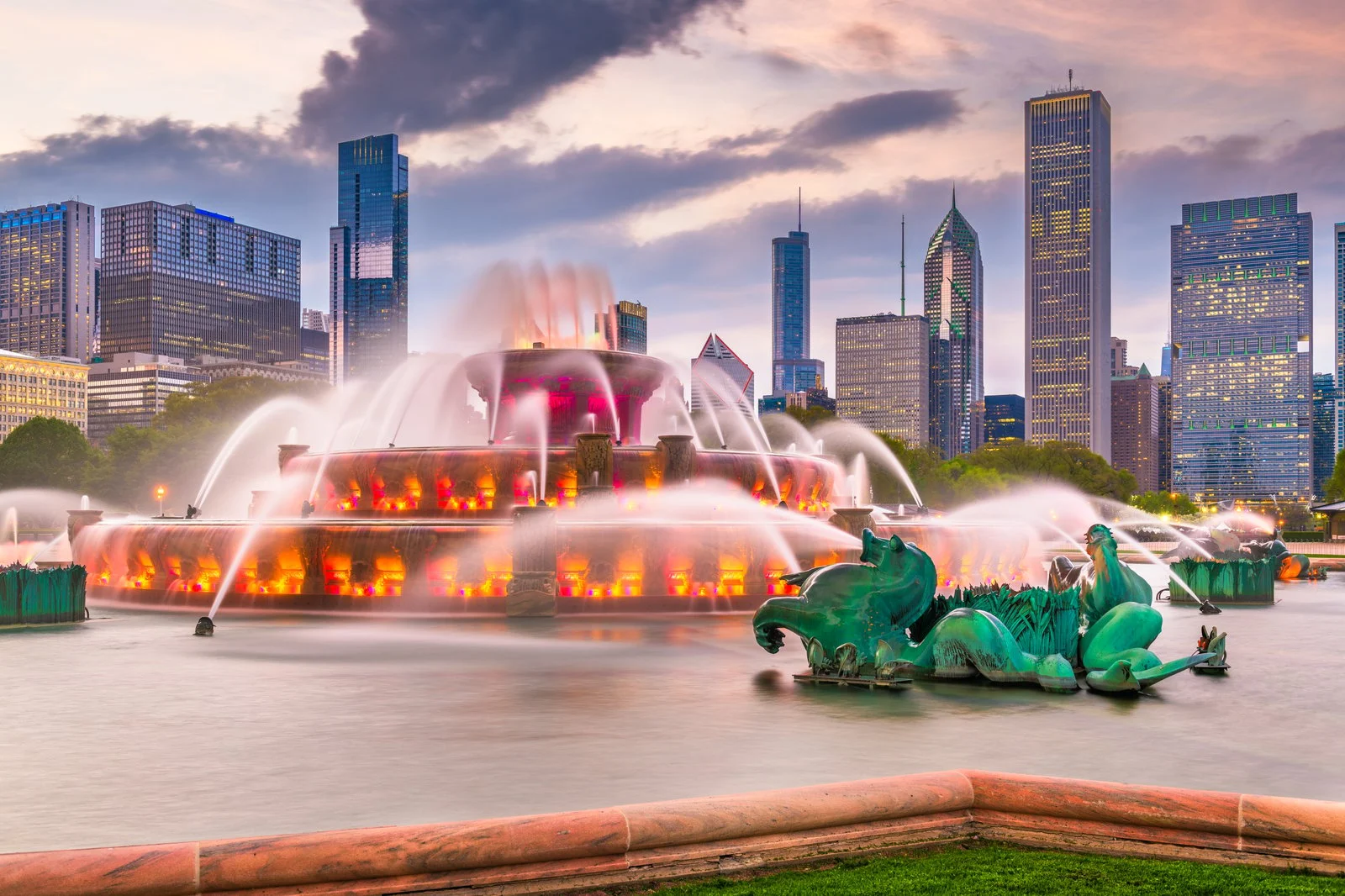
Buckingham Fountain gives Grant Park a formal centerpiece between the skyline and the lake. Dedicated in 1927, it was a gift from Kate Sturges Buckingham in memory of her brother Clarence. Architect Edward H. Bennett worked with sculptor Marcel François Loyau and engineer Jacques H. Lambert on a design influenced by the Latona Basin at Versailles. 16
FREE — fountain and Grant Park
There is no attraction ticket for viewing Buckingham Fountain in the public park. Water displays follow seasonal and weather-dependent operation.
Official Park District fountain information
Suggested time: 20–40 minutes.
The fountain also represents local geography. Its central composition evokes Lake Michigan, while four groups of bronze sea horses stand for the states bordering the lake. Seen closely, those figures add a sculptural story to a landmark often photographed only from a distance.
Walk around the public plaza before choosing a viewpoint. Toward the east side, you can place the fountain against downtown buildings; closer to the basin, the sea horses and tiered stonework become the subject. The scale of the surrounding space is part of the design, so a wide view is worth keeping alongside a detail.
Allow 20–40 minutes as part of a Grant Park walk. There is no attraction ticket for the public plaza. Water displays are seasonal and affected by conditions; consult the Chicago Park District’s fountain page if a display is central to your plans. The sculpture and its setting still provide reasons to stop without building a day around a particular jet or lighting sequence.
In the film: Buckingham Fountain — countdown #12.
17. Field Museum
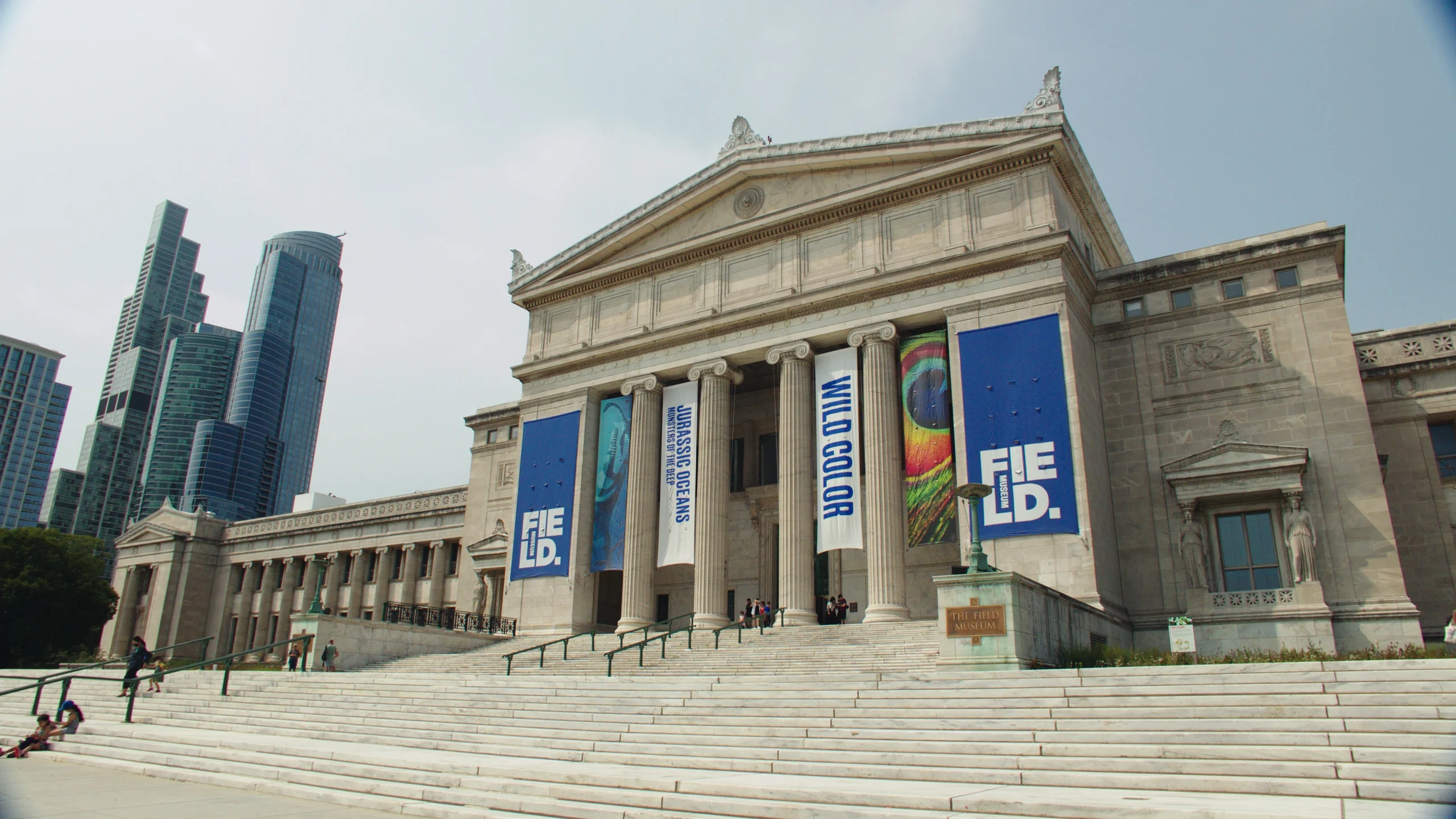
The Field Museum connects Chicago’s world’s-fair ambitions with the study of life and human cultures. Its collections grew from the 1893 World’s Columbian Exposition, and its first home was the Palace of Fine Arts in Jackson Park. The museum moved to its present lakefront building in 1921. Its name honors benefactor Marshall Field. 17
Tickets — Field Museum admission
Museum entry is paid for ordinary visitors. Choose the admission and special experiences you want; free or discounted programs have specific eligibility rules.
Official Field Museum tickets and inclusions
GetYourGuide: museum tickets and tour options
Suggested time: 3–4 hours.
Stanley Field Hall sets the scale of the visit. The enormous long-necked dinosaur there is Máximo, a cast of Patagotitan. SUE, the Tyrannosaurus rex, occupies a dedicated gallery within Evolving Planet on the upper level. They are different animals and different exhibits; older photographs showing SUE in the main hall describe an earlier arrangement. 17
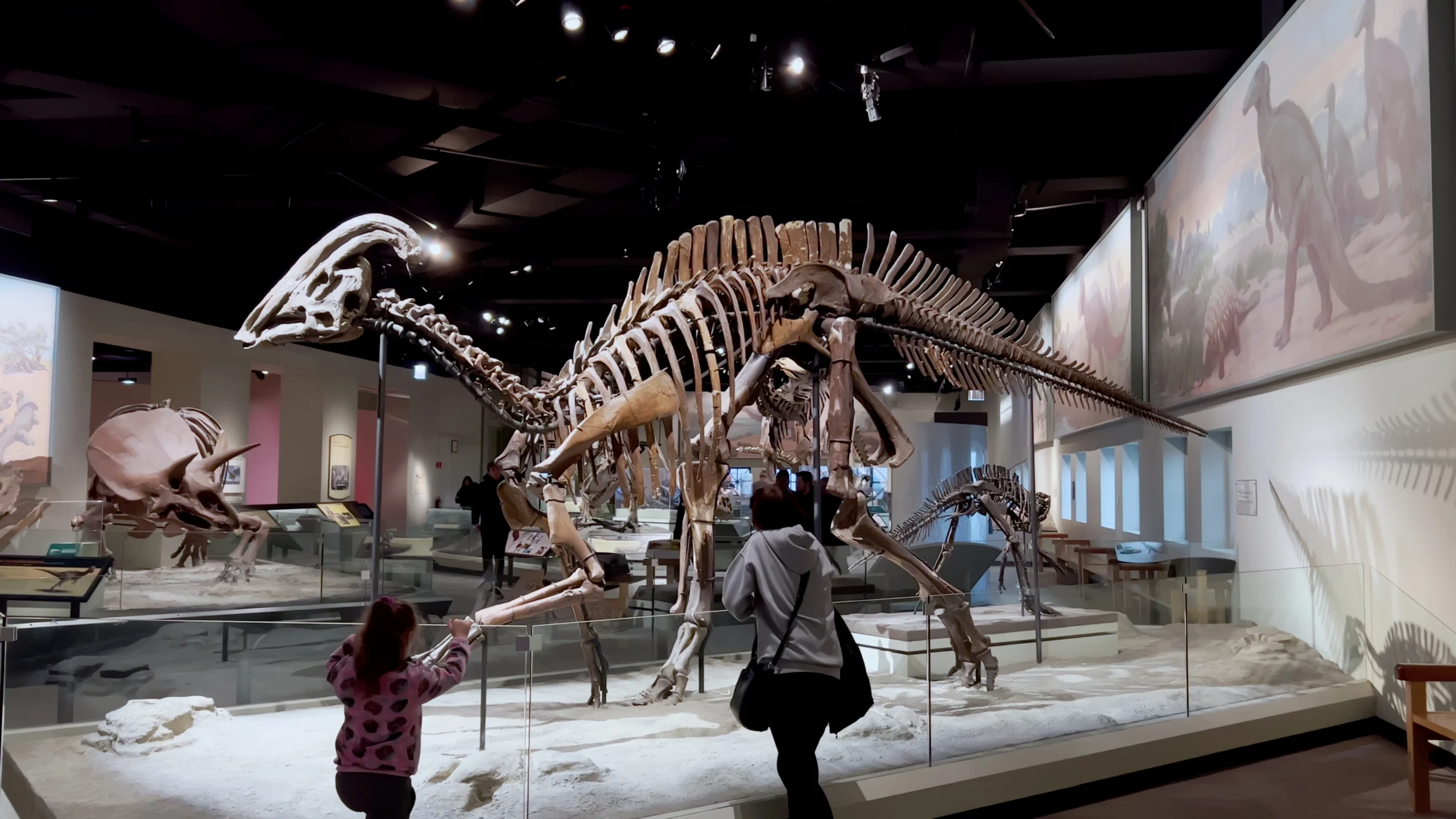
The museum rewards looking beyond a single famous skeleton. Choose a few galleries that match your interests, whether that means fossils, biodiversity or cultural collections, and leave room to read how the objects are interpreted. A focused visit is more satisfying than hurrying through a long list of rooms.
Allow 3–4 hours, or longer for a broader visit. SUE is included in standard museum admission; check any additional exhibition or experience separately through the official ticket page. For an easier day, pair the museum with Buckingham Fountain and the outdoor lakefront rather than another full museum immediately afterward.
In the film: Field Museum — countdown #10.
18. Shedd Aquarium
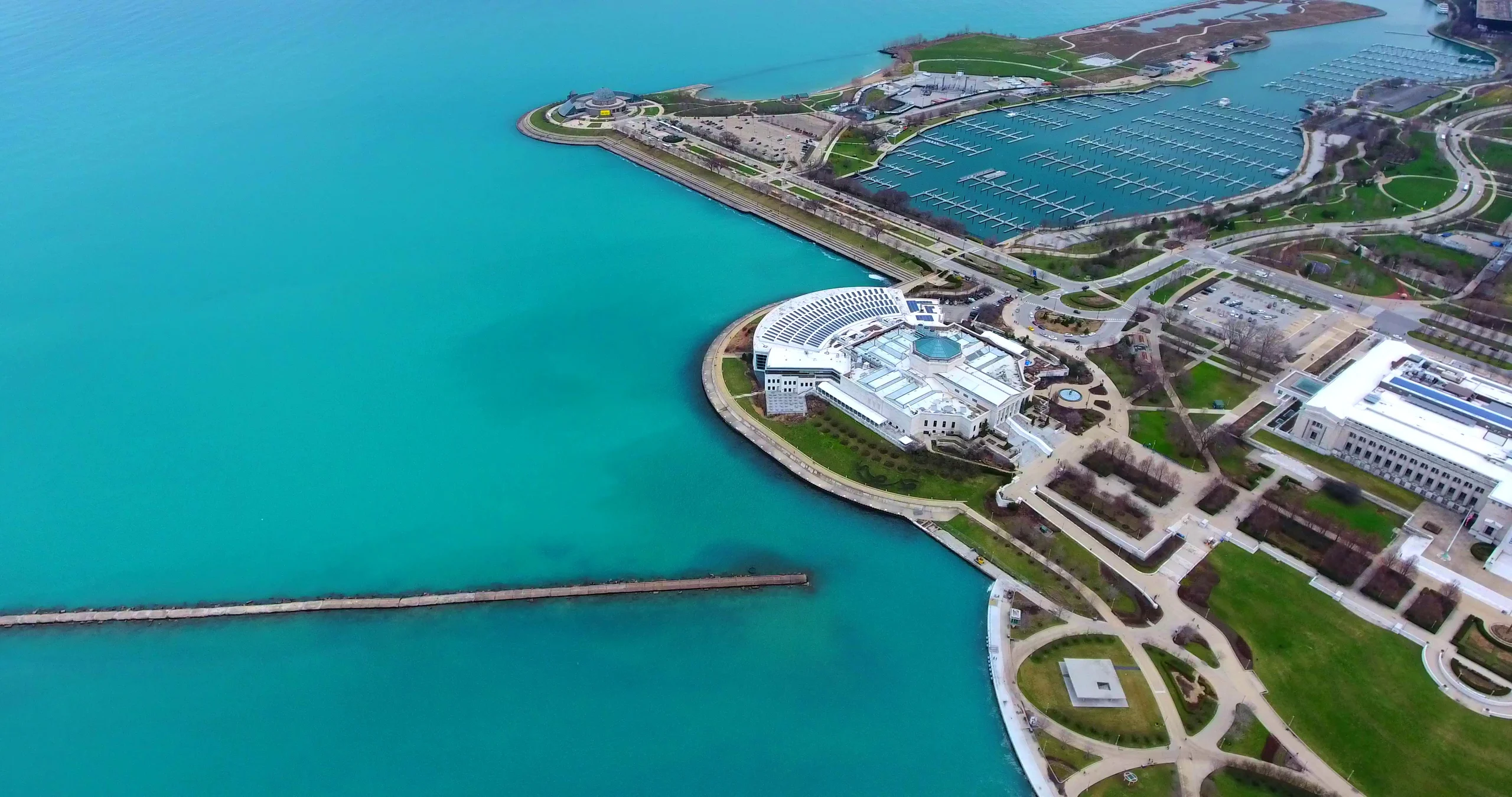
Shedd Aquarium occupies a prominent position on Museum Campus, with a classical exterior looking toward Lake Michigan. It opened in 1930 through the support of businessman John G. Shedd, who died before the building was completed. Its architecture places it within the same civic landscape as the Field Museum and Adler Planetarium, while its subject is the world of water. 18
Tickets — aquarium admission
Reserve ahead with Shedd or an authorized ticket partner. Check the date, entry time and experiences included in your ticket; admission prices vary.
Official Shedd tickets and reservations
Suggested time: 3–4 hours.
Inside, the interest comes from moving between aquatic environments rather than simply collecting sightings of large animals. Rivers, lakes, reefs and oceans introduce different habitats and ways of living. Watch how animals move through a space, then read the interpretation that connects behavior with the conditions of their environment.
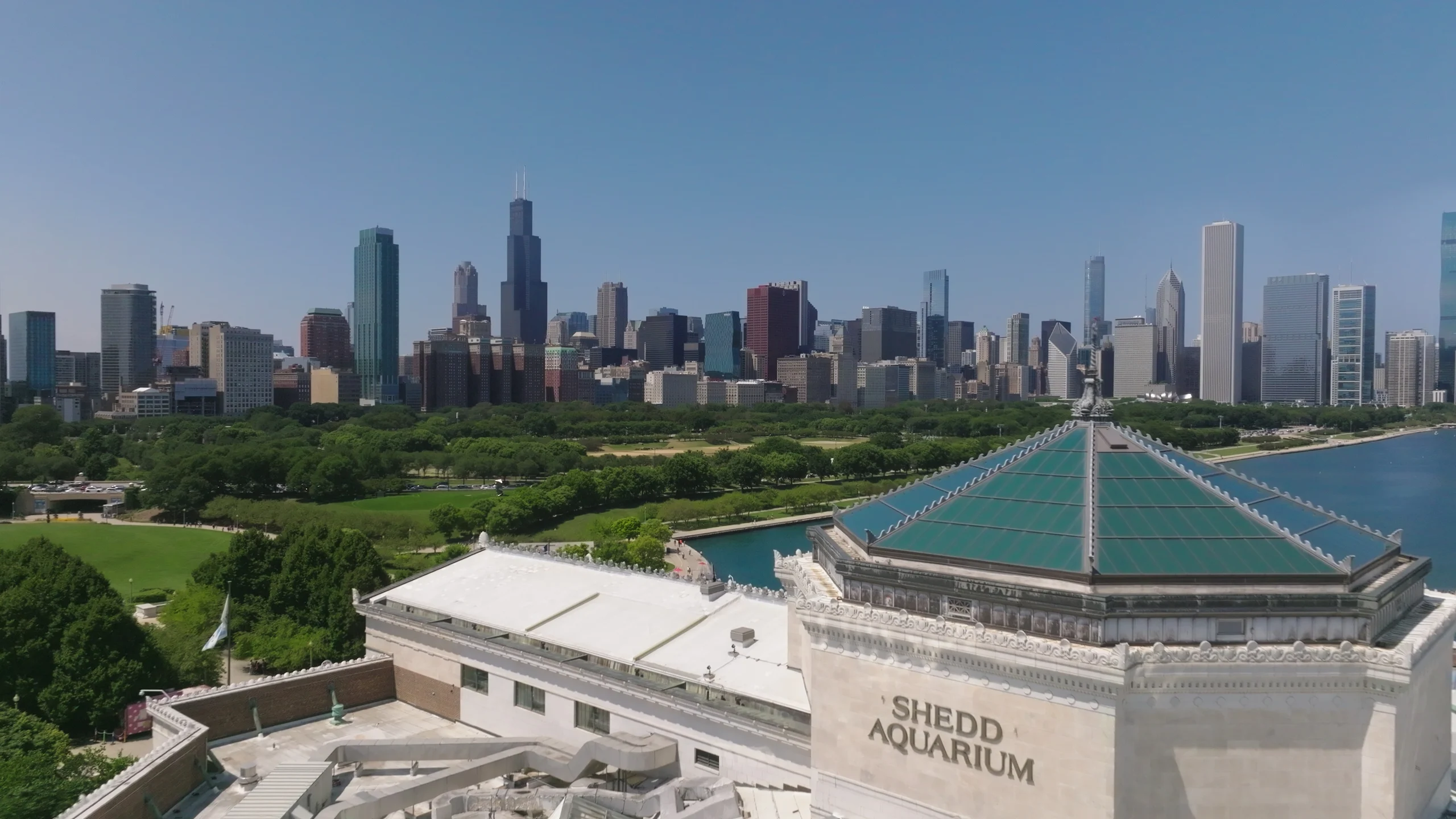
For families, choose a manageable selection and include a rest break. The museum’s map and daily program help you decide where to spend time without repeatedly crossing the building. A particular animal’s visibility can vary; the visit works better when it is built around several interests.
Allow 3–4 hours, with more time for an additional program. Advance timed tickets are recommended through the official visit page. Animal encounters and other special experiences have their own arrangements. Review the accessibility information for mobility and sensory resources, then leave time to enjoy the public lakefront outside.
In the film: Shedd Aquarium — countdown #11.
19. Adler Planetarium
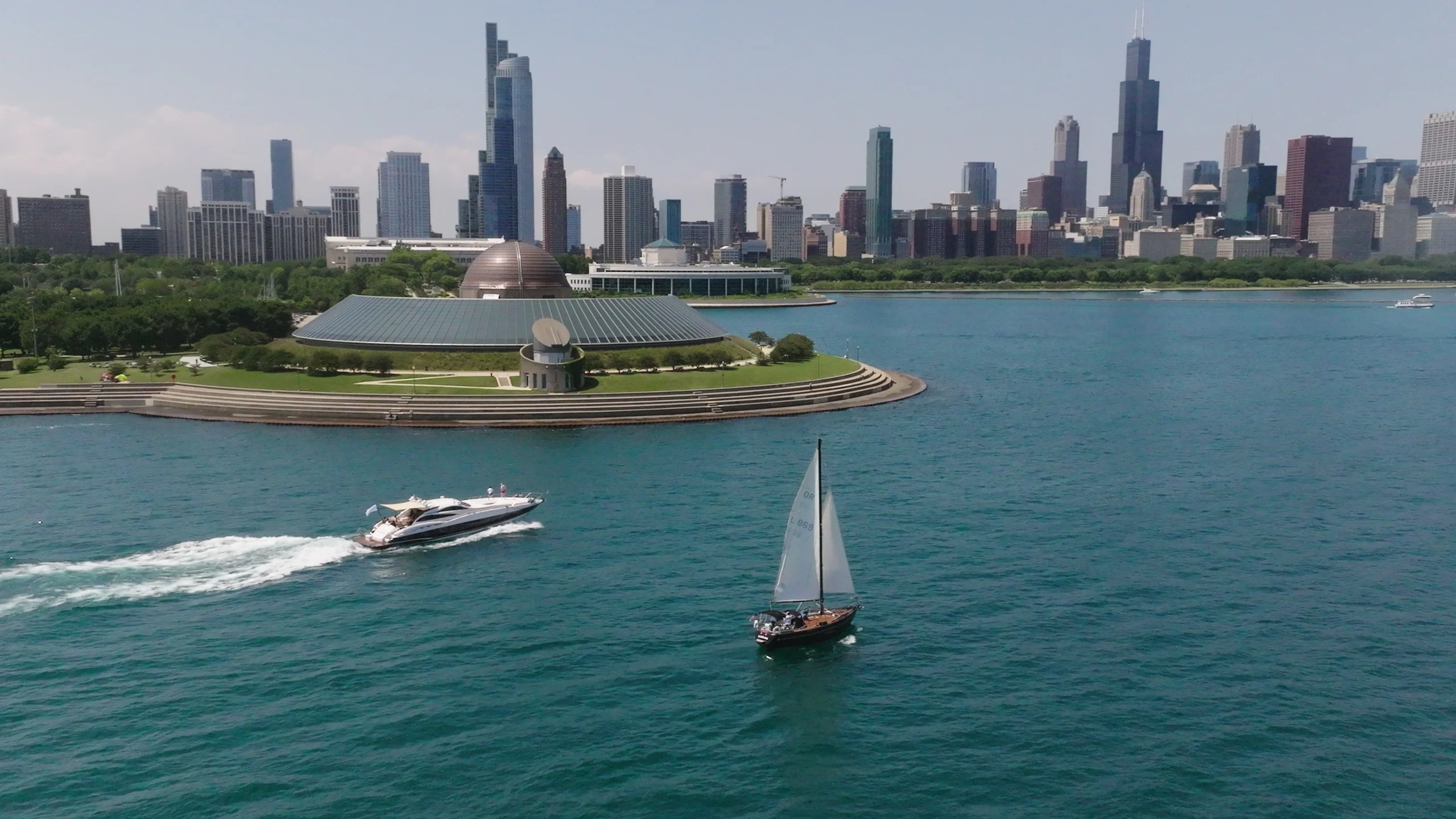
Adler Planetarium sits at the outer edge of Museum Campus, where the land reaches into the lake and the skyline opens across the water. The original domed building, designed by Ernest A. Grunsfeld Jr., became the Western Hemisphere’s first planetarium when it opened in 1930. Max Adler funded the project to bring astronomy to a broad public audience. 19
Tickets — museum; waterfront FREE
The museum requires admission. Dome shows are an additional choice, so check your ticket’s inclusions. The public outdoor skyline viewpoint near the planetarium is free.
Official Adler tickets and dome-show options
Suggested time: 2–3 hours indoors.
There are two distinct reasons to come. Inside, exhibitions and immersive dome shows turn the visit toward space and the ways people have studied it. Outside, the public waterfront offers one of the clearest places to see downtown as a whole, with open water separating you from the buildings.
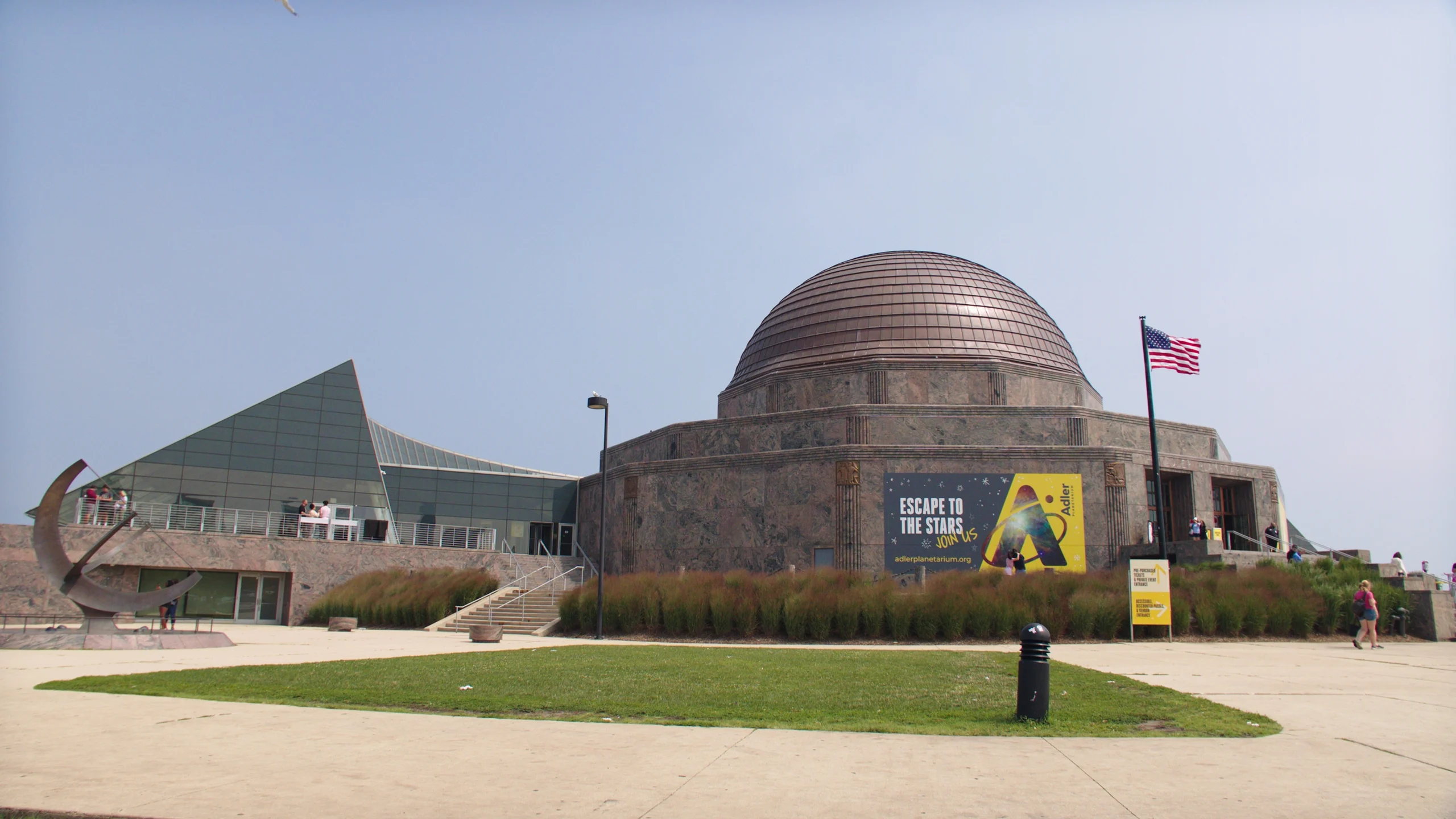
Treat those experiences separately when planning. A short stop for the skyline does not require a planetarium ticket. An indoor visit deserves enough time to explore, with a show chosen around its actual schedule rather than added at the last minute.
Allow 2–3 hours for the museum and a show, plus 20–40 minutes for the lakefront if you want to linger. Museum entry and dome shows are distinct ticket components, so check the official ticket options. The visitor page and accessibility guidance help with arrivals. Bring a layer for the exposed waterfront, even if your main purpose is photography.
In the film: Adler Planetarium — countdown #17.
Lincoln Park, the beach and Lakeview
Lincoln Park gives the trip a greener rhythm. The zoo, Nature Boardwalk and North Avenue Beach combine naturally, with opportunities to sit, walk and look back toward downtown. Wrigley Field lies farther north in Lakeview and needs a transport connection, especially if a ticket fixes your arrival time.
20. Lincoln Park Zoo
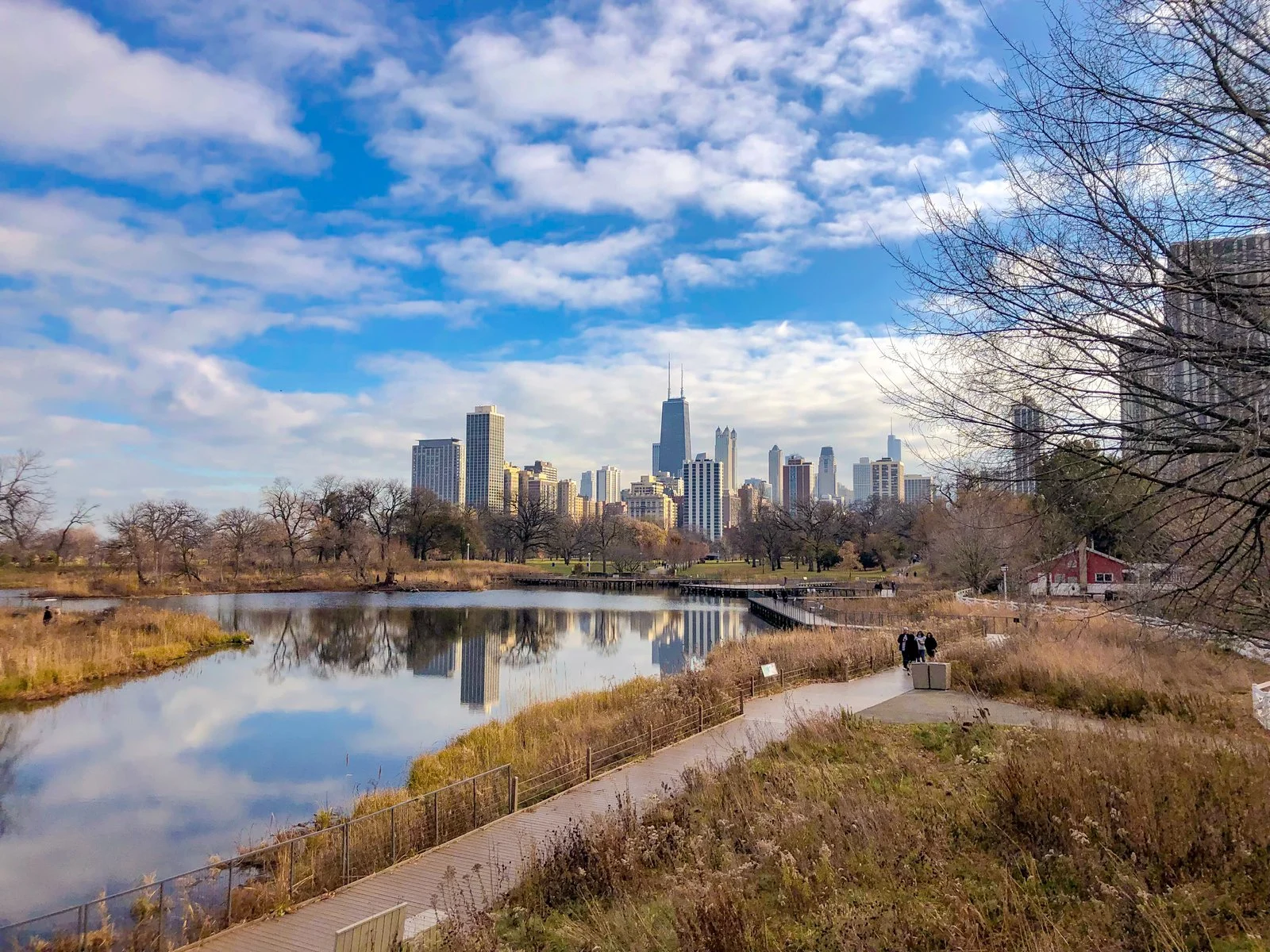
Founded in 1868, Lincoln Park Zoo combines animal habitats, gardens and conservation work within the city’s lakefront park system. Its ordinary admission is free, making it a flexible part of a trip even if you have already committed much of your budget to museums and skyline views. 20
FREE — ordinary zoo admission
General zoo admission is free and does not require a reservation. Special events, encounters, rides and parking may carry separate charges.
Official zoo admission and visitor information
Suggested time: 2–3 hours plus boardwalk.
The zoo’s scale is best approached selectively. Choose a few habitats, allow time to observe rather than hurry between them, and use the landscaped paths to slow the pace. Specific animal sightings vary, so avoid making the whole outing depend on a single species being active.
South of the main zoo, Nature Boardwalk surrounds South Pond with wetland and prairie planting. The restored landscape also supports research into urban wildlife. The curved lattice of the Peoples Gas Education Pavilion and the public bridge offer views that place nature in the foreground and downtown towers beyond it. 20
Allow 2–3 hours for the zoo, adding 30–45 minutes for Nature Boardwalk. Ordinary zoo and boardwalk entry are free; special events, activities and parking can cost extra. Use the official visit page and accessibility information. If your main interest is the skyline photograph and a park walk, a shorter boardwalk-only visit is a reasonable choice.
In the film: Lincoln Park Zoo — countdown #19.
21. North Avenue Beach
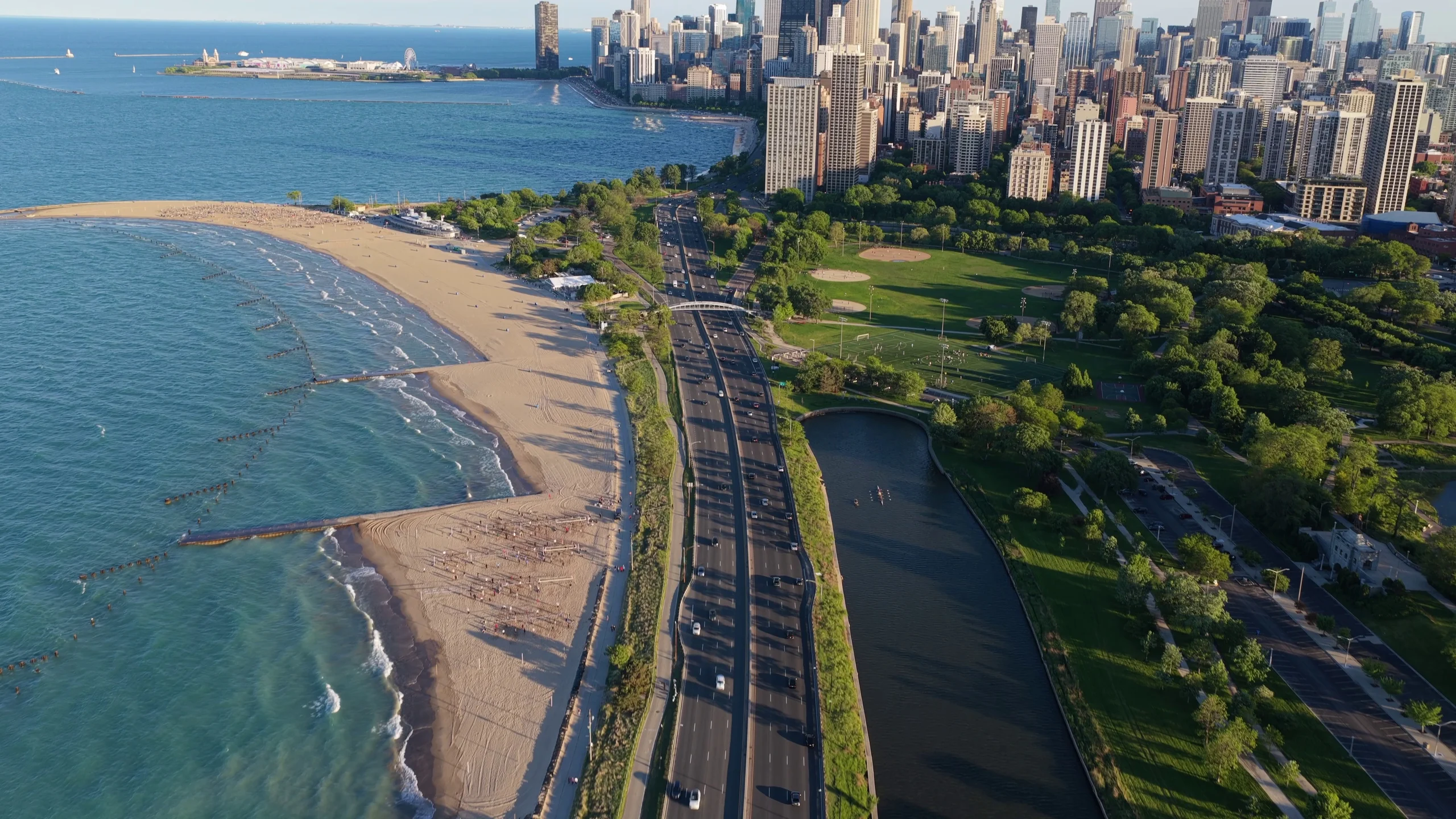
North Avenue Beach shows a side of Chicago that first-time visitors sometimes overlook: sand and open freshwater beside a dense skyline. The view south along the shoreline connects a beach-day setting with the towers of North Michigan Avenue. You do not need to swim to enjoy the contrast.
FREE — public beach access
No beach admission ticket is needed. Swimming is limited to the designated season, areas and lifeguard hours; rentals, parking and food are separate costs.
Official North Avenue Beach rules
Suggested time: 45–90 minutes.
Much of this shoreline took shape through a major expansion of Lincoln Park in the late 1930s, and the beach was dedicated in 1940. Its boat-shaped beach house carries that history in an unusually playful form. The present building is a later replacement that retained the nautical idea, rather than an untouched original structure. 21
A walk along the public lakeside path lets you choose between the skyline, the curve of the beach and the beach house as subjects. Keep to the appropriate pedestrian route and allow space for other trail users. After time in downtown streets, the open horizon can be the main attraction.
Allow 45–90 minutes for a walk and break, or longer for beach time. Swimming is permitted only in designated areas during the official season while lifeguards are on duty; follow the posted conditions. Check the Park District’s beach page for access, conditions and mobility arrangements. Pair it with Lincoln Park instead of making another cross-city journey.
In the film: North Avenue Beach — countdown #18.
22. Wrigley Field
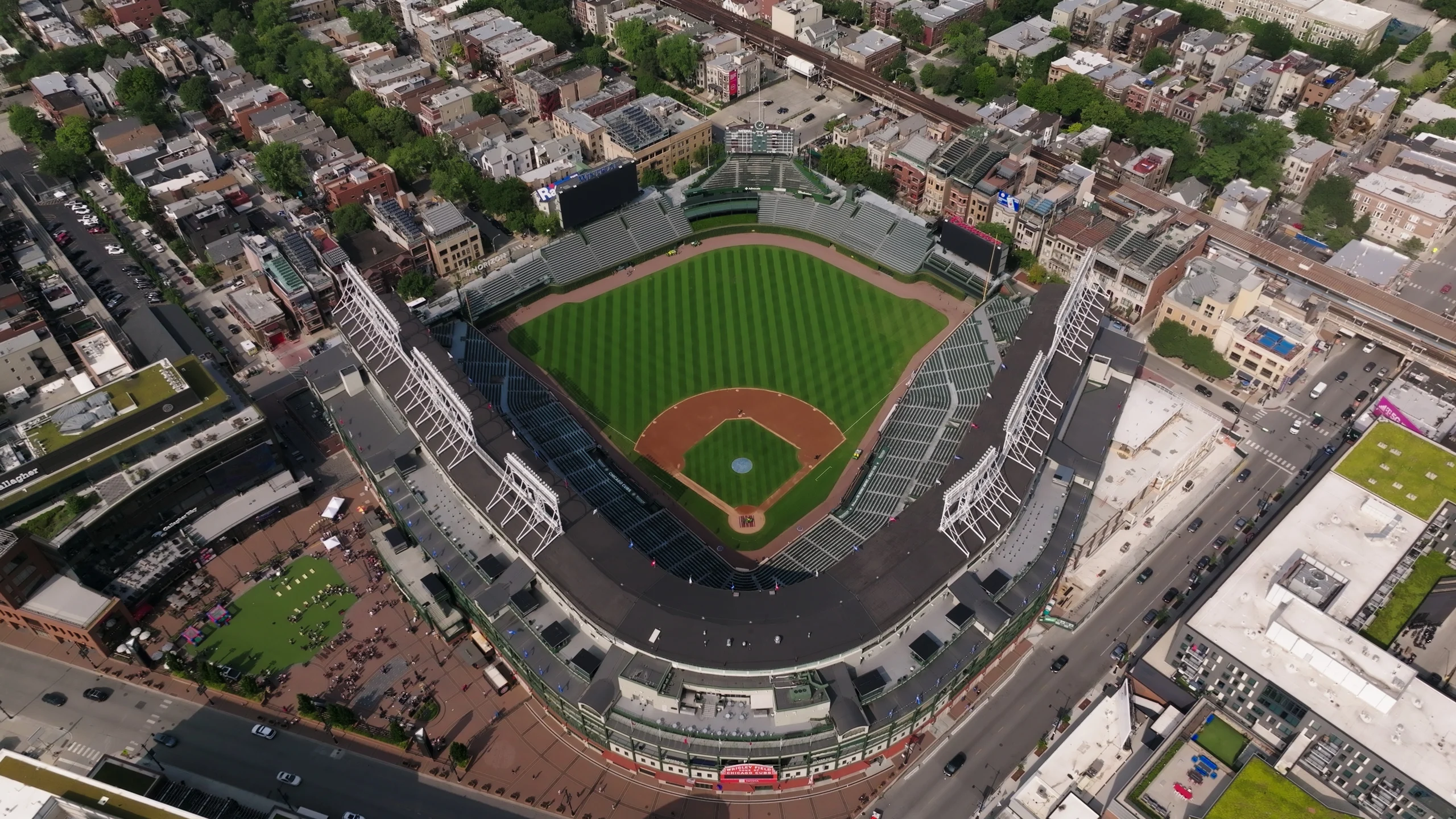
Wrigley Field is a neighborhood ballpark, and the surrounding streets are part of its character. Built in 1914 as Weeghman Park, it became home to the Cubs in 1916 and received the Wrigley Field name in 1926. Its long sporting history sits within Lakeview rather than on an isolated site outside the city. 22
Tickets — tours and games; exterior FREE
A stadium tour or game requires its own ticket. Viewing the ballpark exterior from public streets is free and does not provide access to the seating bowl or field.
Official Cubs stadium tours · Official Cubs game tickets
Suggested time: 20–30 minutes outside.
Begin with the red marquee at Clark and Addison, then look at how the entrances meet the surrounding streets. The experience changes with the baseball calendar: a game brings a sense of shared occasion that an exterior photograph cannot reproduce. A stadium tour is another way to make the journey worthwhile if you are interested in the building itself.
The exterior is a 20–30-minute stop, while a game deserves a substantial half-day including travel and food. For a tour, budget roughly two hours at the venue, including arrival time. Tours are ticketed, and their routes vary. Use the official Cubs tour page and ballpark information before setting your plans.
From Lincoln Park, continue north by suitable public transport or taxi rather than assuming the stadium is immediately beside the zoo. If you have a game ticket, shorten the beach visit or move it to another day. The Wrigley Building by the river and Wrigley Field are entirely different stops; their shared name can otherwise produce a surprisingly poor itinerary.
In the film: Wrigley Field — countdown #13.
Hyde Park and Jackson Park
The last attraction is a separate excursion south of downtown. The Griffin Museum of Science and Industry is not one of the three Museum Campus institutions. Give the journey and the building’s scale a dedicated part of the trip.
23. Griffin Museum of Science and Industry
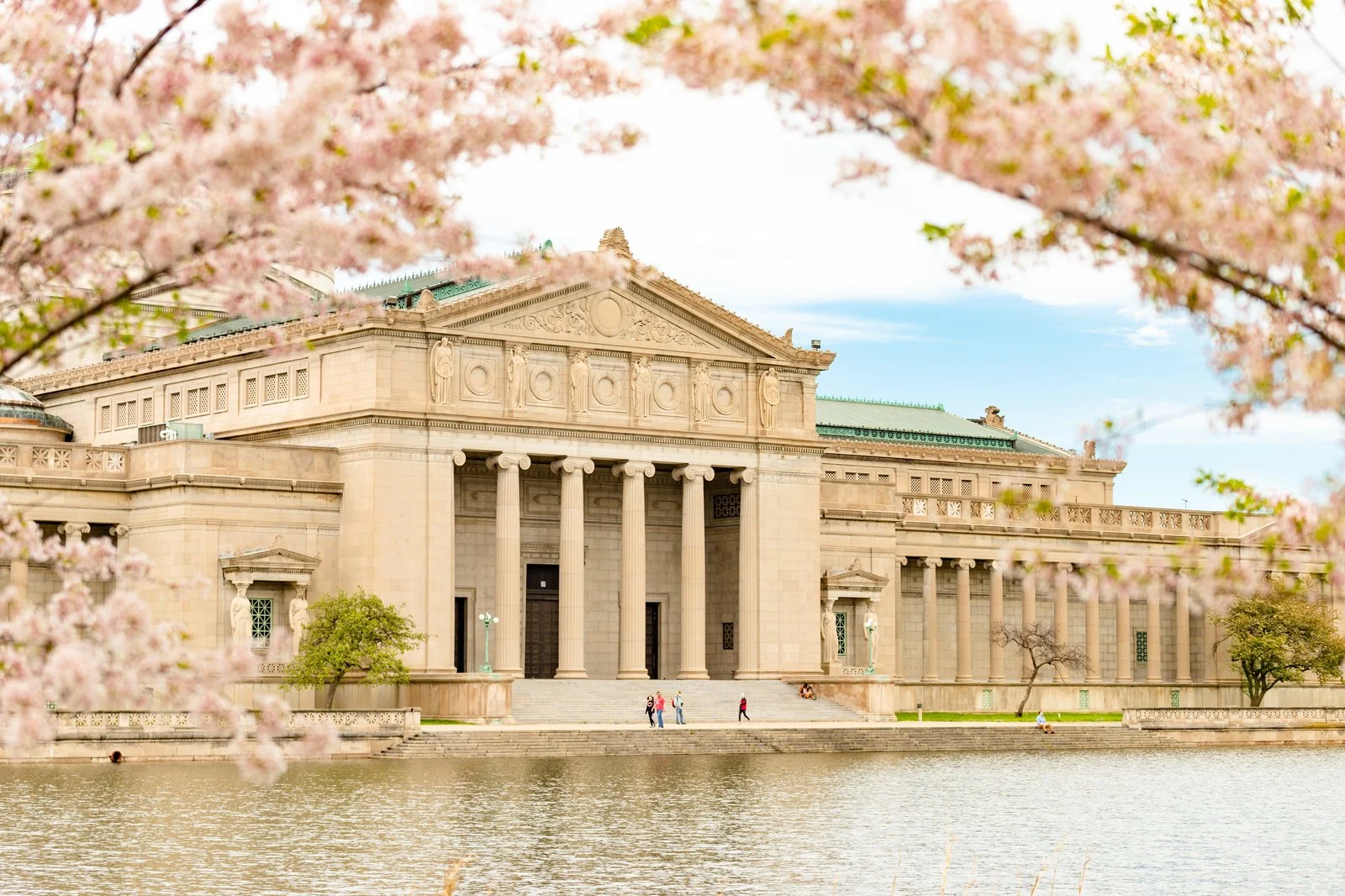
The Griffin Museum of Science and Industry brings together a world’s-fair exterior and a hands-on approach to science. Its building began as the Palace of Fine Arts at the 1893 World’s Columbian Exposition. Julius Rosenwald later championed its conversion into a museum of science and industry, which opened in 1933. 23
Tickets — museum entry and selected extras
General Admission covers most permanent exhibits and selected temporary exhibitions. Experiences such as the U-505 On-Board Tour, Coal Mine and Giant Dome Theater require additional tickets; reserve the ones you want.
Official Griffin MSI admission and extra experiences
GetYourGuide: museum admission
Suggested time: 4–6 hours plus transport.
The long classical facade is worth seeing before you enter, because it connects this outing with the history behind the Field Museum. Inside, the scale changes from monumental architecture to large machines and physical phenomena. Science Storms, for example, uses interactive exhibits to make forces and movement visible, including a large swirling vortex of air and vapor. 23
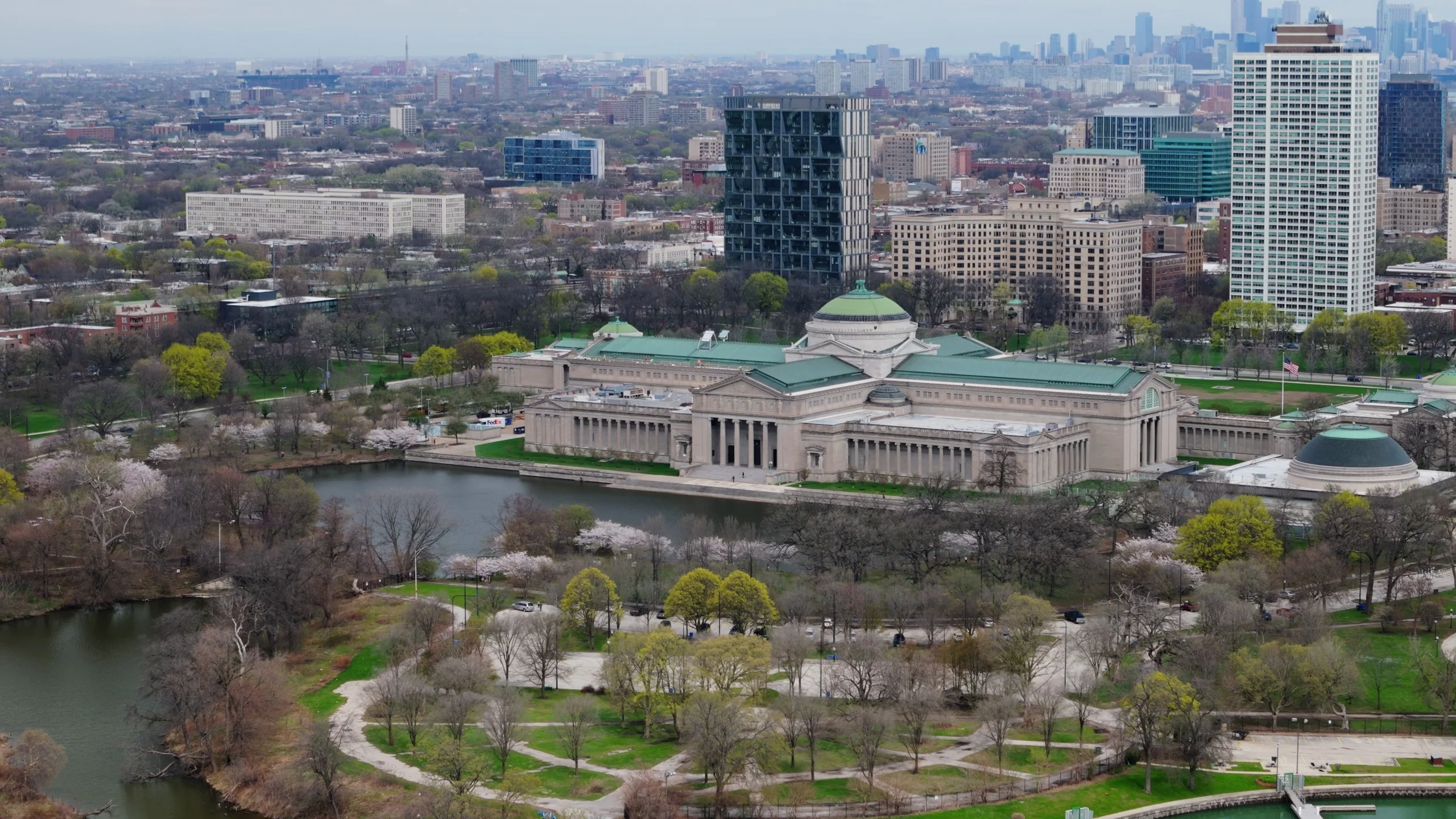
The U-505 submarine offers another kind of encounter with technology. The exhibition around the captured Second World War vessel is distinct from going inside it. Boarding U-505 requires a separately ticketed, timed tour; the interior also has confined spaces and is not accessible to wheelchairs or strollers. Check the requirements before building your visit around that experience. 23
Allow 4–6 hours plus transport, choosing a few priorities rather than trying to cover everything. The official pricing page explains admission and additional experiences, including the U-505 onboard tour. Use the museum’s directions for the journey to Jackson Park. A full museum day is a good choice for visitors with a strong interest in science or industrial history.
In the film: Griffin Museum of Science and Industry — countdown #20.
Planning your Chicago visit
How much time should you allow?
The most useful distinction is between a quick exterior stop and a substantial visit. The lions outside the Art Institute take minutes; the galleries take hours. Adler’s public skyline viewpoint and its indoor program are similarly different commitments.
| Visit type | Useful planning allowance | How to fit it into a day |
|---|---|---|
| Millennium Park’s three main stops | 60–90 minutes combined | Keep Cloud Gate, Crown Fountain and the pavilion in one walk. |
| Cultural Center | 45–60 minutes | A natural interior stop beside Millennium Park. |
| Magnificent Mile architecture walk | 60–90 minutes | Includes short Wrigley Building and Water Tower stops; add deck time separately. |
| CAC / First Lady river cruise | About 2 hours at dock and aboard | Includes the requested early arrival; add travel to the exact dock. |
| Art Institute | 2–3 hours selectively | Half a day if art is a major interest. |
| Field or Shedd | 3–4 hours each | Choose one for a relaxed museum day; two make an active, appointment-led day. |
| Adler | 2–3 hours with a show | Add time separately for the outdoor panorama. |
| Griffin MSI | 4–6 hours plus transport | Treat Hyde Park as a dedicated excursion. |
| Navy Pier with the wheel and food | 2–3 hours combined | Avoid counting the pier and wheel as separate transfers. |
| Lincoln Park Zoo and Nature Boardwalk | About 3 hours, or longer | Add the beach if the weather and energy allow. |
Tickets and reservations
Book the visits that shape the day
Start with your architecture cruise, chosen museum tickets and any baseball game or performance. Then place the free walks around those appointments. Use official booking pages and check the actual product: Skydeck includes The Ledge in General Admission; 360 CHICAGO sells TILT as an additional experience; Adler distinguishes museum entry from dome shows; and Griffin MSI has separately ticketed experiences. Navy Pier entry does not include a Centennial Wheel ride.
Buy tickets after checking opening days, cancellation conditions and the distance between reservations. A timed ticket is an appointment to arrive, not a promise that every queue disappears. Discount passes are worth comparing only against the attractions and ticket types you would actually purchase; they may still require individual reservations.
Free-entry offers at paid museums can depend on age, residency or another eligibility condition. Check the official terms rather than assuming an offer for local residents applies to every visitor.
Skydeck or 360 CHICAGO?
| Choose | What makes it different | Ticket decision |
|---|---|---|
| Skydeck at Willis Tower | Western Loop position, the street grid and river, plus The Ledge’s glass-floor experience | The Ledge is included in General Admission. |
| 360 CHICAGO | A strong shoreline perspective from the northern Magnificent Mile, with beaches and parks stretching away | TILT is optional and requires an additional ticket. |
Both views depend on visibility. Choose the location that complements your interests and route; a trip with one paid deck and the free waterfront panorama beside Adler can already offer substantial variety. Doing both makes more sense when architecture and photography are central interests. 7 13
Getting around without a car
Walk locally, use transport between areas
Keep downtown walks together. Use CTA journey information for Lakeview and check Griffin MSI directions for the separate Hyde Park excursion.
Walking works well inside the central clusters, but Chicago’s lakefront distances can accumulate. Combine those walks with CTA trains and buses for longer connections. A car is unnecessary for the main route in this guide, and parking adds a decision at almost every stop.
CTA accepts Ventra and contactless payment cards or mobile wallets. Use the same payment method consistently for transfer recognition, and compare pay-as-you-go travel with the available passes. Check CTA’s payment guidance and current fares rather than relying on an old price quoted in a travel article. 28
For Griffin MSI, the museum identifies Metra Electric to 55th/56th/57th Street, followed by a short walk, and the #6 Jackson Park Express as useful approaches. Metra uses separate tickets, so an ordinary CTA/Pace pass is not enough; compare the regional ticket options if you will use both systems. Consult the museum’s official directions for the full approach and your return journey. 29
From O’Hare and Midway
The Blue Line connects O’Hare with downtown, while the Orange Line connects Midway with the Loop. As a rough station-to-downtown guide, CTA lists about 40–45 minutes from O’Hare and about 20–25 minutes from Midway under normal conditions. Terminal walking, baggage collection and the final trip to your hotel are additional. 28
At O’Hare, arrivals at Terminal 5 use the airport transit system to reach the terminal area connected to the CTA station. Blue Line service operates around the clock; the Orange Line does not, so check the schedule for a very early or late flight. The official CTA airport guide explains the terminal routes and travel options. A taxi can be useful with heavy luggage or a less convenient hotel connection, but road travel is affected by traffic.
When to visit
Let the season shape your route
Keep one lakefront block flexible. Warm-season fountains and boat schedules differ from the quieter indoor focus of a winter trip.
For a first visit combining walking, river time and museums, late spring through early autumn gives the broadest outdoor possibilities. Summer supports a lively lakefront and outdoor-event program, but it can also be hot and busy. Early autumn often suits an architecture-focused trip particularly well; that is a planning preference, not a weather guarantee.
Spring can change quickly, and the lakefront may feel cooler than sheltered downtown streets. Winter works well for museums, theatre and architectural interiors, with shorter outdoor sections and flexible transport. Boat schedules, fountains and supervised beach swimming are seasonal, so the same itinerary needs adjustment across the year. Use Chicago’s seasonal weather overview and the relevant attraction calendars when choosing dates. 30
Where to stay
Choose a base by the journeys you expect to repeat. The Loop is convenient for Millennium Park, the Art Institute, Cultural Center and central train connections. River North places you near river activities and many dining options. Streeterville and the Magnificent Mile suit a trip focused on the northern downtown landmarks and Navy Pier.
The South Loop can work for Museum Campus, while Lincoln Park or Lakeview makes sense if neighborhood time and baseball matter more than being beside the central museums. Check the actual walking route to a station, the hotel’s final price and any parking charge. A place that looks close to the lake on a map is not automatically convenient for every attraction along it.
The Loop
Convenient for Millennium Park, the Art Institute and rail connections.
Check the evening dining options close to your hotel.
River North & Streeterville
Useful for the river, Magnificent Mile and Navy Pier.
Allow extra journey time to the southern museums.
South Loop
A practical base for Museum Campus and the southern downtown edge.
Check walking distances to the specific museum entrance.
Lincoln Park & Lakeview
A neighborhood base for the zoo, beach and Wrigley Field.
Downtown visits require a separate transport journey.
Families and accessibility
Check the whole journey
Confirm the station entrance, boat and optional experiences with each operator. Main-attraction access does not guarantee access to every add-on.
With children, one major indoor attraction per day is often enough. Shedd, Griffin MSI, Lincoln Park Zoo and Navy Pier provide different kinds of interest, while a beach or park break helps balance a day of rules and queues. A long, detailed architecture lecture may suit older children better than very young ones; choose a cruise for its format as well as its route.
For mobility planning, check each entrance and connection rather than assuming a whole area is step-free. CTA vehicles are accessible, but not every rail station is; use the official accessibility pages and elevator information when choosing the journey. Riverwalk ramps, museum entrances and boat boarding arrangements need their own checks. 25 31
First Lady’s vessel-specific access information, 360 CHICAGO’s TILT requirements and Griffin MSI’s U-505 tour conditions are particularly relevant distinctions. Access to the main attraction does not always extend to every optional experience.
Costs and a useful rainy-day alternative
Build the budget around a few paid priorities. Millennium Park, the Cultural Center, Riverwalk, ordinary Lincoln Park Zoo entry and public lakefront walks provide a strong free framework. Museums, decks, cruises, games, performances and the wheel are the larger optional additions. Add food, transport and any booking charges before comparing the final cost of separate tickets with a pass.
On a wet day, make one museum the anchor. In the Loop, combine the Art Institute with the Cultural Center and a nearby meal. If you prefer science, give Griffin MSI its own indoor day with the necessary transport. A low cloud ceiling may make a deck less rewarding, even when rain does not prevent entry.
Keep one outdoor block flexible
Leave room to exchange a lakefront walk or skyline visit with a museum day. Check the terms before purchasing fixed-time tickets, and avoid placing every weather-sensitive experience on the same afternoon.
The Best Instagram Spots in Chicago
Find your next Chicago photo
Explore our dedicated photo guide for inspiring Instagram examples, portrait ideas, camera positions, the best times of day and individual maps. Read The Best Instagram Spots in Chicago →
What to eat in Chicago
Leave space for local food in the itinerary. A relaxed meal between sightseeing blocks is more useful than adding another distant attraction when the day is already full.
Chicago pizza: deep dish and tavern style

Deep dish is the pizza many visitors picture first: a tall, buttery crust holding cheese beneath a substantial tomato topping. It is a meal to sit down for, rather than a slice to carry between attractions. The photograph shows that deeper style; the height of the crust and the filling are part of the appeal. 32
Tavern-style pizza offers a different Chicago experience: thin, crisp and usually cut into small squares. If your stay includes several meals, try the two styles on different days. Deep dish makes a natural evening pause after a long museum visit; a tavern-style meal offers a useful comparison without repeating the same dish. 33
How to plan it: leave an unhurried meal window and ask the restaurant about preparation time before ordering, especially when a theatre performance or timed ticket comes next. Consider sharing a pizza and adding more only if needed. The city’s tourism board lists places such as Lou Malnati’s and Gino’s East as starting points for exploring deep dish; check the chosen branch’s menu and booking arrangements. 32
Italian beef: a Chicago sandwich with choices

An Italian beef sandwich brings thinly sliced beef and savory cooking juices together in a roll. The important decisions are the peppers and how wet you want the bread. Sweet peppers offer one direction; giardiniera adds a pickled vegetable topping that can bring heat. Read the menu’s wording rather than assuming every shop uses the same ordering terms. 32
What to ask for: if this is your first Italian beef, ask the counter to explain the pepper choices and how much juice comes with the sandwich. A more thoroughly soaked roll is part of the experience for some diners, but it is also messier to handle. Choose the version you will enjoy eating, rather than ordering the wettest option simply because it sounds the most local.
Where it fits in the day: make it a deliberate lunch stop between sightseeing blocks, with somewhere convenient to eat and time to clean up afterward. It is less practical while walking to a cruise departure or handling a camera. Al’s Italian Beef and Mr. Beef are among the examples in the tourism board’s guide; choose a location that fits your actual route. 32
Chicago-style hot dog: a colorful quick stop

A classic Chicago-style hot dog layers an all-beef sausage in a poppy-seed bun with mustard, relish, onion, tomato, a pickle spear, sport peppers and celery salt. The traditional combination leaves out ketchup. There is a lot in one bun: the contrast between the sausage, crisp vegetables, pickle and mustard is what makes it distinctive. 32
Before ordering: check the toppings if you dislike hot peppers or want a particular ingredient left off. The classic recipe is a useful introduction, but the best order is one you will enjoy. For a photograph, take a moment before the first bite: daylight and a clean view of the toppings show the dish more clearly than a dark table or a crowded background.
Where it fits in the day: use it for a shorter food break when you want to keep the afternoon open for a museum, the lakefront or a neighborhood walk. Portillo’s and The Wieners Circle are examples listed by the tourism board; check the location and current menu before making a detour. A quick meal still deserves a proper pause rather than being squeezed into a transfer. 32
For a small sweet-and-savory snack, try the city’s cheddar-and-caramel popcorn combination. It makes a useful extra tasting on a day when a full second meal would be too much. 32
For a wider view of the city’s food cultures, consider a jibarito, a sandwich using fried plantains in place of bread, associated with Chicago’s Puerto Rican community. A meal in another neighborhood can be a worthwhile outing in its own right; put it into the travel plan rather than assuming it lies beside downtown’s landmarks. 32
The tourism board’s guide to local dishes and pizza overview provide places to begin. Check an individual restaurant’s menu, opening times and reservation arrangements before making it the fixed midpoint of a sightseeing day.
Put the attractions into useful sightseeing areas
The six groups below are a practical map of the trip. The linked map searches identify an anchor for each area; they are not pre-timed walking routes. Use CTA’s journey-planning information for the connections between them.
Millennium Park and the Loop
1–7: park artworks, Cultural Center, Art Institute, Chicago Theatre, Skydeck
Combine the nearby park stops; give the museum and deck separate time blocks.
River and Magnificent Mile
8–13: Riverwalk, cruise, Wrigley Building, avenue, Water Tower, 360 CHICAGO
Build the walking route around the cruise’s confirmed dock and departure.
Grant Park and Museum Campus
16–19: Buckingham Fountain, Field, Shedd, Adler
Separate museum interiors from the free outdoor skyline walk.
Lincoln Park and Lakeview
20–22: zoo, beach and Wrigley Field
Zoo and beach combine naturally; use transport onward to the ballpark.
Hyde Park and Jackson Park
23: Griffin MSI
A separate excursion south of Museum Campus, with its own transport plan.
Chicago itineraries for one, two, three, four or six days
Build the day around one main appointment
Allow for meals, journeys, security and queues. An additional museum interior or a baseball game replaces another activity in a short itinerary.
These routes assume full sightseeing days and suitable opening calendars. Move the days to match your reservations and the weather. Airport arrival and departure days are additional unless your flights leave meaningful sightseeing time.
1 Day: the central city and the river
Begin with Cloud Gate, Crown Fountain and the pavilion, then cross to the Cultural Center if its opening time fits. Continue toward the river for a booked architecture cruise, allowing its full check-in window. Have lunch nearby and walk a selected stretch of Riverwalk.
In the afternoon, cross DuSable Bridge, see the Wrigley Building and continue along the Magnificent Mile to the Water Tower. Add 360 CHICAGO only if the ticket, visibility and remaining time make sense. This is already a substantial day, so keep shopping stops selective.
If the Art Institute is your priority, give it the main afternoon block and shorten the river-and-avenue program. Trying to add the museum, both observation decks and Navy Pier to this route would leave very little time to enjoy any of them.
2 Days: the essential weekend
Best for: a first visit with the classic downtown sights, a cruise and one substantial indoor visit. These are two full sightseeing days; allow separately for airport journeys. Choose this shorter highlights list if you need to trim the route further.
Day 1 — Millennium Park, art and the Loop. Begin with Cloud Gate, Crown Fountain and Jay Pritzker Pavilion, then step into the Cultural Center if public access fits. After lunch, give selected Art Institute galleries the main afternoon block. See the Chicago Theatre exterior later if you still have energy. Finish with a relaxed pizza meal; keep a theatre performance optional rather than making it another deadline.
Day 2 — River architecture and a skyline view. Build the morning around your booked architecture cruise, reaching the confirmed dock with the operator’s requested check-in time. Add a Riverwalk stroll and lunch, then cross DuSable Bridge to the Wrigley Building. Walk part of the Magnificent Mile toward the Water Tower. A reserved 360 CHICAGO visit is an optional final stop; leave the evening flexible if the day’s walking is enough.
Choose one swap: if an observation deck matters more than art, replace the Art Institute with Skydeck on Day 1 and skip 360 CHICAGO on Day 2. If you prefer Field or Shedd, replace the art-museum afternoon with that museum and keep the remaining Loop stops brief. Do not add a second large museum, a baseball game or the science museum to this weekend without removing another main activity.
3 Days: highlights and neighborhoods
Best for: the two-day highlights with a separate day for the lakefront or a different neighborhood. Follow Days 1 and 2 above, then choose one of the following versions for Day 3.
Day 3, northern route — Lincoln Park and the lakefront. Travel to Lincoln Park Zoo, explore the Nature Boardwalk and pause for lunch. Continue toward North Avenue Beach for an outdoor skyline view if the weather suits. This is the gentler alternative after two downtown days. If Wrigley Field is your priority, substitute an outing to the ballpark for the beach; a game needs its own ticket and changes the day’s timing.
Day 3, museum route — one museum and Museum Campus. Choose Field or Shedd for the main indoor block, with lunch and travel time built in. Finish with the public waterfront beside Adler for the skyline; entering the planetarium as well would require dropping another activity. Add Buckingham Fountain only if weather, season and remaining energy make the extra outdoor walk worthwhile.
Keep the geography simple: Lincoln Park and Museum Campus are alternative days, not one continuous walk. Use CTA’s journey planner for the journey from your accommodation. Navy Pier, Griffin MSI and a second observation deck remain choices to substitute or save for a longer stay.
4 Days: a varied first visit
Day 1 — Millennium Park and the cultural Loop. Visit the three park landmarks, the Cultural Center and the Art Institute, with lunch between the shorter stops and the longer museum visit. Finish with the Chicago Theatre exterior; a performance is an optional evening commitment with its own ticket.
Day 2 — River architecture and the Magnificent Mile. Combine a selected Riverwalk stretch with your architecture cruise. After lunch, walk from the Wrigley Building toward the Water Tower and 360 CHICAGO. The two architectural landmarks belong within the avenue walk, so do not count their visit times twice.
Day 3 — One major museum and the southern lakefront. Choose Field or Shedd for the main indoor block. Add Buckingham Fountain and the public waterfront near Adler, with lunch and a rest between them. Visiting Adler indoors as well requires removing another part of the day; an exterior skyline stop is the default here.
Day 4 — A northern park day or a science day. For the outdoor version, visit Lincoln Park Zoo and Nature Boardwalk, then North Avenue Beach. Choose Navy Pier later if you still want another outing, or make Wrigley Field your afternoon focus instead. For the science version, spend the day at Griffin MSI and keep the evening light. These are alternatives, not one combined schedule.
This four-day plan deliberately selects from the 23 places. If Skydeck matters more to you than 360 CHICAGO, substitute it and allow for the different location. A game, a second major museum or a full science-museum visit is a reason to add time or remove another activity.
6 Days: cover the full selection at an active pace
Day 1 — Park artworks, Cultural Center, Art Institute and theatre exterior. Spend the morning around Millennium Park and the Cultural Center. After lunch, allow 2–3 hours for selected Art Institute galleries. Fit the short Chicago Theatre exterior stop around opening times and your energy. Keep a performance optional.
Day 2 — Riverwalk, architecture cruise and North Michigan Avenue. Reserve about two hours for the CAC cruise and early arrival, with additional time to reach the dock. Walk part of Riverwalk, have lunch, then explore the Wrigley Building, Magnificent Mile and Water Tower. Finish with a reserved 360 CHICAGO visit if visibility is suitable.
Day 3 — Buckingham Fountain, Field and Shedd. This is the most concentrated museum day, requiring roughly 8–9 hours overall. Arrange one museum early and the other later, allowing about three hours each, a proper lunch and the walk between them. Place the fountain before or after according to the museums’ calendars. If you prefer four hours or more in either institution, move the other to an additional day.
Day 4 — Adler and Navy Pier. Give Adler 2–3 hours, including your chosen show, and leave time for the outdoor panorama. After lunch, use transport to Navy Pier; the route should not depend on walking the entire lakefront connection. Spend the later part of the day on the pier and Centennial Wheel, allowing for the queue and return walk.
Day 5 — Lincoln Park, North Avenue Beach and Wrigley Field. Start with the zoo and Nature Boardwalk, then take a beach break if the weather suits. Continue north by transport for a booked stadium tour or an exterior visit. If you choose a baseball game, keep the beach to a short scenic stop or move it to a seventh day, and build the rest of the day around the game’s arrival time.
Day 6 — Griffin MSI and Skydeck. Travel to Hyde Park for a focused 4–5-hour museum visit, including a meal break and any timed extras you have selected. Return downtown with a generous transport buffer. Combining this with Skydeck can create a 9–11-hour day overall and depends on a suitable evening entry slot. If that slot is unavailable or you prefer a shorter day, use the seven-day arrangement below; the full 23-place program then needs the extra day.
Add a seventh day for a more comfortable trip
Seven days is the stronger choice if you want substantial museum time and flexibility. It also removes the dependence on an evening Skydeck appointment after the science museum. One workable division is:
| Day | Route and priorities |
|---|---|
| 1 | Millennium Park, Cultural Center, Art Institute and Chicago Theatre exterior. |
| 2 | Riverwalk, architecture cruise, Wrigley Building, Magnificent Mile, Water Tower and 360 CHICAGO. |
| 3 | Buckingham Fountain and a longer Field Museum visit, with time for lunch and the surrounding lakefront. |
| 4 | Shedd and Adler, with separate entry reservations, a suitable dome-show time and the public skyline viewpoint. |
| 5 | Navy Pier and Centennial Wheel, then transport to Skydeck for a reserved visit. |
| 6 | Lincoln Park Zoo, Nature Boardwalk, a short North Avenue Beach stop and Wrigley Field. A game replaces a longer beach stay. |
| 7 | Griffin MSI as a dedicated Hyde Park excursion, with time for the journey and selected additional experiences. |
Both full-length plans combine substantial interiors with short exterior visits and connected walks. A theatre performance, a full-day visit to every museum and a baseball game still need individual choices; the seventh day provides room to make those choices more comfortably.
Frequently asked questions about visiting Chicago
How many days do you need in Chicago?
Four full days make a useful first visit with central landmarks, a cruise, one observation deck and selected museums. Six active days can cover this guide’s 23 places, with selective museum visits and some exterior-only stops. Seven days gives more room for deeper museum visits, a game or a slower pace.
What are the best free attractions in this guide?
Millennium Park’s public artworks, the Cultural Center, Riverwalk, ordinary Lincoln Park Zoo entry and the public lakefront are strong starting points. Navy Pier also has free entry, though its rides and venues charge separately. The Adler skyline view is an outdoor public walk, distinct from the paid planetarium. 1 4 8 14 19 20
Should you book an architecture cruise in advance?
Advance booking is sensible if a particular departure matters. Choose the type of tour, verify its boarding point and allow the operator’s requested early-arrival time. The CAC / First Lady option uses a river dock by DuSable Bridge; do not assume every sightseeing boat leaves from Navy Pier. 9
Is Skydeck or 360 CHICAGO better for a first visit?
Choose Skydeck for its western Loop perspective and glass-floor Ledge, or 360 CHICAGO for the long shoreline view from North Michigan Avenue. Both can be rewarding; one is usually enough for a shorter trip. The Ledge is included in Skydeck General Admission, while TILT is additional at 360 CHICAGO. 7 13
Can you visit Field, Shedd and Adler in one day?
You can walk around their shared campus in one day, but three substantial indoor visits would be rushed. Choose one for a relaxed day, or two for a deliberately concentrated museum day with compatible tickets. Give Adler its own indoor block elsewhere if you want exhibitions and a dome show.
Is the Griffin Museum of Science and Industry on Museum Campus?
No. It is farther south in Jackson Park, beside Hyde Park. Plan a separate journey, using the museum’s official directions, and allow most of a day for a meaningful visit. Metra Electric and CTA bus connections are options, with different ticket arrangements. 23 29
Can you enjoy Chicago without renting a car?
Yes. The route in this guide combines walking with CTA, appropriate regional rail journeys and occasional taxis where useful. Both main airports have CTA connections. Check the specific station and entrance if you need a step-free journey. 28 31
Are Wrigley Field and the Wrigley Building next to each other?
No. The Wrigley Building stands beside the river at the southern end of the Magnificent Mile. Wrigley Field is the baseball park in Lakeview, farther north. They belong in different sightseeing blocks. 10 22
Why is the article order different from the film?
The article groups the same 23 places geographically, numbered 1–23 for planning. The film counts down from the Wrigley Building at #23 to Cloud Gate at #1. Each attraction above shows its separate film number.
Which part of Chicago would you give the most time: its architecture, museums, lakefront or neighborhoods? Return to the full Chicago film as you choose your own route.
For our own earlier journey, see Chicago in 2010: our original travel photographs and video. The personal story offers a historical perspective alongside this planning guide.
GetYourGuide links include our partner ID. We may earn a commission from bookings made through these links.
Sources and visitor information
Use the official visitor and booking pages for the rules applying to your travel dates. The historical and architectural resources below provide background to the places; route choices and visit allowances are editorial recommendations.
- Cloud Gate and Millennium Park: City of Chicago artwork record, Millennium Park Foundation art and architecture, Anish Kapoor’s biography and Foundation annual report documenting completion.
- Crown Fountain: Public Building Commission project account and Chicago Public Library’s record of the portrait project.
- Jay Pritzker Pavilion: Public Building Commission design account and Millennium Park Foundation.
- Chicago Cultural Center: City visitor information, architecture and history and Grand Army of the Republic rooms restoration account.
- Art Institute: Museum history, Park District’s account of the lions, museum visitor guide and first-visit advice.
- Chicago Theatre: Venue history, venue architecture and background and official tours.
- Willis Tower and Skydeck: SOM’s project account, Skydeck experience and official visit and ticket guidance.
- Riverwalk: City of Chicago visitor information, Sasaki’s design account and official accessibility information.
- Architecture cruise: Chicago Architecture Center cruise FAQ, First Lady architecture cruise and operator accessibility.
- Wrigley Building: Chicago Architecture Center and the building’s official history.
- Magnificent Mile: District architectural highlights, district overview and Chicago History Museum’s bridge history.
- Historic Water Tower: Chicago Landmarks district record and City Gallery information.
- 360 CHICAGO: Official observation-deck information, TILT FAQ, accessibility and SOM’s building account.
- Navy Pier: Official history, Chicago Architecture Center’s account and admission information.
- Centennial Wheel: Official attraction page, history of the different wheels, design and operation background and accessibility.
- Buckingham Fountain: Chicago Park District history, design and visitor information.
- Field Museum: Museum history, institutional timeline, visiting SUE, Máximo and fossils and casts.
- Shedd Aquarium: Institutional history, visitor information and accessibility.
- Adler Planetarium: Institutional history, architectural background, tickets and visitor information.
- Lincoln Park Zoo: Zoo history, Nature Boardwalk, boardwalk facts and viewpoints and visitor information.
- North Avenue Beach: Chicago Park District and Chicago Architecture Center’s beach-house history.
- Wrigley Field: National Park Service history, Chicago Landmarks record and official Cubs tours.
- Griffin MSI: Museum history, Science Storms, U-505 exhibition, onboard tour and pricing.
- Chicago film: Let’s Visit’s 23-attraction Chicago travel guide.
- Accessible museum planning: Art Institute, Adler, Lincoln Park Zoo and Griffin MSI.
- Chicago after the fire: Chicago History Museum.
- River reversal: Metropolitan Water Reclamation District history.
- CTA travel: Airport connections, paying fares, fare options and visitor planning.
- Transport to Griffin MSI: Museum directions and Ventra regional pass information.
- Seasons: Choose Chicago’s weather overview.
- Accessible public transport: CTA accessibility and elevator information.
- Local food: Choose Chicago’s guide to signature dishes.
- Chicago pizza styles: Choose Chicago’s pizza guide.
Pingback: The Best Instagram Spots in Chicago | Photo Guide