
Street canyons, a skyline reflected in polished steel and a view from the 103rd floor: our 2010 visit to Chicago kept changing our sense of the city’s scale. These are the places we explored, with our own photographs and film.
Chicago gave us plenty of reasons to look up. Walking downtown, we were surrounded by towers that filled the gaps between streets. At the river, the view opened along the water. In Millennium Park, buildings appeared again in the curved surface of Cloud Gate. We also went up Willis Tower for a much wider view of the city.
Our visit took us through the centre of the city, past the Chicago Theatre and the bronze lions outside the Art Institute, into Millennium Park and Grant Park, and up to Skydeck Chicago. The architecture provided the great backdrop, but the smaller details mattered too: a clock face, the curves of a balcony, a face appearing on a fountain.
Our visit at a glance
Destination
Chicago, Illinois, USA
Travel year
2010
On foot
Downtown, public art, parks and the river
Above the city
Skydeck Chicago, Willis Tower’s 103rd floor
On this page
Our filmDowntown streetsTheatre & Marina CityCloud GateCrown FountainGrant ParkMichigan AvenueChicago RiverSkydeck ChicagoLake MichiganOur memories
Our Chicago travel film
Our film brings together the street views, parks, river and panorama from above. It brings movement to the scenes, from the changing reflections to the water at the fountains.
Looking up along LaSalle Street
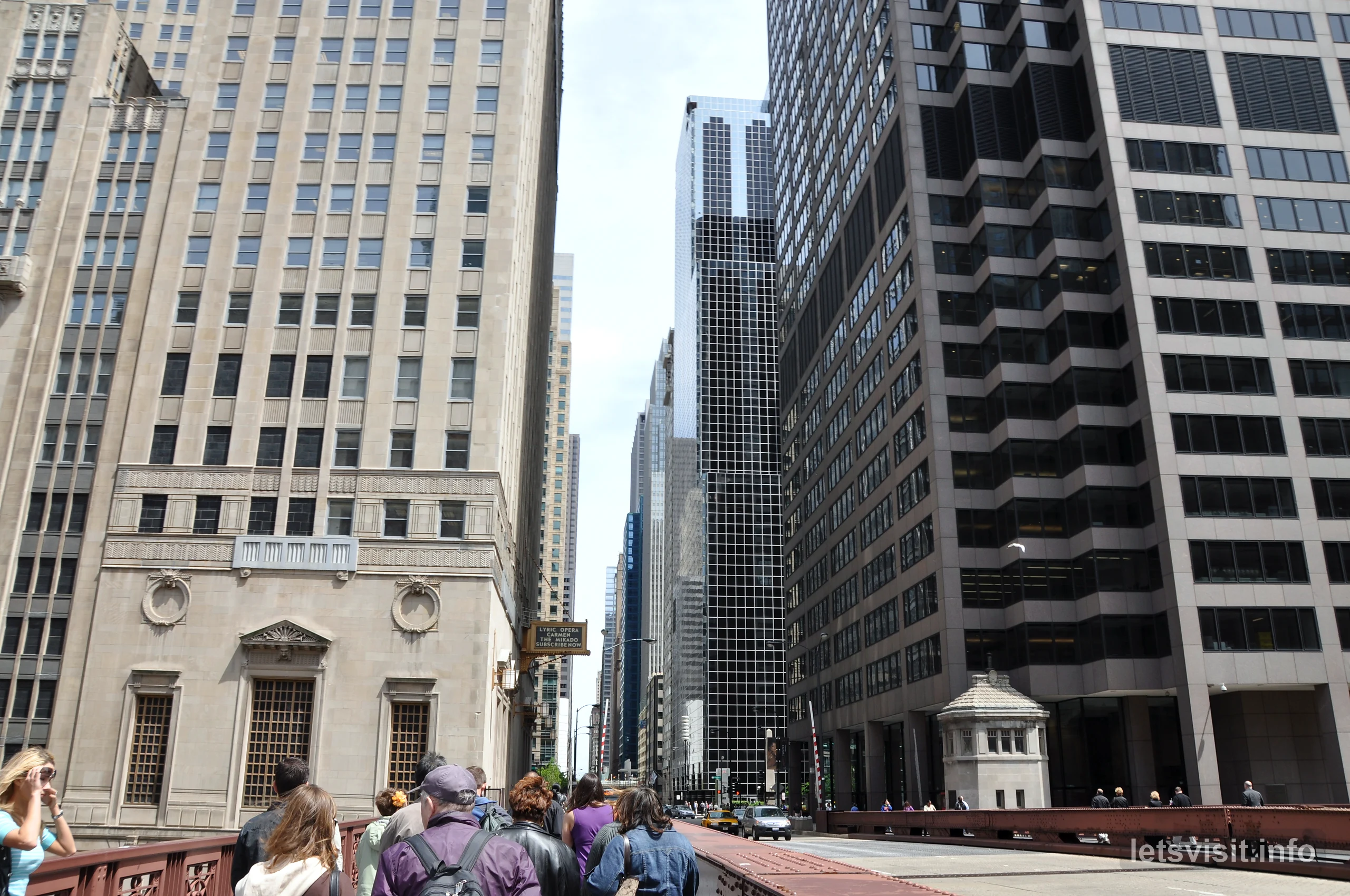
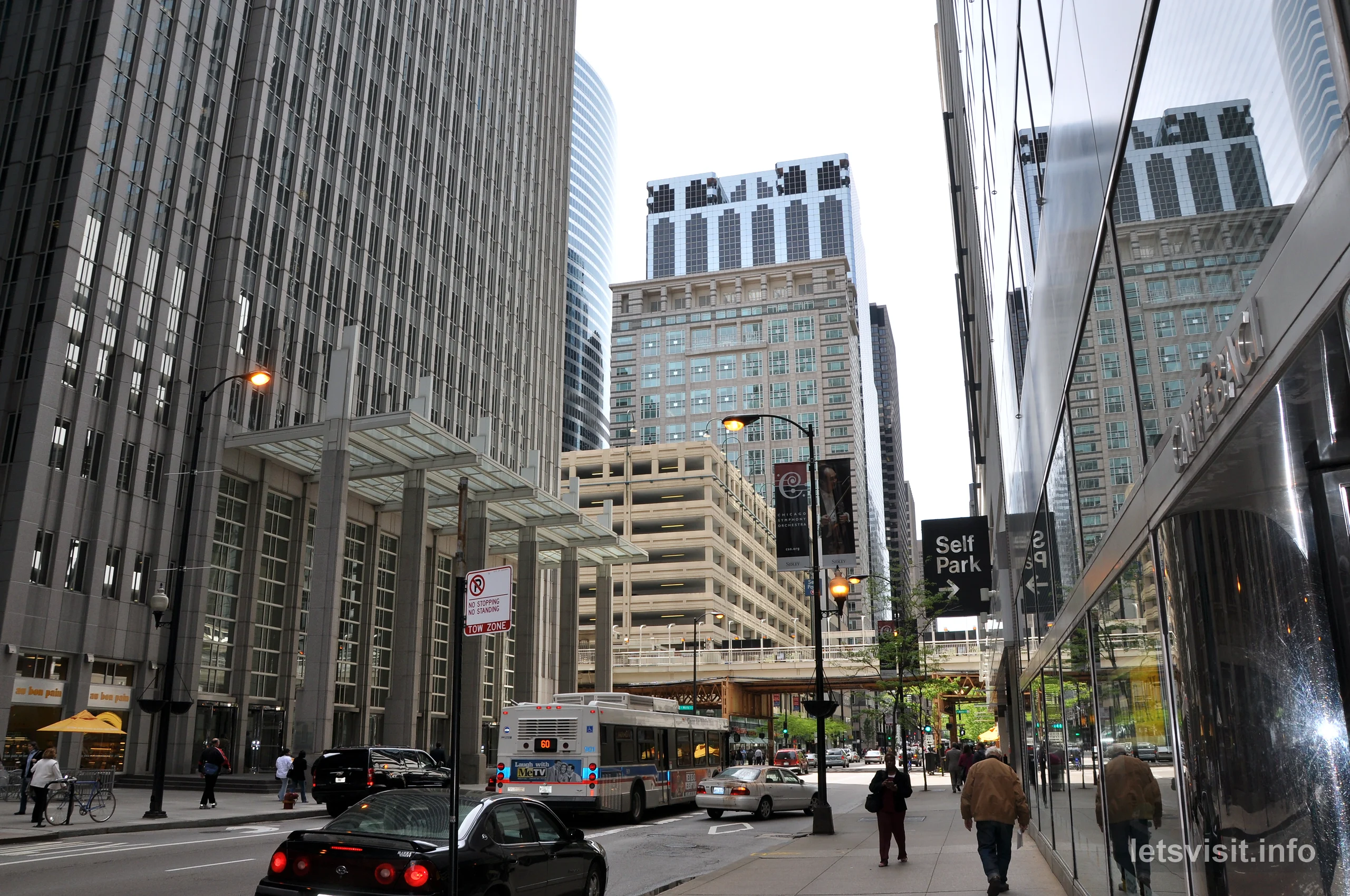
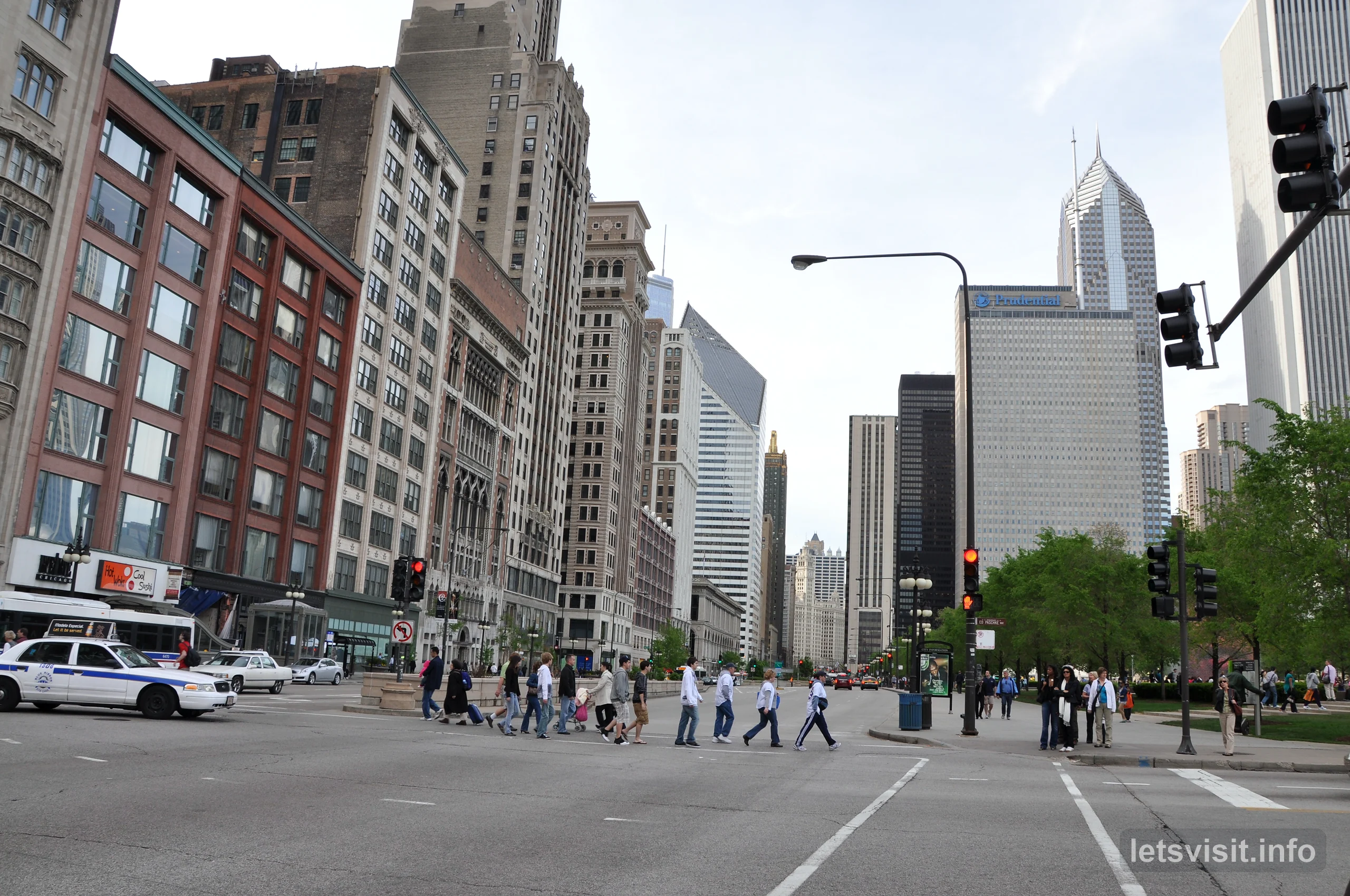
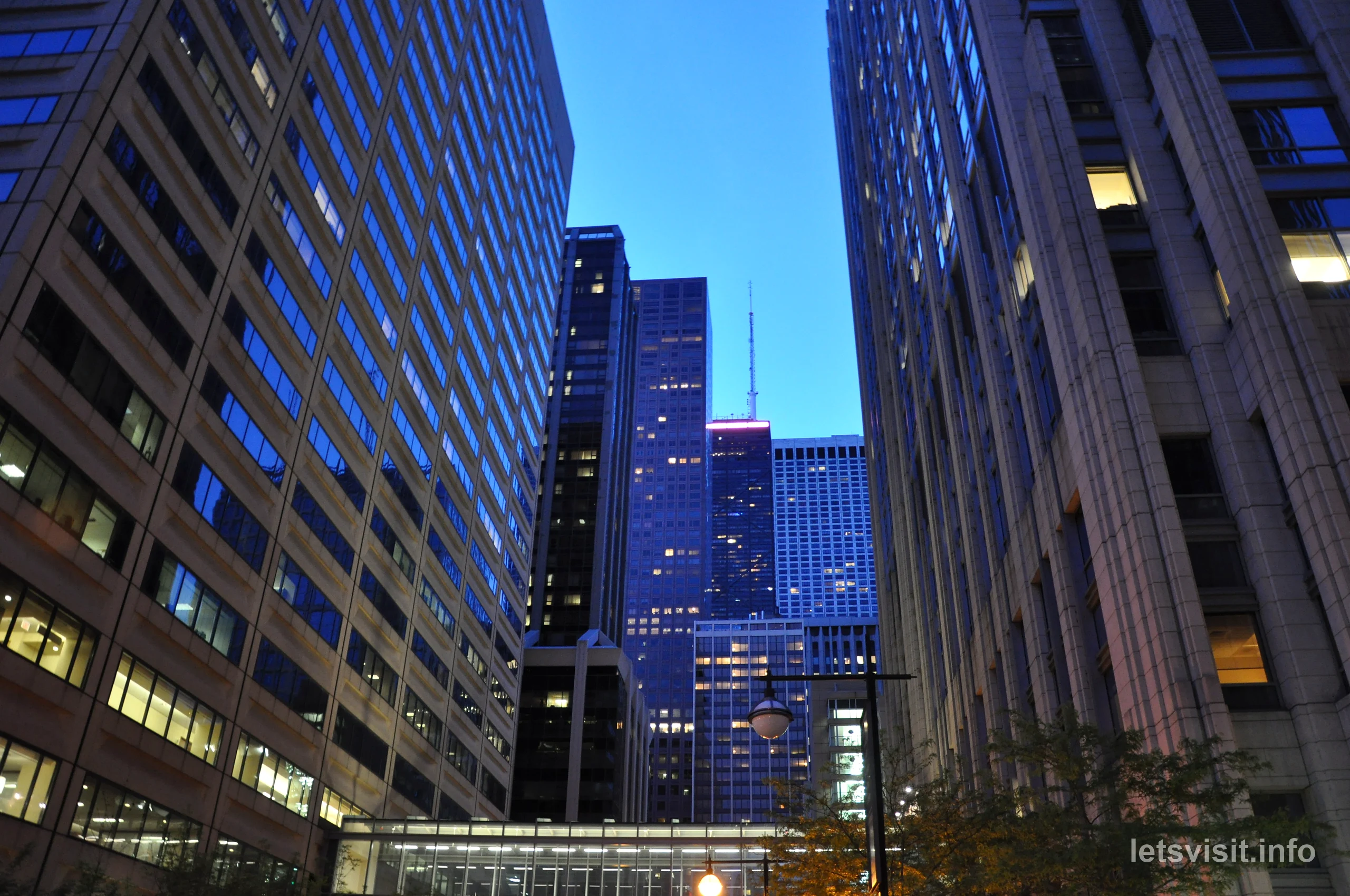
Downtown Chicago made us pay attention to the space between buildings as much as the buildings themselves. A long street could frame a tower like a picture, while a crossing or a bridge suddenly opened a wider view. Looking straight ahead and looking upwards produced quite different impressions of the same place.
LaSalle Street offered one of the clearest examples. At the end of its long corridor stands the Chicago Board of Trade, its stepped outline giving the street a strong focal point. The surrounding buildings make the approach feel enclosed, drawing the eye towards that central tower.
Completed in 1930 and designed by Holabird & Root, the Chicago Board of Trade is a major Art Deco landmark. Its vertical lines and setbacks fit the view down LaSalle particularly well. Seen from the pavement, the whole street becomes part of the composition.
The Chicago Theatre and Marina City’s curves
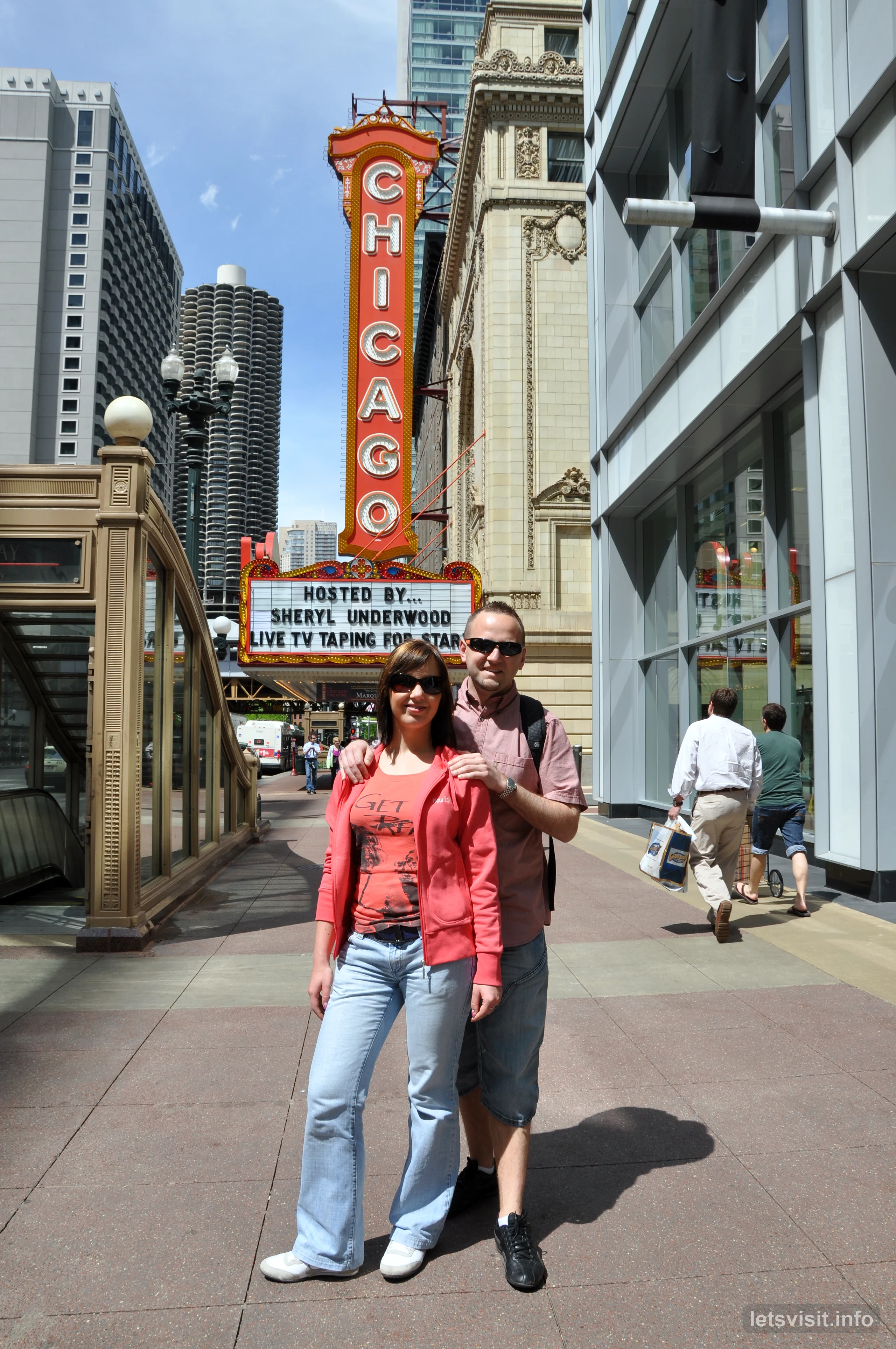
The Chicago Theatre gave us a different kind of landmark. Its vertical sign announces itself above State Street, with the city’s name running down the building. Among so many towers and office façades, that sign is immediately recognizable.
The theatre opened in 1921. Even from outside, its entrance and signage bring another chapter of downtown life into view: Chicago as a place of entertainment as well as business.
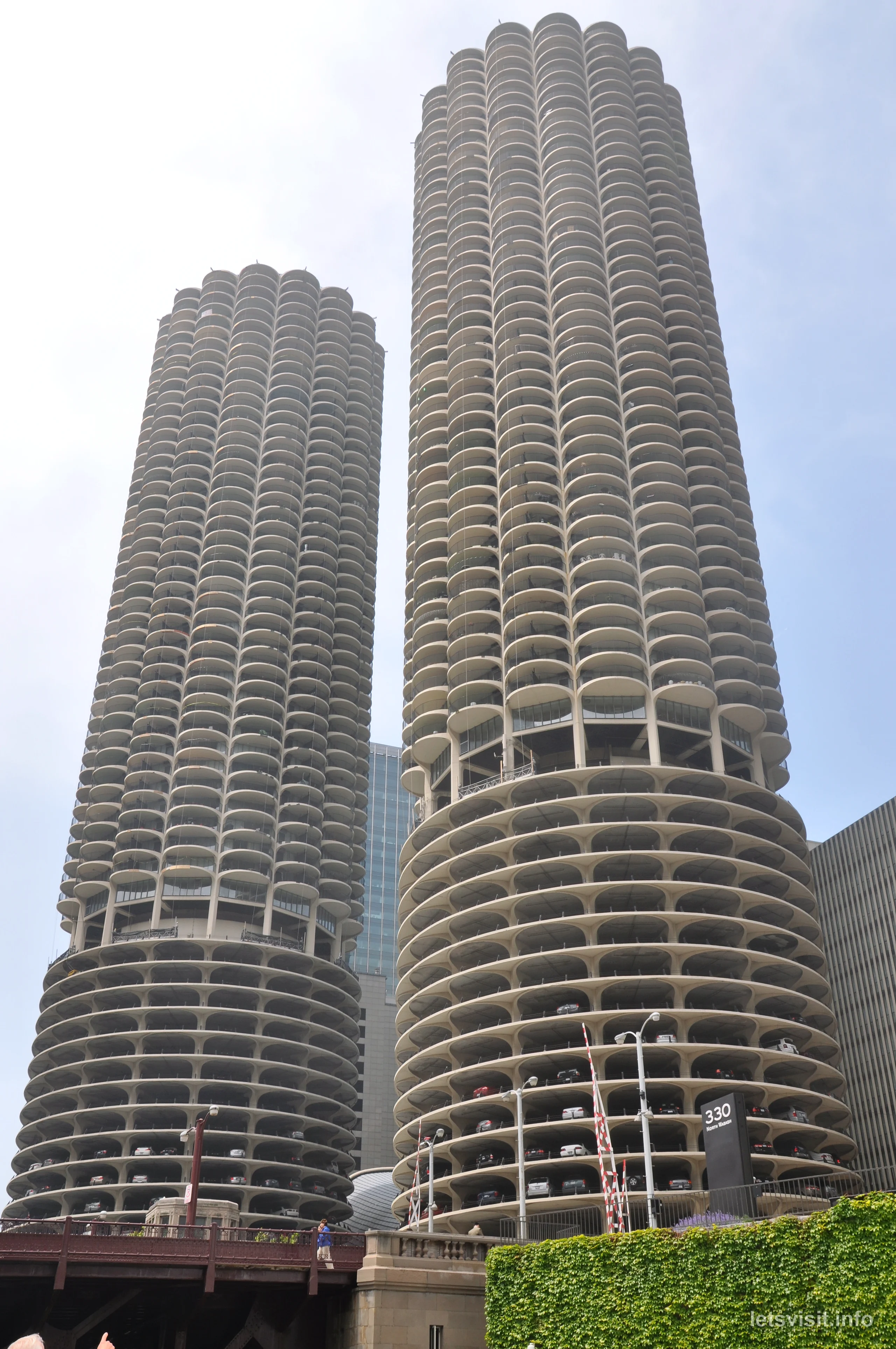
Beside the river, Marina City changes the shape of the skyline again. Its two circular towers have rows of curved balconies that give them a distinctive, almost scalloped outline. The repetition is striking, especially against the straight edges of neighbouring buildings.
Architect Bertrand Goldberg conceived Marina City as a place to live and work downtown, combining apartments with parking and other uses. Built during the 1960s, the complex makes that mixture visible in its form.
Cloud Gate: the skyline in a curved mirror
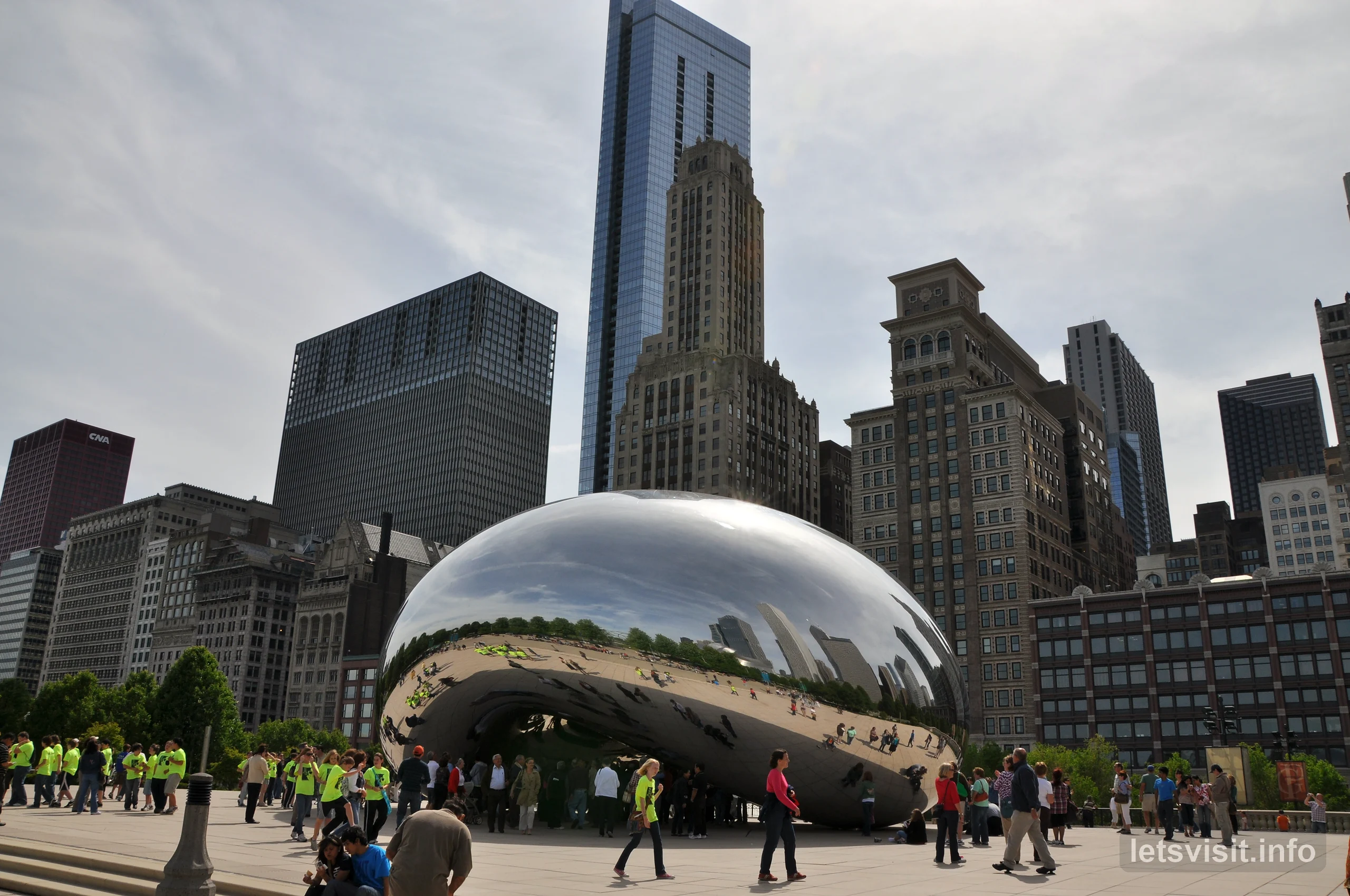
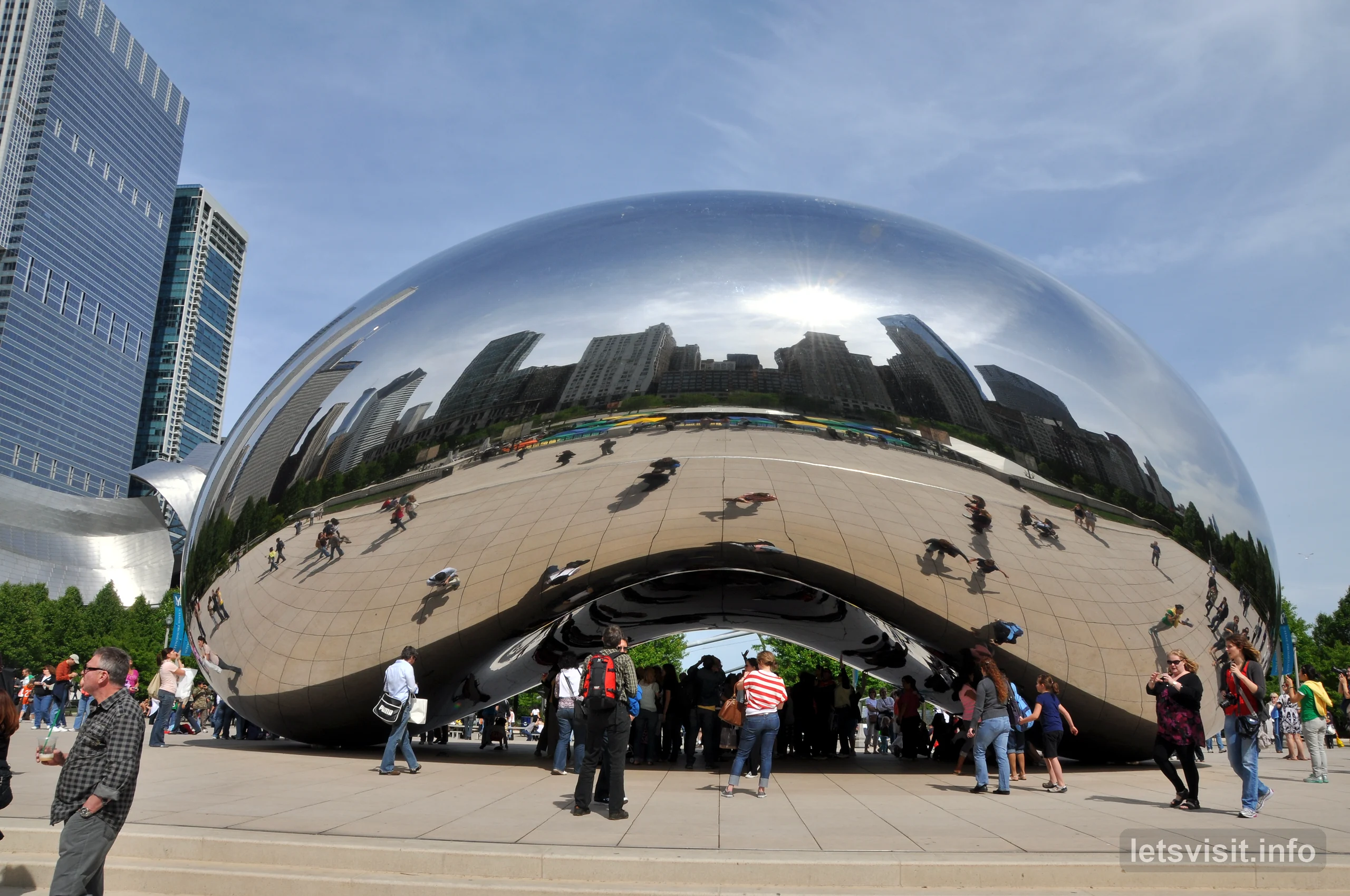
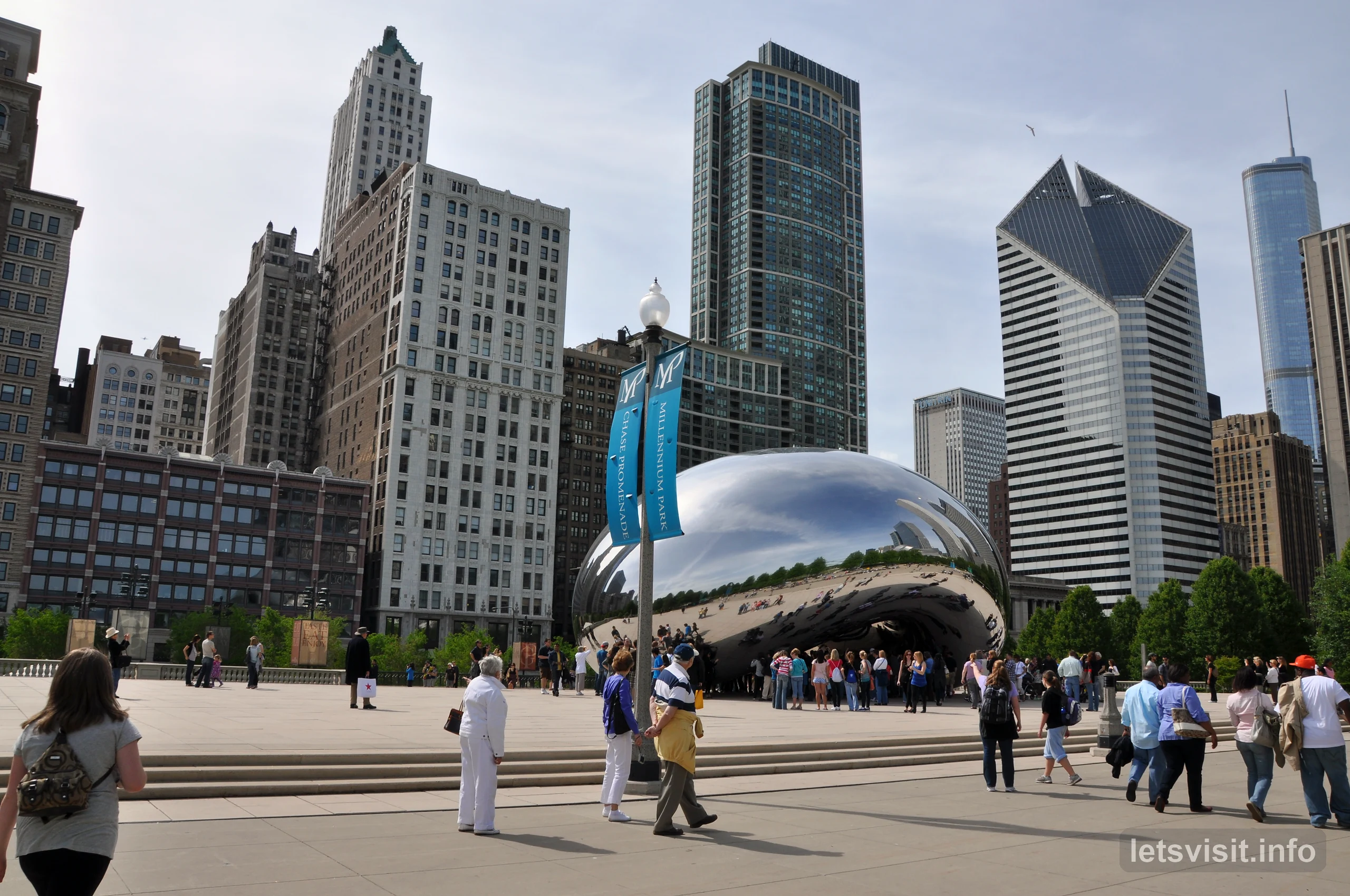
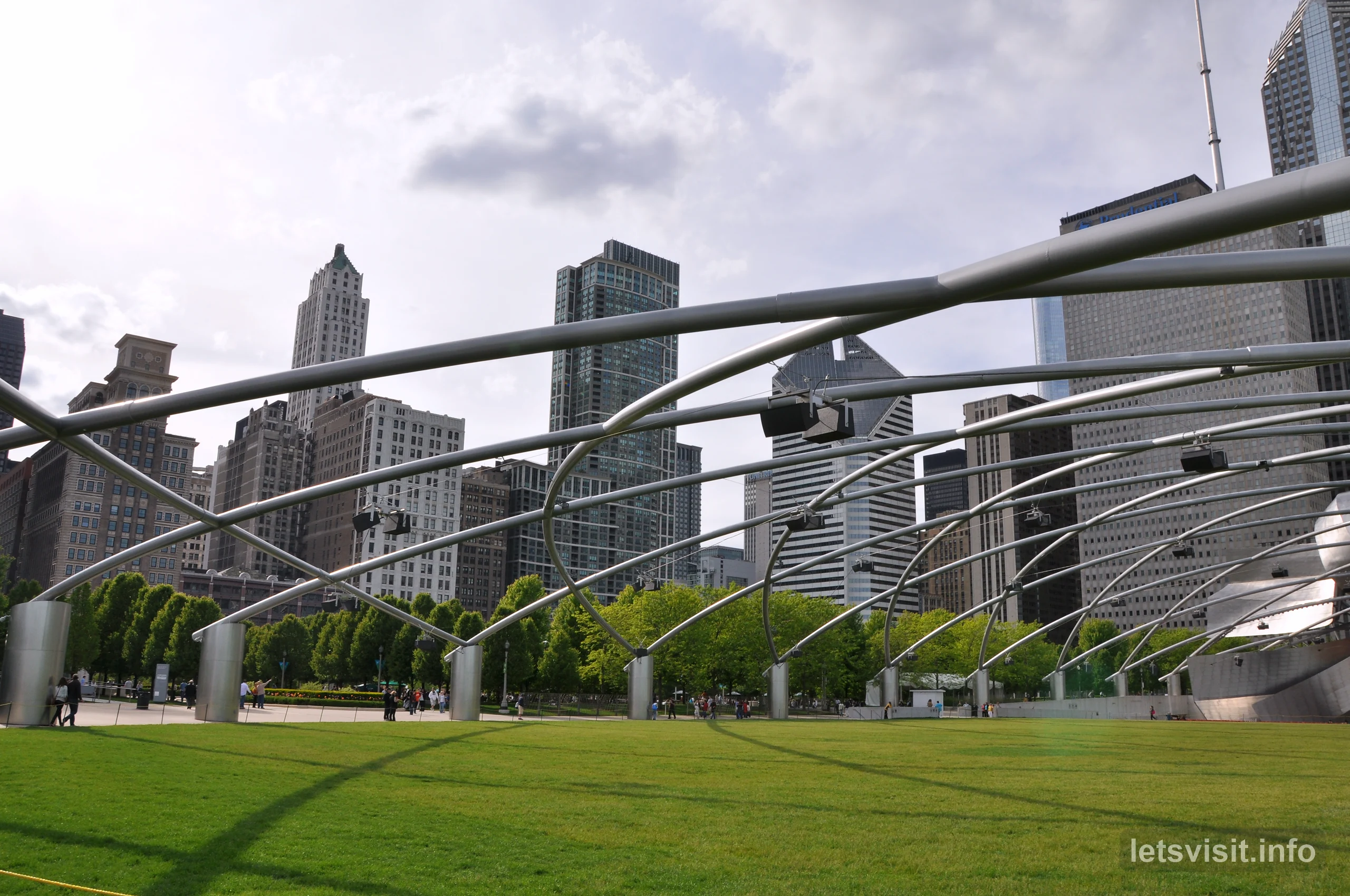
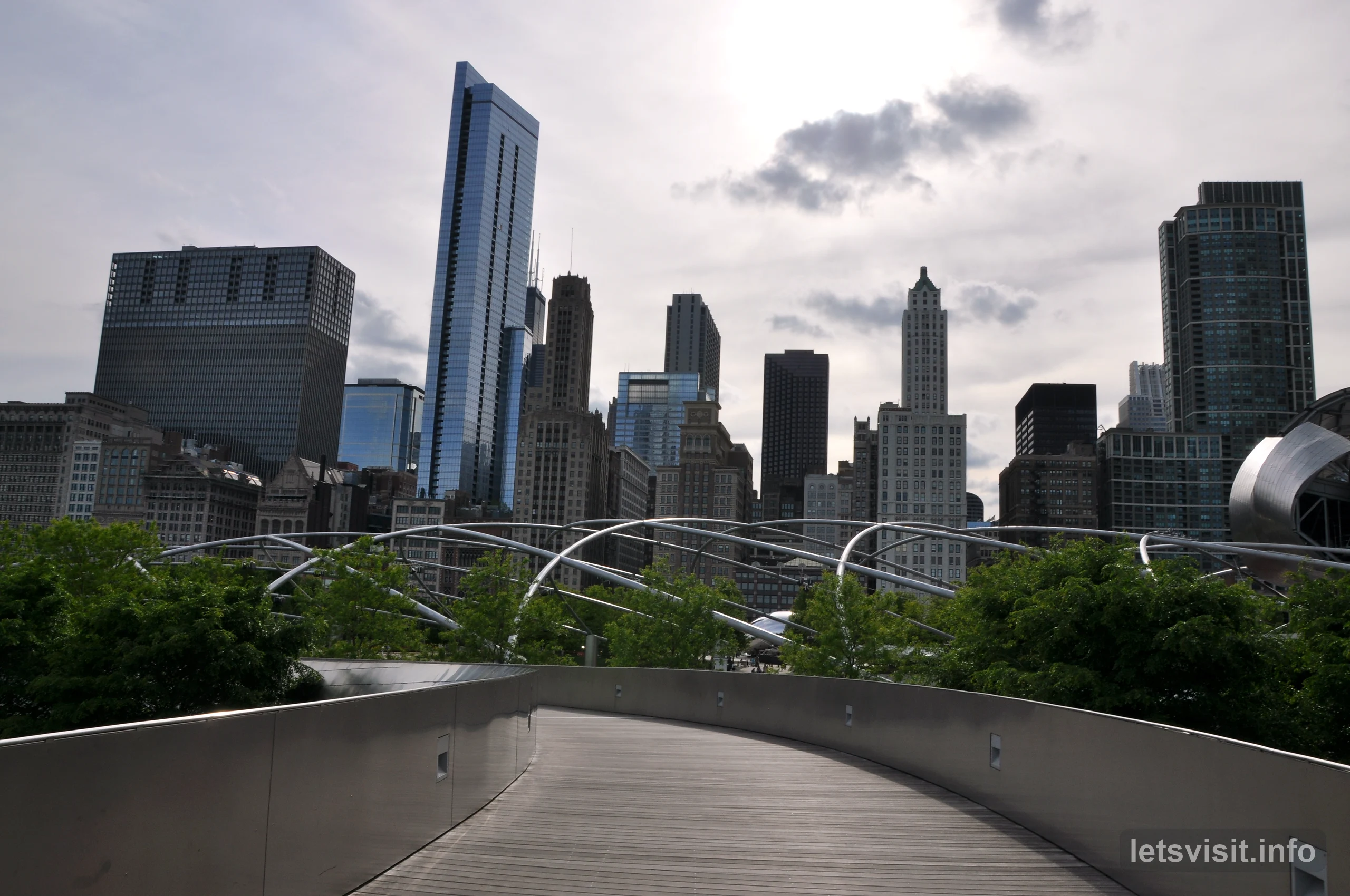
In Millennium Park, we found another way to look at the buildings around us. Cloud Gate, usually called the Bean, gathers the skyline, sky and surrounding people into a single polished surface. Familiar straight lines become curves, and the city seems to wrap around the sculpture.
Anish Kapoor’s stainless-steel sculpture was created for Millennium Park. Its rounded form and concave underside give the reflections their unusual geometry. The surface looks almost liquid, even though the object itself is solid and still.
What makes it so engaging is how much the view depends on position. From one angle, the buildings dominate. From another, people and sky occupy more of the reflection. The sculpture’s outline stays simple while everything on its surface changes.
Seeing people reflected beside the buildings brought the skyline down to a more human scale.
It is also a subject that rewards more than one photograph: a wider frame shows its place in the park, while a closer view reveals the distortions in the steel.
Faces and water at Crown Fountain
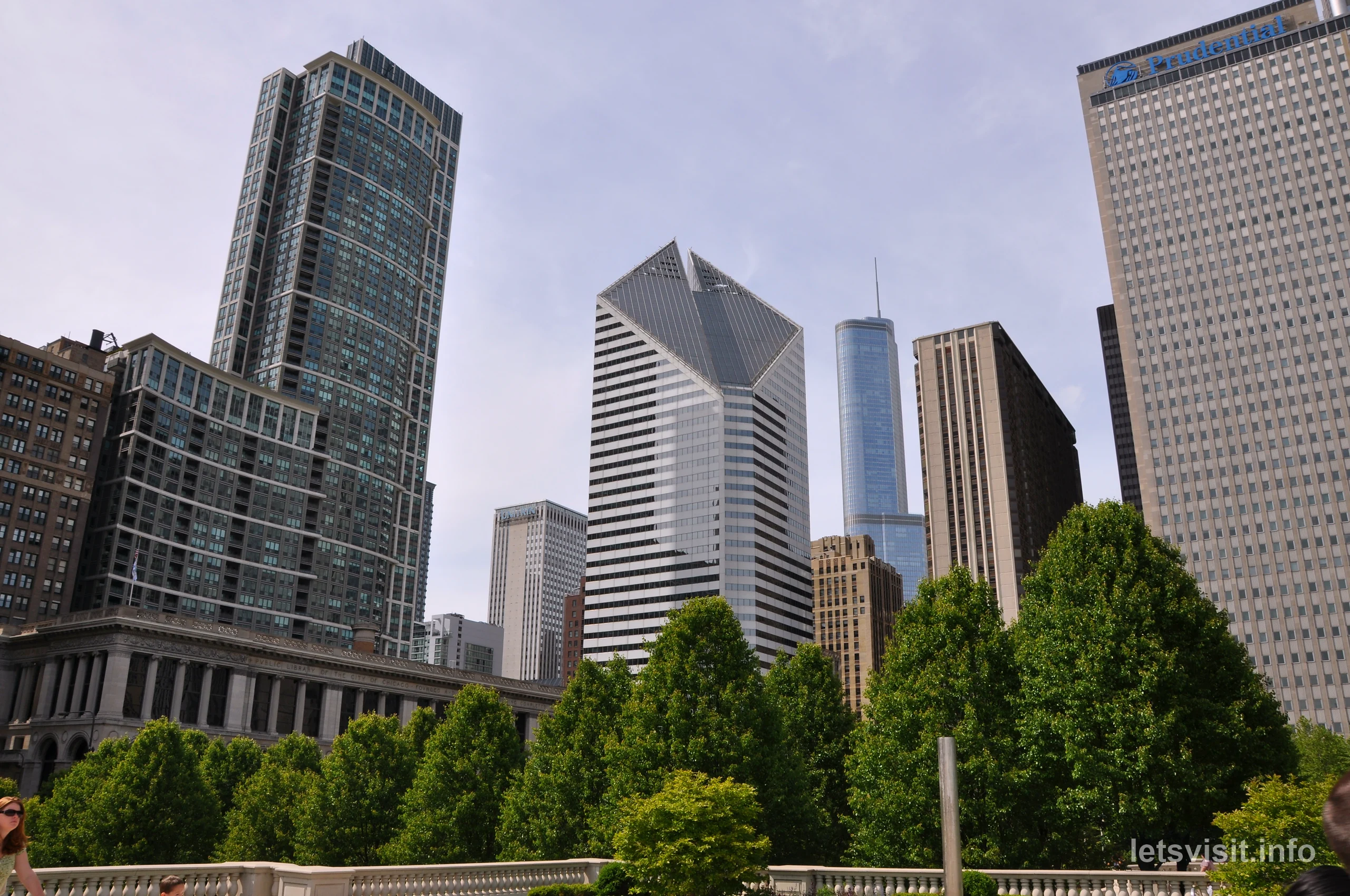
Crown Fountain gave our Millennium Park visit another form of public art. Here, the attention shifts from a reflected skyline to the faces of Chicago residents displayed on two glass-block towers.
Created by Jaume Plensa in 2004, the fountain uses LED screens and water to connect those portraits with the space between the towers. When water emerges at mouth level, a face becomes part of the fountain itself. The artist drew on the old idea of figures spouting water, giving it a contemporary form.
There is something wonderfully direct about using ordinary faces at this scale. A smile or a change of expression becomes the main event, surrounded by the hard surfaces and large structures of downtown.
Grant Park and Buckingham Fountain
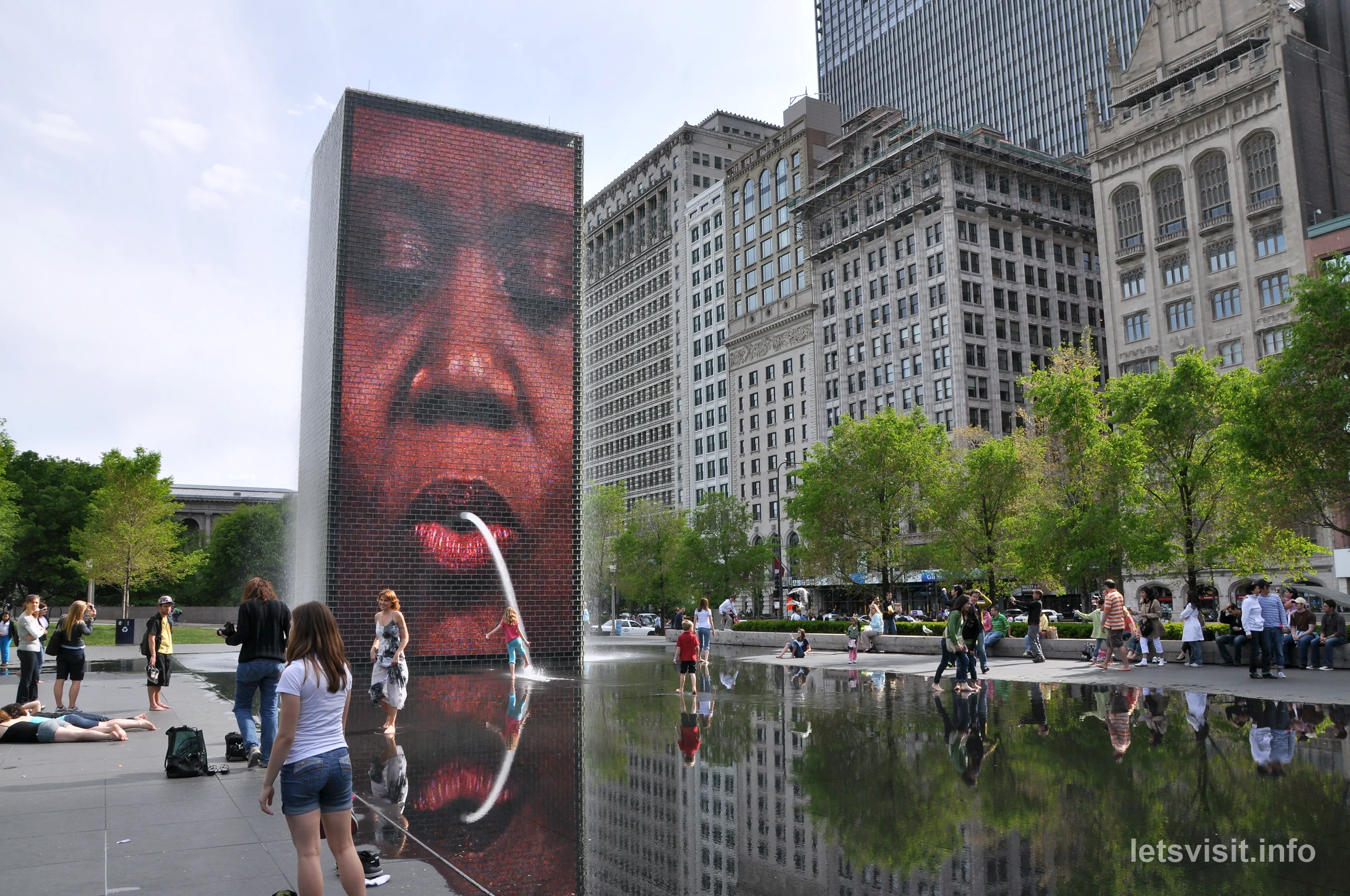
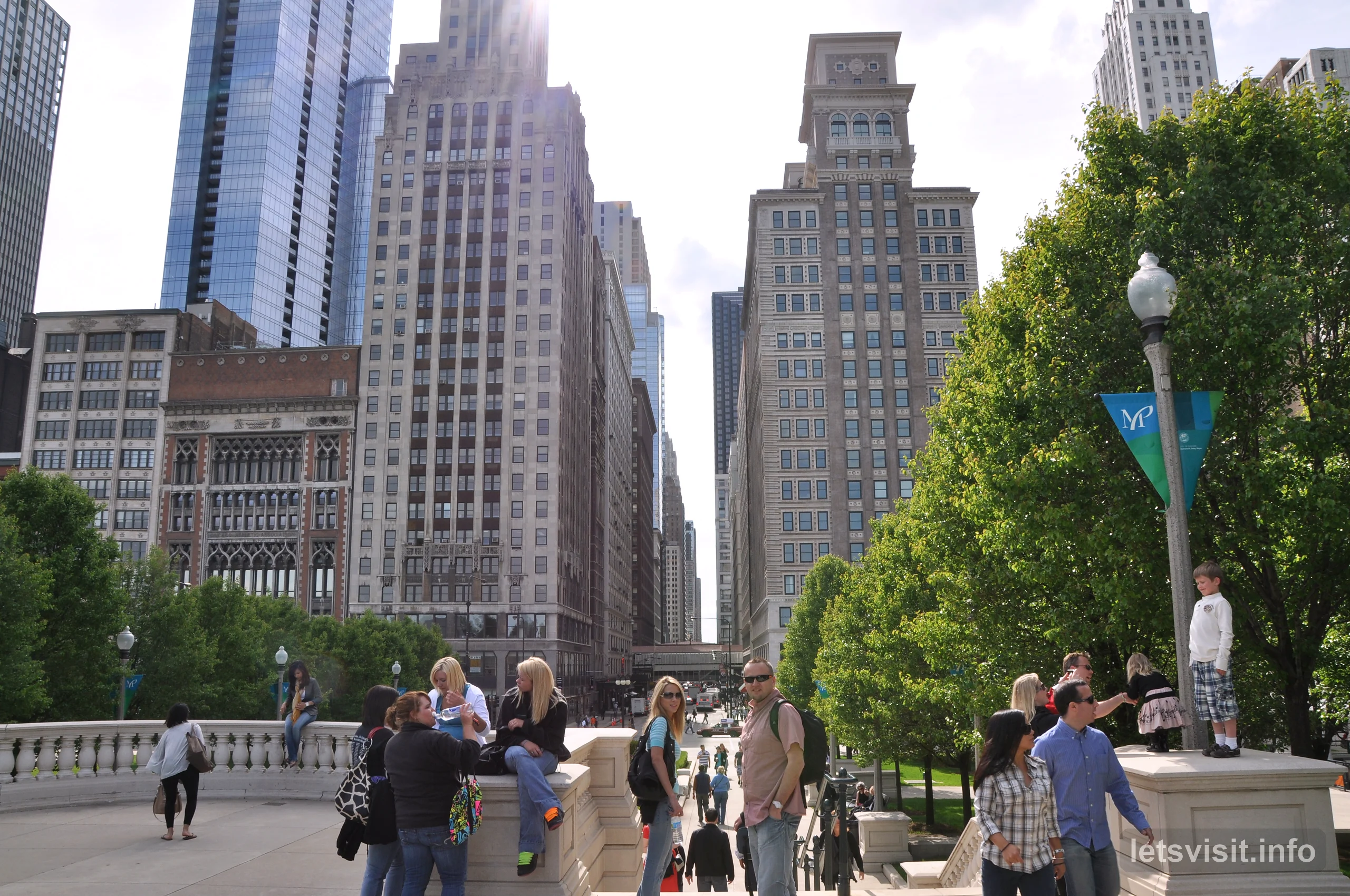
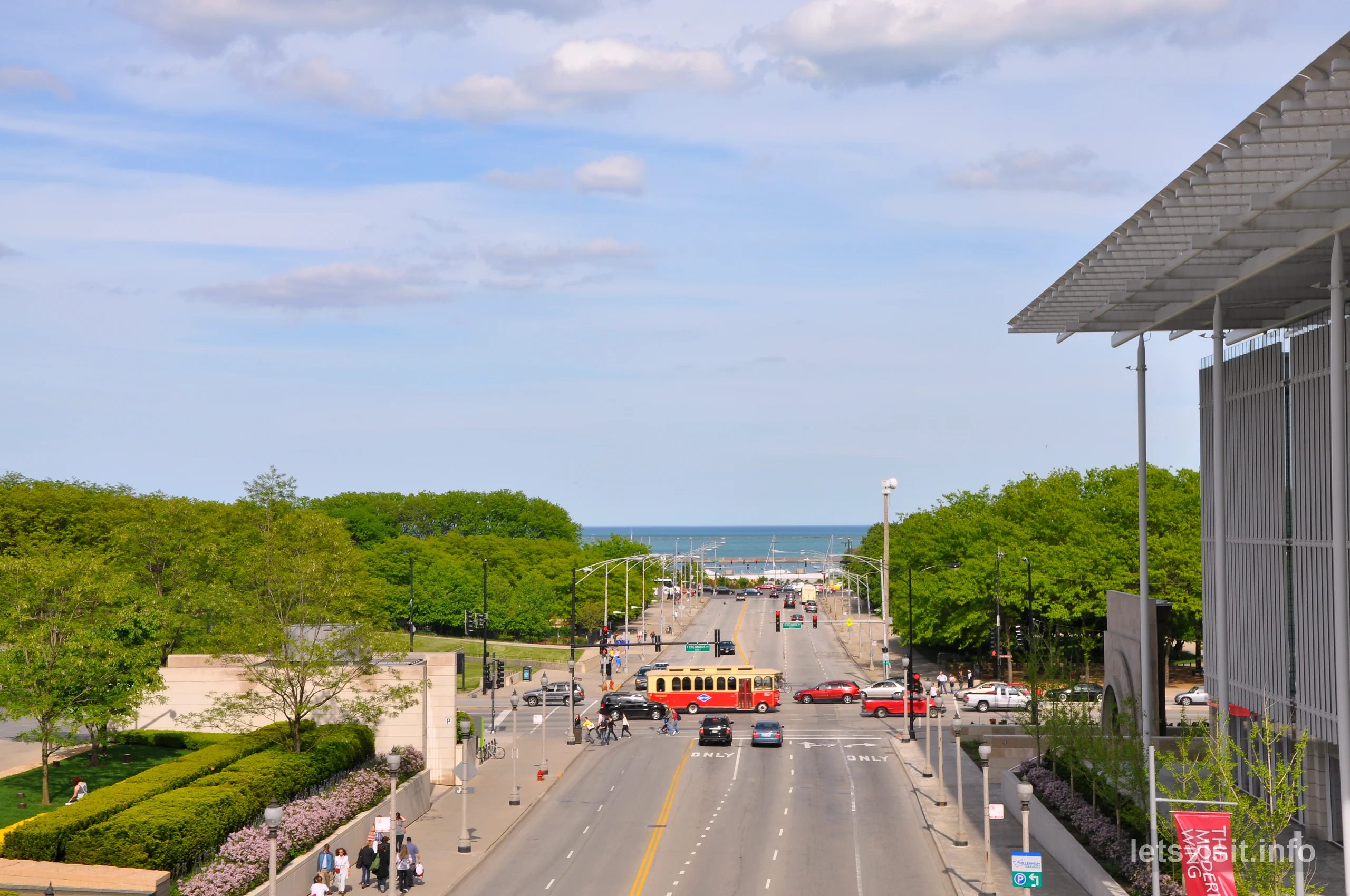
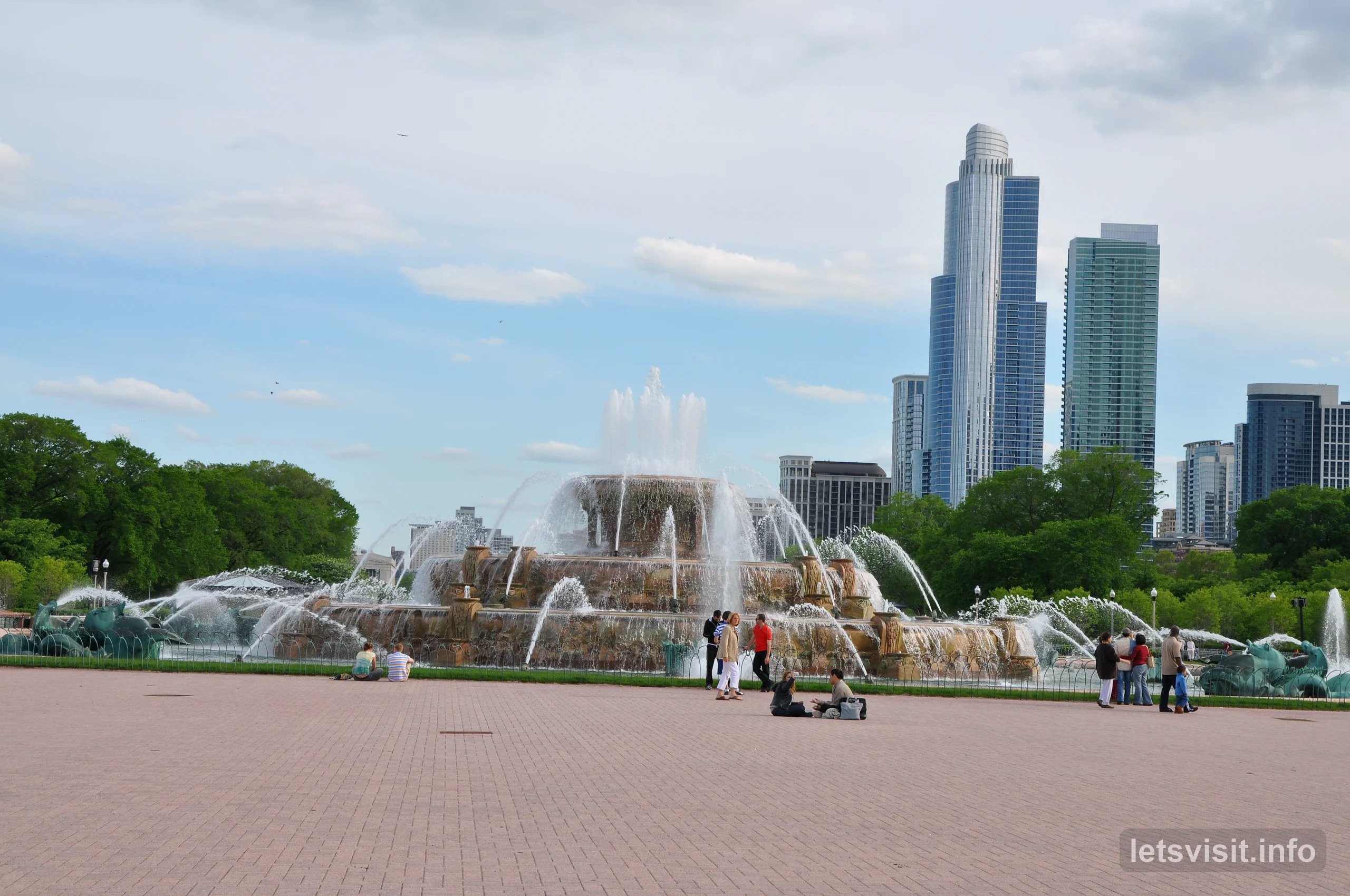
Grant Park gave the visit more breathing room. The space around Buckingham Fountain allowed the water, sculpture and surrounding city to be seen together.
The fountain has a very different character from Crown Fountain. Its layered basins and bronze details belong to a more formal composition, with the water rising at the centre. The broad setting matters: the fountain holds its place within an open landscape instead of being squeezed between buildings.
Dedicated in 1927, Buckingham Fountain was a gift from Kate Buckingham in memory of her brother Clarence. Its design represents Lake Michigan, with four groups of bronze sea horses symbolizing the four states that border the lake.
That connection gives the ornament a useful meaning. The lake is part of Chicago’s setting throughout the visit, and here it appears in sculptural form. Looking at the fountain within the park helps connect the formal city landscape with the much larger body of water nearby.
Michigan Avenue: lions, a clock tower and steel braces
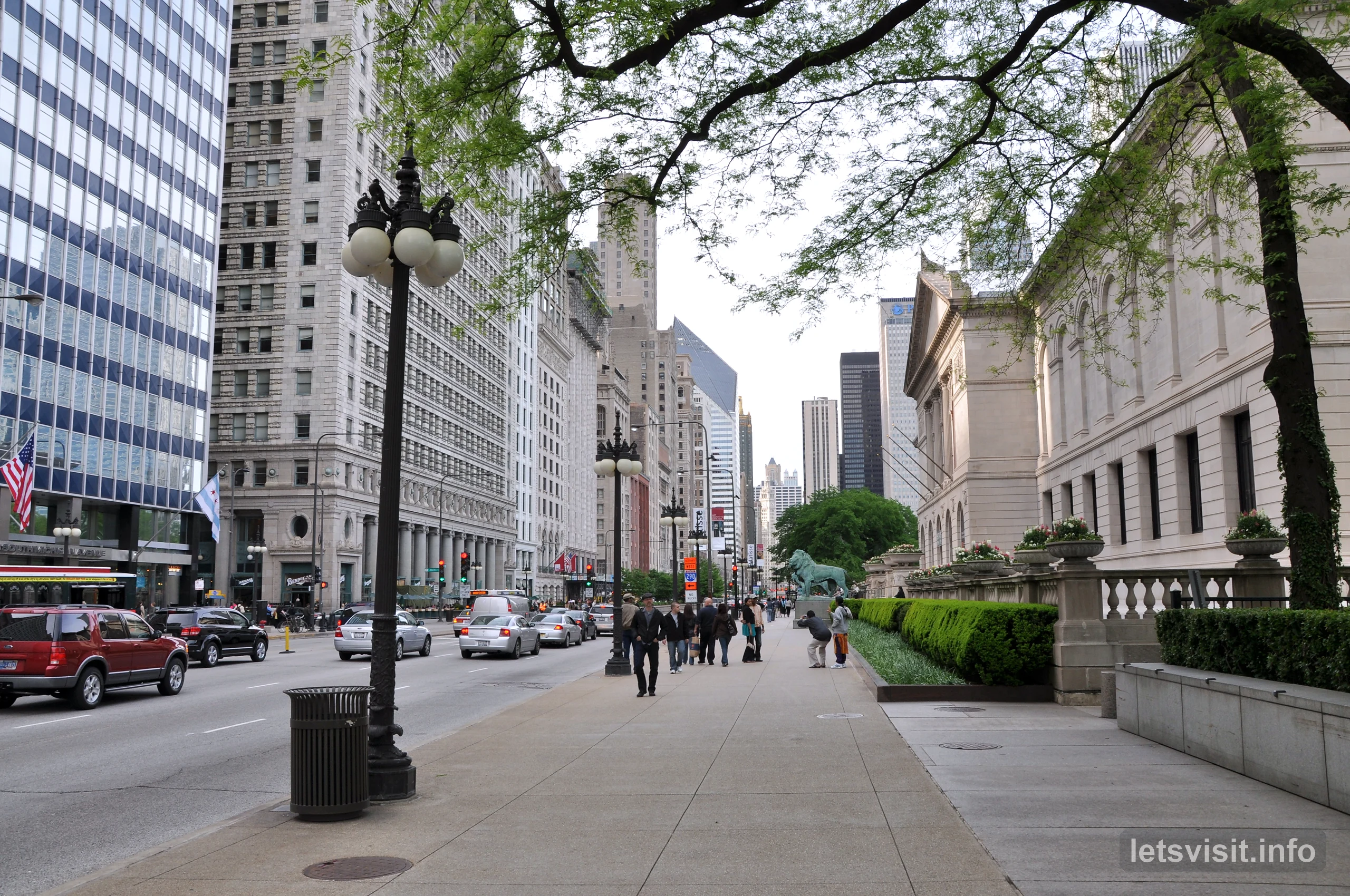
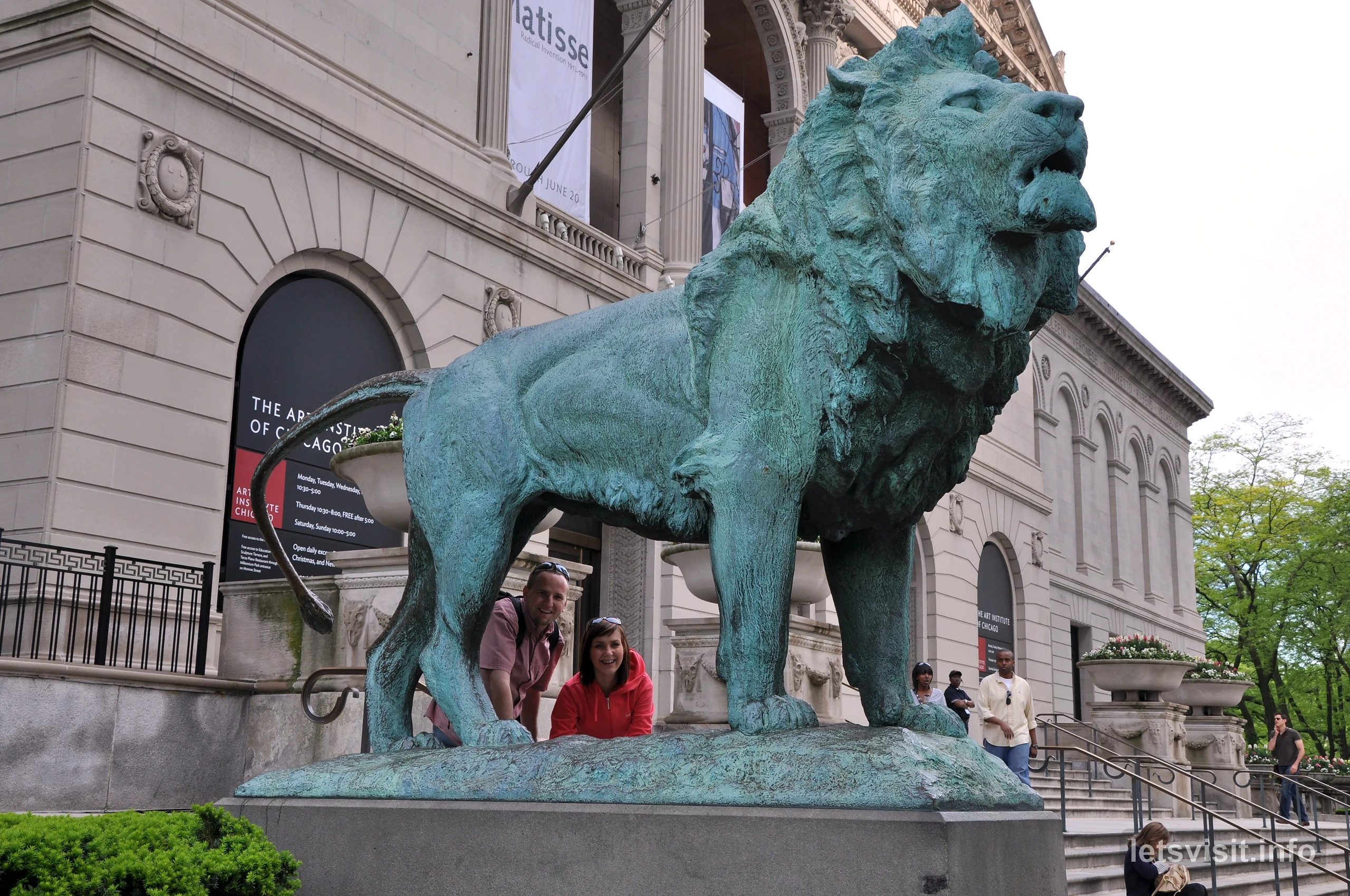
Along Michigan Avenue, some of the most recognizable sights were details at street level. Outside the Art Institute of Chicago, the bronze lions stand on either side of the entrance, substantial figures with a strong presence against the museum façade.
The lions were created by Edward Kemeys and installed in 1894. The sculptures make the entrance a landmark in its own right.
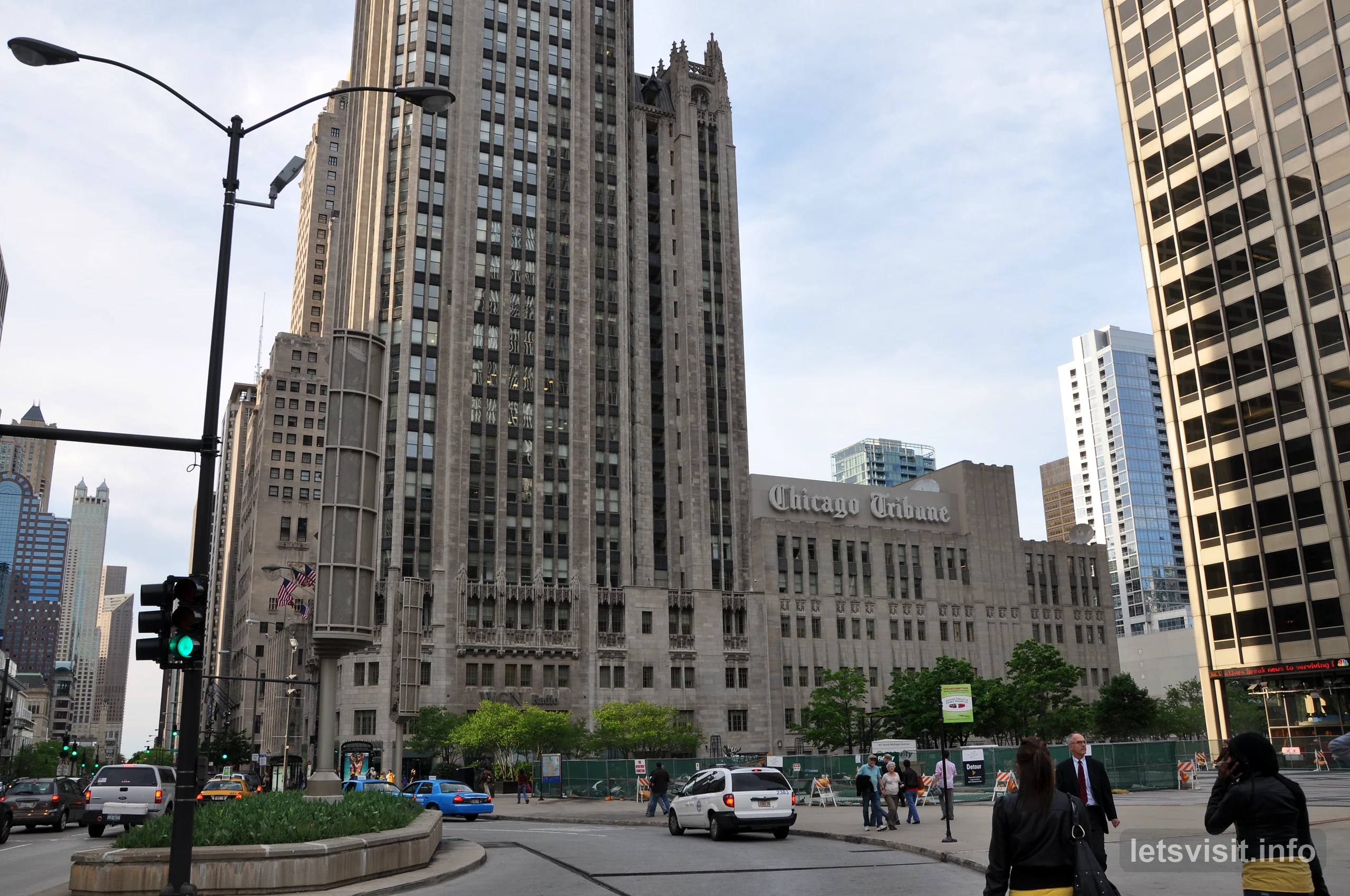
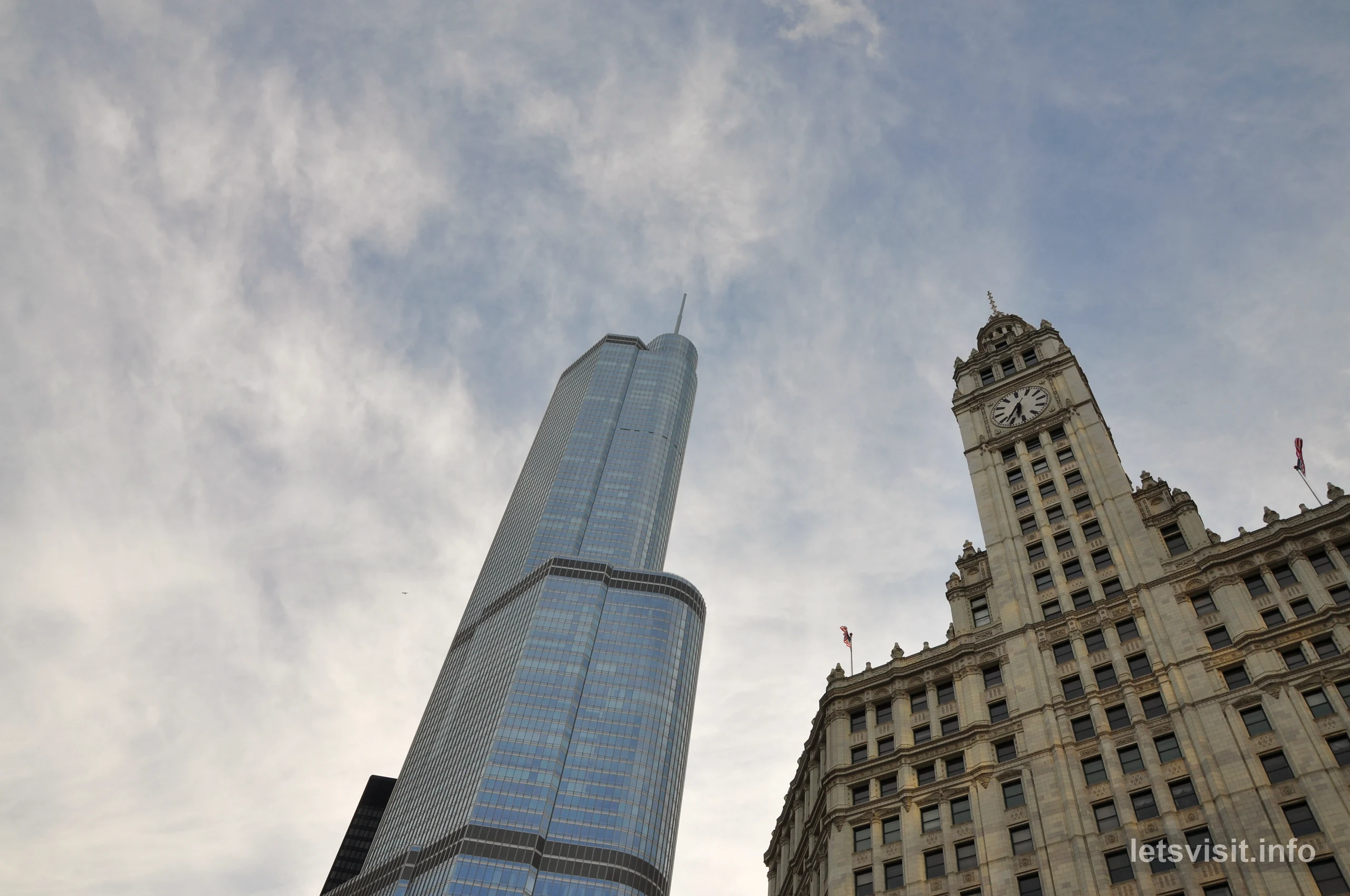
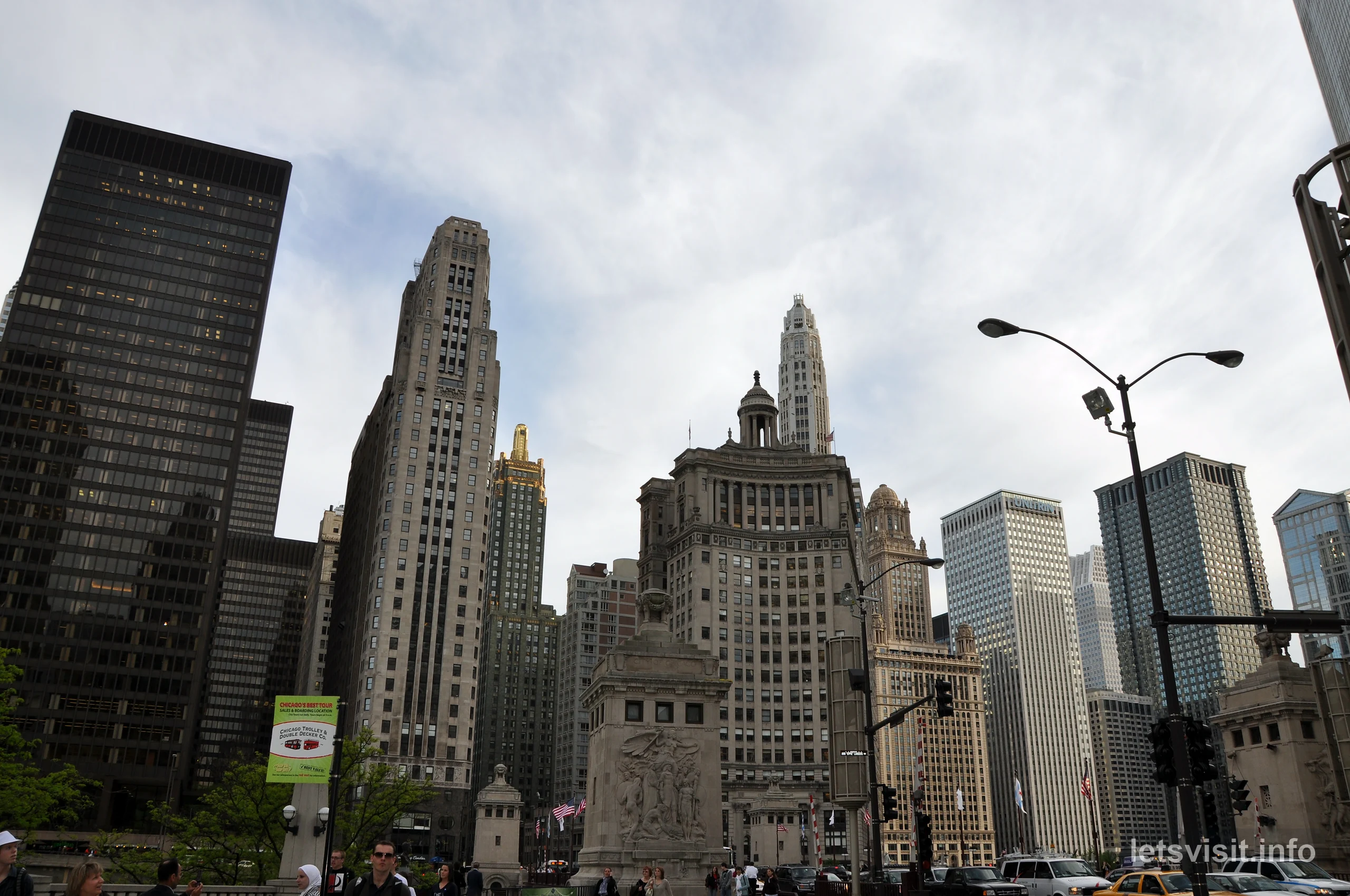
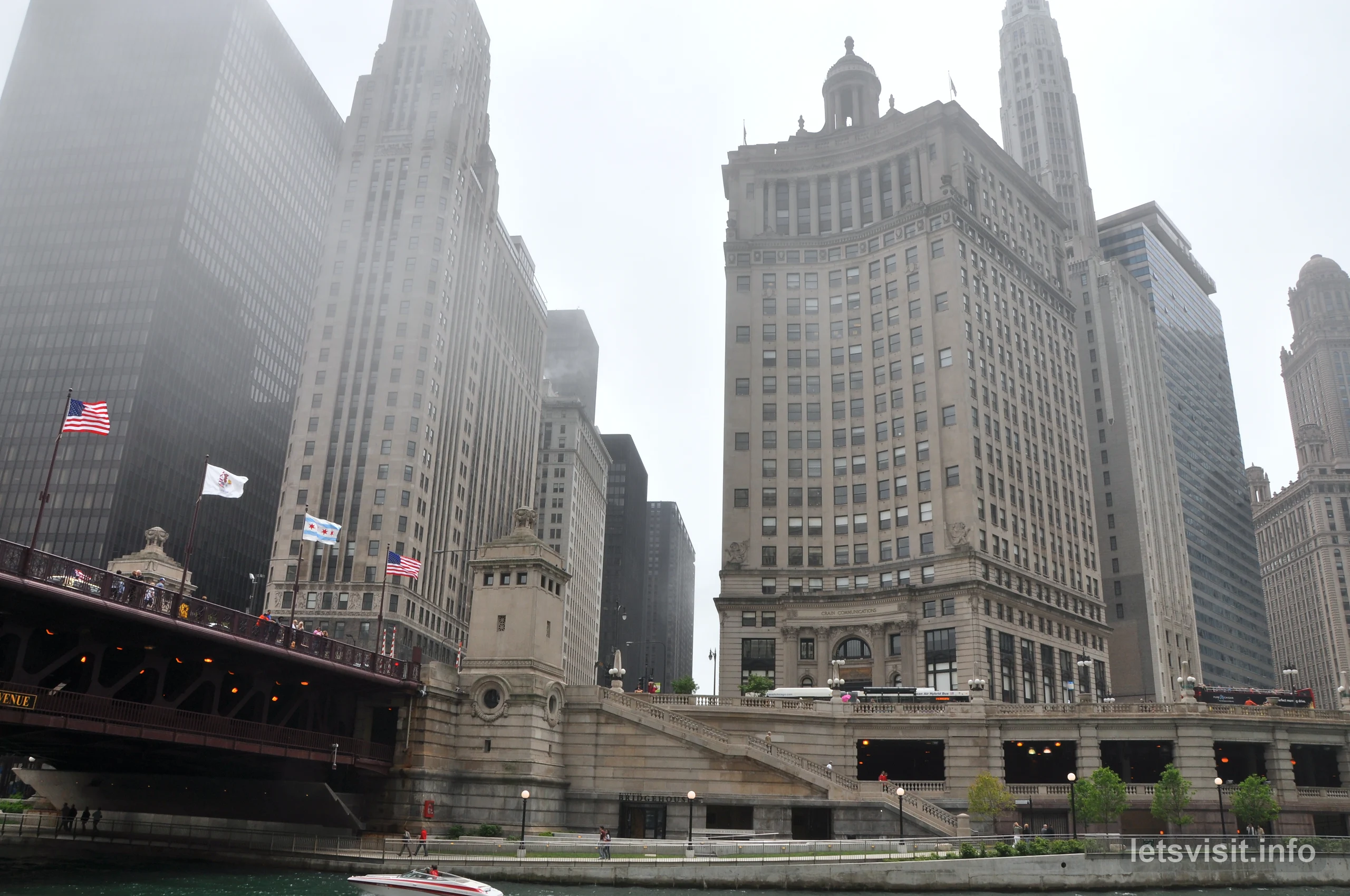
Elsewhere along the avenue and near the river, the architecture offered a much larger range of shapes. The Wrigley Building’s pale exterior and clock tower were particularly easy to pick out. Built in the early 1920s, the Wrigley Building is clad in glazed terra cotta, giving its surfaces a different character from the glass towers around it.
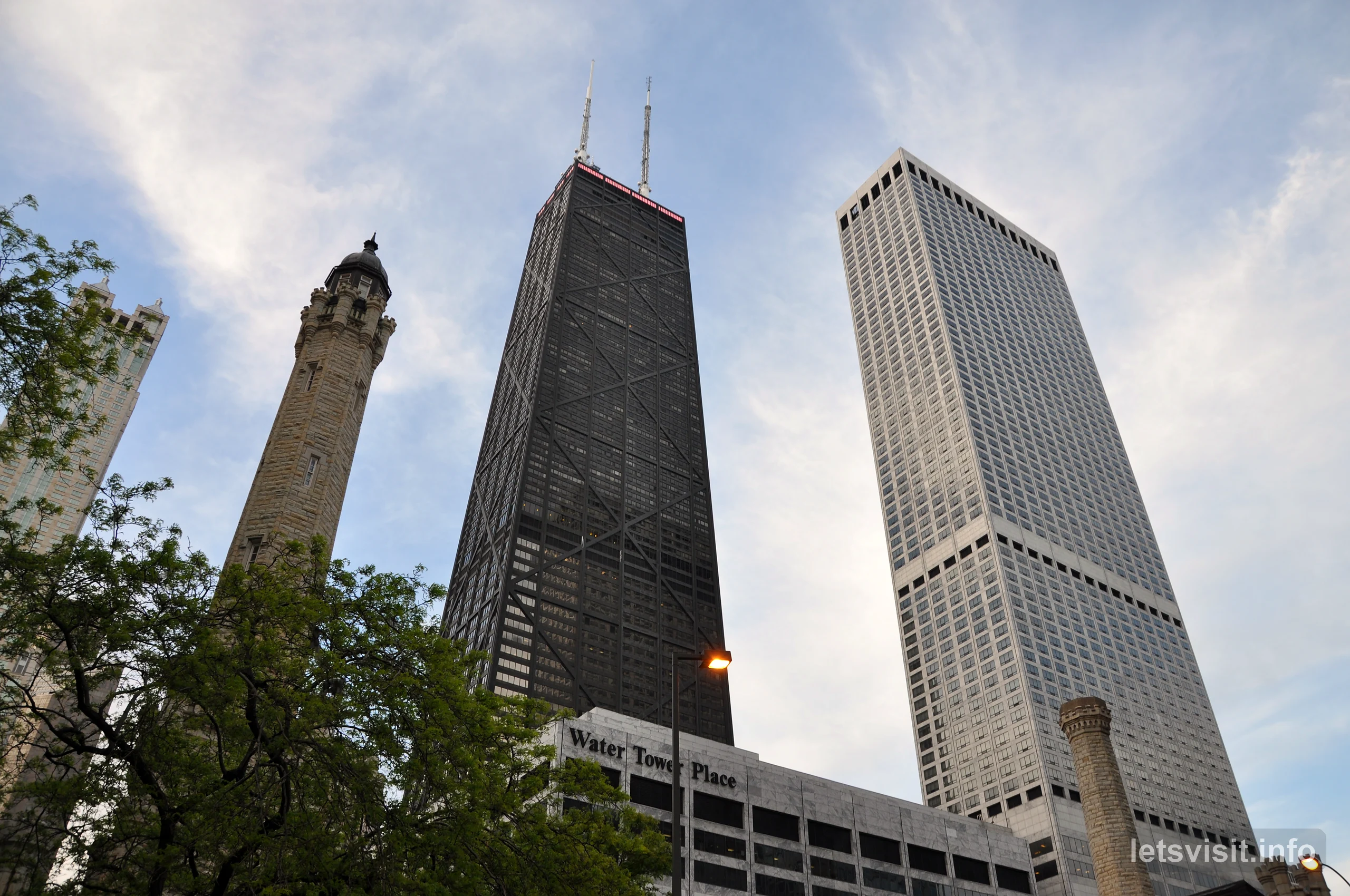
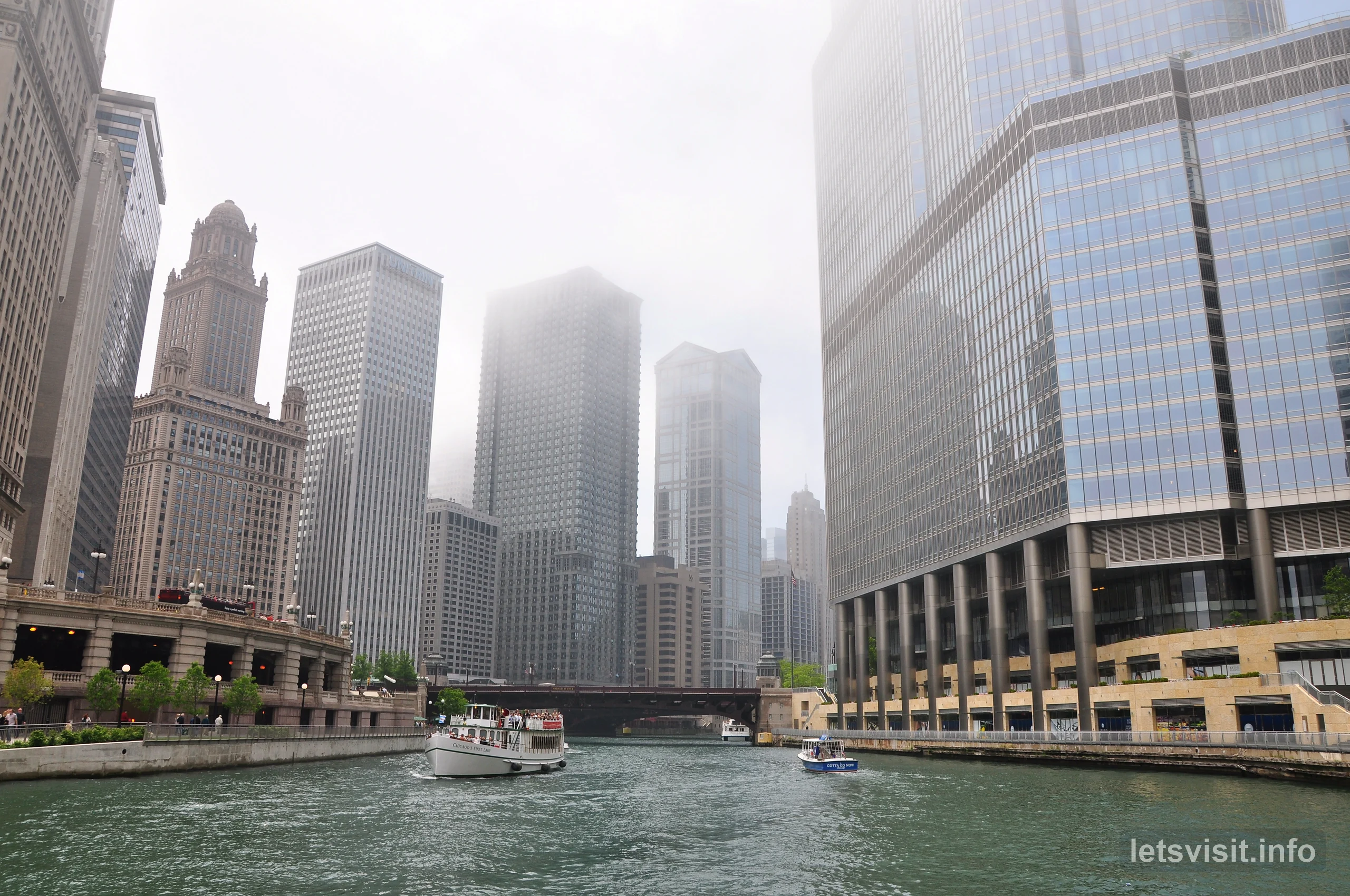
Trump Tower added another tall, glass-faced form beside the river. Farther north, the John Hancock Center stood out through the dark diagonals across its exterior. Those enormous X shapes make the structure unusually easy to recognize, even in a wide skyline view.
The Hancock’s X-bracing is part of its structural system, developed through the work of architect Bruce Graham and engineer Fazlur Khan. The visible diagonals help the tower resist lateral forces, including wind.
The Chicago River and its movable bridges
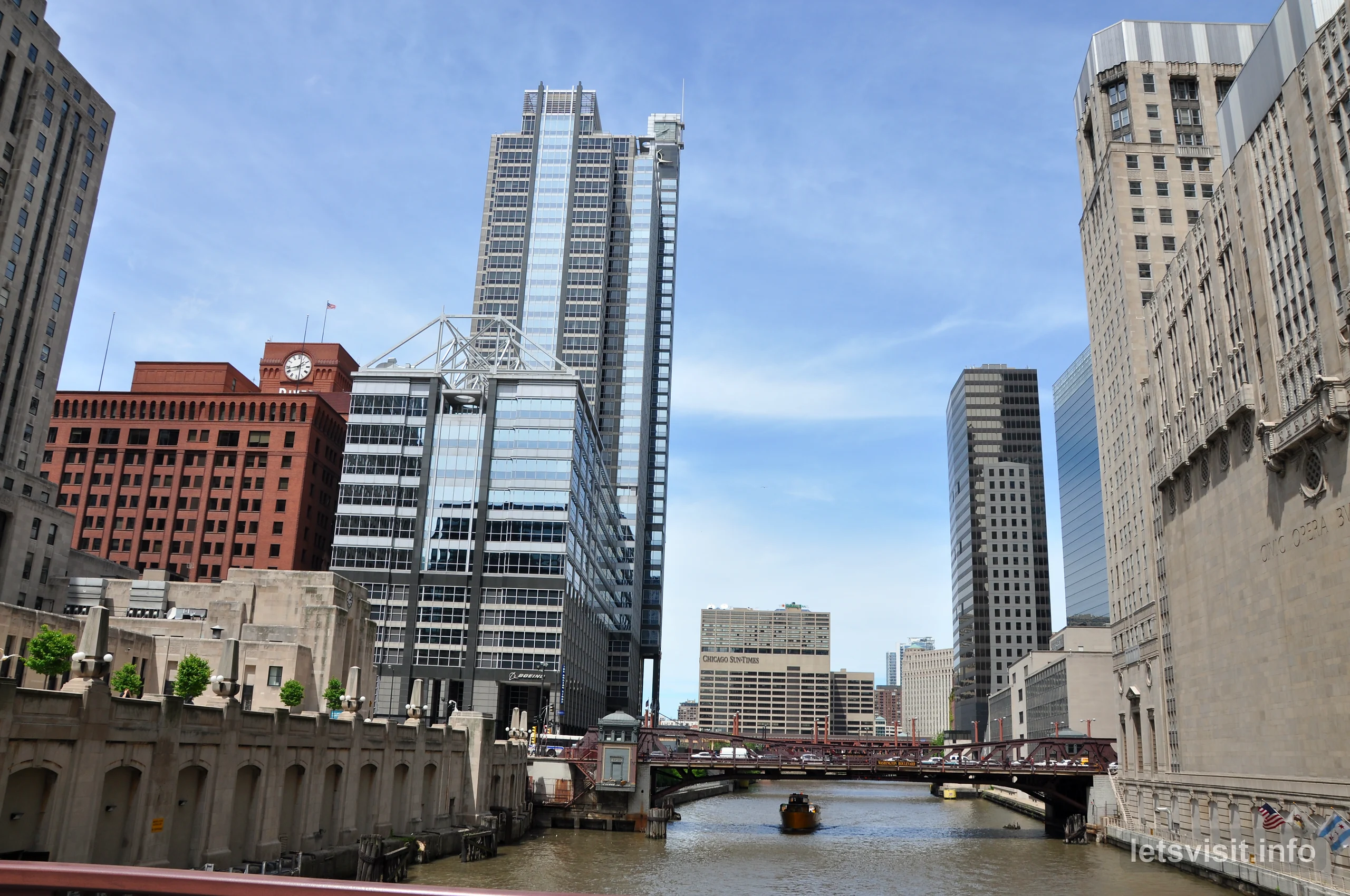
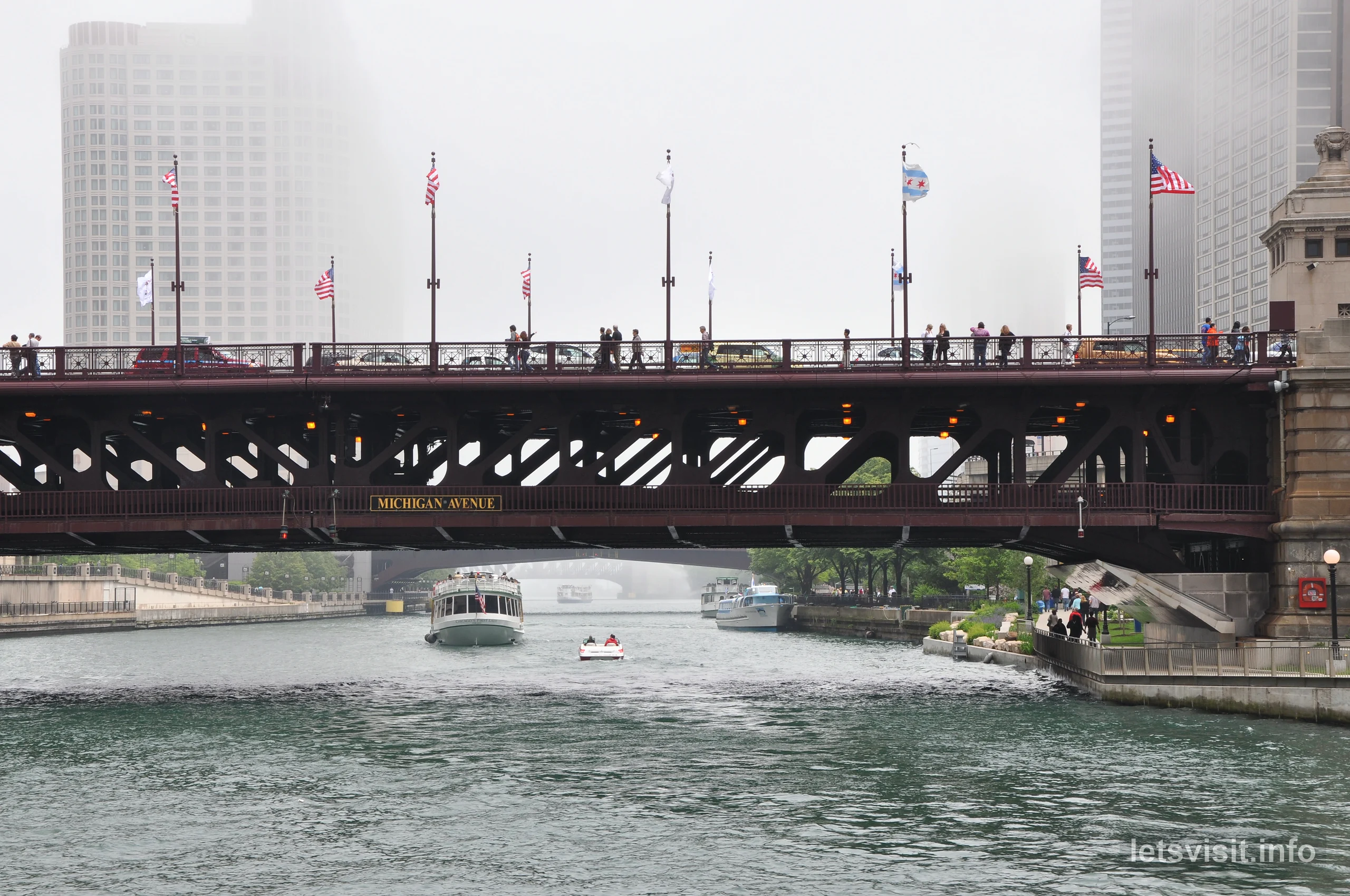
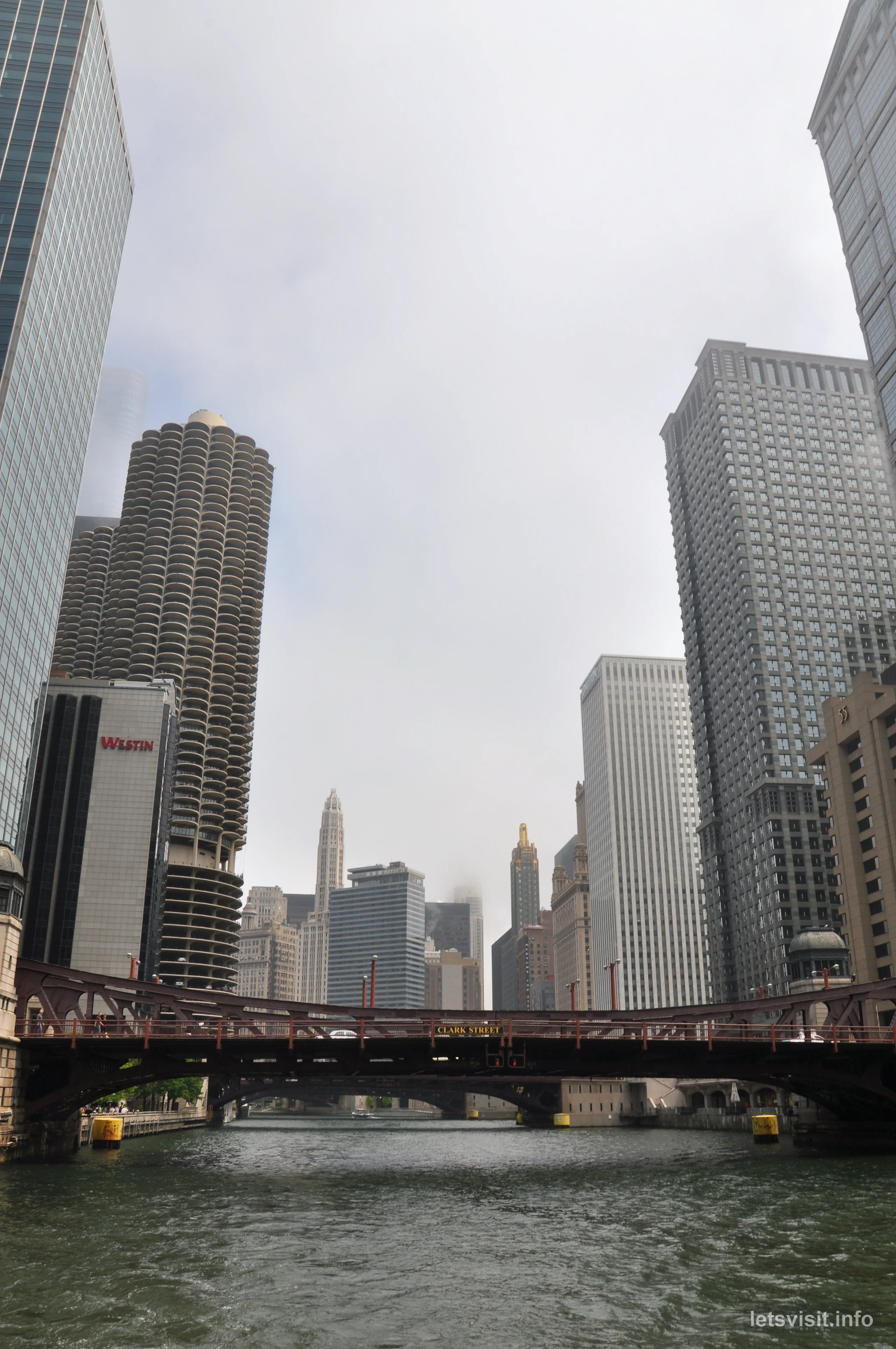
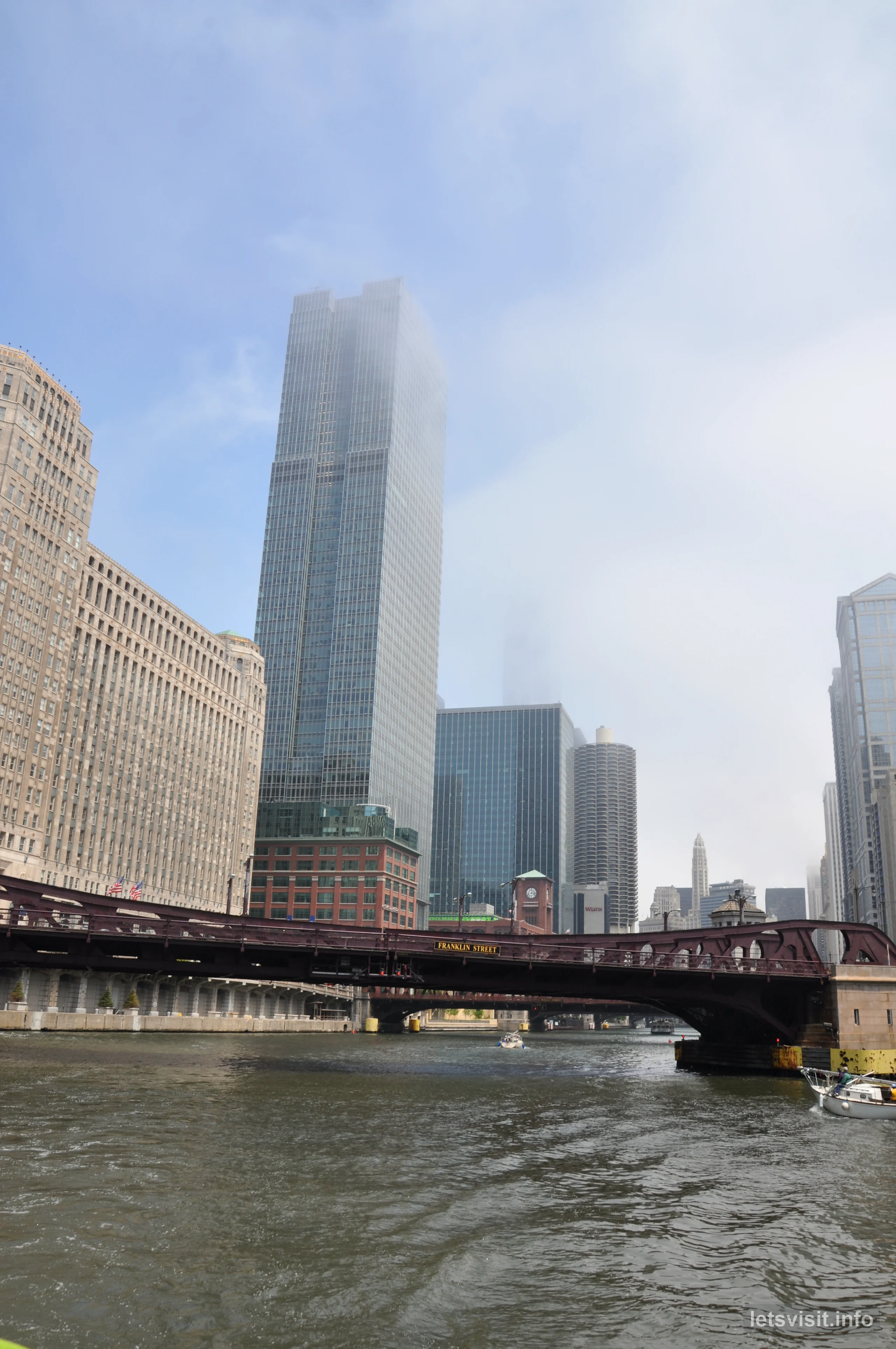
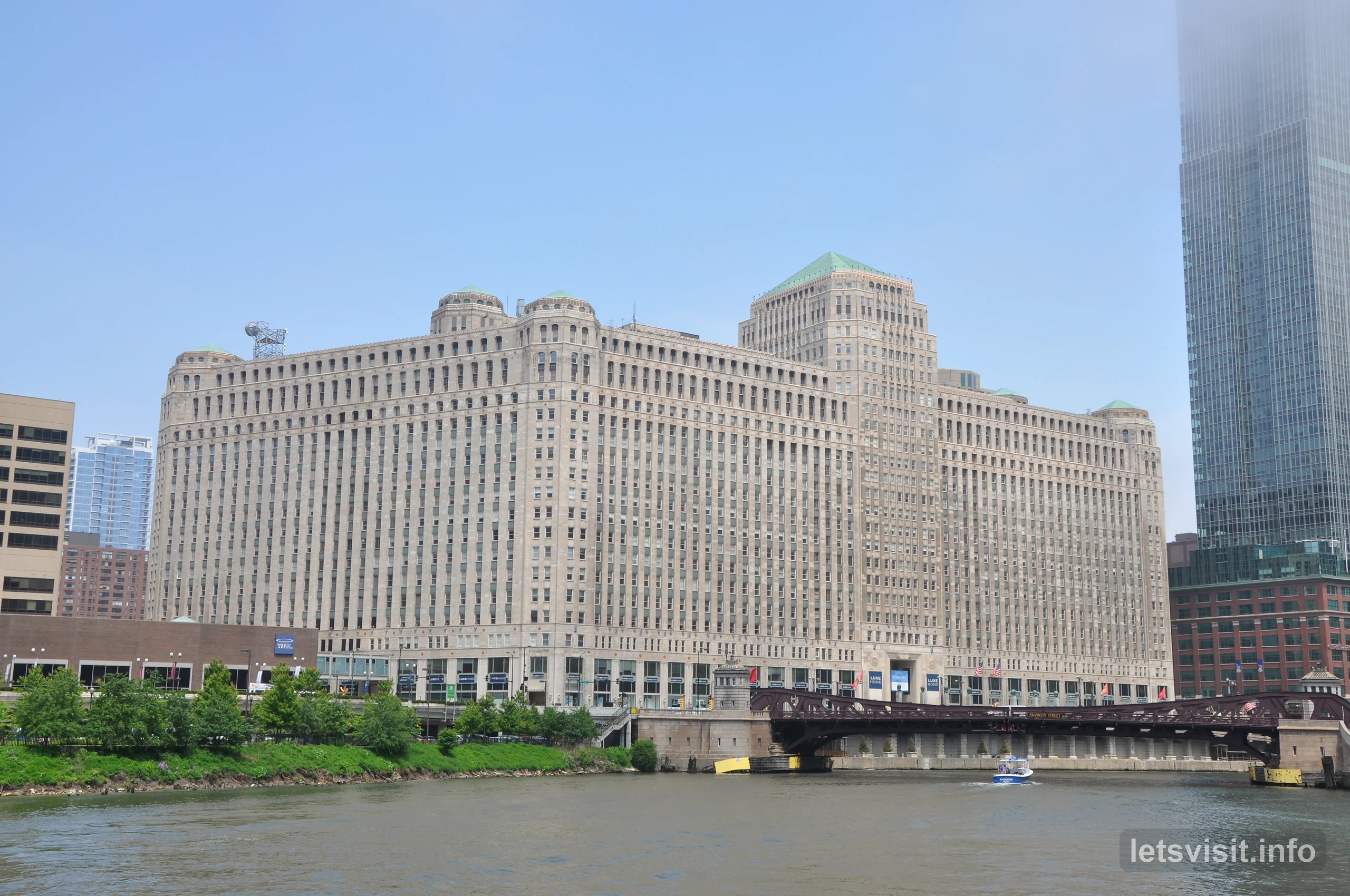
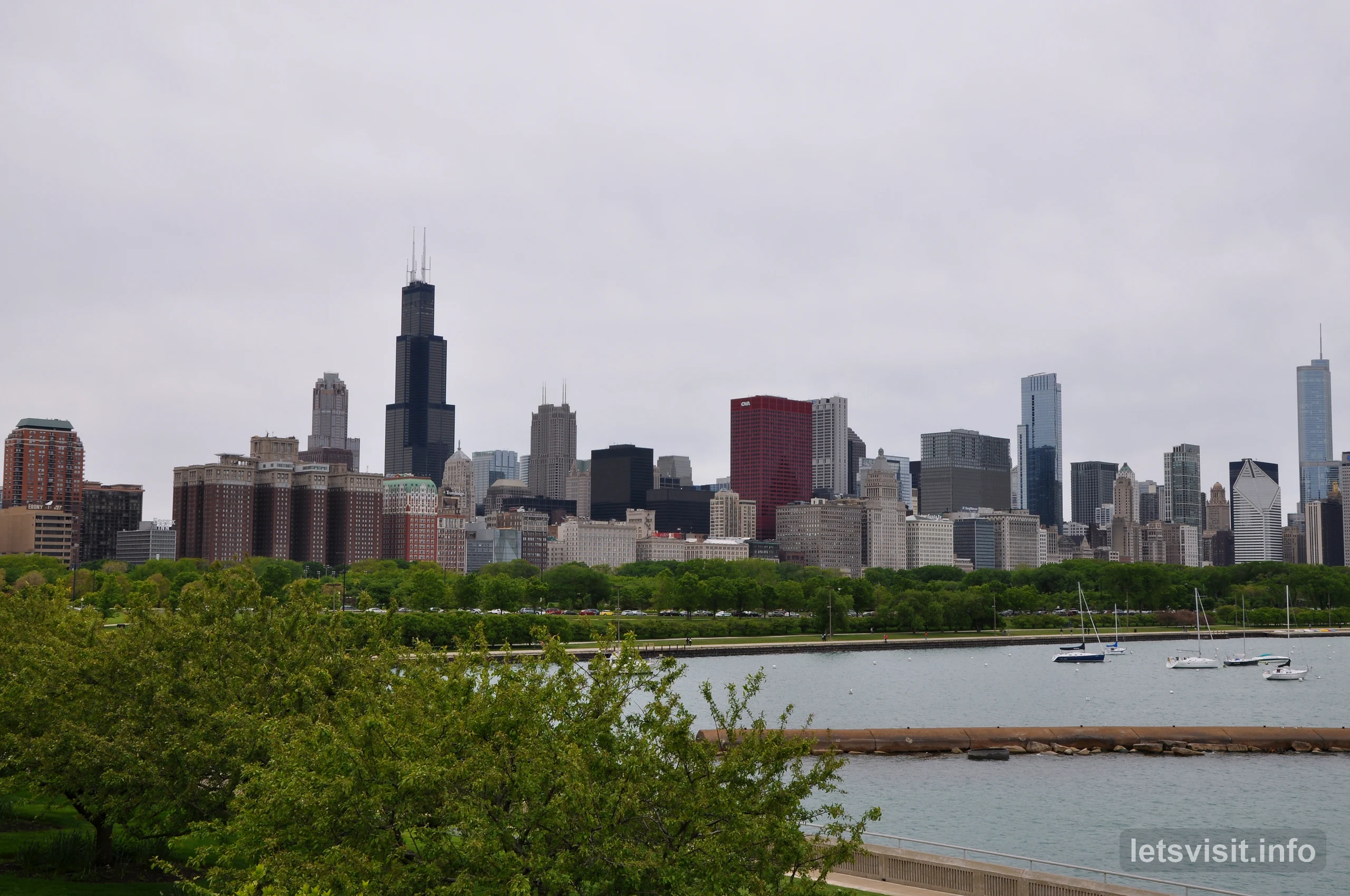
The river gave us some of the clearest views of downtown’s relationship with water. Crossing a bridge opens a long view between the buildings, with the river running through the foreground. Towers that seem tightly packed from a nearby pavement become easier to separate.
The bridges are part of that scene. Chicago’s bascule bridges work through a counterbalanced lifting mechanism: the roadway leaves pivot upwards, balanced by heavy counterweights, to let suitable boat traffic pass. Their engineering serves an everyday purpose while adding a distinctive moving element to the river landscape.
There is a longer history of engineering here too. In 1900, the opening of the Chicago Sanitary and Ship Canal reversed the Chicago River’s flow, helping direct wastewater away from Lake Michigan, the city’s drinking-water source.
Those details made the river more interesting than a gap in the skyline. It is a working part of Chicago, shaped by the needs of transport and the city around it. For our walk, it also provided a welcome change in viewpoint and a clear line through the dense centre.
Above Chicago at Willis Tower
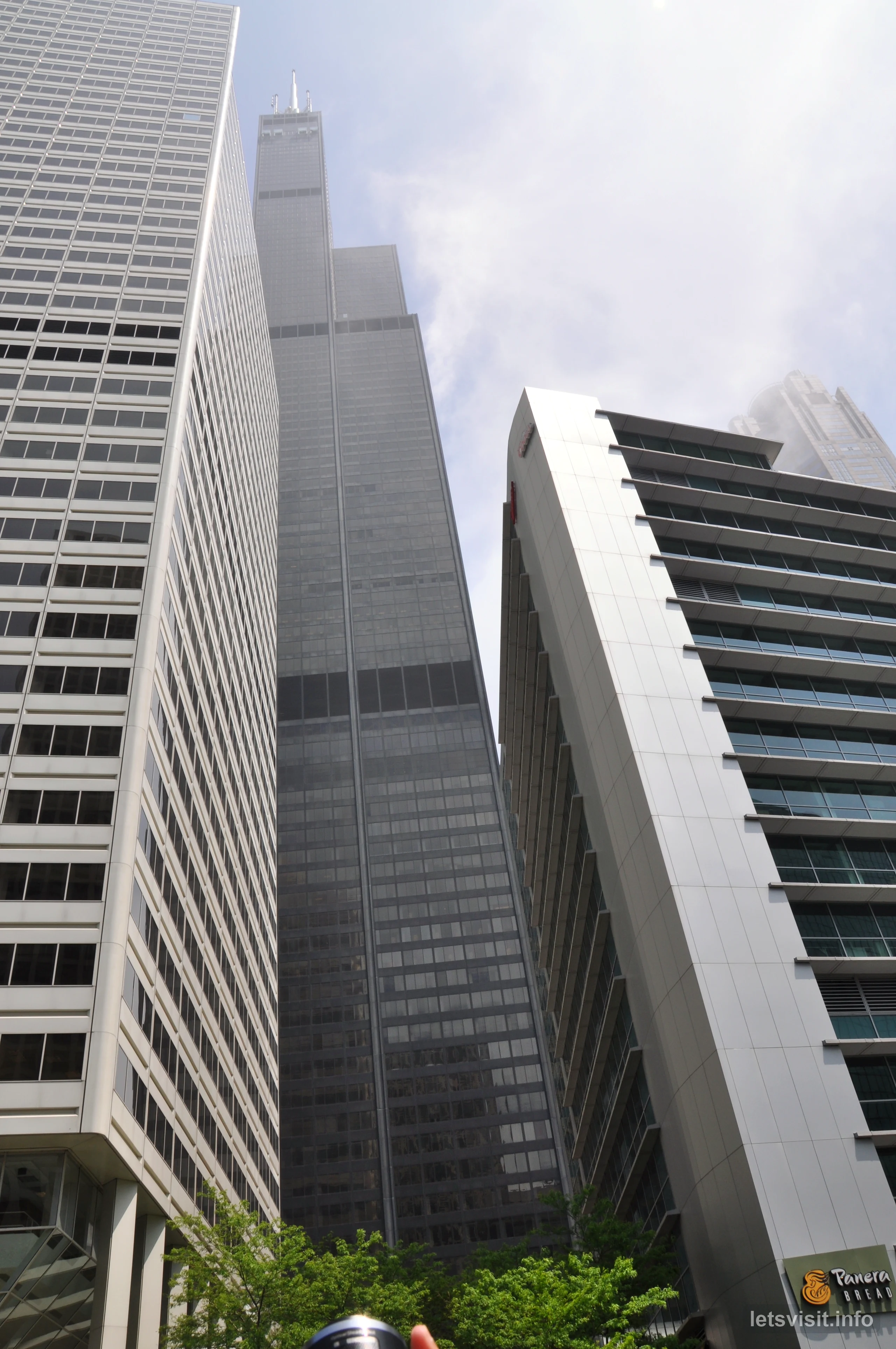
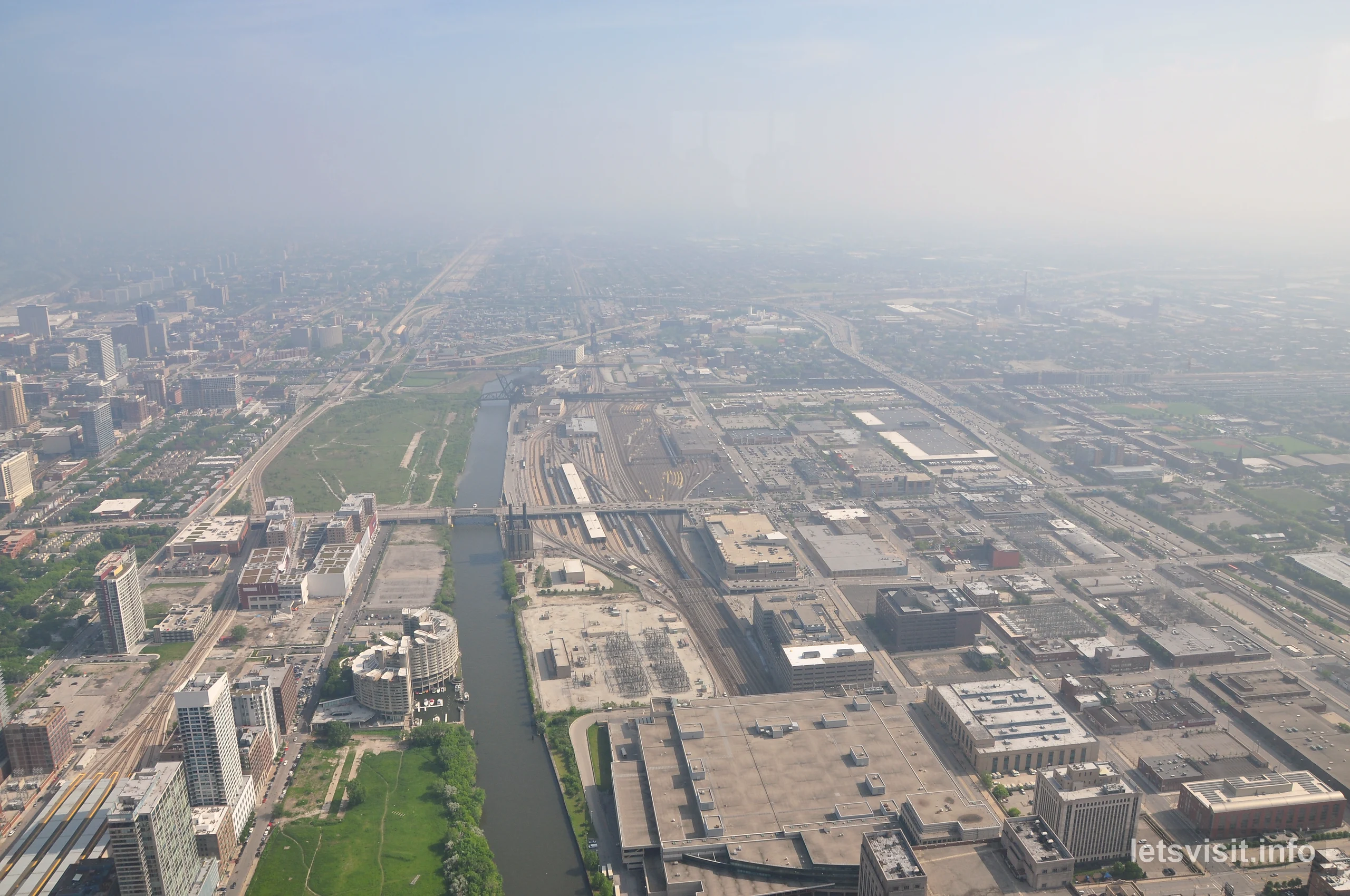
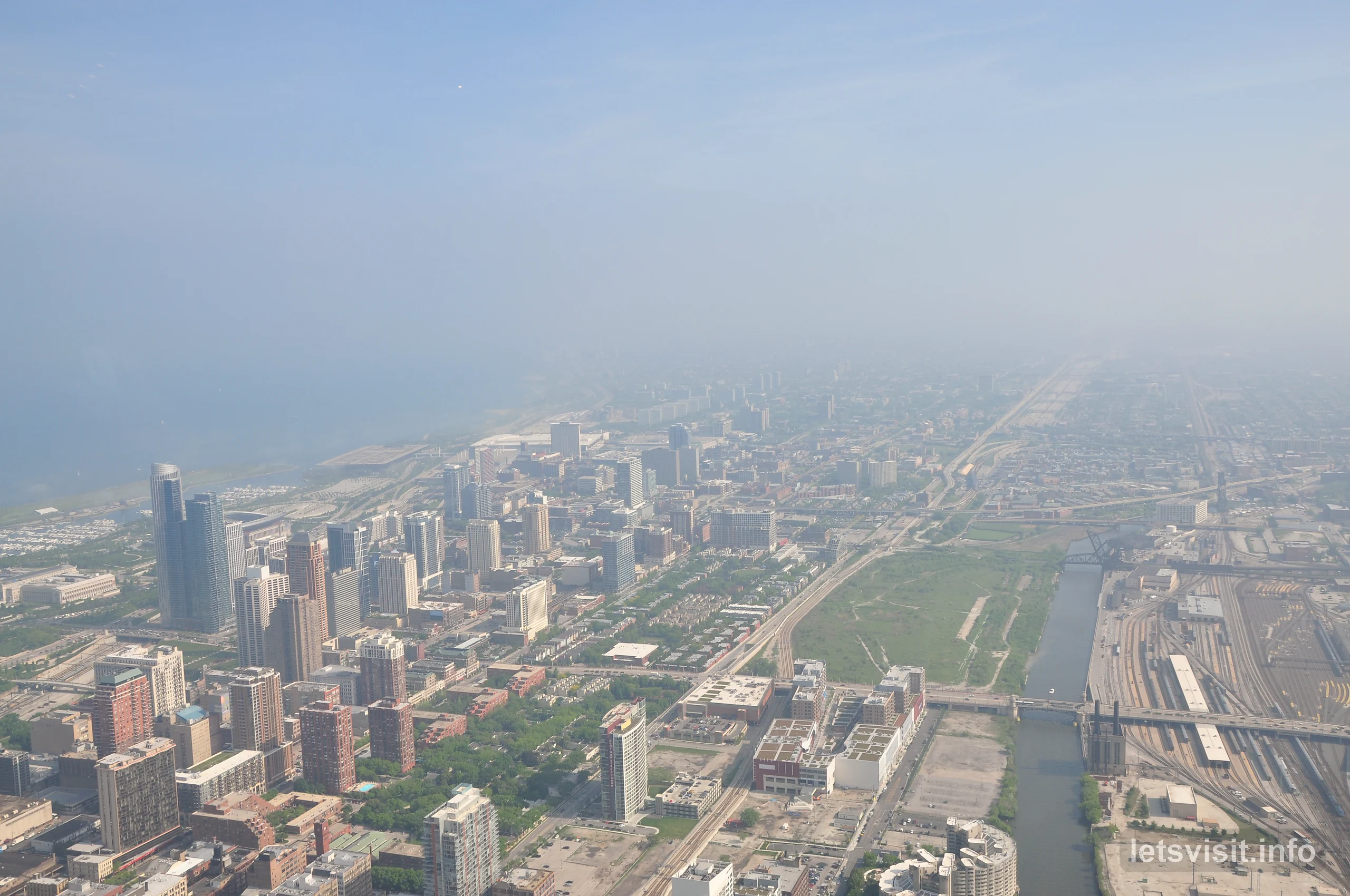
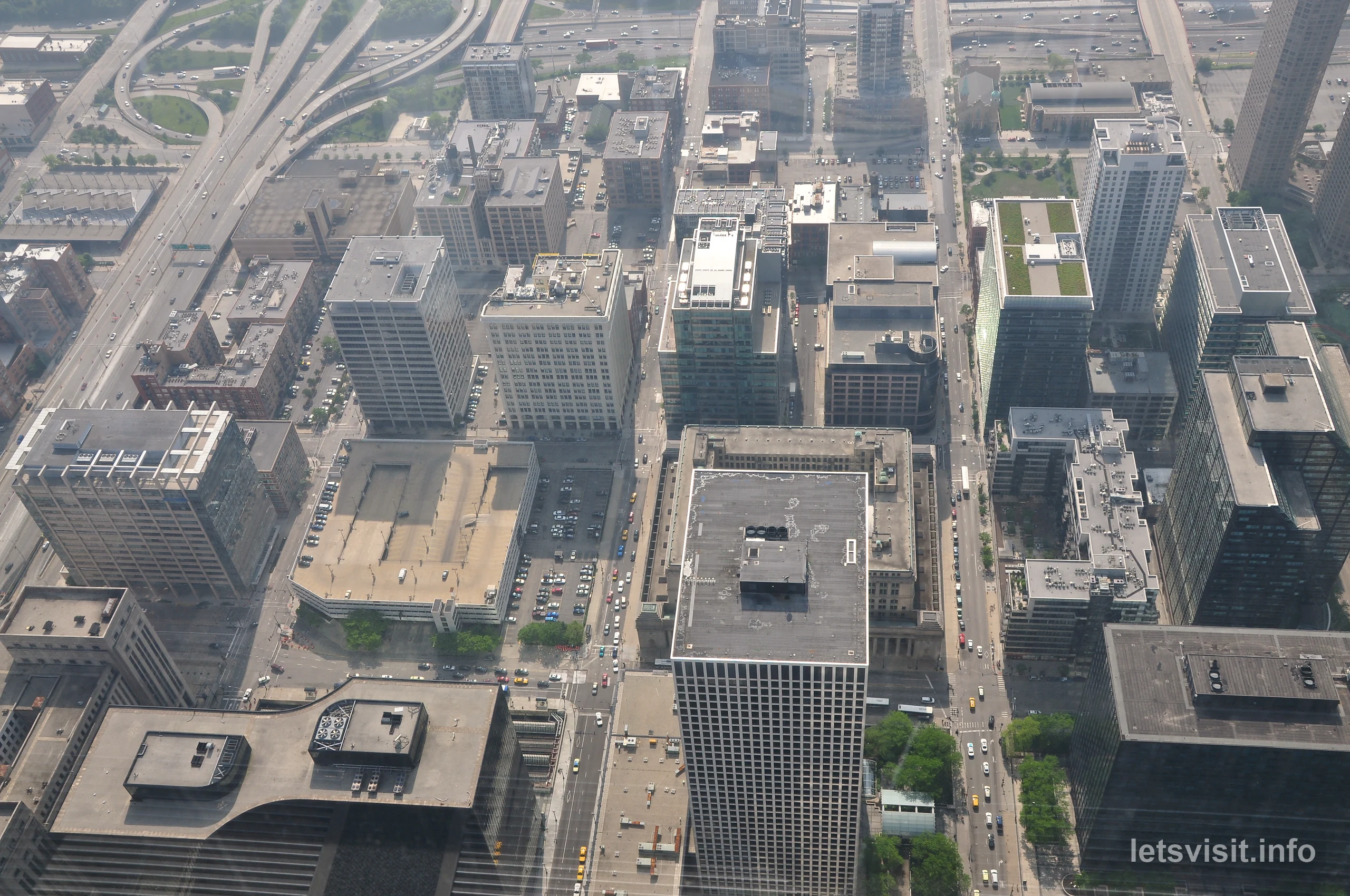
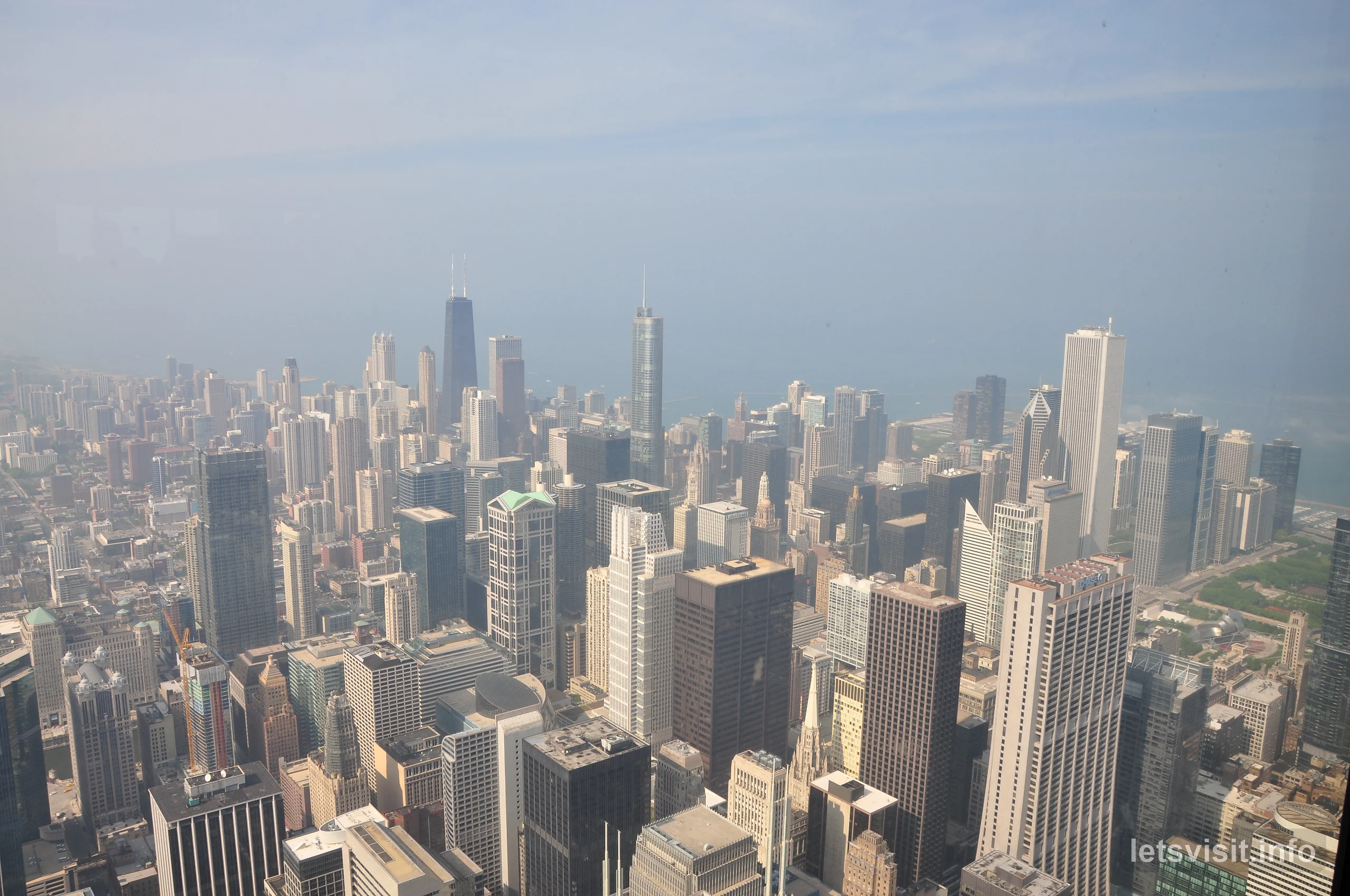
Our visit to Skydeck Chicago, on the 103rd floor of Willis Tower, gave us the widest view of the city. The streets and towers that dominate the view from the pavement became part of a much larger pattern.
At pavement level, a nearby building can fill almost the entire view. From above, its position becomes clearer: how it relates to the surrounding blocks, the river and the edge of the lake. Chicago’s scale is easier to understand when those elements can be seen together.
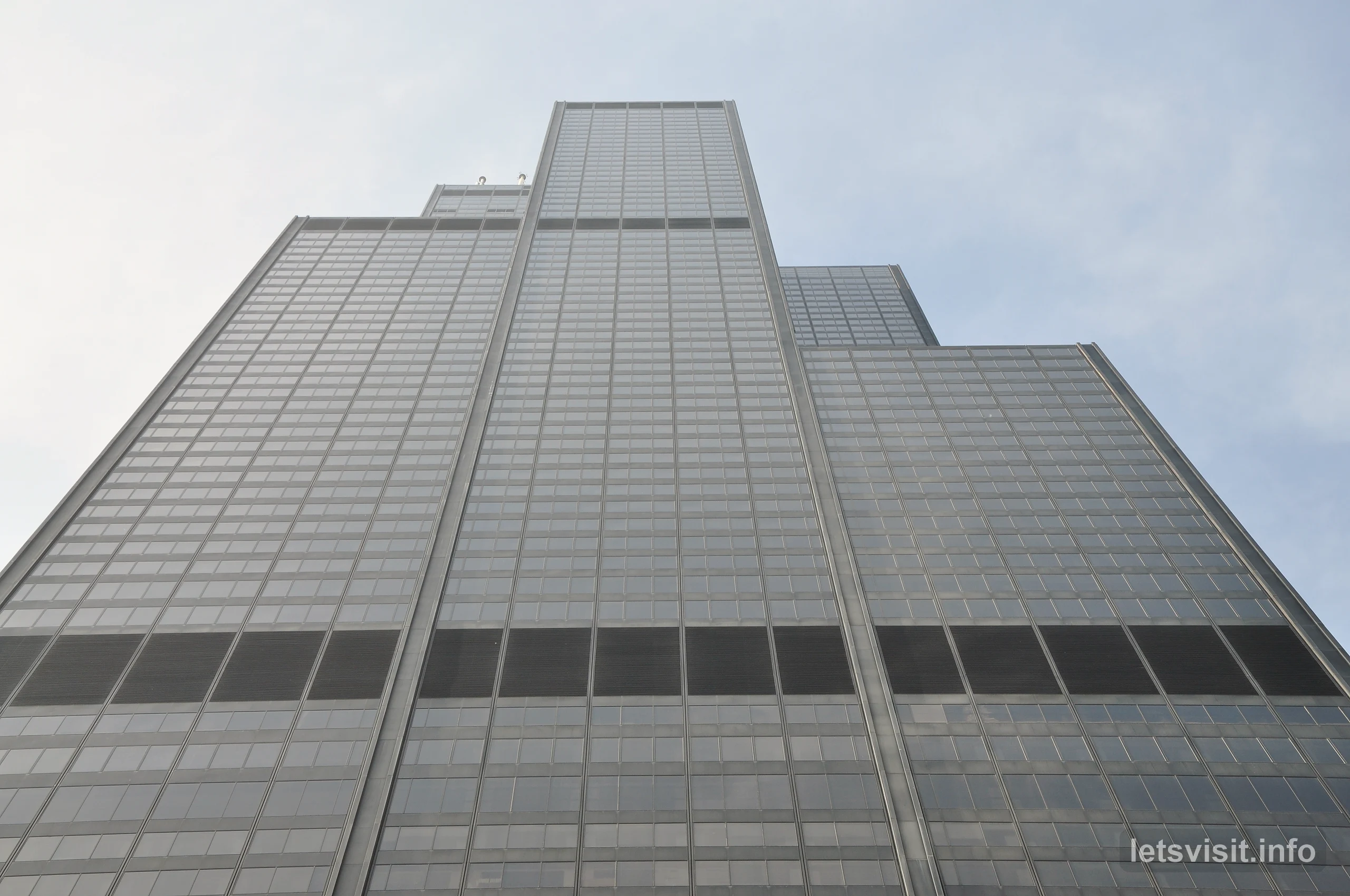
The tower had already been a Chicago landmark for decades. Completed in 1973, it was the world’s tallest building when it opened. The name changed from Sears Tower to Willis Tower in 2009, shortly before our visit.
For us, the value of going up was that change in perspective. The individual landmarks became reference points within the city, while the streets formed a pattern extending well beyond the centre. Lake Michigan gave the panorama its broad, open edge.
The Ledge and the view straight down
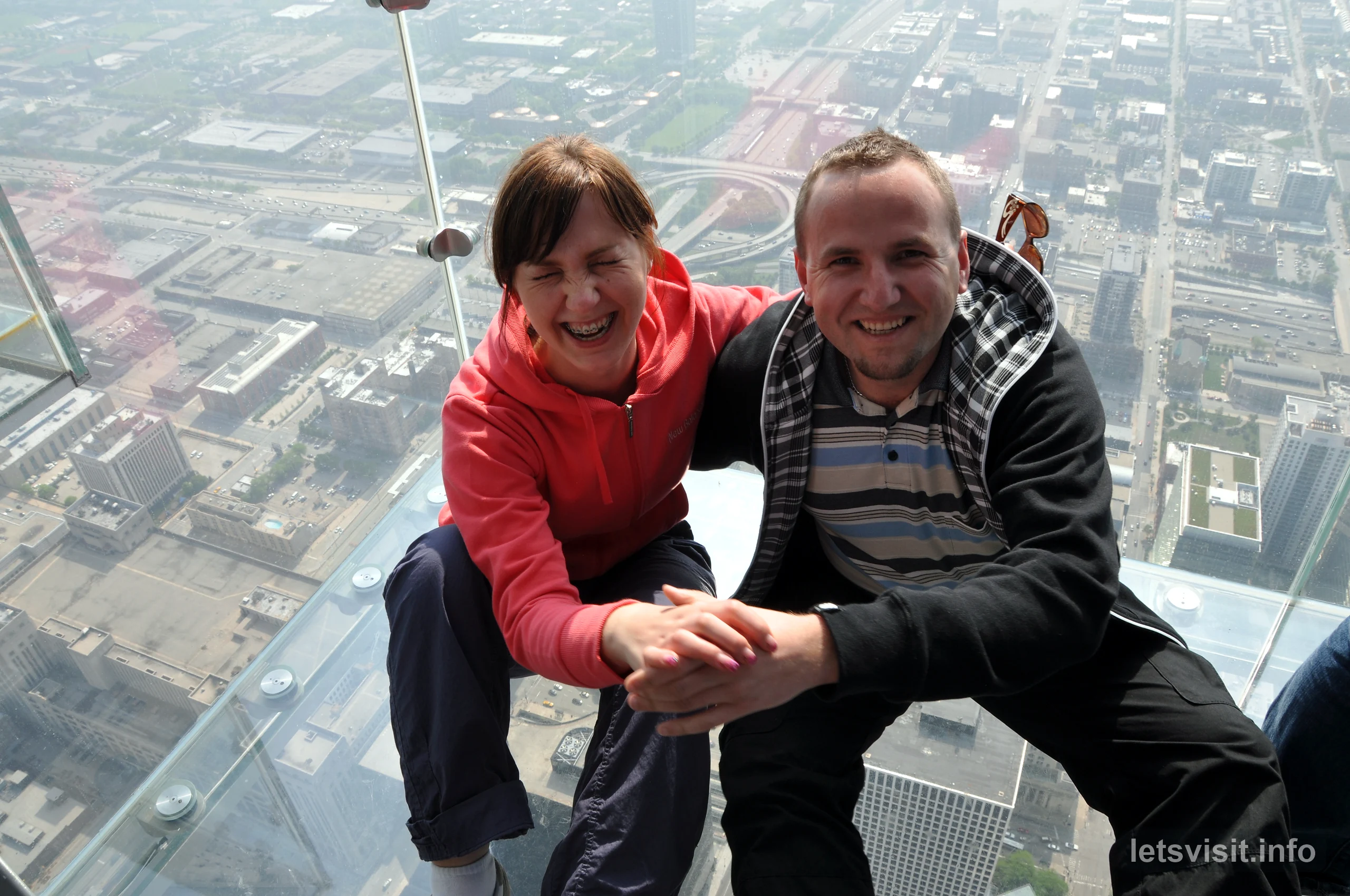
The Ledge adds a different kind of view to Skydeck. Its glass balconies project beyond the building, allowing visitors to look through the floor towards the streets below.
Opened to the public in July 2009, The Ledge was already there during our 2010 visit. The balconies sit about 1,353 feet — roughly 412 metres — above the street. Looking out across a city and looking directly down at it give very different impressions of height.
Lake Michigan and evening light
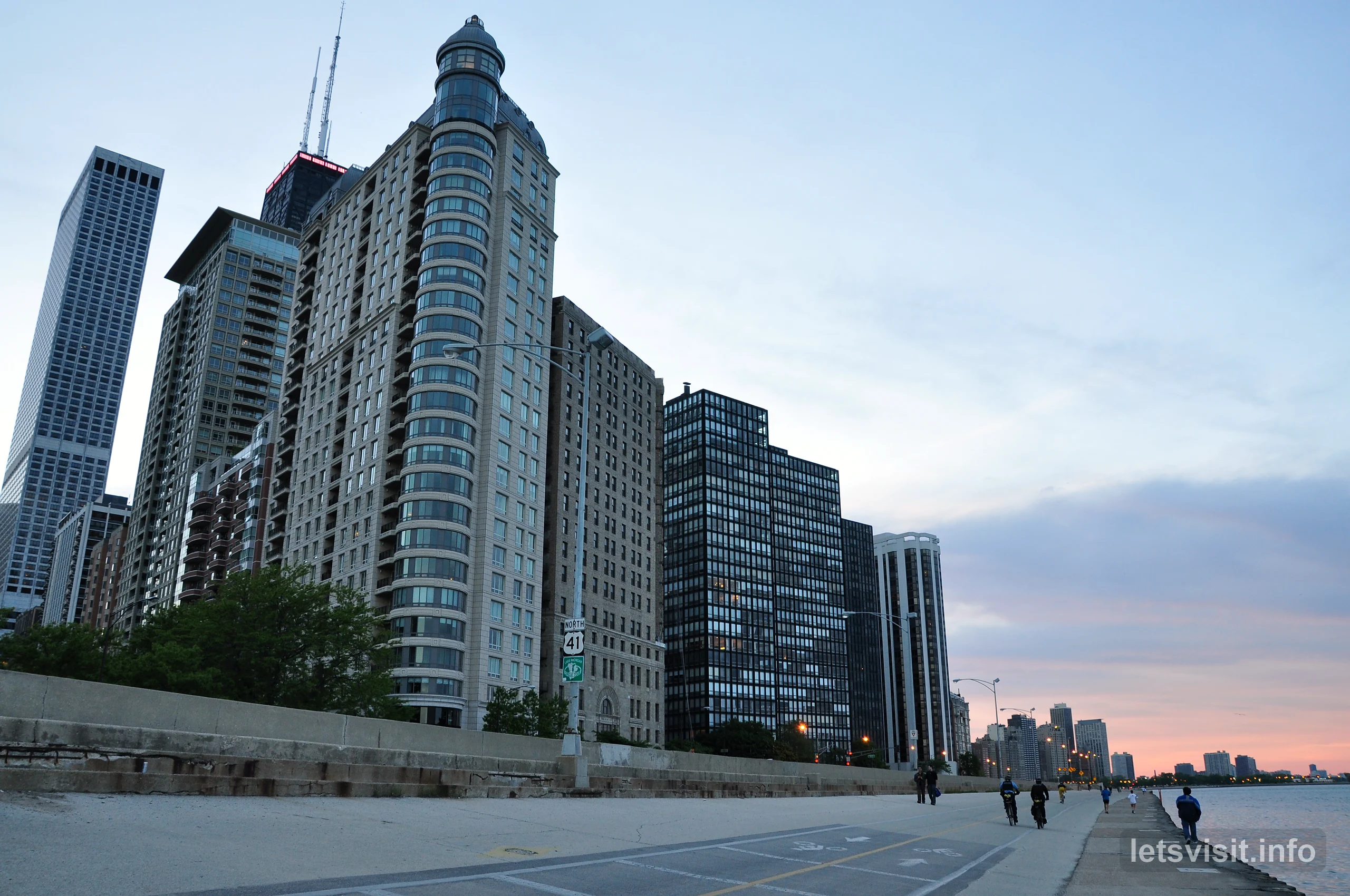
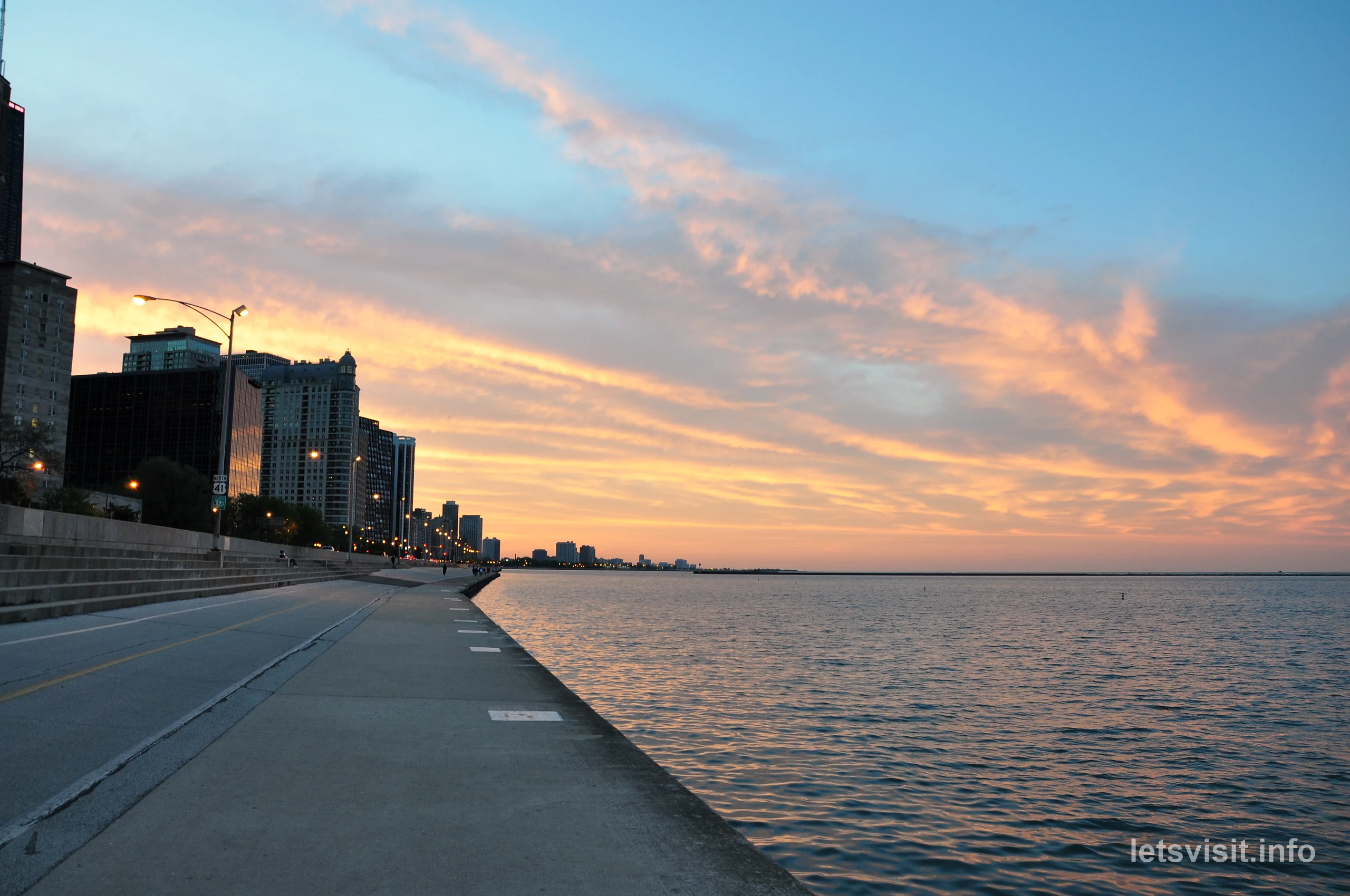
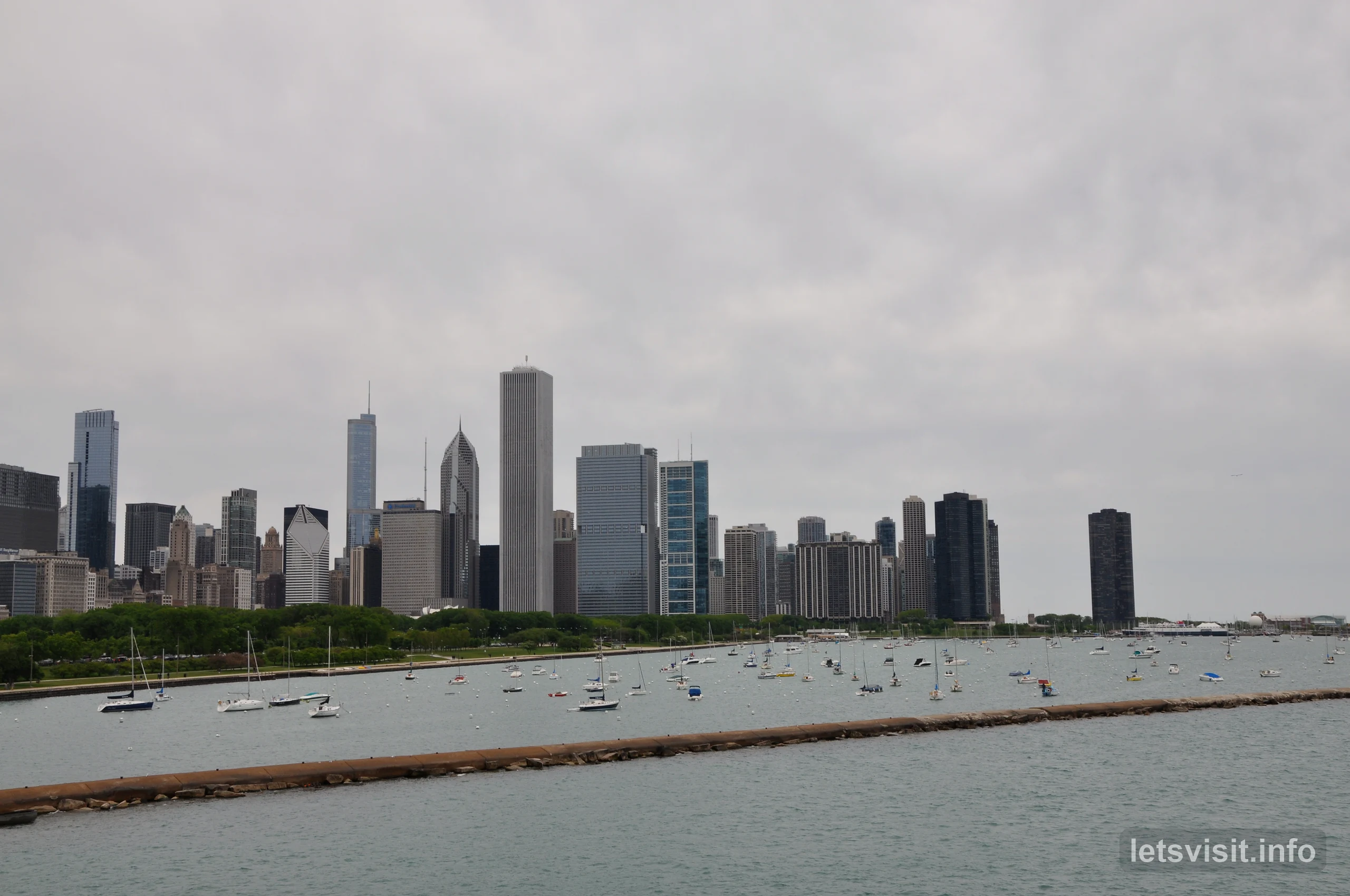
Lake Michigan gives downtown Chicago a remarkably open edge. Close to the towers, the eye is drawn upwards; beside the lake, it can travel towards a much wider horizon. That change is part of what makes the city’s setting so distinctive.
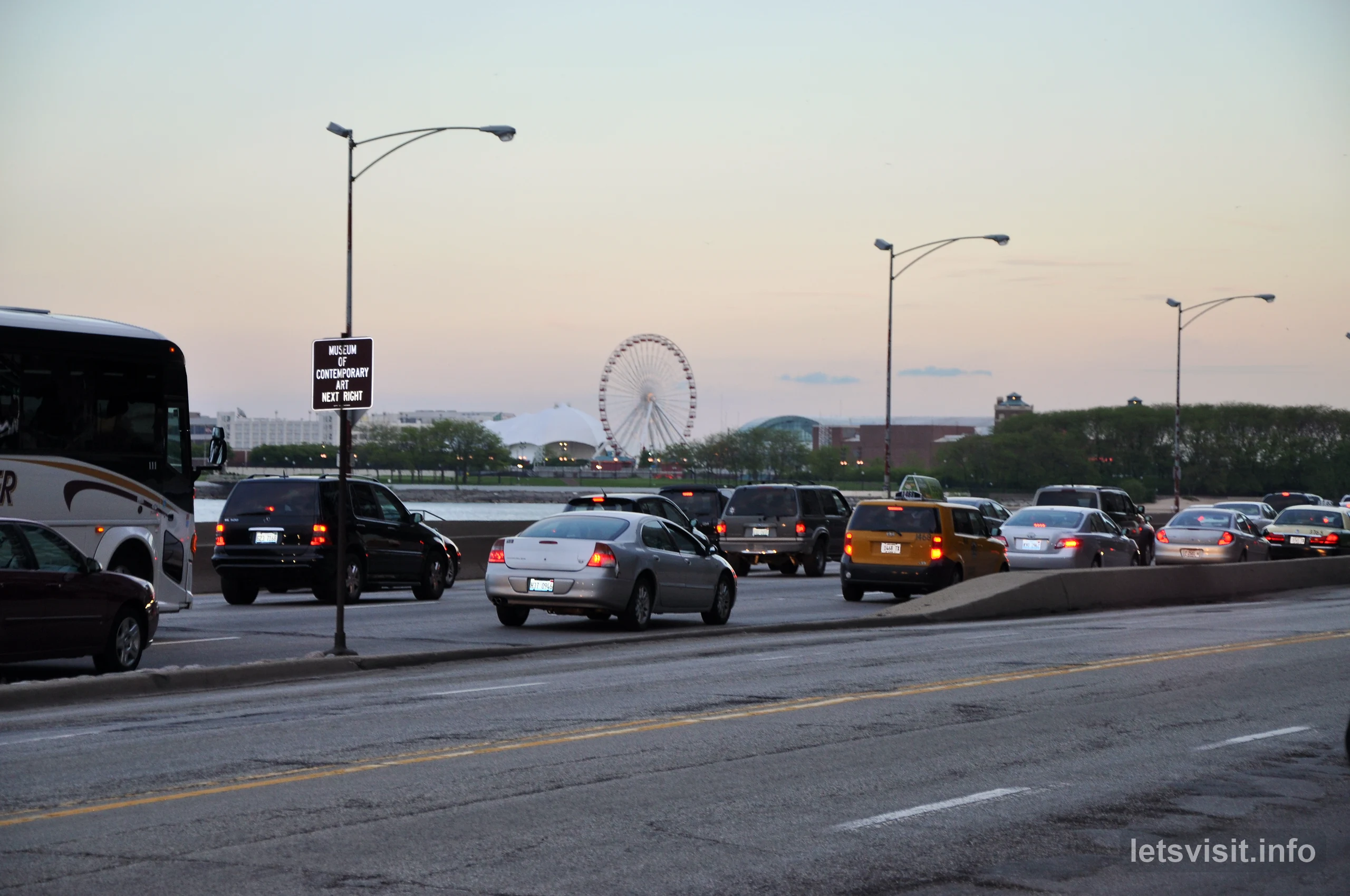
Navy Pier appears as a landmark projecting into the water, another point of reference in the wider view. The lake itself sets the scale, extending far beyond the buildings and shoreline.
Evening light gives this setting a softer character. It picks out the outlines of the buildings and changes the appearance of the water, allowing the lakefront to provide a quieter ending to our Chicago story.
What stayed with us from Chicago
The strongest part of our Chicago visit was the variety of ways we saw the city. LaSalle Street framed a tower at the end of a corridor. Cloud Gate curved the skyline into a reflection. Crown Fountain brought faces into the foreground. Skydeck revealed the larger pattern above the streets.
Our photographs and film bring those views together. The individual landmarks are memorable, but their relationship is what gives the visit its shape: architecture beside water, public art within the city and an open lake beyond the towers.
Photos & video: Original material from our 2010 visit to Chicago — Let’s Visit by Radon.